
AI Skin Analysis:What These Tools Actually Tell You
Most skincare routines are built on guesswork,AI tools are starting to change that.

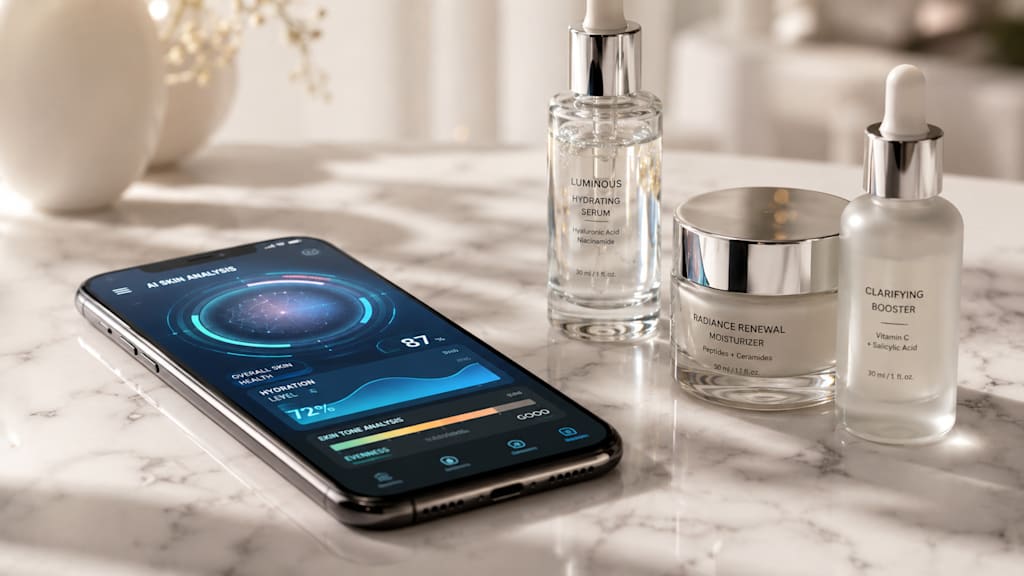
Most of us build our skincare routines the same way. A friend swears by something, a label sounds convincing, or a review at midnight tips you over the edge. You buy the product, use it for a while, and end up roughly where you started, with a shelf full of half-finished bottles and no real understanding of what your skin actually needs.
That cycle is frustrating, and it's surprisingly common. AI skin analysis tools are one of the more practical attempts to break it.
How These Tools Work
The basic process is simple enough. You open an app, take a photo in decent natural light, and within seconds the tool runs your skin through a computer vision model. It reads things a bathroom mirror check won't catch: hydration levels, pore size, pigmentation distribution, surface texture, and early signs of fine lines or uneven tone. From that data, it builds a routine recommendation based on what your skin is actually doing, not on the vague self-reported category of "oily" or "combination" you filled out in a quiz.
This isn't fringe technology. L'Oréal's ModiFace and Haut.AI are already powering analysis tools for major beauty retailers, and tens of millions of people use some version of this tech every month. The computer vision behind it comes from the same class of models used in medical imaging and hospital diagnostics, adapted and trained on skin biometric data instead of radiology scans.
What They Get Right
The most valuable thing these tools do is correct assumptions you've been carrying for years.
Dehydration and oiliness look nearly identical to most people, and plenty of skin that feels greasy is actually just dry and overcompensating. Reaching for mattifying products in that situation makes things worse. An AI analysis can flag that mismatch quickly, before you spend another six months on the wrong routine.
These tools also catch early shifts that are easy to miss, slight texture changes, slow pigmentation movement, subtle dryness patterns, things that only become obvious once they've progressed. Catching them earlier means easier correction.
The practical side matters too. Removing the trial-and-error process saves money and time. Instead of testing three moisturizers hoping something clicks, you start from a data point that's at least loosely tied to your actual skin condition. That's a meaningful shift, even if the recommendation isn't perfect.
How to Pick One Worth Using
Not every AI skin app is worth your data. Before committing to one, a few things are worth checking.
Look at how transparent the platform is about its training data. The better tools are open about whether their models were built on diverse skin tone datasets. This matters directly for accuracy, and a tool that skips this disclosure is probably skipping other things too.
Check whether the tool is tied to a specific brand's product line. Some apps are built to recommend only that company's products, which makes the analysis more of a sales funnel than a genuine skin read. Independent platforms tend to offer more balanced guidance.
Read the privacy policy before uploading any facial scans. Biometric data is sensitive, and not every platform handles it responsibly. Look for clear language on how long they store your data and whether it gets shared with third parties.
Where to Stay Cautious
AI skin tools are not dermatologists. They are pattern recognition systems built to identify surface-level characteristics, and they work best as a starting point, not a clinical conclusion. If anything the scan flags looks medically relevant, a licensed dermatologist is the right next step. Full stop.
There's also a bias problem that's worth knowing going in. Many of these tools were trained on datasets that skew heavily toward lighter skin tones, which reduces accuracy for deeper complexions. The better platforms are actively working to correct this, but it's not a solved problem yet across the industry.
Consistency also matters more than most users expect. A single scan gives you a snapshot of one day. Using a tool regularly over several weeks gives you a pattern, and patterns are where the genuinely useful insight lives. One reading is interesting. Repeated readings over time are actually actionable.
A Reasonable Way to Think About It
AI skin analysis isn't going to replace good skincare instincts or professional advice. What it can do is give you a better starting point than guesswork, catch things you'd otherwise miss, and cut down on the expensive, time-consuming process of figuring out what your skin actually responds to.
Used with realistic expectations and a bit of skepticism toward any tool that oversells its precision, it's one of the more genuinely useful ways technology has entered the skincare space. That's not a small thing.
About the Creator
tuhin khan
Writing about AI, tech & automation. Visit: automationservice.shop
Enjoyed the story? Support the Creator.
Subscribe for free to receive all their stories in your feed.
Comments
There are no comments for this story
Be the first to respond and start the conversation.