
According to Johns Hopkins researchers, the way you hold your arm can affect blood pressure measurements.
The design of the study
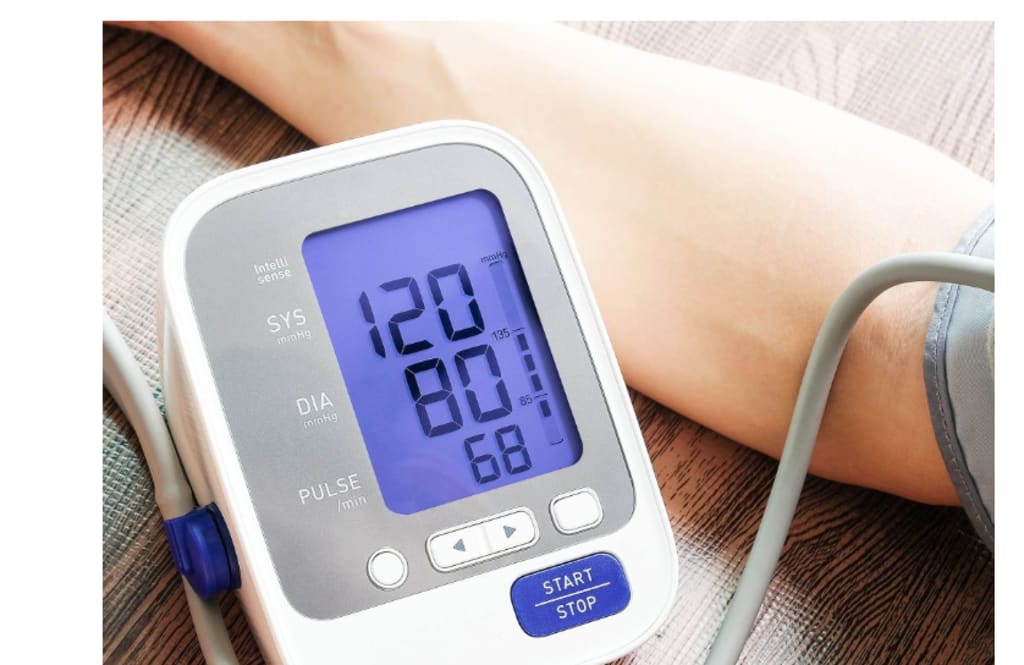
Heart attacks and strokes are caused by high blood pressure, yet the standard test that detects it can be unexpectedly brittle. The reading can be pushed into the danger zone with just two inches of arm movement.
According to a Johns Hopkins crossover trial, a patient's mercury level may be up to 7 millimetres higher if their arm is left hanging than if it is resting on the examination desk. A person's blood pressure reading may go from "elevated" to deadly "stage 2" due to this discrepancy.
The study that replicated three real-world postures encountered in clinics on a daily basis was headed by Tammy Brady, MD, PhD, of the Johns Hopkins University School of Medicine.
The design of the study
Each participant was instructed to walk for two minutes before each blood pressure reading in order to replicate actual checkup settings. After that, they sat with their feet and backs supported and relaxed for five minutes in a quiet room.
Four rounds of triplicate measurements utilising various arm postures were performed on each participant. The researchers took into consideration the inevitable changes in blood pressure over time by repeating the desk-supported reading at the conclusion.
Why blood pressure might deceive us
Hypertension, a chronic increase in arterial pressure that puts stress on the heart and blood vessels, affects about half of adult Americans. To choose whether to begin lifelong medicine, clinicians rely on a single snapshot, frequently obtained in less than a minute.
133 volunteers from Baltimore, ages 18 to 80, were recruited for the study and alternated between desk-support, lap-rest, and side-dangling postures. The researchers repeated the workstation posture at the conclusion to account for natural changes and employed automated cuffs to eliminate observer bias.
A lap-supported arm had an average systolic pressure that was 3.9 mmHg higher and a diastolic pressure that was 4 mmHg higher than the desk standard. For those same figures, an unsupported arm reached 6.5 mmHg and 4.4 mmHg over the baseline.
What the trial revealed
Staff members may neglect best practices in hectic clinics without understanding the repercussions. Patients frequently sit on exam tables unassisted or hold their own arms during hurried exams. While these short cuts may not seem like much at first, they build up over time. Charts, diagnosis, and long-term treatment plans can all be impacted by misreadings.
Referencing the clinical transition from "elevated" to "stage 1," Sherry Liu, M.H.S., cautioned, "If you are consistently measuring blood pressure with an unsupported arm, and that gives you an overestimated BP of 6.5 mmHg, that's a potential difference between a systolic BP of 123 and 130."
By maintaining the cuff's midpoint at mid-heart height, desk-level support balances the hydrostatic pressure along the arteries. The gauge detects additional pressure when the arm is dropped because gravity requires a greater force to push blood upward.
According to the American Heart Association, nurses should place patients in backed chairs with their arms resting on a firm surface that lines up with the right atrium, feet flat, and legs uncrossed.
Even highly qualified medical professionals don't always adhere to textbook recommendations. Due to the need to move fast in hectic offices, features like arm height may be missed.
Although the research indicates that "almost right" still results in incorrect figures, some suppliers may believe that close is sufficient. Errors can become commonplace if posture is not checked on purpose.
At-home monitors require assistance
Many kitchen tables are too low to resemble clinic desks, despite the fact that millions of people measure at home. The gap can be filled by shifting the gadget onto a higher counter or placing a pillow beneath the elbow.
Cuff size is also important; too-narrow sleeves can raise readings by 5 to 10 mmHg, a condition that affects 12 percent of Black Americans with bigger arm circumferences.
Inadequate methodology results in incorrect diagnosis
A person's health journey might be significantly impacted by even minor errors in readings. Overestimating the results could result in an inaccurate diagnosis of hypertension, which could cause worry or needless medicines.
However, a reading that appears to be only slightly elevated could keep someone from receiving the necessary treatment. Appropriate placement can alter decisions and results in real life, so it's not simply about data quality.
Brady's team intends to investigate whether a straightforward prompt on the screen of the gadget, "Rest arm on table," influences behaviour in primary care settings. Additionally, they aim to see if wrist cuffs with integrated position sensors reduce the inaccuracy.
Standard placement, according to public health experts, can cut costs and side effects without jeopardising cardiovascular safety by preventing thousands of needless prescriptions annually.
About the Creator
Enjoyed the story? Support the Creator.
Subscribe for free to receive all their stories in your feed.
Comments
There are no comments for this story
Be the first to respond and start the conversation.