
A closer genetic relationship than previously thought is shown by DNA study of Neanderthal teeth.
Timelines are complicated by dating inaccuracies.

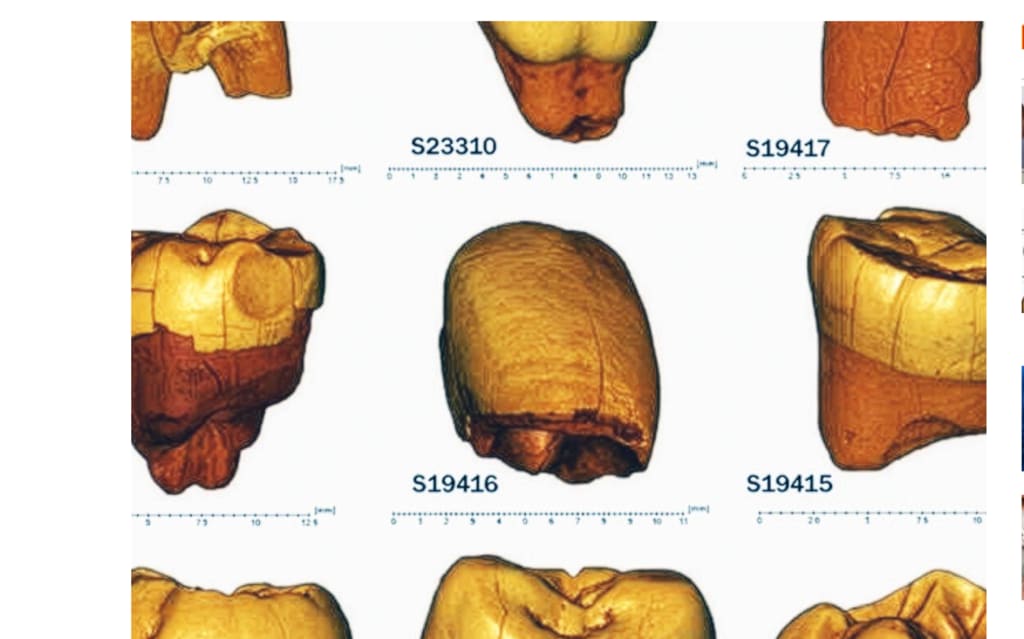
An unexpected window into Neanderthal life has been revealed by eight tiny teeth found buried in a Polish cave. The remains show a cohesive group that probably travelled over large areas of Europe and shared maternal ancestry rather than isolated individuals.
These early people may not have lived at the frontier of their range, but rather were part of a larger network, as evidenced by the genetic evidence connecting this community to populations much beyond Poland.
The finding is assisting scientists in reconsidering Central Europe as an active crossroads in Neanderthal history, when adaptation, travel, and survival took place across shifting climates, rather than a forgotten gap.
Neanderthal maternal DNA relationships
The remains of a small Neanderthal group were preserved in a disturbed deposit inside Stajnia Cave in southern Poland thanks to old teeth. Andrea Picin of the University of Bologna (Unibo) demonstrated that the cave contained at least seven people by analysing those evidence.
Those teeth belonged to a small community from the same era rather than to a single body or time. Even if the surrounding layers still require more explanation, the genetic picture is cohesive, which makes the cave exceptionally valuable.
The scientists was able to compare Neanderthals without requiring a considerably larger DNA record from each specimen thanks to maternal inheritance. Three specimens' mitochondrial DNA, a tiny genetic record primarily inherited from mothers, showed similar maternal lines.
In contrast, Picin added, "it has been possible to reconstruct a small group of individuals at Stajnia, providing for the first time a coherent genetic picture of Neanderthals in this part of Europe."
Because single fossils frequently make it difficult to determine whether a place was home to families, tourists, or unrelated arrivals at a particular site, coherence is important.
Timelines are complicated by dating inaccuracies.
Layer by layer, Stajnia initially seemed to be in order, but that straightforward interpretation was called into question by three teeth that matched. An upper layer produced one tooth, a lower silt produced another, and a third
These layers had moved after burial, probably due to frost action and subsequent cave disturbance, according to shared maternal DNA. The site no longer functions for archaeologists as a straightforward series of older and younger layers.
Radiocarbon technologies, which measure fading carbon in once-living material, were pushed to their limits by dating the teeth. Tiny quantities of contemporary carbon can overpower ancient material during testing, making some samples appear overly young.
Because even slight contamination might make very old samples appear more current when signals are weak, near-limit values should be used with caution. Therefore, when direct dating was unable to answer the question on its own, genetic comparisons assisted in placing the group.
Neanderthals have a broad ancestry.
Beyond Poland, populations in France, Spain, Portugal, and the hilly area between the Black and Caspian oceans share the Stajnia genetic line with Neanderthals. This pattern indicates that before later Neanderthal lineages gained greater dominance, similar maternal lines formerly extended throughout western Eurasia.
This connection had been suggested by earlier research on a single Stajnia molar, but the bigger sample now makes it much more difficult to rule out as a coincidence. Two of the teeth belonged to youngsters, and one adult had the same mother's signature.
Although an exact family tree cannot be confirmed by matching DNA, it strongly suggests that linked individuals share maternal ties. Even more than one tooth may represent a single child, however this cannot be verified by the evidence.
Because Neanderthal fossils are typically discovered as isolated bones from different locations rather than grouped remnants from the same community, such detail is uncommon.
Toolkits influenced by the surroundings
Stajnia stone tools connect the group to the Micoquian tradition, which uses shaped stone knives. Because resharpened edges allowed mobile hunters to maintain useful blades over extended distances with repeated movements, these instruments were ideal for open, colder environments.
More scrapers and notched pieces are frequently found in warmer climates, indicating that toolkits evolved with food and topography. Groups maintained a practical rather than static culture throughout centuries by adapting traditional skills to shifting environmental conditions.
The Neanderthal chronology is disrupted by maternal DNA
The timeframe is being further complicated by Thorin, a Neanderthal from France. Despite earlier archaeological evidence placing him significantly later, close to the last Neanderthal chapter in Europe, his DNA closely resembles that of the Stajnia group.
Genetic evidence and conventional dating techniques clearly clash as a result of this mismatch. Certain Neanderthal lineages may have survived much longer than previously believed if the DNA is accurate.
The results from Poland indicate that when conflicting lines of evidence are present, researchers should proceed cautiously when dealing with late dates. The timeframe is still up for debate, demonstrating that no one approach can adequately convey the intricate history of Neanderthal groups.
The Neanderthal corridor in Central Europe
For researchers studying population migration, southern Poland is now close to the core of a considerably bigger Neanderthal record. Instead of being isolated at a frigid border, groups there seem to be related to western Europe and the mountainous area between the Black and Caspian seas.
According to earlier evidence, Polish caves included tools, animals, and occasionally human remains due to changing conditions. This suggests that Central-Eastern Europe was more of a corridor connecting locations throughout Eurasia than a blank space.
That image has now been altered by eight little remnants. The teeth from Stajnia Cave transformed the site from a difficult excavation into clear evidence of maternal connection, long-distance movement, and more precise dating.
Together, they imply that this corridor may have sustained common lineages across large distances. Future fossil DNA from neighbouring places might verify this theory, particularly to determine whether this maternal line ever connected distant populations before later Neanderthal DNA supplanted it.
About the Creator
Enjoyed the story? Support the Creator.
Subscribe for free to receive all their stories in your feed.
Comments
There are no comments for this story
Be the first to respond and start the conversation.