breakups
When it comes to breakups, pain is inevitable, but Humans thinks that suffering is optional.
The First Time I Felt Jealous- A Writing Challenge
I was in my fifth year of marriage, and I would like to forget it. I thought I was happy and believed everything was rosy. But in hindsight, the truth was that it had been declining since the day we married. We were not compatible. We were not on equal intellectual footing. We were not even from similar backgrounds.
By Alexandra Grant4 months ago in Humans
Feelings Are Real, But Not Always Valid (Rethinking Cheating, Boundaries, and Emotional Control)
This article was written in response to the video published by YouTube Creator "Tejas Huller" available to view by clicking here . --- I think this video is both entertaining and useful. It shows how vague the language around cheating, consent, boundaries, and betrayal can become in a creative, engaging, and unique way. The therapist defines cheating as breaking a relational agreement without the other person’s consent. That sounds clean, but the video itself proves how messy that gets once we leave obvious sexual betrayal and start talking about gray areas. The biggest issue is that many relationship agreements are unspoken. If a boundary was clearly spoken, mutually understood, and applied equally, then violating it can be a real betrayal. But if the “agreement” was mostly assumed inside one person’s head, then it is harder to say the other person cheated. There is a big difference between breaking a covenant and failing to obey an expectation that was never clearly communicated. Feelings matter, but feelings are not automatically moral verdicts. Someone can feel betrayed because their partner crossed a serious line. Someone can also feel betrayed because of insecurity, fear, trauma, jealousy, or assumptions. Those deserve care and conversation, but they should not automatically become proof that the other person is guilty. That is why “feelings are always valid” needs context. The feeling may be valid as an internal experience. “I felt hurt.” “I felt embarrassed.” “I felt unsafe.” “I felt replaced.” Those are real experiences. But the conclusion attached to the feeling may still need to be tested. Feeling betrayed does not always mean betrayal occurred. Feeling disrespected does not always mean disrespect was intended. Feeling unsafe does not always mean the other person was dangerous. The Hinge example shows this clearly. They have been seeing each other for eight weeks, talking every day, FaceTiming every night, and sleeping together, but they never had the formal exclusivity conversation. One person says that would be a 10 because she would be done. That is fair as a personal standard. She can decide, “This is not what I want.” But calling it cheating is harder if exclusivity was never actually established. It may reveal mismatched values, poor communication, or different assumptions, but assumption is not the same as agreement. The coffee shop flirting example makes the same point. One person sees flirting for a discount as mostly harmless until the partner introduces them as “just a friend.” Another sees the whole thing as scummy and close to cheating. Another says if both partners are in on the joke, then it is fine because there is no dishonesty between them. That proves context matters. The same behavior changes meaning depending on secrecy, humiliation, repetition, intention, and whether the couple is united or divided by it. The actor scenario also needs clarity. If someone is dating an actor, on-screen kissing may come with the profession. But staying late for extra practice with an attractive co-star, then telling your partner afterward, is a different issue. The problem is not only the kiss. It is the lack of communication, the after-hours intimacy, the private practice, and the fact that the partner learns about it after the fact. The real question is whether the action honored the relationship and stayed inside the spirit of trust. The workplace happy hour scenario shows another layer. A partner may say, “I am just concerned people will talk,” when what they really mean is, “I feel insecure about this.” I agree vulnerability is usually healthier. But there is also danger in making one partner responsible for managing every emotional fluctuation of the other. A loving partner should care about your feelings, but caring does not mean surrendering all independence to your discomfort. This is where consent language can become too powerful. It is one thing to say, “I choose to respect you, and I want to understand what hurts you.” That is love. It is another thing to say, “You cannot do that because I feel uncomfortable.” That can become control. One invites mutual honor. The other turns one person’s feelings into authority over the other person’s actions. Can one partner really require consent for every like, every text, every meal, every coworker interaction, every joke, every casual flirtation, every ex, every social media habit, every professional situation, and every private feeling? At some point, that stops being trust and becomes surveillance. It also creates the obvious question: can the other person refuse to consent to that level of control? The better framework is spoken, mutual, reciprocal agreement. What counts as flirting? What counts as emotional intimacy? What should be disclosed? What is okay with coworkers? What is okay with exes? What is okay online? What is embarrassing, dishonoring, or dangerous? What is a real boundary, and what is an insecurity that needs healing rather than obedience? The hotel bar kiss is different because it moves from gray area into clear betrayal. A work trip, alcohol, emotional chemistry, physical closeness, and a kiss is cheating to most people for good reason. The confession and remorse matter, but they do not erase the act. And “it was the alcohol” is too weak. The more honest answer is probably, “I liked feeling desired,” or “I let myself enjoy the attention,” or “I failed to leave when I knew where it was going.” So my takeaway is this: feelings matter, but feelings cannot be the whole standard. Consent matters, but consent cannot carry the whole weight of relationship morality. A healthy relationship needs trust, honesty, duty, self-control, clarity, reciprocity, and spoken agreements. Without those, boundaries can become control, feelings can become accusations, and consent can become leverage instead of love. And even if something is not cheating, it can still be a valid reason to break up. Someone can say, “This violates my preferences, my emotional security, or the kind of relationship I want.” That is fair. People can leave over incompatibility. But that is different from saying, “You cheated,” or “You are a cheater,” when no clear agreement was ever made. That distinction matters because “cheater” carries serious moral weight. It marks someone as dishonest, unsafe, disloyal, and untrustworthy. That label should not be thrown around simply because two people had different assumptions about appropriate conduct. Imagine if “abuse” had the same loose definition. If people used that word for every painful disagreement, every hurt feeling, every conflict, every incompatibility, and every moment of emotional discomfort, the word would either lose its power or unjustly destroy people’s lives. Cheating works similarly. The accusation has force because it implies betrayal of a real agreement. If it gets used for every gray-area discomfort or unspoken expectation, it becomes unstable. It either loses meaning, or it becomes a weapon. So the strongest standard is this: if a couple clearly agreed that certain conduct is off-limits, then violating that agreement is betrayal. But if the agreement was never spoken, mutually understood, or equally applied, then the issue may be incompatibility, poor communication, immaturity, carelessness, or emotional mismatch. It may still be breakup-worthy. But that does not automatically make it cheating. A healthy relationship needs more than one person saying, “That hurt me, therefore you betrayed me.” It needs both people saying, “Here is what loyalty means to us. Here is what we agree not to do. Here is what we both consider disrespectful. Here is what we will communicate before it becomes a problem.” Trust is built through mutual clarity, not emotional veto power. I also want to push back a bit on the phrase “all feelings are valid.” I think a better phrase is this: "All feelings are real. All feelings are sourced. All feelings have roots. But that does not mean all feelings are accurate, fair, proportional, morally authoritative, or entitled to control someone else’s behavior." Feelings are sensors. They pick up on things we might otherwise miss. A feeling can alert us to danger, disrespect, distance, attraction, insecurity, embarrassment, fear, jealousy, sadness, or betrayal. But sensors can also be distorted. Feelings are filtered through limited information, timing, stress, trauma, insecurity, past relationships, worldview, personality, attachment style, and whatever story the person is already telling themselves in that moment. So yes, feelings should be taken seriously. But taking them seriously does not mean treating them as automatically correct. A person can feel betrayed without betrayal actually occurring. A person can feel unsafe without the other person being dangerous. A person can feel disrespected without disrespect being intended. A person can feel abandoned because of an old wound, even if the current partner did nothing wrong. That is why I think “valid” is often the wrong word. If valid means “real and worth discussing,” fine. But if valid means “morally correct and entitled to authority,” then no. All feelings are real. Not all feelings are valid in that stronger sense. And no one else is automatically responsible for another person’s feelings. In a loving relationship, we should care about each other’s emotional state. We should listen. We should be gentle. We should try to understand. But caring is different from surrendering authority. One person’s discomfort should not automatically govern the other person’s free will. This matters because accusations carry consequences. Calling someone a cheater is not merely a subjective emotional expression. It is a serious moral characterization. It comes with stigma, reputation damage, loss of trust, loss of opportunity, relational consequences, and its own emotional burden. If the only reason someone is labeled a cheater is because they did something that hurt another person’s feelings, especially by violating an unspoken agreement, then the word becomes dangerously unstable. Because then the logic can reverse. If your hurt feelings give you authority to call me a cheater, what happens when I feel hurt by that accusation? If I feel wounded because I believe your accusation is unjust, unfounded, exaggerated, or based on a rule we never agreed to, do my feelings now control your speech? Do my feelings now mean you are not allowed to say that? What if I feel hurt by you saying I cannot do something because it hurts you? Obviously, a relationship built on that kind of emotional tug-of-war would collapse quickly. But that is the point. When we stress-test the idea at the extremes, we can see the problem: we cannot all be automatically right when our feelings directly compete. One person’s feeling may say, “You betrayed me.” The other person’s feeling may say, “You are unfairly accusing me.” Both feelings may be real, but both conclusions cannot automatically be morally authoritative at the same time. That is why feelings should be addressed, but they should not automatically impose restrictions on another person’s behavior. Each person has to take responsibility for their own emotions, their own emotional regulation, their own communication, and their own needs, wants, desires, preferences, wounds, and expectations. Someone saying, “I need you to stop doing this so I do not feel this negative emotion,” is not automatically expressing a true need. It may reveal a real struggle. It may reveal that they need reassurance, clarity, healing, support, or a conversation about expectations. But it may also reveal that they are trying to make another person responsible for managing an emotion that ultimately belongs to them. That is not always a boundary. A boundary says, “If this happens, this is how I will choose to respond.” A demand says, “You are not allowed to do this because I feel bad.” Those are different. A boundary governs my participation. A demand governs your behavior. Saying, “I will not stay in a relationship where my partner does this,” is a boundary. Saying, “You are not allowed to do this because my feelings cannot handle it,” is an attempt to control another person’s choice. Now, the request itself might be reasonable. It might be fair to ask your partner to avoid certain behavior. It might be wise for a couple to agree that some conduct is disrespectful or dangerous. But the reasonableness of the request still needs to be tested. It should not become law simply because one person feels hurt. This is especially important in dating. When two people are married or deeply covenant-bound, there is a much higher level of shared burden. In marriage, two people are meant to bear each other’s burdens, protect each other, feel the weight of each other’s struggles, and treat the other as an extension of their own body. That level of mutual ownership makes sense inside a covenant that has public vows, duties, protections, and permanence. But dating is different. Dating should involve care, honesty, and respect, but it should not prematurely create the kind of emotional ownership that belongs inside marriage. Without the boundaries and protections of covenant, it can become unhealthy for one person’s emotional state to hold sweeping authority over the other person’s behavior. So the better standard is this: all feelings are real, and all feelings deserve honest communication. But feelings are not automatically accurate, not automatically fair, and not automatically entitled to rule. A healthy relationship does not say, “My feelings control your choices.” It says, “My feelings reveal something we should talk about, and then we decide together what is wise, fair, mutual, and true.” That is also why cheating should not be defined only by hurt feelings. Cheating should involve the betrayal of a real relational agreement, preferably one that is spoken, mutually understood, and mutually applied. Something can hurt. Something can be breakup-worthy. Something can reveal incompatibility. But unless it violated a real agreement, calling it cheating may be more accusation than truth.
By Peter Thwing - Host of the FST Podcast4 months ago in Humans
BORN TO SUFFER
Have you ever held something so incredibly fragile that you were actually terrified to breathe? I’m not talking about a physical object, like a glass ornament or a dried leaf. I mean that feeling in your chest when you realize someone you care about is hanging by a thread, and you are completely, utterly powerless to fix it. It’s a specific kind of helpless. The kind that hollows you out.
By KWAO LEARNER WINFRED4 months ago in Humans
What the River Knows
Two Lives Running Parallel Until the Current Changed The river had been there before the town and would be there after it. This was something that both Hannah and George understood independently, having both arrived at the river separately and for different reasons, and having both found in its consistency a quality that their lives currently lacked.
By The Curious Writer4 months ago in Humans
The Orchard
What Grew Back After Everything Had Been Cut Down The orchard had been neglected for twelve years. The previous owners of the farmhouse had not been farmers — they had been city people with romantic ideas about the countryside that had collided with the reality of rural life and retreated, leaving behind a property that had subsided gently back toward wildness.
By The Curious Writer4 months ago in Humans
The Mountain Between Them
Helena had planned the solo climb specifically because it was the one thing her grief counselor had suggested that she had not yet tried — being somewhere so demanding that the present tense became the only available tense. She was thirty-eight, a sports physician, fourteen months past the death of her younger brother, and she had the specific competence of someone who knew the clinical language of grief and was finding it wholly insufficient.
By The Curious Writer4 months ago in Humans
Running in the Dark
Two People Outrunning Different Things on the Same Road The five AM running club had eight members. They met three mornings a week at the park entrance, ran twelve kilometers in the pre-dawn dark along the river path, and operated by the unspoken code of people who choose the difficult option: no complaining, no stopping, no explaining why you are there. The running speaks for itself. The company is incidental but real.
By The Curious Writer4 months ago in Humans
The Repair Shop
Everything Broken Finds Its Way to Someone Who Knows How to Listen The sign above the door said: Mended Things — Repairs, Restoration & General Fixing. It had been there for thirty years, the paint touched up every few years but the lettering never changed, because the woman who owned the shop did not believe in reinventing things that were working.
By The Curious Writer4 months ago in Humans
I Found Out My Wife Never Loved Me. AI-Generated.
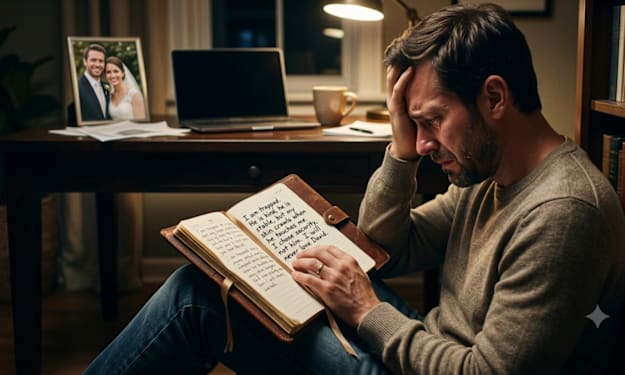
They say the truth will set you free, but they never mention the wreckage it leaves behind before that freedom arrives. For seven years, I believed I was the luckiest man alive. My wife, Elena, was everything I had ever dreamed of: brilliant, breathtakingly beautiful, and possessing a quiet elegance that made me feel like I had won life's ultimate lottery. I adored her. Every sacrifice I made—working eighty-hour weeks at the firm, missing family gatherings, putting my own dreams on hold—was done happily to build a fortress of comfort and security for her. I thought our love was a quiet, mature kind of affection. Elena was never overly expressive or prone to dramatic displays of emotion, but I rationalized it as her personality. She accepted my gifts with a polite smile, thanked me gracefully when I surprised her, and leaned into my touch with what I believed was serene contentment. I convinced myself that stability and safety were her ways of showing love. I was completely blind to the hollow space where her heart should have been. The awakening happened on an ordinary Sunday morning while Elena was out at her weekly yoga class. Our home printer had jammed, and knowing she had printed some travel itineraries earlier, I went into her home office to clear the queue. While clearing the paper feed, a stray folder caught my eye. It had slipped behind her desk drawers, buried in the dark gap against the wall. When I pulled it out, expecting old tax documents or utility receipts, I found an old, worn leather-bound journal wrapped tightly in a silk ribbon. I didn't intend to invade her privacy. But as the ribbon slipped loose, the journal fell open to a page dated just three weeks before our wedding day. The elegant, precise handwriting was unmistakably hers. The first sentence pierced through me like shards of ice: "The wedding is set for next month. My mother keeps telling me I am making the smart choice, but every time David touches my hand, my skin crawls." My breath hitched. I sat down on the floor, the cold hardwood pressing against my jeans, as my entire reality began to warp. With shaking fingers, I turned the pages, reading entry after entry spanning nearly a decade. It was a meticulous, chilling chronicle of a woman enduring a life sentence with a man she fundamentally despised, or at best, viewed as a financial utility. Elena had been deeply in love with an artist named Julian before she met me. Her family had pressured her to leave him because of his financial instability and erratic lifestyle. Brokenhearted and desperate for security, she had chosen me. Not because of who I was, but because of what I represented: a stable income, a respectable background, and a naive devotion that would ensure she was taken care of without ever having to give anything real in return. One passage, written on our third anniversary, read: "David bought me the diamond bracelet today. He looked so desperate for me to love it, so full of that clumsy, pathetic adoration that always smothers me. I played my part. I smiled, I kissed his cheek, and I pretended. It is exhausting to live with a mirror that only reflects a lie. He loves a ghost. He doesn't know me, and he never will, because I will never allow myself to love a man so utterly boring." The words bled into each other as my eyes filled with hot, angry tears. The betrayal of a physical affair is loud and sharp, but this was a quiet, suffocating execution of my entire existence. Every memory, every shared anniversary, every intimate moment we had ever experienced was reframed in an instant. I hadn't been a partner; I had been a transaction. A convenient shield against poverty, a foolish provider who mistook her tolerance for affection. When Elena returned home, carrying a paper bag of fresh pastries and humming a light tune, the dissonance between her casual demeanor and the journal in my hands was agonizing. I was sitting at the kitchen island, the book open under the bright morning light. She stopped in her tracks. The serene, polite mask she had worn for seven years didn't slip; it shattered. For a fraction of a second, I saw absolute terror in her eyes, followed quickly by something far worse: a cold, detached indifference. "You shouldn't have read that," she said quietly, her voice devoid of the warmth she usually manufactured. There were no tears from her. No desperate apologies, no frantic attempts to deny the truth. When confronted with her own written words, Elena simply confessed with a chilling, clinical honesty. She admitted she had never loved me. She liked the life I provided, she respected my kindness, but emotionally, she had remained completely detached. She had treated our marriage like a corporate contract, fulfilling her duties while harboring a deep, unspoken resentment for the man who wasn't the love of her life. Hearing her say the words out loud was the final blow. The woman I would have died for looked at me and essentially confirmed that I was nothing more than a well-paying job she had grown tired of keeping up appearances for. The divorce was swift, finalized with the same cold, administrative efficiency that had characterized her affection. She didn't fight dirty for assets; she just wanted out, as if a weight had finally been lifted from her shoulders too. It has been a year since that Sunday morning. Healing from a marriage where you discover you were never loved is a strange, disorienting journey. You don't just mourn the loss of a person; you mourn the loss of your own past, forced to re-examine every memory through a lens of deception. But beneath the profound grief, a fragile sense of peace has begun to grow. I no longer waste my energy trying to earn the affection of a shadow. I survived the ultimate lie, and for the first time in seven years, I am stepping into a reality that is entirely my own.
By Yasmine Yessou4 months ago in Humans
People Laughed at Her… But She Proved Them Wrong
People Laughed at Her… But She Proved Them Wrong Everyone in the small town knew her name, but not in a kind way. Whenever she walked through the streets, people would whisper, laugh, and point fingers. She was not rich, not popular, and not dressed like the others. To them, she was “different,” and in their eyes, being different meant being “less.” Her name was Amina. She was a quiet girl who carried dreams bigger than the place she lived in. While others spent their time judging and gossiping, Amina spent her time reading books, learning new skills, and imagining a better future. But in school, she was often ignored. Some students mocked her clothes, others laughed at her confidence, and a few even said she would never succeed in life. At first, the words hurt her deeply. She would go home and sit alone, wondering why people were so cruel. Sometimes she cried at night, questioning herself and her worth. But deep inside, there was a small voice that refused to give up. That voice told her, “You are not what they say. You are what you choose to become.” Instead of responding to hate with anger, Amina chose silence and hard work. She started focusing more on her studies. Every insult became motivation. Every laugh became fuel. While others wasted time, she studied late into the night under a small lamp. Even when she felt tired or discouraged, she reminded herself of her dream—to become someone who could change her life and help others. Years passed. The same people who once laughed at her never imagined that she was slowly building her future step by step. She earned top marks in school. Then she won a scholarship that allowed her to study in a better city. It was the first time she left her small town, and it felt like stepping into a new world. Even after leaving, she never forgot where she came from. She worked harder than ever in college. There were still challenges—difficult subjects, financial struggles, and moments of loneliness—but she never stopped. She remembered every insult, every laugh, and every doubt people had placed on her. Instead of breaking her, it made her stronger. Finally, after years of struggle, Amina achieved something no one in her old town expected. She became a successful professional, respected in her field. She built a career that brought her stability, confidence, and pride. But more importantly, she became someone who inspired others. One day, she returned to her hometown. The same streets, the same faces—but everything felt different now. People who once laughed at her now looked at her with surprise and respect. Some even tried to talk to her politely, as if they had never judged her before. But Amina was not angry. She had already forgiven them in her heart. Life had already taught her that success speaks louder than words. She didn’t return to prove them wrong out of revenge. She returned to show that no one has the right to define another person’s future. Standing in the place where she once felt small, she smiled quietly. The girl who was once laughed at had become the girl everyone now admired. And in that moment, she understood something very important: people can doubt you, reject you, or laugh at you—but they can never stop you if you refuse to give up. Her story became an example in the town. Parents told it to their children. Teachers used it as motivation. And those who once laughed at her finally learned a lesson they would never forget. Because in the end, Amina didn’t just prove them wrong—she proved herself right.
By Hafiz afridi4 months ago in Humans
10 Reasons Why Most Relationships Don't Work
Nobody gets into a relationship planning for it to fail. You genuinely care about the other person. You want it to work. And yet, somewhere along the way, things start to unravel. The same arguments keep happening. The emotional distance grows. One or both of you slowly checks out. It's a painfully common story.
By LaMarion Ziegler4 months ago in Humans