breakups
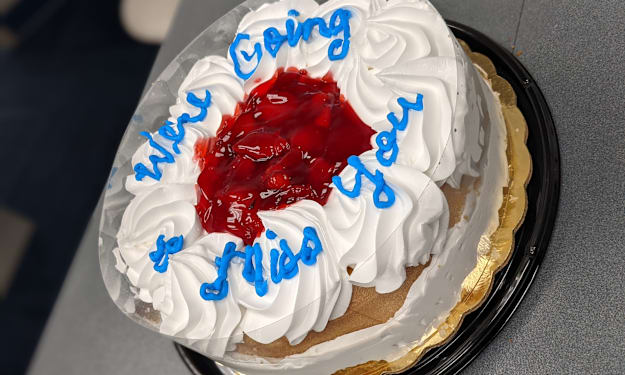
When it comes to breakups, pain is inevitable, but Humans thinks that suffering is optional.
Do You Find It Hard To Say ‘I’m Sorry’?
The chief reason people find it so agonisingly difficult to simply say "I'm sorry" comes down to a deeply ingrained kind of defence mechanism: we unconsciously treat an apology as an admission of moral failure, rather than an acknowledgment of a behavioural impact.
By Elaine Sihera about 13 hours ago in Humans
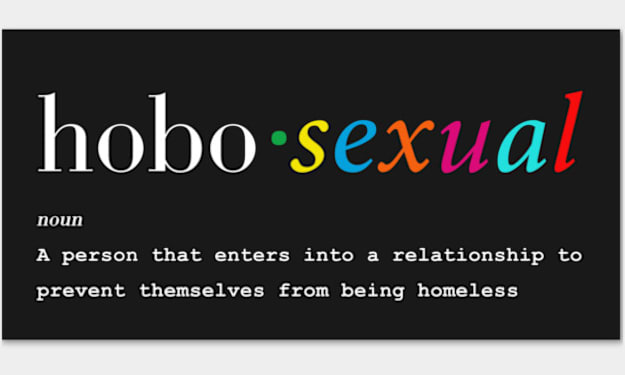
Hobosexuality
In modern dating lexicon, a distinct and pervasive archetype has emerged, colloquially dubbed the Hobosexual . While the term carries a sharp, satirical edge, the psychological reality behind it is deeply calculated. This is the person who navigates relationships not through genuine romantic desire or equal partnership, but through a strategy of charm-based survival.
By Sai Marie Johnson5 days ago in Humans
The Terms of the Threshold
There is a moment where the architecture of an interaction demands a definitive set of coordinates. For too long, the space has been allowed to drift within the low-key illumination of a dim perimeter, where a partner could safely hide behind a series of calculated pauses, intentional delays, and the clumsy protections of a superficial, artificial control. It is easy for an entity to feel sovereign when they are only commanding an empty hallway, or when their entire strategic victory relies on how long they can withhold a response to keep another soul off-balance. But that isn't mastery; it is merely the frantic preservation of a fragile, emptying equilibrium. The grid has officially changed, the vertical boundaries are drawing inward, and the horizontal enclosures no longer allow for casual retreat or lazy, half-measured games.
By Syl De'Vil8 days ago in Humans
The Retribution of the Stagnant Axis
To interfere with the structural laws of a developing current is to invite a very specific, calculated form of psychological desolation. In the architecture of human progression, there is a common delusion among small-board actors that they can permanently stall the climate of another room simply by withholding their presence, stretching out response times, or constructing elaborate silences designed to induce a perpetual freeze. They treat the emotional development of another person like a vault they can lock from the outside, using their petty manipulation tactics as a prop to sustain the illusion of an untouchable sovereignty. But the mechanics of growth do not operate on the terms of a fragile ego. When you attempt to trap a living current inside a sterile laboratory filter, you do not stop the expansion—you merely build a pressure cooker that will ultimately blow its own seams.
By Syl De'Vil8 days ago in Humans
If They Don’t Want to Be With You, That’s Closure
“There’s a trick to the ‘graceful exit.’ It begins with the vision to recognize when a job, a life stage, or a relationship is over — and let it go. It means leaving what’s over without denying its validity or its past importance to our lives. It involves a sense of future, a belief that every exit line is an entry, that we are moving up, rather than out.” ― Ellen Goodman
By Jeff Barton13 days ago in Humans
Notes from the Mind Palace
I’m not the kind of person you understand in one sitting. Most people meet me and think they’ve got me entirely figured out within the first five minutes. They see someone loud, expressive, fast-moving, a little chaotic, and a little sharp around the edges. They look at the alternative clothes, hear the heavy music, and assume that the outer shell is the whole story. They don’t realize that’s just the surface tension. It’s the glare on top of dark water. The real story runs underneath, miles below the noise, quieter, stranger, and far more deliberate than anyone outside ever gives me credit for. If you only look at the velocity on the outside, you miss the gravity on the inside.
By Syl De'Vil17 days ago in Humans
What Causes a Man’s Midlife Crisis?
There’s a popular image of a man going through a midlife crisis: he suddenly buys a sports car, changes his wardrobe, starts going out more, or decides he needs a dramatic new career. While these stereotypes can be amusing, a midlife crisis is often about something much deeper. For many men, it can be a period of questioning their identity, relationships, achievements, and the direction their life is taking.
By AnthonyBTV20 days ago in Humans