Places
June 24, 2026: Venezuela's Devastating Earthquake
June 24, 2026: Venezuela's Devastating Earthquake A Normal Day Turned Into Disaster On June 24, 2026, Venezuela experienced one of the strongest earthquakes in its recent history. What began as a normal day quickly turned into a frightening disaster as powerful shaking spread across parts of the country. Within seconds, homes, offices, schools, and businesses were affected. Many people rushed into the streets, unsure of what would happen next. The earthquake reminded everyone how suddenly nature can change lives. The Powerful Earthquake The earthquake measured more than 7 on the magnitude scale, making it a major seismic event. Reports said that two powerful shocks occurred within a very short time, increasing the fear among residents. The ground shook violently, causing buildings to sway and sending debris onto roads. In several areas, electricity and communication services were interrupted, making it difficult for families to contact one another during the first hours after the disaster. Damage Across Caracas and Nearby Areas The capital city, Caracas, and surrounding regions experienced strong shaking. Many buildings suffered damage, while some older structures partially collapsed. Cracks appeared in roads, walls, and bridges. Vehicles were trapped in traffic as frightened drivers stopped to avoid accidents. Public transportation also faced disruptions as officials inspected tracks, stations, and roads for safety before allowing normal operations to continue. Hospitals and Emergency Response Hospitals immediately activated emergency plans. Doctors, nurses, and rescue teams worked without rest to treat injured people. Ambulances moved continuously through affected neighborhoods, carrying patients to medical centers. Emergency shelters were opened for families whose homes were no longer safe. Volunteers distributed drinking water, food, blankets, and other basic supplies to those in need. Rescue Operations Rescue workers searched damaged buildings carefully, hoping to find survivors trapped beneath fallen concrete and broken walls. Heavy machinery was brought to the hardest-hit areas, while specially trained rescue dogs assisted in locating people under the rubble. Every successful rescue brought hope to worried families waiting nearby. At the same time, officials asked people to stay away from unstable buildings because aftershocks could cause additional collapses. Aftershocks Continue Aftershocks continued to shake the region during the following hours and days. Although many were smaller than the main earthquake, they created fresh concern among residents. Some people chose to sleep outdoors or in temporary shelters rather than return to damaged homes. Engineers inspected schools, hospitals, apartment buildings, and public offices to determine whether they were safe for use. Why Earthquakes Happen Earthquakes happen because enormous sections of the Earth's crust, called tectonic plates, are constantly moving. Venezuela is located in an area where these plates interact, making earthquakes a natural risk. Scientists cannot predict the exact time when an earthquake will occur, but they can study fault lines, monitor seismic activity, and improve warning systems. This knowledge helps governments prepare emergency plans and encourages communities to practice earthquake safety. Earthquake Safety Tips Experts always remind people that preparation saves lives. Families are encouraged to keep emergency kits containing water, food, flashlights, batteries, first-aid supplies, important documents, and medicines. During an earthquake, people should stay calm, protect their heads, and take cover under sturdy furniture if they are indoors. If they are outside, they should move away from buildings, trees, bridges, and power lines until the shaking stops. Economic Impact The economic impact of the disaster may continue for months. Repairing damaged roads, bridges, homes, schools, and hospitals requires significant time and financial resources. Businesses forced to close temporarily may lose income, while thousands of families could face expensive rebuilding costs. Governments, humanitarian organizations, and international partners often work together to provide emergency assistance and support long-term recovery efforts. Stories of Courage Despite the destruction, stories of courage quickly emerged. Neighbors helped rescue one another, shared food with strangers, and opened their homes to families who had nowhere to stay. Medical workers continued treating patients despite difficult conditions, while volunteers worked around the clock to deliver aid. These acts of kindness demonstrated the strength and resilience of communities facing an unexpected disaster. Looking Ahead The June 24, 2026, Venezuela earthquake serves as a powerful reminder that nature can be unpredictable. While buildings can be rebuilt and roads repaired, the safety of people remains the highest priority. Continued rescue operations, careful rebuilding, improved construction standards, and better disaster preparedness can help reduce the impact of future earthquakes. As Venezuela begins the long process of recovery, the determination and unity of its people will remain one of the country's greatest strengths.
By Hafiz afridi3 months ago in History
A New Zealand cave that has been sealed for a million years exposes frogs that have never altered and birds that have disappeared, along with a new Kākāpō progenitor close to Waitomo.
A million-year-old secret was hidden in one cave on the North Island of New Zealand. Fossils of birds from extinct species and frogs that still resembled them were found on its floor.
By Francis Dami3 months ago in History
Ten thousand years ago, humans were already dwelling high in the Pyrenees.
Altitude is typically viewed in archaeology as a variable rather than a barrier. Sites above the treeline are written off, whereas sites below it are dug. The high Pyrenees appeared to be vacant on maps during the majority of the 20th century. Animals, and sometimes humans as well, traversed this area before returning to lower land.
By Francis Dami3 months ago in History
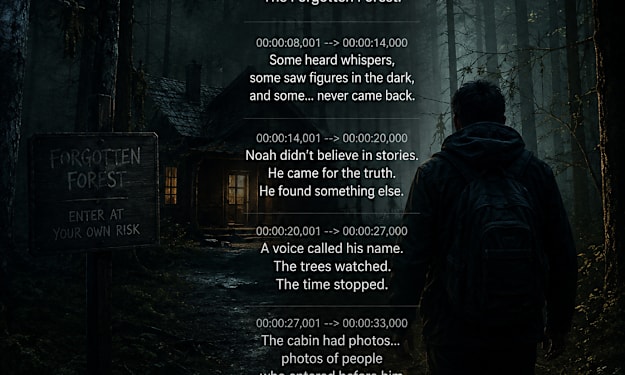
The Forgotten Forest
The Forgotten Forest The locals called it The Forgotten Forest. It stretched for miles beyond the edge of Black Hollow, a small town hidden between mountains and mist. No one knew exactly how old the forest was. The trees were enormous, their twisted branches blocking most of the sunlight even during the day.
By BrightSteps3 months ago in History
A mysterious cave collapse reveals a 300,000-year-old "advanced human time capsule"
A surprisingly well-preserved prehistoric cave discovered by archaeologists is assisting scientists in piecing together a significant period in human evolution. Stone tools, animal remains, and signs of controlled fire from between 400,000 and 250,000 years ago have been found at the site, which is close to the village of Fureidis south of Haifa.
By Francis Dami3 months ago in History
Could the US–Iran War Start Again? The Risks, Triggers, and Road Ahead
Could the US–Iran War Start Again? The Risks, Triggers, and Road Ahead The war between the United States and Iran may have entered a period of reduced military activity, but many experts believe the risk of renewed conflict has not disappeared. While ceasefire agreements and diplomatic negotiations have temporarily lowered tensions, several major disputes remain unresolved. As a result, the possibility of the war starting again continues to concern governments, military planners, and financial markets around the world.
By Wings of Time 3 months ago in History
The World's Smallest Park (And Its Very Serious Leprechaun Problem)
America has no shortage of famous parks. There is Yellowstone, where geysers erupt from the earth with explosive force; there is Yosemite, where granite cliffs tower thousands of feet into the sky; and there is the Grand Canyon, a geological masterpiece visible from space. Then, in sharp contrast, there is a tiny circle of dirt in Portland, Oregon, roughly the size of a pizza. Welcome to Mill Ends Park.
By The Iron Lighthouse3 months ago in History
Finally! US & Iran Deal Reached – Is the War Really Over?
Finally! US & Iran Deal Reached – Is the War Really Over? After months of military confrontation, diplomatic pressure, and growing fears of a wider regional conflict, the United States and Iran have announced a framework peace agreement that could mark a turning point in one of the most dangerous crises of recent years. The announcement has generated hope across the world, but many analysts caution that the path to lasting peace remains uncertain.
By Wings of Time 4 months ago in History
The Underground City of the Believers: The Community That Chose Darkness
In the frozen wilderness of Imperial Russia, where endless forests stretched beyond the horizon and winter could swallow entire villages beneath snow and silence, rumors began circulating about a community that had vanished, not moved, not fled, but vanished.
By Veil of Shadows4 months ago in History