Discoveries
Maria Tallchief: Ballet, Discipline, and an Enduring American Legacy
By Brian D'Ambrosio During the late 1940s and 1950s, Maria Tallchief was one of the central figures in the emergence of American ballet. Her technique—fast, exacting, and musically alert—fit naturally into the choreography of ballet master George Balanchine and helped define a new American standard for this classical dance.
By Brian D'Ambrosio 4 months ago in History
A New Zealand cave that has been sealed for a million years exposes frogs that have never altered and birds that have disappeared, along with a new Kākāpō progenitor close to Waitomo.
A million-year-old secret was hidden in one cave on the North Island of New Zealand. Fossils of birds from extinct species and frogs that still resembled them were found on its floor.
By Francis Dami4 months ago in History
Ten thousand years ago, humans were already dwelling high in the Pyrenees.
Altitude is typically viewed in archaeology as a variable rather than a barrier. Sites above the treeline are written off, whereas sites below it are dug. The high Pyrenees appeared to be vacant on maps during the majority of the 20th century. Animals, and sometimes humans as well, traversed this area before returning to lower land.
By Francis Dami4 months ago in History
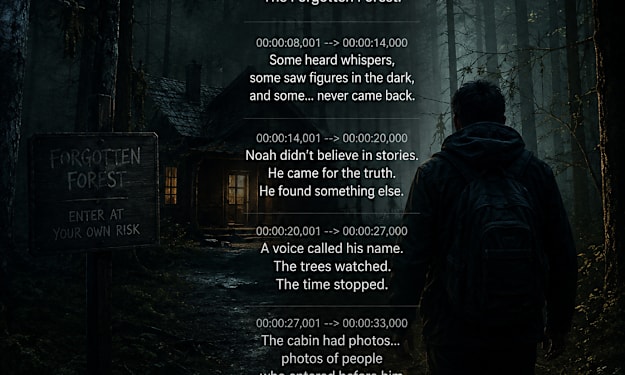
The Forgotten Forest
The Forgotten Forest The locals called it The Forgotten Forest. It stretched for miles beyond the edge of Black Hollow, a small town hidden between mountains and mist. No one knew exactly how old the forest was. The trees were enormous, their twisted branches blocking most of the sunlight even during the day.
By BrightSteps4 months ago in History
A mysterious cave collapse reveals a 300,000-year-old "advanced human time capsule"
A surprisingly well-preserved prehistoric cave discovered by archaeologists is assisting scientists in piecing together a significant period in human evolution. Stone tools, animal remains, and signs of controlled fire from between 400,000 and 250,000 years ago have been found at the site, which is close to the village of Fureidis south of Haifa.
By Francis Dami4 months ago in History
He Opened an Old Box Hidden for 50 Years and Found a Secret
For nearly fifty years, an old wooden box sat untouched in the corner of a dusty attic. It belonged to a man named Thomas, who had recently inherited his late grandfather's house. The house itself was old and filled with memories, but Thomas had never paid much attention to the things stored inside. He planned to clean the property, sell a few items, and move on with his life. One rainy afternoon, while sorting through old furniture and forgotten belongings, Thomas noticed a small wooden box hidden behind a stack of faded blankets. It was covered in dust and looked as though nobody had touched it for decades. The box was locked, but the lock was rusty and weak from age. Curious, Thomas carefully opened it. Inside, he expected to find old photographs or perhaps some forgotten family documents. Instead, he discovered several neatly folded letters tied together with a blue ribbon. Beneath them lay a black-and-white photograph of a young woman he had never seen before. The letters were dated from the early 1970s. Thomas sat down and began reading. The first letter was written by a woman named Eleanor. She wrote about her dreams, her hopes, and her deep affection for a young man named Robert. As Thomas continued reading, he realized that Robert was his grandfather. Letter after letter revealed a story that nobody in the family had ever heard. Before meeting Thomas's grandmother, Robert had fallen deeply in love with Eleanor. They planned to marry and start a life together. However, circumstances beyond their control separated them. Eleanor's family moved to another state, and communication became difficult. In those days, long-distance contact was not as easy as it is today. The letters showed that both of them tried desperately to stay connected. They wrote often, promising never to forget each other. Yet suddenly the letters stopped. Thomas searched through the stack for an explanation. Near the bottom of the box, he found one final envelope. Inside was a letter Eleanor had written but apparently never sent. In it, she explained that she had received a job offer overseas and would be leaving the country. She feared Robert would not wait for her and believed that pursuing her opportunity was the right decision, even though it broke her heart. What shocked Thomas most was what came next. Attached to the letter was a newspaper clipping. The article described a tragic car accident involving Eleanor shortly after she moved abroad. She had died at just twenty-six years old. Thomas sat silently for several minutes. His grandfather had never spoken about Eleanor. No family member had ever mentioned her name. Yet the letters made it clear that she had once been one of the most important people in his life. As Thomas continued exploring the box, he discovered a small notebook. Inside were entries written by Robert himself. The final pages revealed that he had learned about Eleanor's death months after it happened. Heartbroken, he placed all the letters and memories inside the wooden box and stored it away, unable to bear looking at them again. For fifty years, the box remained hidden. Thomas felt as though he had uncovered a forgotten chapter of his family's history. He wasn't finding treasure or money. He was discovering something far more valuable—a story of love, loss, and memories preserved through time. In the following weeks, Thomas shared the letters with his relatives. Many were surprised. Some were emotional. Others said the story helped them understand their grandfather in a way they never had before. The old box eventually became a family keepsake. Instead of returning it to storage, Thomas placed it in a special cabinet where future generations could learn about the people who came before them. Sometimes the greatest secrets are not hidden fortunes or lost artifacts. Sometimes they are the stories that people carry in their hearts and leave behind for others to find. And for nearly fifty years, one small wooden box had quietly protected a story waiting to be discovered.
By Hafiz afridi4 months ago in History
Could the US–Iran War Start Again? The Risks, Triggers, and Road Ahead
Could the US–Iran War Start Again? The Risks, Triggers, and Road Ahead The war between the United States and Iran may have entered a period of reduced military activity, but many experts believe the risk of renewed conflict has not disappeared. While ceasefire agreements and diplomatic negotiations have temporarily lowered tensions, several major disputes remain unresolved. As a result, the possibility of the war starting again continues to concern governments, military planners, and financial markets around the world.
By Wings of Time 4 months ago in History
The World's Smallest Park (And Its Very Serious Leprechaun Problem)
America has no shortage of famous parks. There is Yellowstone, where geysers erupt from the earth with explosive force; there is Yosemite, where granite cliffs tower thousands of feet into the sky; and there is the Grand Canyon, a geological masterpiece visible from space. Then, in sharp contrast, there is a tiny circle of dirt in Portland, Oregon, roughly the size of a pizza. Welcome to Mill Ends Park.
By The Iron Lighthouse4 months ago in History
Faith vs. Fury
The rivalry between Ertuğrul Bey and the Mongol commander Noyan is the central pillar of Diriliş: Ertuğrul, serving as the ultimate struggle between two opposing forces: the relentless, expansionist ambition of the Mongol Empire and the steadfast, faith-driven resilience of the Kayi tribe. Spanning multiple seasons, their conflict is far more than a physical battle of swords and tactics; it is a profound clash of ideologies, civilizations, and visions for the future of Anatolia.
By shahid khan5 months ago in History
Why America Never Leaves Israel: The Historical Roots of an Unbreakable Alliance
Why America Never Leaves Israel: A Brief History Many people wonder why the United States consistently supports Israel despite international criticism. To understand this relationship, we need to look at centuries of history involving Jews, Christians, Muslims, and the land of Palestine.
By Mohib Ullah 5 months ago in History
“Who Was Abraham Lincoln?” . AI-Generated.
The Life of Abraham Lincoln Abraham Lincoln was born on February 12, 1809, in a small wooden log cabin in Hardin County, Kentucky, United States. His family was very poor, and life in early America was extremely difficult, especially for farmers living in rural areas. His father, Thomas Lincoln, worked as a farmer and carpenter, but he earned very little money and often struggled to support the family. His mother, Nancy Hanks Lincoln, was a kind, gentle, and caring woman who deeply loved her children and tried her best to give them a peaceful home. When Abraham was still a small child, his family moved from Kentucky to Indiana in search of better living conditions and more land to farm. However, life in Indiana was not much easier. The family settled in a wild forest area where there were no proper roads, schools, or modern facilities. They had to build their own shelter using logs and live in very basic conditions. Every day life involved hard physical work such as clearing trees, farming, hunting for food, and building fences. Abraham Lincoln’s childhood was full of struggle and hardship. Education was very limited in that time and place. He attended school only for a few months in total throughout his life. However, even though formal schooling was rare for him, Abraham had a very strong desire to learn. He was naturally curious and intelligent. He loved reading books and would borrow them from neighbors whenever he got the chance. He often walked long distances just to get a book. At night, after completing hard work, he would read by candlelight or firelight. When Abraham was only nine years old, a very painful event happened in his life—his mother died. This loss deeply affected him emotionally. He missed her care and love throughout his life. Later, his father remarried a woman named Sarah Bush Johnston. She became Abraham’s stepmother and played an important role in encouraging him. She noticed his interest in reading and supported him by providing books and motivation to continue learning. As Abraham grew older, he started working different jobs to help his family survive. He worked as a farm laborer, rail-splitter (cutting wood logs for fences), boatman, store clerk, and surveyor. These jobs were physically demanding and required long hours of hard labor. Despite being busy with work, Abraham never stopped educating himself. He continued reading books and improving his knowledge in his free time. During his early adulthood, Abraham became interested in law, politics, and justice. He studied legal books on his own and slowly developed a deep understanding of how laws worked. Without attending a formal law school, he prepared himself for a legal career. In 1836, after studying and working hard, he successfully became a licensed lawyer. This was a major turning point in his life. As a lawyer, Abraham Lincoln quickly gained respect in his community. He was known for his honesty, fairness, and simple lifestyle. Unlike many other lawyers of his time, he did not try to trick people or use unfair methods. Instead, he focused on truth and justice. Because of his strong moral character, people began calling him “Honest Abe.” After becoming successful in law, Abraham Lincoln entered politics. He became a member of the Illinois State Legislature and later served in the United States Congress. During his political career, he strongly spoke against slavery. At that time, slavery was still legal in many parts of the United States, especially in the southern states. Lincoln believed that slavery was morally wrong and that all human beings should be free and equal regardless of race or background. His strong views on slavery made him both respected and criticized. Some people supported his ideas, while others strongly opposed him. However, Lincoln never changed his principles. He continued to speak for justice, equality, and human rights. In 1860, Abraham Lincoln was elected as the 16th President of the United States. This election was a historic moment, but it also created serious tension in the country. Shortly after his election, several southern states decided to leave the United States because they disagreed with his views on slavery. This led to a major national conflict known as the American Civil War in 1861. The Civil War was one of the most difficult and tragic periods in American history. It was a war between the northern states (Union) and the southern states (Confederacy). The country was deeply divided, and families were affected on both sides. Lincoln’s main responsibility as president was to preserve the unity of the United States and prevent it from breaking apart. During the war, Abraham Lincoln faced immense pressure. Thousands of soldiers were dying, and the nation was suffering. He had to make very difficult decisions that would affect the future of the country. Despite criticism and emotional stress, he remained strong and focused on his mission. One of the most important actions he took was the Emancipation Proclamation in 1863. This historic document declared that all enslaved people in the Confederate states would be freed. Although it did not immediately end slavery everywhere, it changed the purpose of the war and gave it a moral direction focused on freedom and equality. It also allowed African Americans to join the Union army and fight for their freedom. Abraham Lincoln also gave many powerful speeches during his presidency. One of his most famous speeches is the Gettysburg Address, delivered in 1863. In this short but meaningful speech, he emphasized the ideas of democracy, equality, and national unity. His words inspired millions of people and are still remembered as some of the greatest political words ever spoken. After several years of fighting, the Union finally won the Civil War in 1865. The United States remained united, and slavery began to be abolished across the country. Abraham Lincoln became a symbol of leadership, courage, and moral strength. Many people considered him a hero for saving the nation and fighting for human rights. However, just days after the war ended, tragedy struck. On April 14, 1865, Abraham Lincoln attended a play at Ford’s Theatre in Washington, D.C. During the performance, he was shot by John Wilkes Booth, a man who opposed Lincoln’s policies. Lincoln was seriously injured and taken to a nearby house, where he died the next morning on April 15, 1865. His death shocked the entire nation. People across America mourned deeply, and even his critics later recognized his greatness. Although his life ended early, his legacy continued to grow stronger over time. Today, Abraham Lincoln is remembered as one of the greatest presidents in United States history. His journey from a poor boy in a log cabin to the leader of a nation inspires millions of people around the world. His life teaches us important lessons about honesty, hard work, courage, and equality. The story of Abraham Lincoln proves that no matter how poor or difficult your beginning is, you can achieve greatness through determination, education, and strong moral values.
By Hafiz afridi5 months ago in History