Biographies
Title: The Plastic Obsession: Why Popping Bubble Wrap Is So Addictive
But let’s be completely honest with ourselves. The gadget is only the second most exciting thing in that box. Your eyes are already locked onto that clear, air-filled sheets of plastic cushioning the item. Before you even realize what you are doing, your fingers have gripped the edge of the sheet. Press, snap, pop. A wave of pure, unadulterated satisfaction washes over you. You are a grown adult with bills to pay and a career to manage, yet you are completely powerless against a piece of industrial packaging material. You cannot stop until every single bubble is dead. Why does this simple plastic invention possess such a hypnotic hold over the human mind?
By Lenka Čihařová7 days ago in History
James Wright and the Poetry He Had to Learn to Write
James Wright came from a place that could have produced an entirely different kind of poet. Born December 13, 1927, in Martins Ferry, Ohio, Wright grew up along the Ohio River in a community shaped by steel mills, factories, smoke, labor, and the hard industrial economy of the American Midwest. The landscape surrounding his childhood carried the marks of industry, yet the poetry Wright eventually became known for could seem almost impossibly delicate. His poems found beauty in abandoned places, lonely people, fields, birds, rivers, and brief moments of human recognition. The contrast became one of the defining tensions of his career. From a world marked by industrial hardship, Wright developed a poetry capable of making room for astonishing tenderness.
By Tim Carmichael9 days ago in History
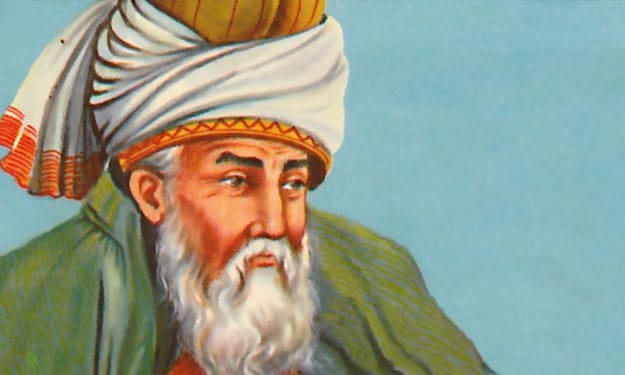
Celebrating 819 Years of the Poet Rumi
The great Poet Jalal al-Din Muhammad Rumi was born in 1207 in Balkh, a great center of learning and culture in what is now Afghanistan. His childhood unfolded during a period of upheaval that would eventually drive his family from their home and send them westward across Central Asia.
By Tim Carmichael9 days ago in History
Ornella Muti: When the Most Beautiful Eyes in the World Blindly Trusted Fraudsters
A mix of Italian temperament from her father and cold Estonian elegance from her mother gave her the face of an innocent angel and eyes that had the depth of an ocean. In 1994, readers of prestigious magazines chose her as one of the most beautiful women in the world. But while she was an unreachable goddess on the screen, in real life she was a vulnerable girl who had incredible bad luck with men, and her desire for love brought her to the absolute bottom several times.
By Lenka Čihařová13 days ago in History
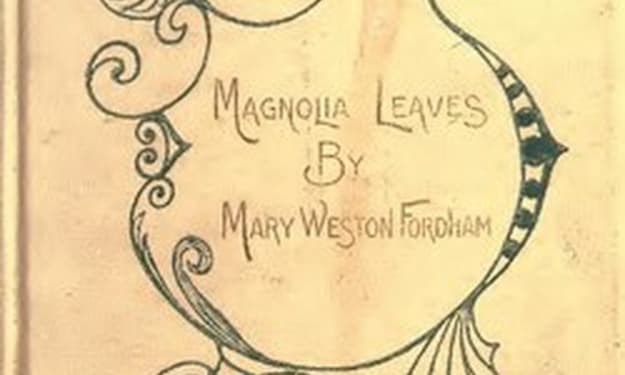
The Life and Legacy of Poet Mary Weston Fordham
I was recently at our local library when the Librarian told me about a poet I had never heard of, Mary Weston Fordham. I sat down and began reading her work on the library's computer, moving through the pages of her 1897 collection, Magnolia Leaves . I had planned to read a few poems, but I couldn't stop. One poem led me to another, and soon I was absorbed in the work of an amazing woman whose name had somehow escaped me for all these years.
By Tim Carmichael14 days ago in History
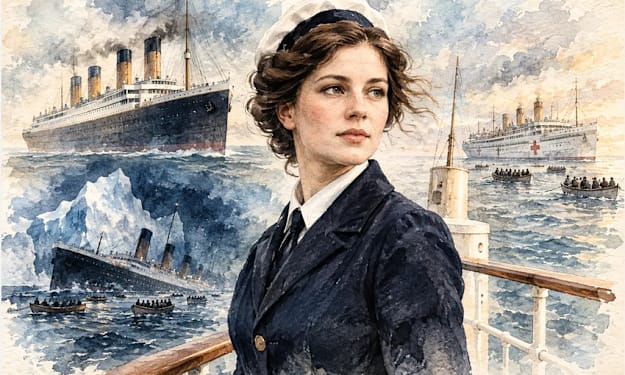
She Survived Titanic, Britannic and Olympic: The True Story of Woman Who Ocean Could Not Bury
This woman did not find herself in the freezing waters of Atlantic Ocean only once. During her life, she served on all three gigantic sister ships of the White Star Line company — on Olympic, Titanic, and Britannic. And what is most fascinating? She survived a heavy crash or sinking of every single one of them. In the history of sea travel, she gained a completely unique, even if a bit scary, status of the most resilient woman in the world.
By Lenka Čihařová15 days ago in History
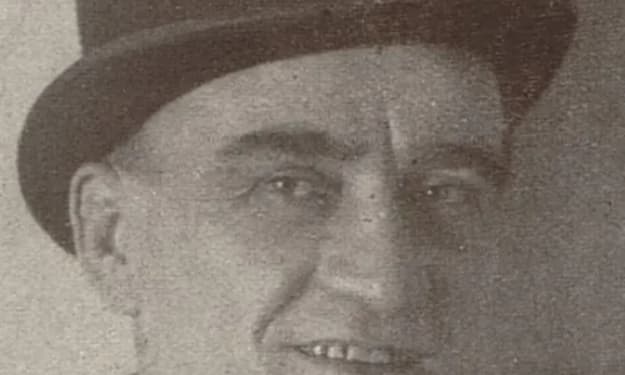
Karel Hašler Died After Being Tortured in Mauthausen. The Testimony Is Chilling — and His Name Still Lives on in Sweets
Karel Hašler was a phenomenon of his time. He wrote songs that were sung all over the country, performed on stage, appeared in films and managed to reach audiences of several generations. During his life, he composed hundreds of songs, many of which became so popular that people simply considered them part of Czech folk culture.
By Lenka Čihařová15 days ago in History
Johannes Gutenberg: The Man Who Changed the World, But Lost His Own Life
It is the restless, flickering light of a secret workshop, where a heavy smell of molten metal, thick ink, and omnipresent nervousness mixes together. Johannes Gutenberg stands over a wooden press, his hands black from soot and his mind paralyzed by fear. Every movement of his tired body is accompanied by a heavy sigh of the machine. If it does not work out today, tomorrow morning creditors will knock on the door and he will have nothing to pay his growing debts with. And if it does work… maybe he will manage to change the world in a way that none of his contemporaries can even imagine.
By Lenka Čihařová17 days ago in History