artificial intelligence
The future of artificial intelligence.
Agata Lukaszczyk and the Role of Ethics in Building Smarter Robotics. AI-Generated.
Agata Lukaszczyk is a robotics engineer specializing in autonomous systems and human–robot interaction. She designs intelligent robotic platforms using advanced sensors and machine learning. As robotics technology becomes increasingly integrated into industries and public spaces, her work reflects a growing awareness that technical advancement must be accompanied by ethical responsibility. The development of autonomous systems is creating exciting opportunities, but it is also prompting important conversations about safety, accountability, and the long-term relationship between humans and machines.
By Aga Aleszczyk6 months ago in Futurism
Kids don't trust a robot's eyes, but they do trust human eyes.
Before they can do nearly anything else, babies gaze at faces. The message somehow lands when a parent's gaze darts to a toy. Check this out—it's fascinating. One of a child's earliest social abilities is the tiny act of eye-reading. However, a recent study reveals that there is a tight restriction: the eyes must be human, not robotic.
By Francis Dami6 months ago in Futurism
The Internet Is Being Rewritten for AI Agents
Over the past two decades, the default assumption of the Internet has been clear: its service targets are humans. Humans search, click, scroll, watch, and place orders. Traffic fluctuates but is generally predictable, with system design centered on user behavior and page request logic. Today, this premise is being broken. An increasing number of AI agents are beginning to perform tasks on behalf of humans. They do not browse slowly like humans; instead, they simultaneously mobilize multiple sub-agents within seconds to query databases, retrieve documents, and call APIs, then quickly disappear. For the underlying infrastructure, this is not simply an increase in traffic volume, but a fundamental change in the form of traffic.
By Daniel Widjaja Kusuma6 months ago in Futurism
China is pursuing an asteroid that might not actually be a fragment of the Moon.
China is getting ready to gather a sample from a tiny near-Earth asteroid that many experts believe is a piece of the Moon. mThe dominant explanation links the object to a crater on the far side of the moon, where the fragment may have been blasted into space by an ancient impact. That notion is now contested by a recent study.
By Francis Dami6 months ago in Futurism
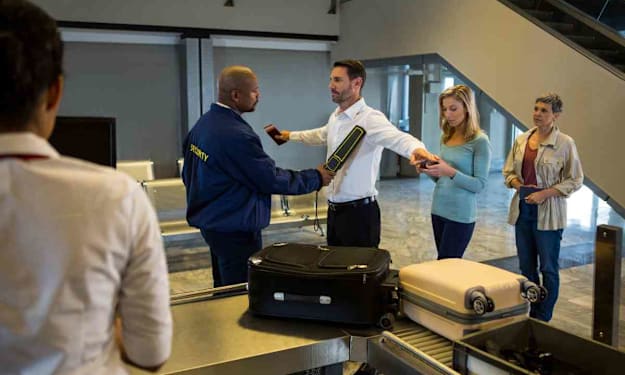
Is the Airport Security Market Finally Catching Up to Modern Threats?. AI-Generated.
Why Airports Are Spending Billions on Security — And It's Still Not Enough Every time you stand in a TSA line, shoes off and laptop out, you're participating in a system that was largely designed in the early 2000s. Yet the threats airports face today — sophisticated explosives, cyberattacks on air traffic systems, drone incursions — look nothing like what kept security planners up at night two decades ago. That mismatch is fueling one of the most significant spending surges in aviation history. The global Airport Security Market is undergoing a fundamental transformation, driven by technology adoption, geopolitical pressure, and a post-pandemic rethinking of what "safe travel" actually means.
By Kathryn J. Lemos6 months ago in Futurism
Aircraft Curtains Market: The Cabin Detail Airlines Can't Ignore. AI-Generated.
The Curtain Separating You From Business Class Is a Bigger Deal Than You Think I used to assume the curtain at the front of the economy cabin was basically an afterthought — a fabric panel chosen by whoever had five minutes to spare in an airline's procurement meeting. Then I came across sourcing specs for commercial cabin interiors. The weight tolerances, the flame-retardancy certification requirements, the thread counts engineered for a specific drape — it turns out that curtain is a highly specified product, and the global Aircraft Curtains Market generating consistent demand year after year is proof that airlines are paying serious attention to it.
By Kathryn J. Lemos6 months ago in Futurism
What's Actually Behind the Commercial Supersonic Aircraft Revival. AI-Generated.
The Mach 2 Question Nobody in Aviation Can Stop Asking The Concorde retired on November 26, 2003. A British Airways flight from JFK to Heathrow, four hours and twenty-four minutes, 100 passengers, the end of an era. In the two decades since, supersonic commercial aviation existed mostly as a nostalgia item — something older aviation journalists wrote retrospectives about and engineering students cited in thesis papers. That's changed, and the change feels different from previous false starts because actual airlines are now writing actual checks.
By Kathryn J. Lemos6 months ago in Futurism