
What's Actually Behind the Commercial Supersonic Aircraft Revival
Two decades after the Concorde's last flight, the second attempt looks structurally different.

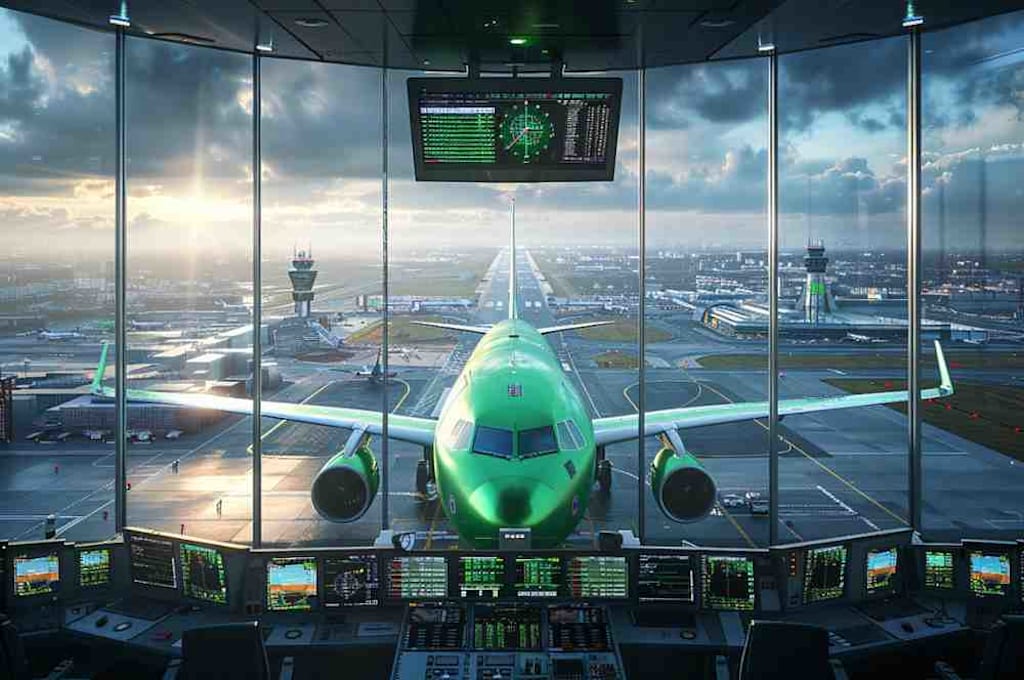
The Mach 2 Question Nobody in Aviation Can Stop Asking
The Concorde retired on November 26, 2003. A British Airways flight from JFK to Heathrow, four hours and twenty-four minutes, 100 passengers, the end of an era. In the two decades since, supersonic commercial aviation existed mostly as a nostalgia item — something older aviation journalists wrote retrospectives about and engineering students cited in thesis papers. That's changed, and the change feels different from previous false starts because actual airlines are now writing actual checks.
United Airlines committed to up to 15 aircraft from Boom Supersonic in 2021. American Airlines followed with a similar agreement. Japan's ANA is a development partner. These are not letters of intent from charter operators or vague expressions of interest — they are purchase agreements from carriers that collectively fly hundreds of millions of passengers a year and have procurement teams that model aircraft economics in exhausting detail. If those teams thought supersonic was a vanity exercise, the agreements wouldn't exist.
So what actually changed?
The honest answer is several things at once, none of them individually sufficient but together forming a credible case for the first time. Engine technology improved enough that Boom's Overture can target Mach 1.7 with fuel consumption that makes the ticket economics at least theoretically workable for premium travelers. Materials science — carbon composites, thermal barrier coatings — reduced structural weight in ways that compound the efficiency gains. And sustainable aviation fuel moved from a pilot program curiosity to something that major fuel suppliers are now contractually committing to supply at scale.
Analysts tracking the commercial supersonic aircraft market point to business travel on transatlantic trunk routes as the initial addressable segment — specifically the New York–London, Los Angeles–Tokyo, and Miami–São Paulo corridors where time savings are largest and the base of travelers willing to pay a significant premium over business class fares is most concentrated.
The regulatory picture is the variable that gets discussed least but matters most. The Concorde wasn't just expensive to operate — it was legally banned from flying over the continental United States at supersonic speeds because the sonic boom registered around 105 decibels at ground level, enough to rattle windows and terrify livestock across a wide path of territory. Every viable Concorde route was an over-water route. The network economics were strangled before the aircraft ever turned a profit.
NASA's X-59 program, currently in active flight testing out of Palmdale, California, is specifically engineered to address this. The aircraft is designed to produce a supersonic signature of around 75 PLdB — described by NASA acoustic engineers as roughly comparable to a car door closing from a distance away. The FAA is running community overflight surveys to determine whether that level of noise would generate regulatory complaints. The outcome of those surveys will determine whether overland supersonic corridors become legally flyable for the first time since 1973. That single regulatory decision probably matters more to the long-run size of the supersonic market than any engineering choice Boom or any other manufacturer makes.
There's a parallel story in the sustainability question that doesn't get resolved cleanly. Supersonic aircraft burn more fuel per seat than subsonic widebodies — that's physics, not a design failure. Boom has committed to 100% sustainable aviation fuel operations from day one of service, and the math on SAF lifecycle emissions (up to 80% lower than conventional jet fuel across the full carbon cycle) gives that commitment real environmental meaning. But SAF remains expensive and supply-constrained, and supersonic's higher burn rate means the fuel cost premium is amplified rather than offset. Airlines will be pricing supersonic fares well above current business class levels, which is either the market's natural filter or its ceiling, depending on which analysts you find more persuasive.
What's harder to dismiss than any individual argument is the quality of the institutional attention. Defense contractors, aerospace tier-1 suppliers, and sovereign wealth funds don't typically place bets on nostalgia projects. If you want to understand where the money thinks this goes, the free sample from this market report is worth the two minutes it takes to request — the demand segmentation and regional breakdowns are more granular than most public coverage captures.
The Concorde failed commercially for specific, diagnosable reasons: sonic boom restrictions, fuel economics that didn't close, too few seats, no path to fleet scale. Each of those problems has either been engineered around, regulated around, or is actively being addressed. That's not a guarantee of success. But it is a different situation than 2003, and anyone who treats the Concorde's failure as a permanent verdict on supersonic aviation is reading the wrong lesson from the evidence.
About the Creator
Enjoyed the story? Support the Creator.
Subscribe for free to receive all their stories in your feed.
Comments
There are no comments for this story
Be the first to respond and start the conversation.