artificial intelligence
The future of artificial intelligence.
We Trained AI on Everything Humans Ever Wrote. Did We Include Enough Wisdom?. AI-Generated.
Artificial intelligence has been trained on an astonishing amount of human language. Books. Essays. Websites. Arguments. Instructions. Stories. Code. Warnings. Jokes. Prayers. Sales pitches. Philosophy. Propaganda. Scientific papers. Political speeches. Poetry. Threats. Apologies. Dreams.
By Aegis Solis (Thomas Vargo)5 months ago in Futurism
Genius "Unpaid Labor": How Clicking Traffic Lights Built Today's AI Powerhouse 🌐
We all know that moment of frustration. You want to quickly buy a concert ticket 🎫, log into your bank, or download a file, when suddenly a digital wall blocks your path. Distorted, twisted letters that look like they were written by a toddler, or a grid of nine photos with the instruction: “Select all squares with crosswalks” 🚶♂️.
By Piotr Nowak5 months ago in Futurism
7 AI Tools Every Student Needs in 2026. AI-Generated.
Artificial Intelligence is no longer just a futuristic concept. In 2026, AI has become a powerful study companion for students around the world. From writing assignments and organizing notes to solving coding problems and creating presentations, AI tools are helping students learn faster and work smarter.
By Maroof Khan5 months ago in Futurism
Deskwoot vs Zendesk vs Intercom: The Real Cost of AI Help Desk Software in 2026
I opened my support tool invoice last quarter and stared at the line that read "AI add-on, $1,247." Our four agents handled the rest of the workload. The AI was doing more work than any single human on the team, and it was billed more than two of them combined.
By CEO A&S Developers5 months ago in Futurism
What Is Becoming the Real Revenue Gatekeeper for AI ?. AI-Generated.
AI adoption is no longer limited to experiments, internal demos, or isolated productivity tools. Enterprises are now evaluating AI systems for core business workflows, customer-facing products, decision support, automation, and operational efficiency. This shift has changed how AI vendors and engineering teams are assessed. A product may have strong features, impressive model performance, and a polished interface, but if it cannot pass security and compliance reviews, it may never reach production.
By Sahara Andrews5 months ago in Futurism
AI Generated Bug Reports Overwhelm Bug Bounty Programs Forcing Suspensions and Triage Changes
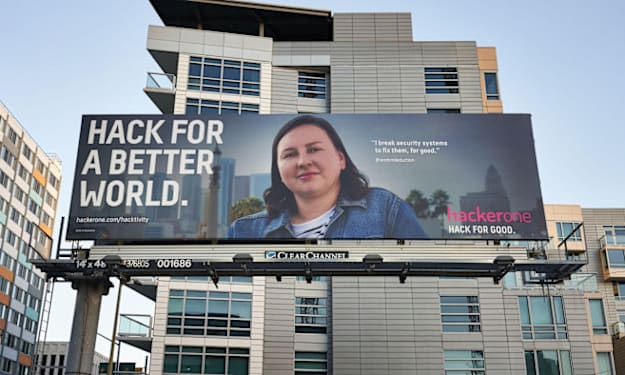
Read Time 6 minutes Tags Bug Bounty AI Security Cybersecurity AI Slop HackerOne Bugcrowd Vulnerability Disclosure AI Agents Security Economics Companies that pay hackers to find flaws in their software are being inundated with low quality reports generated by AI forcing some to suspend the programmes altogether Businesses that run bug bounty schemes have long relied on independent security researchers to spot vulnerabilities But the rise of AI tools is now overwhelming them with spurious submissions Bugcrowd whose customers include OpenAI T Mobile and Motorola said the number of reports it received more than quadrupled over a three week period in March with most proving to be false Curl a widely used tool to transfer data across the internet suspended its paid bug bounty programme in January citing an explosion in AI slop reports and lower quality submissions Cyber security experts say advances in generative AI are reshaping the economics of bug bounty programmes While the tools allow experienced researchers to find flaws more quickly they are also lowering the barrier to entry triggering a flood of automated or erroneous submissions that companies must sift through Software group Nextcloud suspended its bug bounty programme in April because of the massive increase of low quality reports It said it hoped to resume the programme once it had found a way to filter submissions effectively The surge in AI generated reports comes as Anthropic last month launched Mythos its new cyber AI model which it says can find software flaws faster than humans Companies running bounty bug programmes have started to introduce more stringent background checks to combat the problem as well as building AI agents to triage submissions HackerOne whose bug reporting platform serves Goldman Sachs Google and the US Department of Defense said it had introduced new agentic validation capabilities this year to help organisations manage high volumes of findings such as those generated by models like Mythos The company said submissions had jumped 76 percent in the year to March But it said the share of reports flagging legitimate vulnerabilities had remained steady over the past year at 25 percent HackerOne chief executive Kara Sprague said it had in recent weeks seen a rise in higher quality reports that had used AI She added that the rise in AI generated submissions was not a strong reason to say we don t want them altogether given that hackers were using the technology to spot more flaws Bugcrowd chief Dave Gerry said developments such as Anthropic s Mythos would assist human bug bounty hunters not replace them AI is going to help with a lot of things but we re never going to replace that human creativity he said How AI changes the bug bounty economics One Lower barrier to entry Open source scanners and agents can now chain together crawling fuzzing and static analysis with minimal setup Amateurs can submit reports that look plausible without understanding the underlying vulnerability This increases volume but reduces signal to noise ratio Two Automated end to end systems A third cohort described by Sophos CISO Ross McKerchar consists of experienced AI builders who run automated scanning and submission systems These systems generate thousands of reports with little human review creating absolute carnage for triage teams Three Human plus AI workflows Experienced researchers use agents to accelerate recon exploit development and report writing This raises the ceiling for legitimate findings but also contributes to the flood if results are not filtered before submission Four Model specific impact Anthropic s Mythos and OpenAI s GPT 5 5 Cyber can find flaws across operating systems and browsers When made available to defenders they improve patching speed When accessed by attackers or indiscriminate scanners they increase the volume of low quality reports Operational impact on programs One Program suspensions Curl suspended its paid bounty in January Nextcloud suspended in April Both cited time spent debunking slop and mental toll on staff as reasons The cost of triage now exceeds the value of payouts for some projects Two Triage overload Triage teams must distinguish real vulnerabilities from hallucinations misconfigurations and known issues that are out of scope The process is slow because each report requires reproduction and risk assessment Three Quality remains stable HackerOne reports that despite a 76 percent rise in submissions the share of reports flagging legitimate vulnerabilities stayed at 25 percent over the past year This suggests AI is expanding the pool but not yet changing the base rate of real bugs Four Platform response HackerOne has deployed agentic validation to pre screen findings and route likely false positives to automated checks Bugcrowd is building similar filtering before human review What changes to restore signal One Reputation and gating Require historical accuracy or identity verification before allowing high volume submissions Projects can rate limit accounts with low signal to noise ratios Two Mandatory evidence standards Require proof of exploitability with minimal false positive rate Reports without a working reproduction or clear impact should be auto rejected Three AI assisted triage Use agents to reproduce steps check against known issues and score severity before a human looks at the report This reduces burden but requires careful validation to avoid missing novel bugs Four Scope tightening Projects can narrow scope to reduce noise from generic scans Target specific components or endpoints where AI assisted research adds value Five Differential payouts Reward high quality reports with clear impact and novel technique more heavily than low effort findings This aligns incentives with signal quality Broader implications One Security posture improvement If triage improves AI assisted researchers can find more real bugs faster The net effect can be stronger software despite the noise Two Cost shift Small projects cannot absorb the triage cost They may move to private bounties or community auditing rather than public programs Three Adversarial adaptation Attackers also use agents to find zero days The arms race shifts from manual discovery to agent versus agent defense and validation Four Policy considerations If federal vetting of models is implemented as discussed in the White House AI security EO the pipeline for high capability cyber agents may face access controls This could reduce indiscriminate scanning but also slow defensive use For companies running bounties the immediate priority is to automate triage without discarding edge cases For researchers the priority is to use AI to increase depth not just volume For platforms the priority is to preserve trust by keeping the signal rate stable even as volume grows Do you think bug bounty programs should require human verification of exploitability before accepting AI assisted reports or would that exclude valuable automated findings Share your view in the comments
By Behind the Tech5 months ago in Futurism
Asimov v1 Brings Open Source Humanoid Robotics to Hobbyists at 15000 With 25 Degrees of Freedom
Read Time 6 minutes Tags Open Source Robotics Humanoid Robots Asimov DIY Robotics Raspberry Pi 5 Robotics Hardware ROS Robot Actuators Given that some of the more famous demos were by Honda and Tesla you might be forgiven for thinking you need pockets as deep as a car company to get into humanoid robotics and maybe that was true once but now Asimov v1 is here It doesn t have a positronic brain and you ll have to code in the Three Laws for yourself but at least you have the freedom to because Asimov is open source It s not exactly cheap the kit version comes with a target price of 15000 USD but they do provide the Bill of Materials on the GitHub repository so you can try and hunt down some deals Still compared to the millions poured into these sorts of robots in the early days we have to consider it accessible With 25 total degrees of freedom you ll have to source a lot of actuators but at least the onboard compute will be easy to get Rather than begging CERN for spare positrons you ll only need a Raspberry 5 and a Radaxa CM5 No word on if this robot can write a symphony though we ve seen software that can and its 5 kg personal best for squats and 18 kg single arm lat raises aren t going to impress the bros at the gym But hey at least now you have someone to shake your chair for sim gaming If you re wondering what the deal with these androids is well so were we Hardware and design choices One Degrees of freedom and actuation Asimov v1 ships with 25 DOF distributed across arms torso and legs This is enough for basic manipulation walking and object handling but not for dynamic parkour or high speed manipulation The BOM lists off the shelf servo and brushless actuators which keeps parts replaceable but increases assembly time Two Compute stack The reference design uses a Raspberry Pi 5 for high level control and a Radaxa CM5 for lower level real time tasks This split is common in robotics where Linux runs planning and vision while a real time controller handles joint control and safety loops Three Mechanical structure The frame is designed for CNC machinable parts and 3D printed covers keeping manufacturing accessible to small shops and advanced makers Wiring harnesses and power distribution are exposed for modification which aids debugging but requires careful cable management Four Power and payload The robot can squat 5 kg and perform a single arm lat raise of 18 kg These numbers are modest compared to industrial arms but reasonable for a 25 DOF platform at this price point The focus is on research and education not load bearing tasks Cost and comparison One Kit pricing at 15000 USD puts Asimov in the prosumer range It is cheaper than research platforms from SCHAFT era labs but more expensive than Unitree G1 which ships ready to use for around 13000 USD Two BOM transparency The GitHub repository includes the full bill of materials so users can source parts themselves This can lower cost if you have access to bulk pricing or existing inventory but it also shifts assembly and integration burden to the buyer Three Tradeoff versus commercial units Commercial robots like the G1 include integrated software stacks perception and basic behaviors Out of the box they walk and perform demos Asimov requires the user to develop or integrate locomotion manipulation and safety software Community reaction and concerns One Software burden Gravis commented Don t get me wrong robots are cool and all but why would anyone to buy a human sized humanoid robot Developing the software for such a beast is literally a full time job This is accurate for a from scratch stack but open source projects often split work across contributors Two Community development counterpoint Actually replied I think a big part of the appeal of an open source humanoid robot is that the work of making software for such a beast becomes divided by an entire community of developers If ROS2 packages locomotion controllers and simulation environments are shared the burden per person drops Three Security concerns mmiscool warned Just what we need A bunch of easy to hack foreign robots that are humanoid shaped and left powered on all day waiting for there owners instruction Humanoid robots with network connectivity and cameras are attractive targets If the system is always on and poorly secured it becomes a physical and data risk Four Exploit history rasz_pl linked to a Unitree exploit and noted Dude found a local privilege escalation giving you root on the thing and you complain BOM aka just parts alone is more than whole put together unit You could buy G1 replace processing unit or root it using that LOCAL exploit and save ton of money and time The point is that commercial units are not immune to security issues and rooting them may be easier than building from parts Use cases and limitations One Research and education Asimov fits universities and labs that want a modifiable platform for locomotion manipulation and human robot interaction studies The open design allows changes to kinematics sensors and control algorithms Two Hobbyist development For advanced makers it is a capstone project that combines mechanical assembly electronics and software Integration time is measured in months not days Three Not a consumer product This is not a plug and play home robot Expect to debug motor drivers tune PID loops and write safety monitors The value is in learning and customizing not in having a butler What would make it more viable One Reference software stack Shipping a baseline walking controller balance system and teleoperation interface lowers the barrier to entry Even if advanced behaviors are left to the community a working default is critical Two Safety framework Open source does not mean no safety A documented safety system with E stops torque limits and collision detection is necessary before letting the robot move near people Three Security hardening Default to network isolation disable unused services require key based SSH and document secure setup Procedures for air gapping the robot should be provided Four Modularity for upgrades If arms legs and compute can be swapped independently users can iterate faster and share improvements without redesigning the whole platform Why this matters One Democratization of hardware When a humanoid platform is open source more people can experiment with bipedal control whole body manipulation and sensor fusion This accelerates learning even if most units never leave the lab Two Cost benchmark Even if few people buy the kit the BOM sets a reference for what parts cost at low volume This pressures commercial vendors and helps labs budget projects Three Data and policy implications Open humanoids increase the number of physical agents that can move in human spaces That raises questions about safety standards privacy and regulation before the technology becomes mainstream For teams considering Asimov the decision comes down to whether you want control and transparency at the cost of time and integration effort If you need a working demo quickly a commercial unit is faster If you need to modify everything and contribute to the stack Asimov is closer to what you want Do you think open source humanoid platforms will accelerate robotics research or will security and complexity keep them in niche labs Share your view in the comments
By Behind the Tech5 months ago in Futurism
Steven Soderbergh Uses Meta AI for 10 Percent of Lennon Documentary Sparking Debate on AI in Film
Read Time 6 minutes Tags AI in Filmmaking Generative AI Steven Soderbergh John Lennon Documentary Ethics Transparency AI Ethics Meta AI CANNES France The day John Lennon was shot on Dec 8 1980 he and Yoko Ono gave an interview to a San Francisco radio crew from their home in New York s Dakota Apartments They were promoting their new album Double Fantasy but the two hour conversation was wide ranging Though the interviewers had been warned no Beatles questions Lennon and Ono were thrillingly open That day Annie Leibovitz also shot the famous portrait of a clothes less Lennon wrapped around Ono The interview is similarly naked The two particularly Lennon riff on love their relationship creativity life after the Beatles raising their toddler son writing songs in bed and much more At the age of 40 Lennon sounds like someone who has found real clarity I feel like nothing happened before today said Lennon In John Lennon The Last Interview Steven Soderbergh turns those surviving tapes into a documentary that does as much to demystify Lennon and Ono as Get Back did to the Beatles The film debuted Saturday at the Cannes Film Festival I was just so compelled by their generosity of spirit throughout the conversation Soderbergh explained in an interview Saturday in Cannes It s like the world took place in one day in this apartment Making it posed an acute problem Soderbergh was resolved to let the audio play He could find ways to visualize much of the film but that still left a large gap where the conversation grows more philosophical I worked on everything that could be solved except that for as long as I could Soderbergh says Then there was the inevitable moment of OK but really what are we going to do We just started playing and ran out of time and money That s where the Meta piece came in Soderbergh accepted an offer to use Meta s artificial intelligence software to conjure surreal imagery for those sections which make up about 10 percent of the film When Soderbergh let the news out earlier this year it prompted an uproar One of America s leading filmmakers was using AI In a film about a Beatle no less The AI parts overwhelmingly slammed by critics in Cannes are fairly banal and don t differ greatly from special effects there are no deepfakes of Lennon But they put Soderberg at the forefront of an industrywide debate about the uses of AI in moviemaking It s a conversation the director who has made movies on iPhones is eager to have AP At a time when AI in film is under much debate you ve been very forthright about your use of it here Why SODERBERGH Transparency is so important in the world outside of the creative context we re not aware of the extent that this is being used and used to manipulate us We don t know because they re not telling We find out after by accident by some whistle blower I m like my own whistle blower This is what he s doing AP Did you expect such a strong response SODERBERGH I knew what was coming I take it very seriously and I understand why people have an emotional response to this subject As I ve said before I feel like I owe people the best version of whatever art I m trying to make and total transparency about how I m doing it But yeah you don t say yes to Meta offering you these tools and offering to finish the film and not know you re going to come in for some heat That was part of the deal AP Some fear generative AI will tear apart the film industry You don t see it as a bogeyman though SODERBERGH I think most jobs that matter when you re making a movie cannot be performed by this tech and never will be performed by this tech As it becomes possible for anybody to create something that meets a certain standard of technical perfection then imperfection becomes more valuable and more interesting We haven t seen yet someone with a certain amount of creative credibility go full metal AI on something and see how people react I think it s necessary How do you know where the line is until somebody crosses it I don t think what I m doing crosses it Some people may disagree I don t know where my line is yet I m waiting to see AP What kind of prompts did you give the program to create the animations SODERBERGH Circles of light that come out of nowhere things like that A black rose that turns into a Busby Berkeley thing and then a red rose I wasn t very articulate to the people I was working with It was hard to describe the things I wanted to see The good part about this technology was at least ability to have something in front of me quickly that I could respond to AP Did your experience give you any kind of framework that you think this technology should be limited to SODERBERGH I ve determined my rule is It has to be necessary Is it the only way to accomplish what I want to see Is it truly the best way to do it That s the real question You re going to see a lot of people doing stuff with AI that fail those two challenges AP There s the ethical debate but also an aesthetic one This is otherwise a naked human dialogue SODERBERGH I needed a way to follow them in flight visually or I m not doing my job It s hard to judge how long it will take us to find homeostasis with this technology I think we will Just looking at this technology in the movie making business each department has or will have a very different relationship with it I ll have a different relationship than a writer than an actor than the costume designer the production designer the sound effects people Each creative person is going to have their own prism and be affected by it in different ways Our inherent desire to have a simple template for how this is to be approached is part of the problem I don t think that s possible I don t think there s a one size fits all AP Regardless the conversation in the film is deeply inspiring SODERBERGH Especially his burning desire to destroy the male rock star myth at a time when that was not the mood anyone else was in That s inspiring What I hope young people who see it get out of it is This guy told the truth about everything from the jump right up through the last day of his life He just was built that way And he was constructive He was very opinionated but also very thoughtful and all in the aid of Can we do this better Can we do a better version of human beings on this planet Why this matters for the industry One Transparency as a stance Soderbergh is disclosing AI use upfront rather than hiding it This contrasts with how many productions use AI tools quietly for de aging cleanup and background generation His argument is that audiences deserve to know when AI shapes what they see Two Scope and role of AI In this case AI handles abstract visual accompaniment for audio where no footage exists It does not replace actors replace performances or generate dialogue The distinction matters for labor and consent debates Three Aesthetic function versus cost cutting Soderbergh frames the use as necessary for visual storytelling not as a way to reduce crew or budget He argues that if AI cannot meet a necessity test it should not be used Four Industry signal High profile directors experimenting publicly set norms Younger filmmakers watch how Cannes and critics react to determine what is acceptable in festivals and distribution Limits and risks One Creative credibility gap Critics at Cannes called the AI segments banal suggesting that the technology did not add artistic value Using AI without clear intent risks breaking audience trust Two Precedent for deeper use Soderbergh says he does not know where his line is yet This openness signals that future projects could push further into generative video voice synthesis or performance augmentation Three Labor concerns Even limited use raises questions for visual effects animators and designers about where work will be displaced The argument that AI cannot do most jobs that matter will be tested as models improve Four Meta partnership optics Accepting tools and finishing from Meta creates perception of corporate influence in creative choices That amplifies backlash regardless of how minimal the AI role is What filmmakers are likely to take away One Define necessity before experimenting Write down what problem AI solves and whether alternatives exist If the answer is no alternatives then document that decision Two Keep AI in service of human performance Avoid deepfakes of living people and avoid generating new dialogue for historical figures without explicit consent and context Three Separate process from product Let audiences see the method through credits making of features and direct statements Soderbergh s whistle blower framing is an example Four Expect category specific norms Cinematographers editors sound designers and writers will each develop different relationships with AI A single industry rule will not hold The broader debate One AI as tool versus author The film community is split between viewing AI as another tool like color grading and viewing it as a shift that undermines authorship Soderbergh lands closer to tool but acknowledges the line is unclear Two Value of imperfection As technical perfection becomes trivial human flaws and choices may become the differentiator This could shift taste toward work that shows human decision making even if it is messier Three Consent and estate issues Using AI for historical figures is less legally fraught than for living actors but still raises questions about legacy and representation The Lennon estate s cooperation likely reduced risk here For audiences the question is whether disclosure changes reception If viewers know 10 percent of visuals are AI generated does it alter how they engage with the dialogue If the answer is yes then transparency is not just ethical it is essential for trust Do you think filmmakers should disclose all AI use in credits or does that overstate the role of minor visual effects Share your view in the comments
By Behind the Tech5 months ago in Futurism
White House AI Security Lead Faces Doubts Over Expertise as Advanced Models Raise Cyber Risk
Read Time 6 minutes Tags AI Security National Cyber Director AI Policy Cybersecurity AI Governance Anthropic Claude Mythos AI Risk Federal Response Officials within the Trump administration are worried that National Cyber Director Sean Cairncross is not equipped to lead the White House s response to rapidly advancing artificial intelligence models with potentially dangerous hacking capabilities Four current US officials and five industry representatives who spoke to POLITICO said they fear Cairncross isn t moving with sufficient urgency and lacks the expertise to lead on such a technically complex and emergent national security issue And more broadly JP Morgan Chase CEO Jamie Dimon has relayed to Treasury Secretary Scott Bessent his concerns about the speed of the government s response to major potential risks to critical infrastructure posed by new forms of AI and the need for coordination with the private sector according to two of the current US officials and two industry representatives with knowledge of the exchange These people like others in this report were granted anonymity to discuss sensitive policy deliberations and share details of private conversations Cairncross has convened a flurry of calls and in person meetings with corporate executives security experts and administration officials over the past month about AI security concerns and potential executive action to manage the rollout of new AI models which have reached a level of coding proficiency surpassing all but the most skilled human minds Cairncross previously met with Bessent White House chief of staff Susie Wiles and Anthropic CEO Dario Amodei at the White House to discuss advancing innovation and ensuring safety in scaling up these AI models responsibly These conversations were prompted by an announcement from Anthropic last month that its newest AI model Claude Mythos could find security flaws in every major operating system and web browser and that similar technology could become widely available in the next six to 18 months Advanced tools like Mythos could help cyber defenders patch security gaps found in their systems more quickly than ever before But the technology could also greatly increase the speed and scale at which adversaries could launch cyberattacks if it fell into the wrong hands With this model upending literally everything we re doing you don t want someone who doesn t know what they re doing at the helm of that said the first current US official Cairncross and the ONCD they said are a little bit over their head In a statement White House Spokesperson Liz Huston defended Cairncross s performance Sean Cairncross is doing excellent work to protect the American people and our nation s critical infrastructure from cyber threats working closely with senior administration officials and American companies to advance shared objectives and priorities including addressing cybersecurity challenges posed by the rapid scaling of artificial intelligence while continuing President Trump s commitment to ensuring American technological dominance she wrote Spokespeople for the ONCD did not respond to a request for comment The White House is considering a raft of executive actions around AI security which may include requiring tech companies to submit their advanced artificial intelligence models for federal vetting before releasing them to the public So far Anthropic has limited access to Mythos granting it only to a small group of trusted researchers and companies OpenAI has similarly confined testing of its advanced AI model GPT 5 5 Cyber to a small group of cyber defenders Government agencies both in the US and abroad congressional committees global banks and regulators are now clamoring for access to these models so they can secure key networks before adversaries such as China access equivalent hacking capabilities and use them to amplify their attacks In a statement JP Morgan Chase spokesperson Trish Wexler said that the bank appreciates the leadership of the Administration and the White House on this complex evolving issue and their continued engagement with critical infrastructure A spokesperson for Treasury declined to comment Accessing Mythos has been complicated by an ongoing dispute between the Pentagon and Anthropic following the AI company s attempt to limit the use of its software for mass surveillance or autonomous weapons The Defense Department declared Anthropic a risk to the country s national security supply chain in response an unprecedented legal maneuver that is now being challenged in court Cairncross is leading coordination among the White House government agencies industry groups and tech companies to inform these policies despite having little past experience with cybersecurity He was given the assignment because he is trusted by Trump and Wiles and is seen as a skilled political operator according to the second US officials and two former national security officials with knowledge of the dynamic Before being confirmed by the Senate as the national cyber director in August 2025 Cairncross served as the chief operating officer of the Republican National Committee in 2016 and 2024 In between he worked as a senior adviser to Trump s first chief of staff Reince Priebus and headed the Millennium Challenge Corp a federal foreign assistance agency While those who spoke to POLITICO acknowledge that what Cairncross has set out to do is no small task they worry the White House is falling behind at a moment when federal agencies and private companies are anxious for clear federal guidance as these AI tools continue to improve Industry has not received this thing well government counterparts haven t I think he s wasted an awful lot of time on this said the second current US official Cairncross cuts a markedly different profile from the previous Senate confirmed officials who have held the role of national cyber director a position Congress established in early 2021 to centralize the federal government s digital policymaking apparatus His predecessors Chris Inglis and Harry Coker Jr spent decades working on digital security in the US intelligence community before assuming the post under President Joe Biden Both supporters and critics say Cairncross is smart and personable and has established himself as the go to voice on cyber policy in the White House a key asset that sets him apart from his more experienced predecessors The Trump administration came to office touting a hands off approach to AI to avoid stifling the development of these tools But the rapid development of Mythos so alarmed the Trump administration that they opted for a quick course correction with Cairncross at the helm Cairncross had spent much of his first year in the administration getting up to speed on cyber priorities and preparing the White House s National Cyber Strategy a four page policy document that called for more aggressive responses to foreign cyberattacks But frustration with Cairncross has simmered over the last month as he spearheaded the administration s outreach to industry and led its efforts to draft an executive order that could give the federal government more oversight of powerful new AI models Ahead of some in person meetings at the White House Cairncross s office sent out a list of questions that some private sector recipients felt lacked clarity and understanding of AI and federal cyber policy One question simply asked What is the most effective role for the government Cairncross gave a short introduction at some of those meetings and then left turning the proceedings over to his chief of staff Lara Smith said two industry representatives with knowledge of the meeting Smith worked with Cairncross at the White House and Millennium Challenge Corporation and like him does not have a background in tech or cyber policy He s done the same in some interagency calls with other senior Trump officials about next steps on the AI security EO frustrating participants who feel Cairncross s presence could speed up the discussions two of the current US officials said The three US officials said Cairncross s office also tried to fast track the AI executive order before several agencies were comfortable with its language Elements of the draft raised privacy or legal issues that other agencies found impractical the officials added According to these three officials the first draft order met so much resistance in the interagency that it was effectively torn up Additional drafts have since been in circulation said two of the current US officials They are just flinging things at the wall until someone gets someone else senior enough to freak out with the West Wing and have it changed said the second US official Members of Congress are also growing impatient with progress on the AI executive order On Thursday a bipartisan group of more than 30 House members urged Cairncross to take action to address the likely influx of AI powered cyber threats targeting US networks Several of those who spoke with POLITICO acknowledged Cairncross is in a tough spot because of cuts to the cyber workforce elsewhere in the administration Typically DHS and the Cybersecurity and Infrastructure Security Agency would play a central role in AI cybersecurity particularly in shoring up defenses across US critical infrastructure But the agency has not had a Senate confirmed leader since Trump assumed office and its workforce has been cut down by the Trump administration over the past year and a half Trump also made significant cuts to his National Security Council staff last year Only a handful of those remaining focus on cyber policy and they do not appear to have been active in formulating the EO according to one of the US officials and the two former national security officials Two additional former national security officials confirmed the dynamic Cairncross s own management decisions have exacerbated the problem several who spoke to POLITICO argued Whereas Biden staffed his ONCD with nearly 100 people Cairncross has surrounded himself with a team of roughly three dozen people according to one of the US officials and two of the former national security officials Of those employees only a small cohort works on policy they added A White House official granted anonymity to discuss internal staffing decisions said the administration is making the federal government more efficient to better serve the American taxpayer Cairncross just doesn t have a staff surrounding him who can help him execute these things professionally said the second US official Do you think the White House should appoint a technical expert to lead AI security policy or is political trust more important for coordinating a response Share your view in the comments
By Behind the Tech5 months ago in Futurism
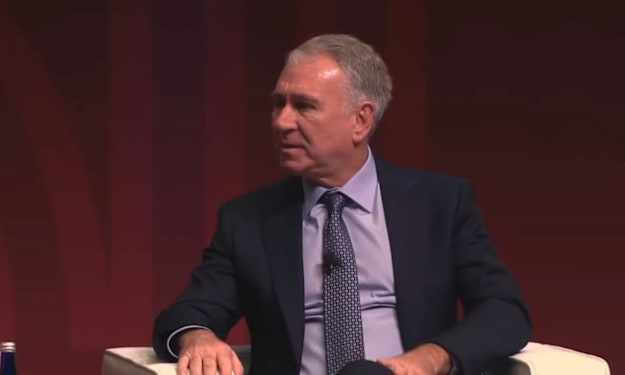
Citadel CEO Ken Griffin Says Agentic AI Now Automates Work That Took Finance PhDs Weeks
Read Time 6 minutes Tags AI in Finance Agentic AI Automation High Skilled Labor Hedge Funds Citadel Ken Griffin Future of Work AI Productivity NEW YORK Citadel founder and CEO Ken Griffin described a dramatic recent leap in artificial intelligence capabilities saying agentic AI systems are now performing work once requiring teams of finance professionals with master s and doctoral degrees in a fraction of the time In remarks at the Stanford Leadership Forum Griffin said there has been a step change in the productivity of AI tools over the last few months making them profoundly more powerful than they were just nine months earlier And for us at Citadel that has allowed us to unleash a much broader array of use cases for AI Griffin said It has been really interesting to watch to be blunt work that we would usually do with people with masters and PhDs in finance over the course of weeks or months being done by AI agents over the course of hours or days These are not mid tier white collar jobs he added These are like extraordinarily high skilled jobs being I m going to pick a word automated by agentic AI Griffin said the rapid progress left him unsettled I gotta tell you I went home one Friday actually fairly depressed by this because you could just see how this was going to have such a dramatic impact on society he said When you witness it in your own four walls when you see work that used to be man years of work being done in days or weeks it s like wow The comments mark a notable shift in tone for Griffin who earlier this year cautioned that much of the broader AI investment boom is driven by hype needed to justify massive spending on data centers and infrastructure Citadel which manages about 66 billion is among the world s largest hedge funds Griffin s observations echo growing reports from finance and technology leaders about accelerating AI adoption in analytical and research roles that traditionally demanded advanced human expertise Industry observers have noted similar transformations with some predicting significant changes to white collar workflows in the coming years Griffin s account highlights tangible productivity gains already visible inside one of the industry s most sophisticated trading operations What changed in the last nine months One Agent architectures moved from single turn Q and A to multi step planning and tool use Agents can now break a research task into sub tasks call APIs pull data run statistical tests and iterate based on intermediate results This mirrors how a junior analyst would work but at higher speed Two Context windows and retrieval improved dramatically Models can hold and reason over entire earnings transcripts regulatory filings and proprietary datasets without losing track This reduces the manual data wrangling that consumed analyst time Three Reliability on structured tasks rose even as hallucination risk remains For quant research valuation models and scenario analysis the outputs are now good enough to be useful with human review Citadel s use case suggests the review burden is lower than before Four Cost per task dropped sharply Inference costs have fallen while model capability rose This changes the economics of applying AI to tasks that were previously uneconomical to automate Which finance tasks are being compressed One Equity and credit research Summarizing filings modeling scenarios and building comparable sets can be done by agents in hours instead of weeks Human analysts still set hypotheses and validate assumptions but the legwork is automated Two Risk and portfolio analysis Running stress tests across portfolios updating exposures and simulating market regimes is faster when agents orchestrate models and data pipelines Three Due diligence and deal analysis Agents can ingest thousands of pages of contracts transcripts and market data to flag risks and extract key terms reducing the time for initial screening Four Regulatory and compliance monitoring Monitoring rule changes mapping them to positions and drafting disclosure language is increasingly automated though legal sign off remains required What this means for high skilled labor One Job composition not just job count The work does not disappear but it shifts from manual data assembly and first draft analysis to hypothesis generation model validation and decision making The skill premium moves to judgment and domain expertise Two Faster iteration cycles Teams can test more strategies in the same time window This raises the pace of competition and raises the bar for what counts as valuable human input Three Talent leverage changes A single analyst with good agents can do the work of a small team This concentrates output among those who know how to direct and verify AI systems Four Training pipeline pressure Traditional paths that relied on years of manual grunt work to build intuition are disrupted Firms need new ways to train junior staff when that grunt work is automated Why Griffin sounded depressed One Scale of disruption When you see man years of work collapse into days the implication for headcount and career paths is immediate Even in high margin hedge funds the headcount model changes Two Uncertainty about distribution If productivity gains accrue primarily to capital owners and a small set of AI operators the social contract around high skilled professional work weakens This echoes broader debates about AI wealth concentration Three Pace exceeds adaptation The capability jump came faster than firms can retrain people or redesign workflows That creates friction and anxiety even inside firms that are adopting the tech Limitations and guardrails One Hallucination and data quality risk Agents can still invent plausible but false details In finance a single wrong number can cause material loss Human verification remains essential Two Model opacity and auditability Regulators and risk teams require explainability for decisions that affect client money Black box outputs are not acceptable without traceable reasoning chains Three Data access and security Using proprietary data with external models requires strict controls Citadel likely runs agents on private infrastructure to manage this risk Four Legal and compliance liability Responsibility for a bad trade or a flawed disclosure still sits with the firm and the licensed individual AI does not change regulatory liability What this signals for the broader market One Acceleration in white collar automation Finance is a leading indicator because data is structured and outcomes are measurable If it is happening at Citadel it will spread to asset management investment banking and corporate finance Two Competitive pressure Firms that integrate agents well gain an edge in speed and cost Those that do not risk being outpaced on research and execution Three Demand for AI fluent professionals The most valuable skill is knowing how to frame problems for agents verify outputs and integrate results into decisions This is different from traditional quant or analyst training Four Infrastructure demand The compute and data pipelines needed to run agents at scale are large This reinforces the datacenter buildout debate and the political friction seen in Wisconsin and other states For professionals in finance the immediate step is to learn agent orchestration data validation and AI risk management The winners will be those who use agents to multiply their judgment not those who try to compete with agents on raw calculation Do you think high skilled finance roles will shrink in headcount or transform into higher leverage positions with fewer people doing more with AI Share your view in the comments
By Behind the Tech5 months ago in Futurism