
Kids don't trust a robot's eyes, but they do trust human eyes.
A signal that vanishes

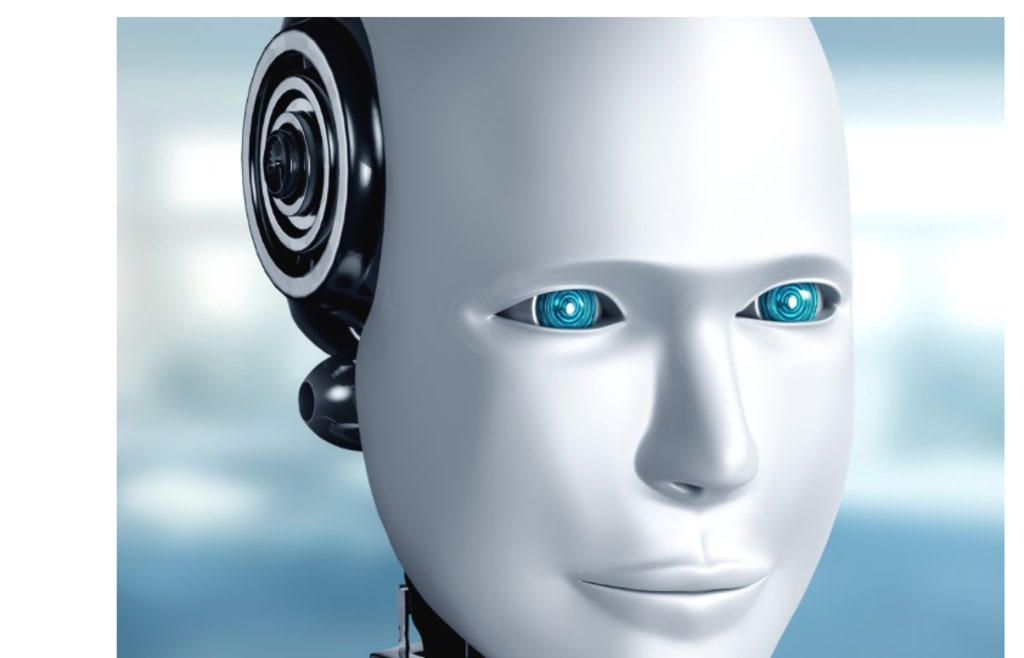
Before they can do nearly anything else, babies gaze at faces. The message somehow lands when a parent's gaze darts to a toy. Check this out—it's fascinating. One of a child's earliest social abilities is the tiny act of eye-reading. However, a recent study reveals that there is a tight restriction: the eyes must be human, not robotic.
Youngsters understand human intent.
Researchers showed brief recordings of two distinct "watchers" examining an object to Italian children ages three to five. One was an individual. The other was a humanoid robot with movable eyes and a face.
It was easy to set up. When a youngster saw two things next to each other, they saw the robot or the person pivot and focus on only one of them. The children were then asked what their favourite object was.
Children immediately recognised it as a hint when someone did the searching. There was meaning in the glance. They assumed that whatever drew the person's attention was their favourite. Even when the robot's eyes were aimed at the same item in the same direction, it received no such credit.
A signal that vanishes
Together with partners in Italy and Japan, Antonella Marchetti, the head of the psychology department at the Catholic University of the Sacred Heart (Università Cattolica) in Milan, oversaw the project.
Her group expanded on a previous study on infants that demonstrated that while one-year-olds followed a robot's head turn, they did not use it to learn about items in the same way that they did with a human.
Marchetti's team questioned if youngsters who were older and more talkative might bridge that gap. They didn't. Children saw the robot's gaze as meaningless movement even at the age of five. Turning one's gaze to a toy was perceived as a mechanical occurrence rather than a sign of desire.
Perceiving thoughts rather than faces
The ability to recognise that other individuals have ideas, feelings, and desires of their own is known as theory of mind, and it is the skill being tested here. A four-year-old can know that you desire the cookie you're staring at because of this.
This was the robot's shortcoming. Youngsters were paying attention to where it appeared. They were able to follow the movements with ease. What they failed to do was presume that there was a mind behind that action, desiring anything.
There seems to be an implicit guarantee of intent in a person's gaze. Children seemed to infer that someone who wants, likes, and chooses is behind those eyes. The robot's gaze remained vacant, a pointer with nothing pointing back, because it carried no such presumption.
Youngsters cling to their preferences
Another outcome emerged, and it was equally applicable to both viewers. The robot and the person were unable to alter the children's preferences. Kids were better able to comprehend the tastes of others when they observed someone appreciating a toy. They didn't desire the toy as a result.
Gaze was not a persuasive instrument; rather, it was a reading tool. "She likes the red one" could be interpreted by a toddler without making them want the red one as well. Wanting and understanding remained distinct.
That division is a subtle discovery in and of itself. We frequently believe that attention is contagious and that we become envious of something when we witness someone else. That draw just didn't exist in these young kids, at least not at first impression.
Why it matters to designers
The lesson is clear for anyone creating robots to comfort or educate kids. A machine cannot be made socially credible by giving it expressive eyes. Marchetti contended that a robot cannot truly communicate with a child by mimicking a single human signal, such as glance.
She contends that more complete interaction—words, gestures, back-and-forth reactions, and the feeling of a shared moment—is what works instead. A robot that merely imitates appearance lacks the meaning that comes with appearance. It must be accompanied by presence.
As embodied AI enters homes and classrooms, weight accumulates there. Children interpret various robots differently, according to an increasing amount of research, and the design decisions aren't purely aesthetic. They determine if a child witnesses a
What follows
It was unclear up until now if older preschoolers, with their more developed social skills, would be able to read a machine's mind in the same manner that they do individuals. They don't, at least not from sight alone, according to this study. A person must be behind the eyes.
This discovery has practical applications, particularly in therapy. In order to help youngsters with autism spectrum condition practise shared attention and eye contact—skills that can be extremely challenging to develop—robots are being explored.
Designers may create interventions that truly fit the way young minds function by knowing precisely how a youngster reads—or fails to read—a robot's gaze. A robot-based program to assist youngsters with autism in practicing mimicry is one such initiative that is scheduled to start in the middle of 2026. It focuses on the issues raised by this research regarding what can and cannot be said by a robot's gaze.
About the Creator
Enjoyed the story? Support the Creator.
Subscribe for free to receive all their stories in your feed.
Comments
There are no comments for this story
Be the first to respond and start the conversation.