
Is the Airport Security Market Finally Catching Up to Modern Threats?
From AI-powered scanners to biometric gates, the industry is spending big — and the data reveals exactly where.

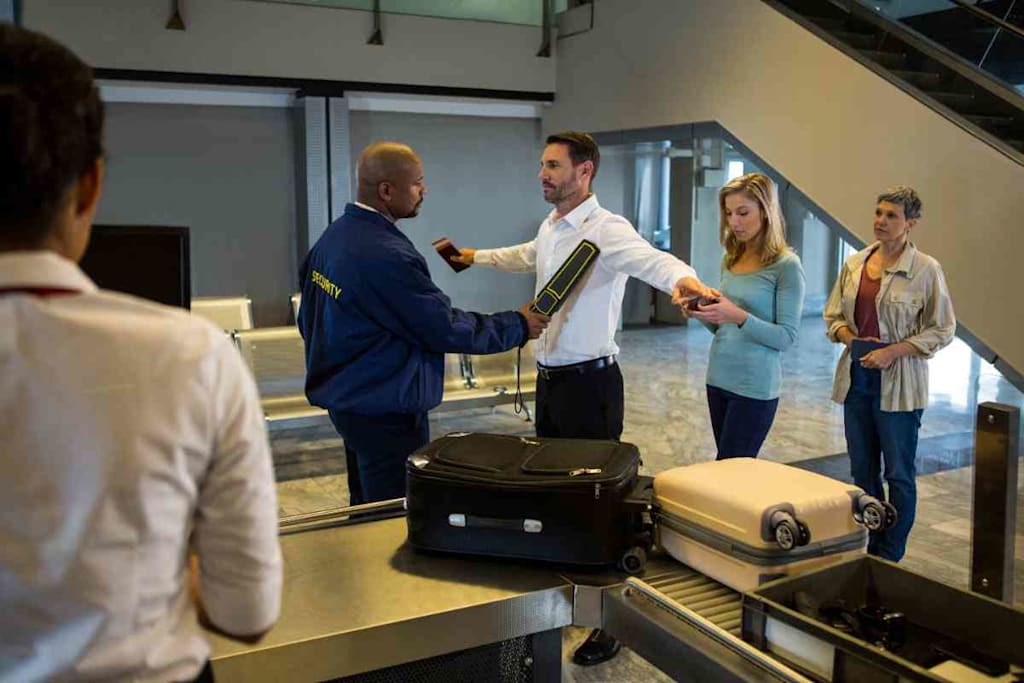
Why Airports Are Spending Billions on Security — And It's Still Not Enough
Every time you stand in a TSA line, shoes off and laptop out, you're participating in a system that was largely designed in the early 2000s. Yet the threats airports face today — sophisticated explosives, cyberattacks on air traffic systems, drone incursions — look nothing like what kept security planners up at night two decades ago. That mismatch is fueling one of the most significant spending surges in aviation history. The global Airport Security Market is undergoing a fundamental transformation, driven by technology adoption, geopolitical pressure, and a post-pandemic rethinking of what "safe travel" actually means.
Want the numbers behind this shift? Claim your free industry sample and see the full dataset before anyone else.
The Scale of the Problem Is Bigger Than Most Travelers Realize
Global air passenger traffic is projected to exceed 7.8 billion trips annually by 2040, according to IATA forecasts. More passengers mean more entry points, more baggage, more surface area for bad actors to exploit. Airports in emerging markets — particularly across Southeast Asia, the Middle East, and Sub-Saharan Africa — are expanding rapidly without always having mature security infrastructure to match.
Consider what happened at Brussels Airport in 2016: two coordinated explosions in the departure hall exposed critical gaps in perimeter-to-gate security integration. That single event triggered a review of security protocols across dozens of European airports and accelerated procurement timelines for integrated threat-detection systems. The lesson wasn't lost on governments or procurement agencies.
Technology Is Reshaping What "Security" Looks Like at the Gate
The era of the X-ray conveyor belt and a human squinting at a screen is giving way to something far more sophisticated. AI-assisted threat detection systems can now analyze thousands of CT scan images per hour with accuracy rates that outperform human screeners in controlled trials. Facial recognition gates — already deployed at major hubs in Dubai, Singapore, and Amsterdam's Schiphol — reduce both processing time and the reliance on document inspection alone.
Explosive Trace Detection (ETD) devices, body scanners with automatic threat recognition, and drone-countermeasure systems are all seeing accelerated deployment. These aren't incremental upgrades — they represent a categorical shift in how airports conceptualize their security perimeter. Research into the Airport Security Market size shows the sector is on track for consistent double-digit growth as airports globally modernize aging infrastructure and meet new regulatory mandates.
Who's Driving Demand — and Who's Writing the Checks
Government mandates remain the single largest driver of airport security spending. Post-9/11 frameworks in North America and the EU created a baseline of compliance that all airports must meet. But what's changed recently is the private sector's increasing role.
Airport operators, airlines, and ground handling companies are investing in security not just to comply, but to compete. Faster, smoother security experiences become a differentiator — especially for business travelers and frequent flyers who choose hubs partly based on how painless the process is. This commercial pressure is pushing adoption of seamless biometric corridors, where a traveler's face becomes their boarding pass from curb to gate.
Meanwhile, defense contractors and cybersecurity firms are converging on the airport vertical in ways they hadn't before. The digitization of airport operations — IoT sensors, networked cameras, cloud-based access control — has opened new vulnerabilities that physical security alone can't address.
What the Next Five Years Will Likely Look Like
The convergence of physical and cyber security is perhaps the defining trend of the next phase. Airports will increasingly deploy unified security operations centers (SOCs) that monitor everything from perimeter cameras to network traffic anomalies in real time. Predictive analytics, fed by passenger behavior data and threat intelligence feeds, will give security teams earlier warning windows than reactive systems ever could.
Interoperability will matter enormously. A scanner that talks only to its own software is a liability in a networked environment. Vendors who can offer integrated platforms — rather than point solutions — are positioned to capture an outsized share of this market.
The airports that get this right won't just be safer. They'll move passengers faster, reduce operational overhead, and become the model others are mandated to follow. For investors, operators, and policymakers tracking this space, the next wave of spending is already in motion — and understanding its shape is half the battle.
About the Creator
Enjoyed the story? Support the Creator.
Subscribe for free to receive all their stories in your feed.
Comments
There are no comments for this story
Be the first to respond and start the conversation.