
Stinckbug meal!
"do you think this meal is real?"


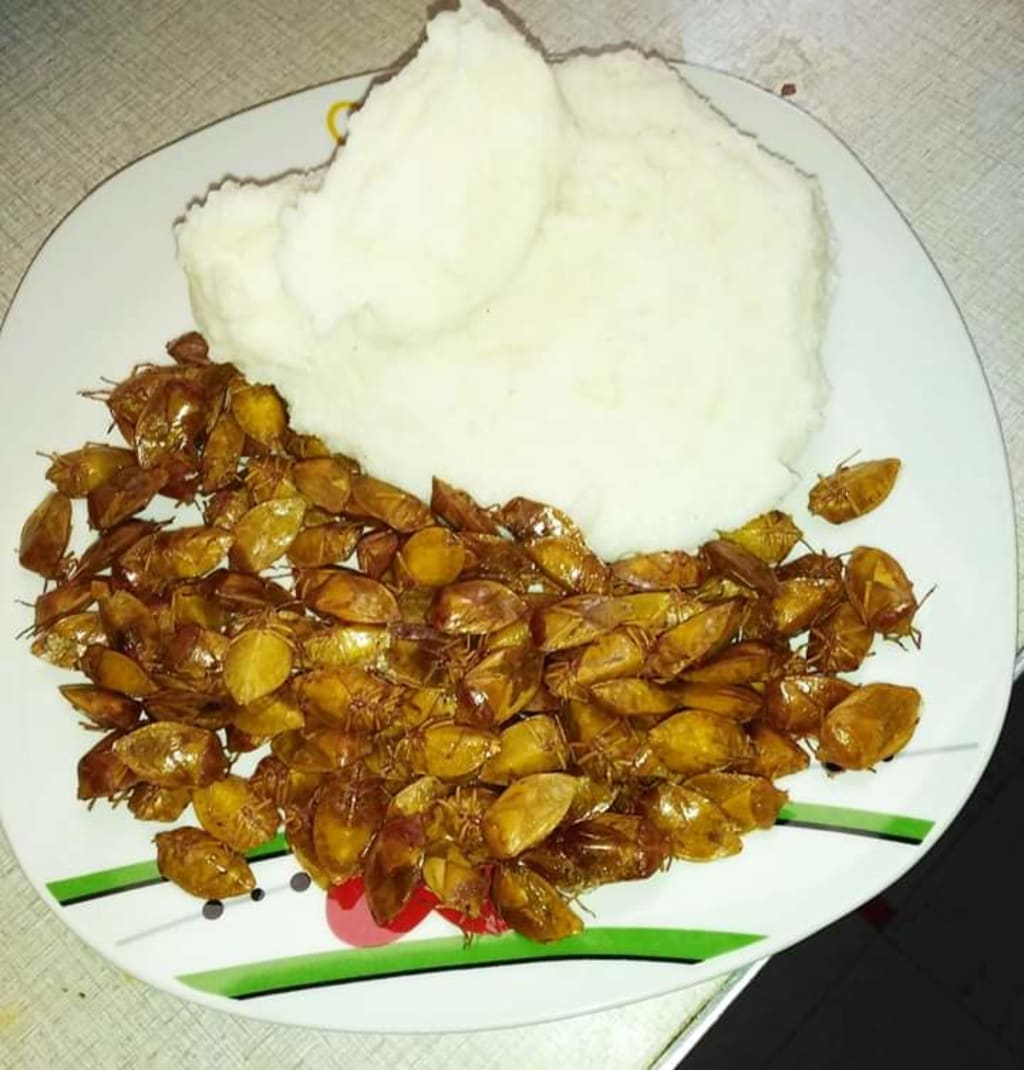
For years, South Africans, Malawians, and Zimbabweans have consumed stinkbugs. In South Africa, they are a delicacy for the Limpopo Venda and the Mpumalanga people.
They contain significant amounts of protein, vitamins, and microelements. Their palatability is dependent on the successful elimination of bitter-tasting and smelly defensive molecules. After harvesting, live stinkbugs are segregated from dead ones.
The heads of the deceased are removed, and the defensive chemicals are forced out through the orifice. The live ones are placed in warm water and agitated.
After being boiled for a few minutes, they are sun-dried. The dried ones can be cooked with some salt. Some people eat them dry as snacks. They also have a rising economic worth for harvesters who sell them.
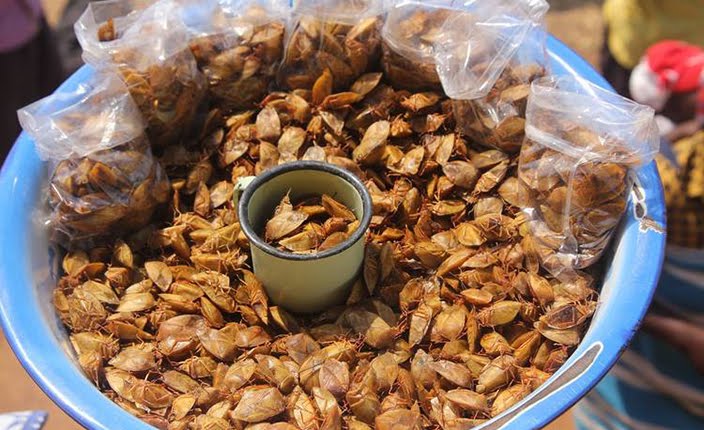
A cup of roasted stinkbugs is sold from R10.00 on average and R25.00 this year (2024) in Thohoyandou. (South Africa) stinkbugs also serve for metabolism, as a starter, and to treat drunkenness.
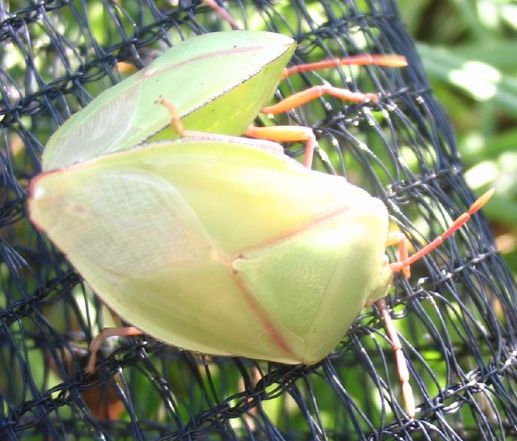
How to identify delicious stinkbugs if you come across them in the forest.
Best stinkbugs are light green-yellow shield-shaped bugs with lateral folded bodies that average 25 mm in length. Their heads are small and triangular, with two brown lustrous complex eyes and five segments antennas each. They have firm forewing bases and flexible tips, divided by a triangular scutellum. Nymphs have crimson skin and no wings.
How they get around?
They are strong fliers who gather in specific places throughout the dry season. Swarms are said to migrate to mountainous and valley locations, according to villagers. During the night and in cold weather, they remain immobile in big clumps, making them vulnerable to harvest.
Where they are mainly eaten. Countries, or places to find them cooked.
These creatures' range extends from southern Africa to the Democratic Republic of the Congo. South Africa, Botswana, Swaziland, Malawi, Mozambique, and Namibia have a large population of tropical/subtropical forests and bushveld. South African groups have been found in the areas surrounding Thohoyandou, Ga-Modjadji, and Bushbuckridge.
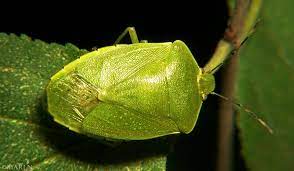
Where they live.
During the dry season, they assemble at greater altitudes than during the rainy season, often in sunny treetop sites in tropical bushveld and open forests. The wet season distribution is more extensive and linked to the abundance of edible plants.
What they eat.
They devour plants, such as Combretum imberbe, Combretum molle, Peltophorum, africanum, and Dodonaea.
Stinkbugs' reproductive cycle.
Reproduction is sexual. The process of mating occurs from mid-October until late November. Ten days after pregnancy, hard-shelled eggs are placed and adhered to the grass stems and twigs of feeding plants, and they hatch 18 days later. Hatchlings are little, wingless nymphs that mimic adults except for their color. Nymphs go through four phases known as instars, during which they molt, change color, and develop wings to resemble adults.
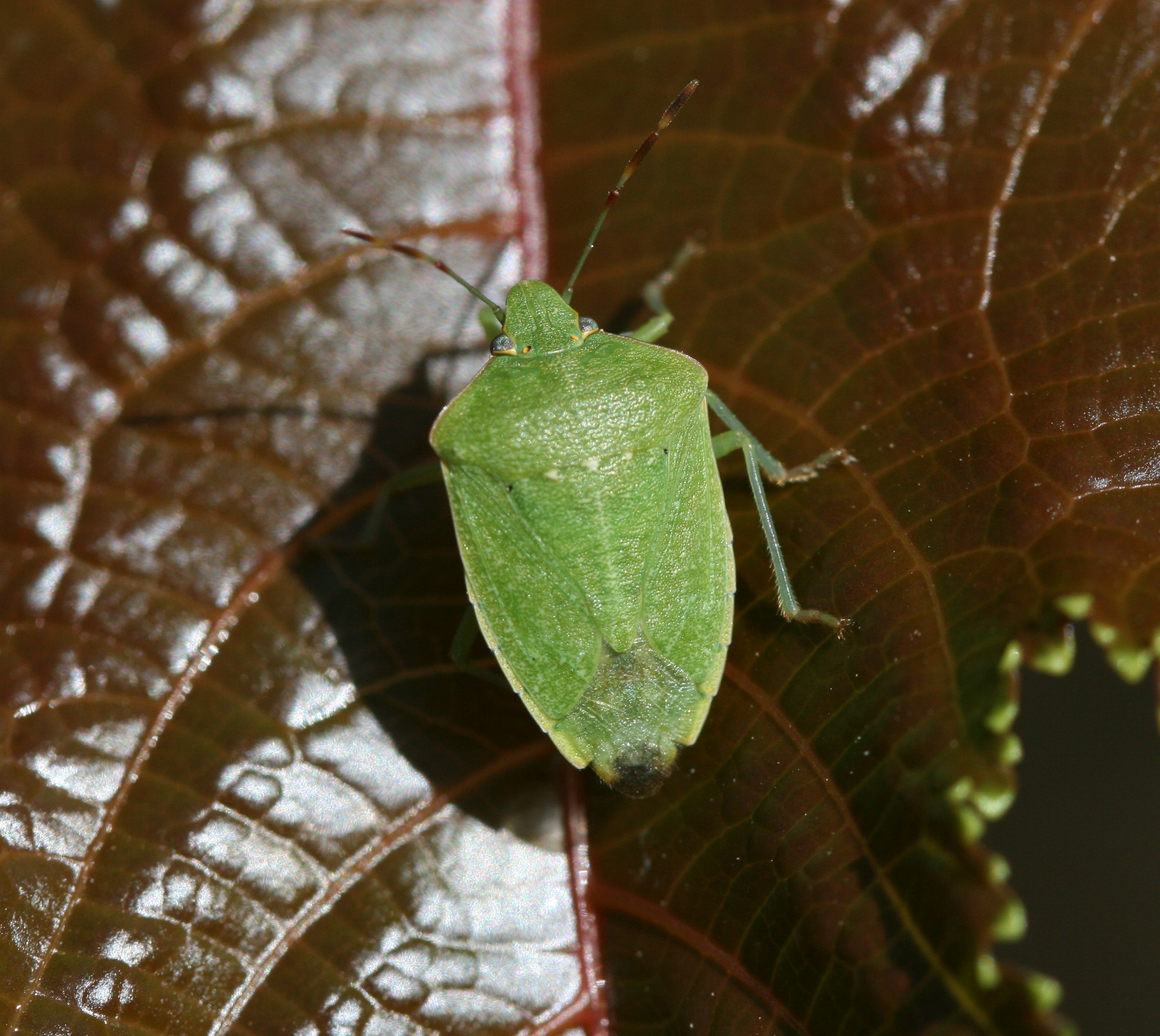
Humans are the most significant enemy of the stinkbug, as they are extensively harvested for food. Monkeys, birds, and ants feast on them as well. Aside from predators, they endure habitat deterioration caused by land use and the cutting of food plants.
Their survival strategies:
During the winter, the majority of stinkbug food plants lose their leaves. As a result, these bugs have fewer food sources available. To deal with these problems, they create wax to protect their bodies in the winter and go into diapause, during which they avoid feeding and only drink drops of water. To fight predators, the species uses a chemical defense system.
It produces toxins that leave hands yellow or orange and emit an unpleasant odor. Chemicals can potentially cause temporary blindness if they come into contact with the eyes. To strengthen their defenses against predators, they congregate in treetops and mix their defense compounds. Aggregation behavior also aids in body temperature regulation during the winter and improves mating possibilities during the mating season.
Comments
There are no comments for this story
Be the first to respond and start the conversation.