
How to Write About a Winery for a Fiction Story
Best practices for writing about charming settings
Incorporating Wine into a Story
Wineries and vineyards make for incredible settings for stories. The setting is rich with visuals, scents, tastes, and sounds. To really capture the beauty of a winery in story form, you'll need to do some research. Rely on experts like sommeliers, archaeologists, and academics. When you write, you never want to assume. You want your writing to have authority; you can do that by having a strong knowledge base supported by research.
Wineries have a variety of styles. There are different techniques, soils, grapes, flavors, blends, climates, and terms. A winery in Canada will have a different feel to it than one in South Africa.
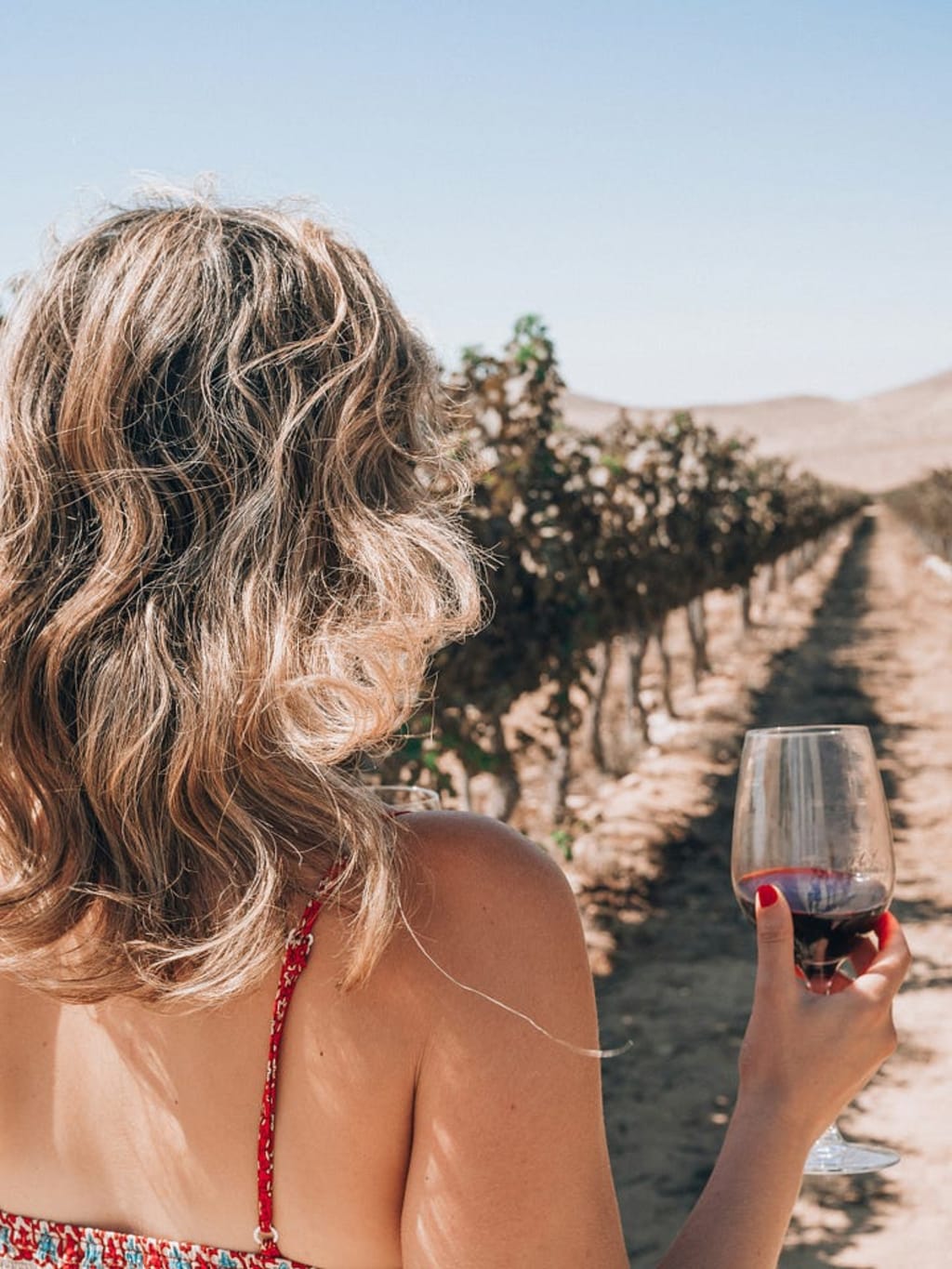
Wine comes up a lot in stories. The alcoholic beverage is offered at weddings, private events, and religious services. It's often paired with cheese and crackers, but of course, coming up with a more complicated spread is the work of a good host. If you want to write a compelling story featuring wine, then you need to know some of the lore around it.
In this guide, I'll give you a rundown of what you can do to elevate your story. I'll try to help you get an idea of what things people will look for when you write about wine and where you can find free resources.
Story Elements
First, let's do a quick roundup of some of the most important elements in a story. This is to help you get in the right frame of mind and to inspire ideas.
Setting: It's the playground for your characters. The setting, in a way, is an extension of your characters. Consider the following:
- A room is indicative of the type of person who owns it.
- You would expect someone with a lot of money to have a different home than someone who doesn't have a lot of money.
- The setting gives us a sense of space and time.
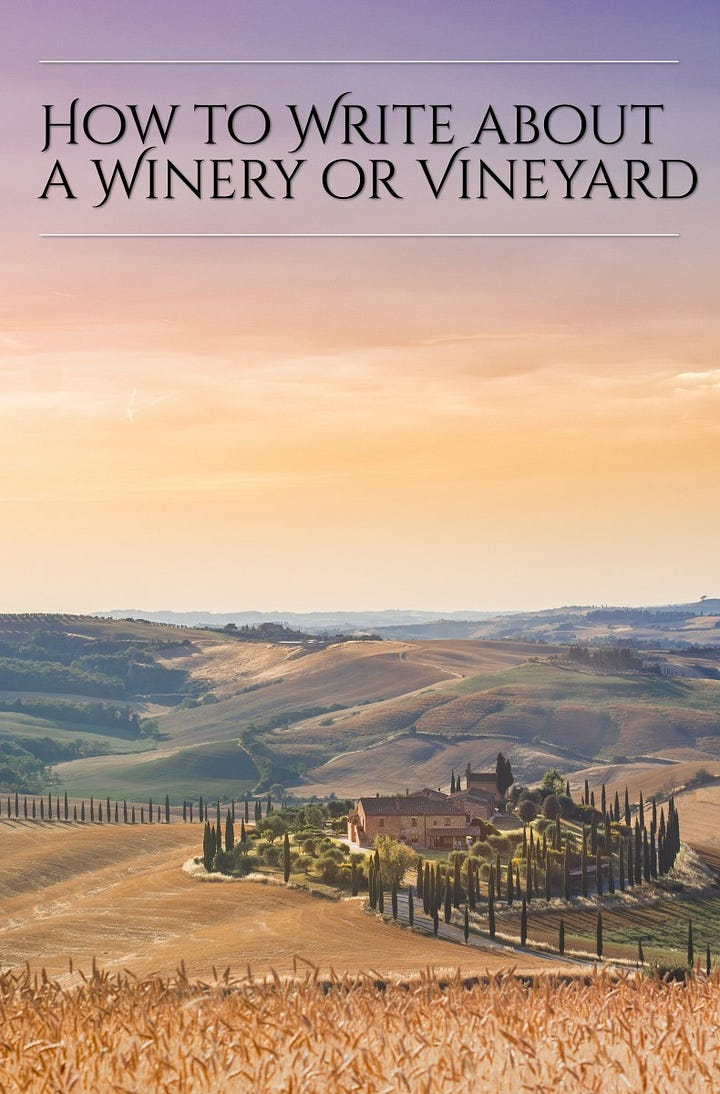
- When it comes to wineries, people have expectations about what will be there: gorgeous landscapes, historic buildings, impressive chateaus, plenty of sunshine, and strong scents of soil and crops.
If you're planning to write about a winery or vineyard, I would encourage you to make your writing descriptive:
- What does the soil feel like?
- What does the wine smell like?
- What memories come up when you drink the wine?
- What is the weather like at the destination?
- Pretend you're a sommelier. What notes does the wine have?
Characters have a particular set of options and manners related to their setting. You would expect characters to act differently at a gas station than at a wedding.
Wineries are often romantic locations; they're fantasy spaces away from urban sprawl, and they connect people back to their roots. Wineries often bring in rich snobs. You'd also expect to see retired couples, dedicated workers, proud vineyard owners, women on bachelorette parties, and outdoor enthusiasts who look for any excuse to get in touch with nature.
When creating characters or a story around wineries, the following questions might help you craft intriguing characters:
- What's the character's motivation for working at the winery?
- What are some of the challenging parts of working at a vineyard?
- What kind of clothes do your characters wear, and what does it say about them?
- Is it a family-run winery? If so, how do the different family members feel about the place? Does it offer consistent income for all of them?
- Do the characters want to stick to tried-and-true winemaking methods, or are they trying to reinvent the wheel?
Symbols: Wine has been used as a symbol for millennia. It's a symbol of Dionysus and partying. It's a symbol of Christ's resurrection and sacrifice. It's a symbol of plight and hope for migrant workers in The Grapes of Wrath. Wine has ancient roots, which makes it easy to develop a folklore about it.
Here are some ways wine can be used as a symbol in literature:
- Prestigious wines could symbolize the aristocracy in a historical narrative about the French Revolution.
- A hard-to-come-by wine could be a symbol of otherworldliness in a fantasy epic.
- A white wine brimming with sweet flowers and citrus could be a symbol for youth.
Themes: Wine can be used for various themes, from depicting wealth inequality to the beauty and possibilities in metamorphosis. Here are some possible themes to consider:
- The hard work of humans to cultivate wine contrasts with the simultaneous convenience and overuse of tech in urban centers.
- Where wine is abundant, hubris follows. The extent of one's collection is in relation to their downfall.
- Where wine brings people together, bonds are strengthened and made consistent. Wine encourages inclusion among like-minded people, but creates exclusion for those who don't want to partake. A tale of who is in and who is out.
Brief Winery History
Evidence of wine dates all the way back to 7000 BCE in China. Humans have been sipping wine since the Neolithic Era, a time when most of the world lived in Palaeolithic hunter-gatherer communities.
Wine is deeply interconnected with human progress. The earliest known evidence of winemaking on a large scale was found in the Middle East.
Oldest Known Wineries
Here is a quick look at some of the oldest known wineries:
- Areni region, Armenia: Wine press in a cave. Discovered in 2011. Dates back 6,000 years.
- Zagros Mountains, Iran: Jars found with a chemical marker of wine. Dates back 7,000 years.
- Kvemo, Kartli, Georgia: Wine-making equipment discovered. Dates back 8,000 years.
- Tbilisi, Georgia: Remnants of a wine-making facility discovered in 2017. Dates back 8,000 years
Quick Overview
How do we get wine? Winemakers work to ferment grapes and other fruit. The fruit is blended and aged with juice. Grapes are brought in from vineyards owned by the winery or outsourced from other locations.
I encourage writers to go to wineries and vineyards to get a firsthand look at these places. There are wine experts here; they can help you get a more accurate understanding of the industry. They'll likely be enthusiastic to talk with you. Wineries are known for tours and tastings.
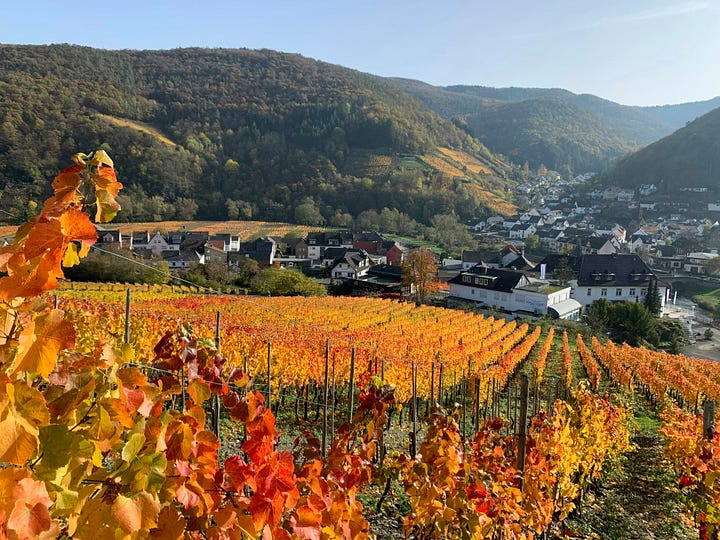
Some wineries have fancy architecture to lure people to them. They have mansions, rustic buildings, barns, cellar doors, and tasting rooms. I encourage writers to consider what their winery/vineyard looks like for their story and what makes it special.
Consider writing about design features that will catch people's attention: giant marble statues, hidden passages, baroque fountains, hanging vines, and expensive wines in pristine display cases.
Wineries can be found nearly everywhere. Some of the most popular ones are:
- Napa Valley, California
- Sonoma Valley, California
- Barossa Valley, Australia
- Bordeaux, France
- Burgundy, France
Grapes aren't the only fruit that can be turned into wine. Quite a few things can be transformed into wine: honey, dandelions, pears, pineapples, persimmons, blackberries, peaches, apples, and strawberries, to name a few.
Types of Wineries
Farm Winery: Farms produce wine and sell it on location. These operate on a small scale. The winery often helps farmers who might be struggling to survive.
Micro-Winery: Located at a small farm vineyard or a wine producer sets up a location and gets their grapes from outside suppliers. It's similar to a microbrewery. Small batches are generally made for locals. The micro-winery usually has a wide range of wines since it isn't limited to its own fruits.
Urban Winery: A winemaking facility inside a city rather than out in the country. Grapes are grown in a remote location, transported, and then crushed at the urban facility. Urban wineries often draw people in with restaurants and venues for bands or other live performances.
Tools to Research Wines
There are multiple tools you can use to learn about wines, vineyards, and the like. Here are my recommendations:
- Visit Wineries: Walk around and get a feel for the place. While you're there, write down descriptions of the area. Look for hidden trails. Go to tasting rooms. Let your mind wander.
- Find Books: Your local library likely has books on wines and wineries. If you're going to write about a popular winery, there is likely a book on it.
- Listen to Podcasts: There are podcasts you can use as background noise as you write. Search "wine" or the name of the winery wherever you listen to podcasts.
- Look for YouTube Videos: There are travel videos all over YouTube. You'll find hundreds of Napa Valley videos where people sample wines, discuss them, and teach you about the finer things in life.
- Sample Wines: Order wines from the area you're doing research. Try them out for yourself. Host a wine-tasting party. Have people write notes about how the wines tasted. Notes with descriptive language will be helpful when you write.
- Subscribe to Wine Magazines: Bon Appétit, Food & Wine, The World of Fine Wine … there are an endless number of subscriptions you could use to build your knowledge. Sometimes libraries have copies of these!
- Watch Wine Documentaries: Dozens of wine documentaries have been created. You can find them on Netflix, Hulu, Amazon Prime, and YouTube. It's a good idea to listen to sommeliers and get a sense of their language and personalities.
- Study Pictures and Art: There are some incredible artworks out there of wine. You could look at paintings from the Dutch Golden Age for inspiration.
- Look to Ancient History: Tie-ins to older texts can help ground your story. Wine has been around for about as long as human memory. Essentially, when you study history, you study wine - it's all hooked up. Wineries dating back thousands of years still exist today.
- Study Myths About Wine: Look for stories about wine deities, curses, and prophecies. You want to write a compelling story, so if you can find a local legend about a ghost haunting a winery, you should definitely use that.
- Join a Wine Club: Get around wine enthusiasts. Observe how they interact with each other. Get a sense of their likes and dislikes.
Research Your Location
You can't expect a winery in Australia to be the same as one in Italy. You should do some research about the land. You want to paint a picture in words; your description should give the reader an idea of what it's like to travel to this place.
What should you keep in mind? The history of the wine, the type of soil where it's grown, and the rivers and valleys that support its development. You also want to know how it's served, how it's stored, and the rituals associated with it. You want to know the details of the wine, like the back of your hand.
I often use Walla Walla, Washington, as an example for my writing guides. I find it makes it easy to keep going back to the same place for my readers. I also intend to write a novel about Walla Walla.
So what makes the Walla Walla Valley special? It's a hidden gem in the United States. I would bet if you asked people to name one wine hot spot in the US, they'd probably say Napa Valley, not Walla Walla.
You need to know the size and scale of your wine valley. Walla Walla Valley AVA is included within the larger Columbia Valley AVA, which goes through central and southern Washington and a small section of Oregon. Columbia Valley AVA is the largest wine region in Washington. It includes more than 11 million acres. Fifty thousand of those acres are vineyards.
Walla Walla Valley AVA has the second-highest concentration of vineyards/wineries in the state. There are about 140 wineries.
For writers, you should have guide notes about your winery/vineyard of interest. Consider these notes like a character profile. This can help you to understand the setting's quirks and how to write about it accurately for your story.
Here are some important things to consider for a winery. I filled out the details for Walla Walla Valley AVA:
- Climate Region: Continental/Mediterranean
- Growing Season: 190–220 days
- Soil Conditions: Loess soil, unstratified, calcareous silt
- Grapes Produced: Barbera, Cabernet Franc, Carmenere, Chardonnay, Counoise, Gewurztraminer, Malbec, Merlot, Petit Verdot, Sangiovese, Syrah, and several others.
- Wine Produced: Grape, Dessert, Sparkling, Meritage
What makes your winery special? There are a few things that make Walla Walla a star in the wine community. It will likely be a big player in the industry in the future. The Walla Walla Valley has large areas of wind-deposited loess, and this makes for excellent drainage for wines.
The area doesn't receive a lot of rainfall and relies on irrigation. The 200-day-long growing season has hot days and cool nights. Cold air comes down from the Blue Mountains and gets trapped in the Snake and Columbia River valleys.
What is the history of the place? Walla Walla Valley became a leader in wine in Washington when the town was founded as a trading post in the 1840s. French fur trappers settled outside the city and planted grapes. The first nursery of grapevines came from Champoeg, Oregon.
The Idaho gold rush of 1860 helped Walla Walla turn into a trade center. When the gold rush ended, the state switched its focus to the Western side. Seattle was the state's main hub from then on.
The first Walla Walla wine industry ran into major setbacks. The Northern Pacific Railway built a route from Spokane to Seattle, cutting Walla Walla off from the state's hotbed of economic growth. Then, in 1883, frost destroyed several grapevines, forcing farmers to abandon their crops. Worse yet, the Prohibition Era. The wine region essentially died at that point.
The area didn't see a resurgence until the 1970s. Leonetti Cellars became a cult favorite. Woodward Canyon Winery was founded in 1981 and L'Ecole №41 in 1983. Walla Walla Valley was granted AVA status in 1984.
What are the most popular wines/varieties? The most popular grape variety for Walla Walla wines is Cabernet Sauvignon, followed by Merlot, Syrah, and Cabernet Franc. The four varieties account for approximately 89% of what's planted in the area.
Winkler Index
The Winkler Index, Winkler Scale, or Winkler Regions classifies the climate of wine-growing regions. This is based on how much heat gets into an area. There are five climate regions that are based on temperature converted to growing days. The regions are listed below.
Region Ia
°F Units: 1500–2000
°C Units: 850–1111
Very early ripening varieties will achieve a high-quality finish. Suitable for hybrid grapes and some V. vinifera.
Region Ib
°F Units: 2001–2500
°C Units: 1111–1389
Early ripening varieties achieve a strong finish. Suitable for some hybrid grapes but mostly V. vinifera.
Region II
°F Units: 2501–3000
°C Units: 1389–1667
Early to mid-season table wine varieties.
Region III
°F Units: 3001–3500
°C Units: 1668–1944
Suitable for high production of standard to good table wines.
Region IV
°F Units: 3501–4000
°C Units: 1945–2222
Favorable for high production. Not the best table wine quality, but acceptable.
Region V
°F Units: 4001–4900
°C Units: 2223–2700
Only suitable for extremely high production. Fair quality table wine.
Grapevines do not appear to grow below 50°F (10°C). Important note about the Winkler index: the higher the number of the region, the warmer the area gets.
More subtle wines with lower alcohol content and a stronger fruit scent are found in cooler climates, Regions Ia, Ib, II, and lower III. Bolder wines with a deeper color and strong aroma are found in warmer climates, Regions III, IV, and V.
It's important when doing research on a vineyard to consider sun exposure, latitude, precipitation, soil conditions, and risk of bad weather. Winter weather is disastrous for wine; you don't want blizzards and ice. Unless you're making icewine, which is a whole different ball game.
---
This content is accurate and true to the best of the author's knowledge and is not meant to substitute for formal and individualized advice from a qualified professional. It was written solely by a human.
This article was originally published on Medium.
About the Creator
Andrea Lawrence
Freelance writer. Undergrad in Digital Film and Mass Media. Master's in English Creative Writing. Spent six years working as a journalist. Happily living with my husband, toddler, two cats, and corgi-labrador mix.
Enjoyed the story? Support the Creator.
Subscribe for free to receive all their stories in your feed.
Comments
There are no comments for this story
Be the first to respond and start the conversation.