

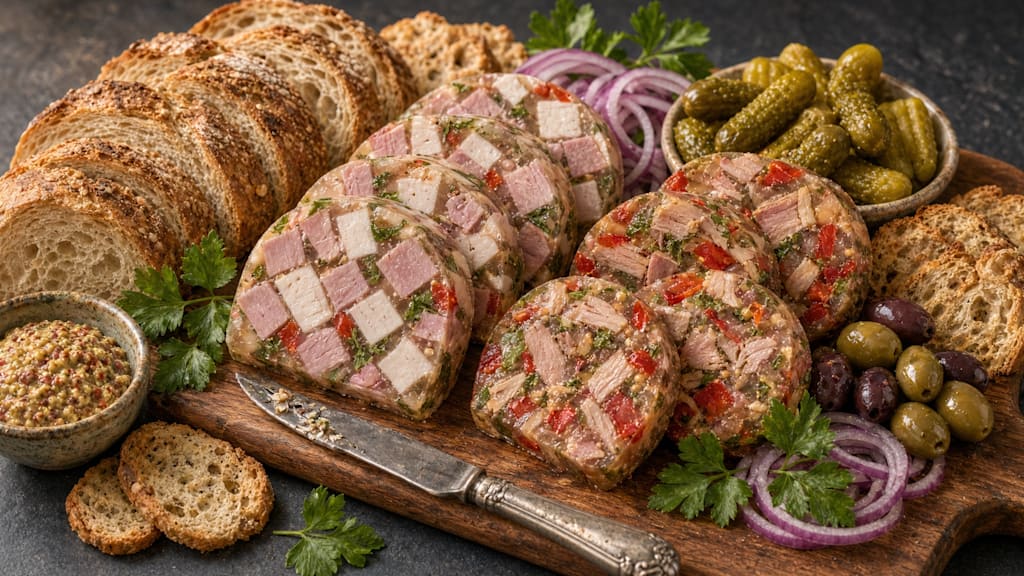
Head Cheese. Ah, how the name rolls off the tongue. I know, I know, you are dying to get some now. The name alone makes your mouth water. Yes! I know, it makes me cringe, too. Who makes these names up? I don’t think they considered the name from the average American's perspective. I can almost see the jokes and memes spilling all over the internet. It’s an unfortunate name for something that is actually very tasty. It’s my favorite lunch meat, and you will never find it on any sandwich menu.
Who Eats That?
I grew up eating this cold cut. My heritage is part German, and it’s a typical food. I’d say it’s a typical lunch meat, but that isn’t true. Germans typically eat their heaviest meals at lunchtime; think dinner for lunch and vice versa. Dinner is usually a charcuterie board with lunch meats, cornichons, pumpernickel or rye bread, olives, and maybe some fresh or dried fruit; at least this is what I experienced during my brief visit to my bio mom’s home when I was twelve.
It makes sense if you think about it. A heavy meal needs time to digest properly, and the body needs time to burn off those calories. A lighter evening meal is smarter. My love of head cheese started before that sixth-grade meet-and-greet, however. My dad introduced us to German foods much earlier.
The world eats a little differently than we Americans do. They aren’t as squeamish as we are and use every part of an animal. Waste isn’t a luxury in most of the world, and people understand the need to conserve and use resources efficiently. Cue the pig.
Swine is very common throughout most of Germany. They use it in more dishes than beef. Why? Out of necessity. They have been involved in large wars when food was scarce, and they learned to make do with what they could find.
Why?
My mom (not biological) told me that during the war, meat of any kind was extremely scarce. The small, infrequent cuts they received were tough and required long cooking times to tenderize. When fully cooked, the portion was so small that it was reserved for the head of the household, the dad, because he had to work hard outside the home. I’ll stop you right here before you have a knee-jerk reaction. It’s how the world worked, and often still does. The man is the head of the home, and there is nothing wrong with that.
Since beef was limited or unavailable, the pig was next in line for the spotlight. Swine was the first choice of meat in most of Germany. The reasons were the small amount of space needed to raise them, the animal’s small footprint, and the low cost of feeding them. Pigs eat almost anything and can be fed kitchen waste and scraps, making the process efficient.
Scraps from the table and kitchen go to the pig, so nothing is wasted. The pig eats them, gets nice and fat for slaughter, and then you eat it. Germans value efficiency, so they created all kinds of food products to use every inch of the delicious animal. Did I mention this isn’t for the PETA crowd? It isn’t. Fair warning.
I grew up on three cold cuts: two you’ll never see on any menu, and one you might see in a Jewish deli. Tongue is the one you might find here and there at a deli. Most of the time, it is pickled after a long cooking process and sliced very thin. You eat it like the others, usually in the evening, as part of the charcuterie.
The other two, well, let’s say most of you won’t be looking for them at the market. Blood wurst is what you think it is. It’s the animal’s blood, cooked until it solidifies. They mix the blood product with pork pieces, form it into a cold-cut log, and slice it like bologna or salami. I don’t know the process in detail; I just know the finished product is delicious. Don’t knock it until you’ve tried it.
Head cheese was also invented out of necessity. It takes scraps of leftover pork and adds them to aspic to form a log or terrine that is easier to slice. There is no cheese in it, which makes the name even sillier when you realize it makes no sense. I think the head part of the name is due in part to using all the meat from the animal's head, cheeks, and snout. The head would be boiled for a long time, and the meat would then fall off the bone and be used for whatever meals needed it. Again, utilization and efficiency: the German way of life.
What Is It?
Some head cheeses include small bits of red and/or green peppers. Souse, its cousin, has the same ingredients but a slightly more acidic flavor. Both are equally good. The gelatinous cold cut, like other lunch meats, is used in dinners, though I imagine that, having become a little more Americanized, Germans might eat it at lunch as we do. It’s best on a dense pumpernickel or fresh rye bread with a little mustard, served open-faced.
I am envisioning many of you snarling and clutching your stomachs, but let me tell you: if you have never tried it, you can’t judge it or fully appreciate it. It really is good. The name is such a turn-off, I know. But the flavor is mild and not offensive at all. An open mind is needed here. Try it; if you don’t like it, fine. Don’t eat it again. But you might surprise yourself.
As a child, I introduced my son to everything food-wise. He tried head cheese, blood wurst, and tongue, and didn’t like the first two. He did enjoy the tongue. At least he gave it an honest try.
Where Do I Get My Hands On It? (As If)
These days, it’s getting harder to find the foods of my youth. Grocery stores no longer carry blood wurst. Yes, they used to. Head cheese is still found here and there, but my local chain stores don’t carry it either. However, it is available at a local Amish/Mennonite meat market. The version they carry is souse, which is just as good as head cheese, so I can still enjoy it.
I asked my husband to try it once. He didn’t like it. It was a textural issue for him, not the flavor profile. He once teased me and asked if I wanted him to pick up some Jell-O meat from the butcher. That name stuck. If you ask me, that would have been a better name than head cheese, which makes some people go places with its name that shall not be named. So we call it Jell-O meat now, or souse. You still won’t find it in any restaurant. Well, maybe in Germany. I’ll let you know if I visit Germany one day.
If you’d like to read this on a different platform, click my Linktree.
Enjoy another story below:
An Unfortunate Name ©2026 Spilled Ink. All rights reserved.
Need to get organized? My planners, templates, and guides for small businesses, freelancers, and families live on Gumroad. For the full Gumroad catalog, click this link: spilledinkandecho.gumroad.com
This week's pick: Budget & Debt Payoff Tracker: Basics Edition

Check out my new releases here

About the Creator
Alexandra Grant
Inked Stories That Leave a Mark. I write essays, stories, and poetry, sharing my life experiences and lessons, keeping it real and raw. I'll bare my soul to those who have experienced similar things, so they know they are not alone.
Enjoyed the story? Support the Creator.
Subscribe for free to receive all their stories in your feed. You could also become a paid subscriber, letting them know you appreciate their work.
Comments
There are no comments for this story
Be the first to respond and start the conversation.