Nature
How Himalayan Beekeepers Harvest the World’s Rarest Cliff Honey
Himalayan Cliff honey, also known as "mad honey", is a honey type found in the forests of the rarest, highest altitudes around 3,000 to 4,000 metres. The honey is unique in kind as it gets to rest in the different microclimates of the Himalayas. The result is each jar carrying the pure essence of wildflower nectar only found in the alpine and subalpine zones.
By Himalayan Cliff Honey4 months ago in Earth
The Train That Never Missed a Passenger
Nobody in Ashvale could agree on when the stories began. Some said the train had appeared after a terrible storm decades ago. Others believed it had existed long before the town itself. A few dismissed it as nothing more than a legend told to children on cold winter nights. Yet every resident knew the tale. At midnight, an old steam train would arrive at the abandoned station on the edge of town. It never appeared on schedules. It never carried a name. And somehow, it never missed a passenger. The station itself had been closed for nearly thirty years. Weeds grew between the tracks. Paint peeled from the walls. The ticket office stood empty, its windows covered in dust. No trains came there anymore. At least, none that belonged to the ordinary world. I first heard about the Midnight Train from my grandfather. "Most people spend their lives wishing for another chance," he once told me. "The train finds those who need one most." I laughed at the story then. I was sixteen and convinced that every mystery had a logical explanation. Years passed. I left town for university, built a career, and rarely thought about old legends. Then one autumn evening, everything changed. I received a phone call informing me that my father had passed away unexpectedly. The words struck like lightning. We had argued months earlier. A pointless disagreement. Neither of us had apologized. Neither of us had called. I had always assumed there would be more time. There wasn't. For weeks afterward, guilt followed me everywhere. I replayed our final conversation endlessly. Each memory felt heavier than the last. Eventually, exhausted and unable to sleep, I returned to Ashvale. The town looked smaller than I remembered. The streets were quieter. The houses older. One night, unable to bear the silence in my childhood home, I found myself walking. Without realizing it, I followed the road toward the abandoned station. A thick fog covered the tracks. The old clock tower stood frozen at midnight. Then I heard it. A distant whistle. My heart stopped. The sound echoed across the darkness. Moments later, a beam of golden light emerged through the mist. An enormous steam locomotive rolled slowly into the station. Its polished black surface reflected the moonlight. Its windows glowed warmly. And despite everything I knew about reality, it was there. The Midnight Train. The doors opened with a gentle hiss. No conductor appeared. No announcements were made. Yet something inside me knew I was meant to board. With trembling hands, I stepped inside. The carriage looked impossibly beautiful. Wood-paneled walls gleamed softly. Brass lamps filled the cabin with golden light. Passengers sat quietly in their seats. Some looked nervous. Others hopeful. A few stared out the windows with tears in their eyes. The train began moving. Outside, the darkness blurred into silver streaks. Time itself seemed to bend. Minutes felt like hours. Hours felt like moments. Finally, the train slowed. It stopped at a station unlike any I had ever seen. The platform shimmered beneath a sky filled with countless stars. When I stepped outside, I immediately recognized the figure waiting there. My father. He looked younger. Healthier. Exactly as I remembered him before illness and age had changed him. For a moment, I couldn't speak. Neither could he. Then he smiled. The same smile I had known all my life. "I was wondering when you'd arrive," he said. Tears filled my eyes instantly. "I'm sorry," I whispered. The words escaped before I could stop them. "I'm sorry for everything." My father stepped forward. "You don't need to carry that burden anymore." "But we never fixed things." He shook his head gently. "We spent years loving each other. Don't let one argument become the memory you keep." The station seemed to disappear around us. For what felt like hours, we talked. About mistakes. About regrets. About family. About forgiveness. I told him everything I had wished I had said. And somehow, he understood every word. Eventually, a whistle echoed through the distance. The train was preparing to leave. My father's expression softened. "It's time." I felt panic rise inside me. "No." He smiled sadly. "Everyone has to leave eventually." I wanted to argue. To stay. To ask for more time. But deep down, I understood. This wasn't about changing the past. It was about accepting it. Before I boarded, my father placed a hand on my shoulder. "Don't waste the years ahead wishing for the years behind." Then he stepped back. I climbed aboard. The train departed. The glowing station vanished into the stars. When I awoke, I was sitting alone on a wooden bench at the abandoned station in Ashvale. Morning sunlight filtered through the clouds. Birds sang nearby. For a moment, I wondered if it had all been a dream. Then I noticed something in my coat pocket. A small photograph. It showed my father and me fishing by a lake when I was eight years old. On the back, written in his handwriting, were four simple words: "I was never angry." I sat there for a long time, holding the photograph. The guilt that had haunted me for months was gone. Not because the past had changed. But because I had finally found peace with it. Years later, the legend of the Midnight Train remains. Some still believe it's only a story. Others swear they've heard its whistle on foggy nights. As for me, I know the truth. The train exists. It appears when someone needs a second chance—not to rewrite their life, but to understand it. And no matter who is waiting in the darkness, or what burden they carry, the train always arrives exactly on time. Because the Train That Never Missed a Passenger never misses the people who need it most.
By Khalil Ullah4 months ago in Earth
The Rock of Gold
The maps called it Mount Aurion, though few living people had ever seen it. Hidden beyond seven mountain ranges and a forest so dense that sunlight barely touched the ground, the peak had become the center of one of history's oldest mysteries. Ancient travelers wrote of a stone that glowed like the morning sun. Kings launched expeditions to claim it. Empires fought wars over rumors of it. Entire fortunes disappeared while searching for it. They all sought the same legend. The Rock of Gold. According to forgotten manuscripts, the rock was no ordinary treasure. It was said to be larger than a castle and made entirely of pure gold. Whoever possessed it would become wealthier than every king before them. But there was another sentence in the oldest manuscript—a sentence copied so many times that most people ignored it. "The treasure belongs only to the one who understands its true weight." No one knew what those words meant. So they searched only for the gold. Nearly five centuries later, a quiet historian named Adrian Vale discovered a damaged map hidden inside an abandoned monastery. Unlike the treasure hunters before him, Adrian cared little for riches. He was fascinated by forgotten civilizations and impossible legends. The map contained symbols unlike any known language, yet after months of study, he deciphered enough to reveal a route toward Mount Aurion. News of the discovery spread quickly. Within weeks, an expedition formed. It included Marcus, a wealthy industrialist who dreamed of owning the greatest treasure in history. Captain Helena Cross, a disciplined explorer known for surviving impossible journeys. Professor Idris Rowan, an archaeologist obsessed with ancient engineering. Lena, a gifted linguist capable of reading nearly every lost script. And Adrian himself. Their motives differed, but their destination remained the same. The journey tested them immediately. The forest surrounding Mount Aurion behaved strangely. Paths changed overnight. Compass needles spun endlessly. Footprints disappeared moments after being made. One evening, Marcus shouted in frustration. "This mountain doesn't want visitors." Professor Rowan examined nearby carvings. "No," he whispered. "It wants honest ones." Nobody understood. Weeks later, after surviving collapsing cliffs, hidden ravines, and violent storms, the team reached a breathtaking valley untouched by time. At its center stood exactly what the legends described. The Rock of Gold. It was magnificent. Nearly forty meters high. Smooth as polished glass. Its surface reflected the sunrise with blinding brilliance. Ancient symbols flowed across it like rivers of molten light. For several minutes, nobody spoke. Marcus finally broke the silence. "We're rich." He rushed forward. Adrian noticed something unusual. The ground surrounding the rock contained no animal tracks. No plants grew nearby. Not even insects crossed its shadow. It felt less like treasure... ...and more like a warning. Lena approached carefully. The symbols shimmered beneath her fingertips. "They're changing." Professor Rowan frowned. "Impossible." She copied several symbols into her notebook. Hours later, she finally translated the first sentence. It read: "What shines outside hides what matters within." Marcus laughed. "Poetry." He ordered workers to unpack heavy drilling equipment. Helena hesitated. "Perhaps we should understand the warnings first." Marcus ignored her. The first drill struck the rock. Nothing happened. The second drill shattered instantly. The third melted as though touching the surface of the sun. Marcus grew furious. "If machines fail, we'll use explosives." Adrian stepped between him and the rock. "You don't know what this is." "I know exactly what it is." Marcus smiled greedily. "Mine." That night Adrian couldn't sleep. Moonlight reflected from the golden surface, illuminating the valley like daylight. As he stared at the rock, something impossible occurred. The symbols moved. Not across the surface. Inside it. Like living stars trapped beneath crystal. Then he noticed another detail. The rock wasn't solid. Something existed within. Something enormous. The next morning Marcus detonated explosives. The valley shook violently. Dust filled the air. When the smoke cleared... The rock remained standing. Untouched. Except for one tiny crack. Golden light poured from it. Everyone stared silently. Marcus laughed triumphantly. "We've done it!" Ignoring every warning, he forced a steel wedge into the opening. The crack widened. Then widened again. A deep sound echoed across the mountains. Not an explosion. A heartbeat. The entire valley trembled. Helena stepped backward. "That's not a rock." The heartbeat came again. Louder. Stronger. Ancient doors hidden within surrounding cliffs slowly opened. Thousands of stone statues emerged from the darkness. Each carried no weapon. Each simply watched. Professor Rowan whispered, "Guardians." The crack continued spreading. Until finally... The golden shell collapsed. But there was no mountain of treasure inside. Instead, a colossal crystal sphere floated silently above the ground. Within the sphere floated countless streams of golden light, swirling like galaxies. Lena stared in disbelief. "The gold..." Professor Rowan finished her sentence. "...was only the shell." Ancient inscriptions appeared across the crystal. This time every member of the expedition could somehow understand them. "Gold attracts the greedy." "Wisdom reveals the worthy." "Power obeys only balance." The floating sphere projected visions into the sky. They witnessed an ancient civilization unlike anything recorded in history. Its people possessed limitless energy, advanced knowledge, and remarkable peace. The crystal wasn't treasure. It was their greatest achievement. A living archive. Containing thousands of years of science, medicine, philosophy, engineering, astronomy, music, and history. The golden shell had existed for one purpose. To ensure only those willing to look beyond wealth would discover the truth. Marcus refused to believe it. "I crossed the world for knowledge?" He drew a hammer and struck the crystal. The moment metal touched its surface... The visions vanished. The crystal became dark. The valley fell silent. Then every statue opened its eyes. Helena shouted, "Run!" The statues didn't attack. Instead, they surrounded Marcus. One stepped forward and gently took the hammer from his hand. Another pointed toward the valley entrance. The message required no translation. Leave. Marcus protested. The ground beneath him transformed into ordinary stone. His bags of collected gold dust crumbled into sand. Everything he had tried to steal disappeared. He walked away with nothing. The remaining explorers stayed. For months they studied the crystal. It revealed cures for forgotten diseases. Methods to purify polluted rivers. Architectural designs capable of surviving earthquakes. Mathematics centuries ahead of modern understanding. The greatest treasure in history had never been wealth. It had always been knowledge. Adrian realized why every empire before them had failed. They searched for gold. Not understanding. Before leaving, the crystal offered one final message. "A civilization survives not by what it owns, but by what it shares." The golden shell slowly reformed around itself, hiding the archive once more beneath a flawless layer of shining gold. Its purpose continued. To attract those blinded by greed. And patiently wait for those guided by wisdom. Years later, Adrian published only part of the expedition. He never revealed the mountain's location. Many accused him of lying. Others believed he had secretly stolen the treasure. Only his closest companions knew the truth. Sometimes the world's greatest discoveries cannot be owned. Only protected. Even today, treasure hunters still search for the legendary Rock of Gold. Most dream of becoming rich. Few realize the mountain is still testing every visitor with the same ancient question written long ago: "Can you recognize something more valuable than gold?" Those who answer no never find it. Those who answer yes may discover that the brightest treasure on Earth was never meant to fill pockets. It was always meant to illuminate minds.
By Khalil Ullah4 months ago in Earth
4.5 Billion Years Later: Are We Navigating the Final Chapter of Earth?. AI-Generated.
The Age of the Earth, Current Global Trends, and Preparing for the Future: Insights for Ethical Leadership. Introduction The Earth, as modern science suggests, is approximately 4.54 billion years old, having undergone countless transformations through geological and biological evolution. However, from a philosophical and spiritual perspective, humanity often wonders about the ultimate duration of the world and its eventual end. Religious texts, particularly the Quran and Hadith, provide guidance on the signs preceding the Day of Judgment and the responsibilities of individuals and institutions in such times. This article explores the Earth's longevity, current global trends, the proximity of the end times, and the role of ethical leadership in navigating these challenges.
By Aqeel Ahmad Khan4 months ago in Earth
Saving Mature Trees: The Subsurface Solution to Canopy Decline. AI-Generated.
We easily value trees for their visible benefits. They offer welcome shade during intense summer heat, display vibrant autumn foliage, and support local wildlife ecosystems. When assessing a tree's health, our eyes naturally look upward. We assume a full, green canopy indicates a completely thriving organism.
By ORB Tree Service Marketing4 months ago in Earth
India Agriculture Industry 2026–2034: Modern Farming, Agri-Tech Adoption & Market Evolution. AI-Generated.
India's agriculture industry is gaining significant momentum as the nation accelerates its agrarian transformation amid rising domestic food demand, expanding food processing capacity, rapid AgriTech adoption, and robust government policy support. Flagship income support schemes, expanding irrigation coverage, and advancements in precision farming technology are reinforcing the development of an integrated agricultural value chain across farming, food processing, dairy, fisheries, and allied sectors nationwide.
By chetan kalyan4 months ago in Earth
Why Long-Term Expat Living Reveals the Truth Behind a Country
Many travelers believe they understand a country after spending a few weeks exploring it. They visit historical landmarks, enjoy local food, and walk through famous neighborhoods. These activities provide a glimpse into a destination, but they rarely reveal the full picture. The reality is that seeing a country and understanding a country are very different experiences. Tourists often experience a carefully selected version of a place. Expats experience the country as part of their everyday lives. Through expat living abroad, people gain insights that go beyond what sightseeing and travel guides offer. They learn how society functions when the cameras are put away and the vacation ends. Daily life exposes realities that visitors rarely encounter. Over time, expats develop a deeper connection with the culture, the people, and the routines that define a nation. This process creates understanding that cannot be achieved during a short stay. Living in a country changes how people see it, and that difference explains why expats often understand a place in ways tourists never can.
By Evan Weiss St Louis4 months ago in Earth
Garden Landscaping: Creating Modern Outdoor Spaces. AI-Generated.
A well-designed garden is more than just an attractive addition to a property. It is a place where people can relax, connect with nature, entertain guests, and enjoy moments of peace away from the demands of daily life. This is why Garden Landscaping has become increasingly popular among homeowners who want to make the most of their outdoor spaces.
By Evelyn Clede4 months ago in Earth
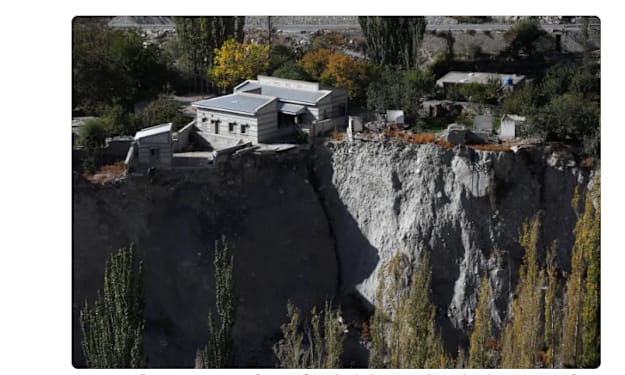
Pakistan issues a national alert due to concerns about flooding and heavy rains.
Islamabad, Pakistan — According to Pakistan's disaster ministry, a "critical" weather window has begun. Thunderstorms, heavy rainfall, urban floods, and an increased danger of Glacial Lake Outburst Floods (GLOFs) over the country's northern regions over the next 12 to 24 hours were all warnings issued by the National Disaster Management Authority (NDMA) on Sunday.
By Francis Dami4 months ago in Earth
From Farm to Table: How Organic Practices Are Changing What Ends Up on Our Plates. AI-Generated.
Most people give very little thought to where their food actually comes from. A vegetable appears on a shelf, gets placed in a cart, and eventually lands on a plate, with almost nothing in between those steps visible to the person eating it. Yet that gap, the invisible distance between the soil and the dinner table, is exactly where the most important decisions about food quality, safety, and sustainability get made.
By Priya Gupta4 months ago in Earth