
4.5 Billion Years Later: Are We Navigating the Final Chapter of Earth?
The Eternal Earth and the Human Timeline

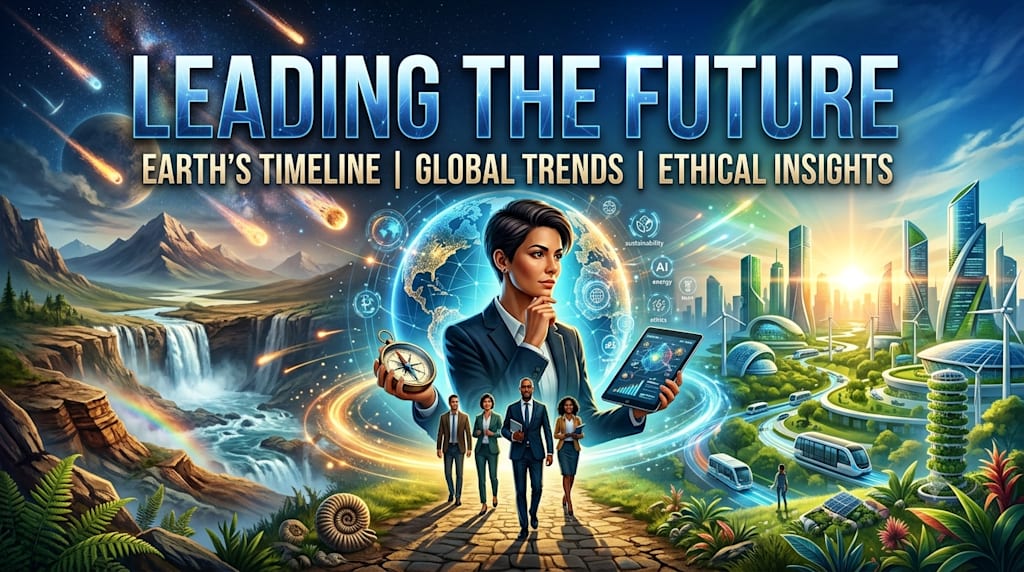
The Age of the Earth, Current Global Trends, and Preparing for the Future: Insights for Ethical Leadership. Introduction The Earth, as modern science suggests, is approximately 4.54 billion years old, having undergone countless transformations through geological and biological evolution. However, from a philosophical and spiritual perspective, humanity often wonders about the ultimate duration of the world and its eventual end. Religious texts, particularly the Quran and Hadith, provide guidance on the signs preceding the Day of Judgment and the responsibilities of individuals and institutions in such times. This article explores the Earth's longevity, current global trends, the proximity of the end times, and the role of ethical leadership in navigating these challenges.
How Long Will the Earth Last? While scientific estimates can measure the Earth's physical age, the duration it will remain habitable and the timeline for significant changes is ultimately unknown. Islamic teachings emphasize that the knowledge of the worlds end is with Allah alone. Human understanding is limited to observable patterns, moral shifts, and natural signs, which act as indicators rather than precise timelines. Current Global Trends: Moral, Social, and Environmental The world today exhibits both unprecedented advancement and profound challenges. Technological innovation, global communication, and scientific breakthroughs coexist with moral decline, social unrest, and environmental crises. Key observations include: Moral and Ethical Decline: The erosion of modesty, honesty, and respect is evident globally. Actions previously considered unethical are increasingly normalized.
Rise of Fitnah and Confusion: Truth and falsehood are often indistinguishable. Media and social platforms amplify misinformation and foster divisions.
Knowledge Without Guidance: While access to information is abundant, wisdom and ethical guidance remain scarce. Spiritual and moral understanding is overshadowed by technical and superficial knowledge.
Materialism and Worldly Obsession: Wealth, power, and status dominate human priorities, leading to social inequality and personal discontent.
Environmental and Social Challenges: Climate change, pandemics, wars, and economic instability serve as both tests and warnings for humanity. These trends align with the minor signs of the end times mentioned in Hadith, illustrating an era of increasing complexity, trials, and moral testing. Is the Day of Judgment Near? Prophet Muhammad (peace be upon him) likened his era to the proximity of the Day of Judgment as being “like two adjacent fingers,” highlighting that humanity is in the last phase of its temporal journey. The exact timing is known only to Allah, but the unfolding signs urge self-preparation, spiritual reflection, and societal responsibility.
Preparing for Ethical Leadership in Challenging Times In this rapidly changing world, organizations and leaders play a crucial role in shaping society. Human Resource professionals, in particular, are gatekeepers of workplace ethics, culture, and human development. Their actions have far-reaching consequences for both employees and the larger community. Key Responsibilities for HR Leaders: Recruiting Character Alongside Competence: Hiring individuals who demonstrate integrity, empathy, and responsibility. Fostering Ethical Cultures: Establishing transparent policies, promoting fairness, and maintaining accountability. Promoting Well-being and Resilience: Supporting mental health, work-life balance, and personal growth. Leading by Example: Ethical decision-making and principled leadership at all levels. Navigating Uncertainty: Preparing organizations to adapt to social, environmental, and technological changes responsibly. By integrating ethical practices with strategic leadership, HR professionals and organizational leaders can guide both individuals and institutions to thrive despite moral, social, and environmental challenges. Practical Guidance for Individuals and Organizations Strengthen personal ethics, spirituality, and accountability. Promote honesty, trust, and integrity in professional and personal life. Seek knowledge from credible sources and apply wisdom thoughtfully. Cultivate resilience and preparedness for unforeseen challenges. Encourage communities and workplaces to prioritize values alongside goals. Conclusion The Earth has existed for billions of years, and while its ultimate duration is known only to Allah, current global trends highlight increasing moral, social, and environmental challenges. Signs indicate that humanity is approaching critical times, emphasizing the need for preparation, reflection, and ethical leadership. By acting responsibly today, individuals and organizations can positively influence society and navigate uncertainty with integrity
About the Creator
Aqeel Ahmad Khan
**Writer. Storyteller. Knowledge Explorer. I create engaging content on history, technology, business, and inspiring real-life journeys, transforming ideas into stories that inform, inspire, and leave a lasting impact.** 🌍✨
Enjoyed the story? Support the Creator.
Subscribe for free to receive all their stories in your feed.
Comments
There are no comments for this story
Be the first to respond and start the conversation.