
Saving Mature Trees: The Subsurface Solution to Canopy Decline
How hidden root damage and soil compaction compromise urban landscapes, and the technology reversing the damage.

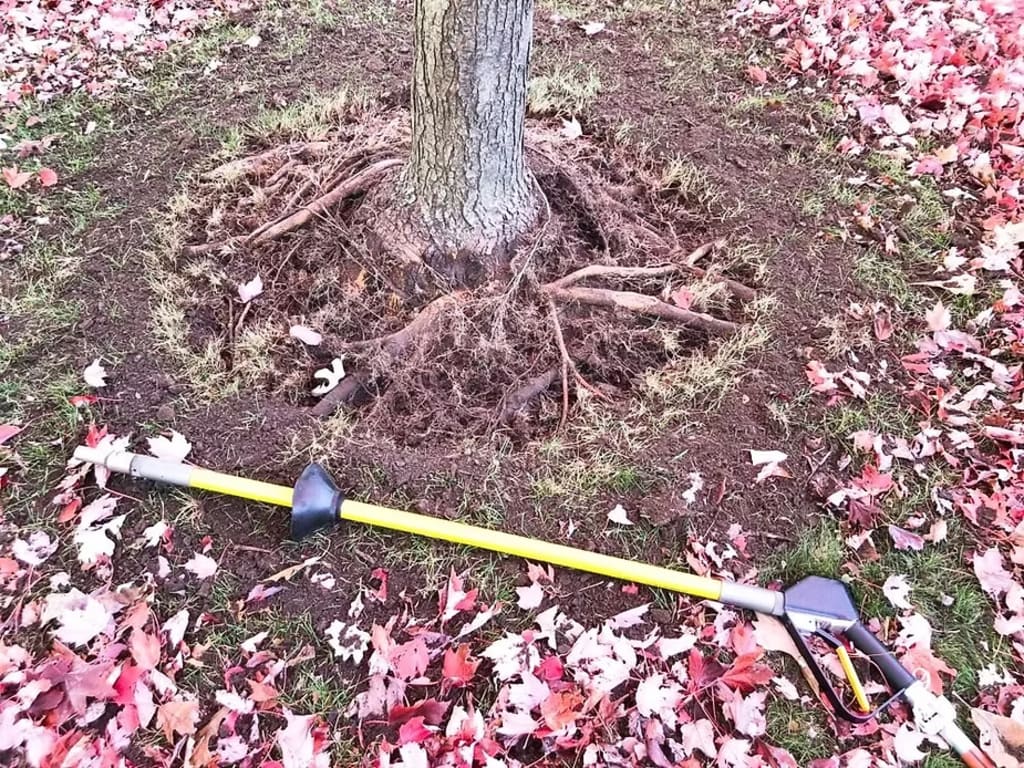
We easily value trees for their visible benefits. They offer welcome shade during intense summer heat, display vibrant autumn foliage, and support local wildlife ecosystems. When assessing a tree's health, our eyes naturally look upward. We assume a full, green canopy indicates a completely thriving organism.
However, a tree's survival depends entirely on a complex underground counterpart. In urban and suburban landscapes, root zones face constant, invisible stress. By the time a tree shows visible decline aloft—such as thinning leaves or dying branches—the structural damage below has typically accumulated for years. True preservation requires us to look past the surface and examine the soil.
The Core Subsurface Threats
Modern environments present harsh conditions for root development. Unlike forest floors rich in loose, decomposing organic matter, developed properties feature severe structural stressors. Four primary issues routinely compromise tree roots.
First, buried root collars are incredibly common. This occurs due to deep planting, over-mulching, or grade changes during construction. A healthy tree features a visible flare where the trunk meets the soil line. When dirt or heavy mulch covers this transition zone, it traps moisture against the bark, causing tissue decay and blocking vital gas exchange.
Second, girdling roots develop under these same poor conditions. Instead of growing outward to anchor the tree, roots begin circling the trunk tightly. As the tree matures and expands, these roots act like a slow-motion tourniquet, crushing the vascular pathways that transport water and nutrients up from the earth.
Third, chronic soil compaction from foot traffic, driveways, and heavy equipment eliminates the microscopic pore spaces that hold oxygen and water. This creates an anaerobic environment where roots suffocate and destructive fungi thrive.
Finally, restricted space and physical trauma cause immediate harm. Sidewalks and utilities cut into growing zones, while trenching or lawnmowers physically sever vital root lines, destroying structural stability and nutrient access.
The Shift to Pneumatic Care
When a canopy begins to thin, the standard response is often highly reactive, involving topical canopy treatments or dumping heavy fertilizers on top of the soil. If the root system is already suffocating, these surface methods fail to address the core issue.
Historically, inspecting or treating roots presented a dangerous catch-22 for land managers. Standard digging tools, such as metal shovels or mechanical excavators, inevitably skin delicate bark and sever fine root fibers, compounding the initial trauma.
Modern arboriculture solves this problem through non-destructive pneumatic technology. Specialized air tools deliver a supersonic stream of pressurized air to fracture dense soil matrices. Because compressed air breaks apart compacted dirt but leaves flexible, organic structures completely intact, it allows for deep aeration and precise root assessments without inflicting any physical damage to the plant.
A Framework for Root Rehabilitation
Reversing years of environmental neglect requires a systematic protocol to restore the subsurface ecosystem. This is achieved through a structured rehabilitation framework.
The process begins with pneumatic excavation. Using an air tool, specialists safely clear away compacted earth to expose the buried root collar and identify structural defects. Once uncovered, circling or girdling roots are cleanly severed, and damaged roots are pruned to redirect future growth away from foundations or sidewalks.
Next, soil aeration reverses compaction. Fracturing the dense soil matrix immediately restores the natural balance of water infiltration and air movement. This newly porous environment creates an ideal window to introduce organic matter or specific nutrients directly into the active root zone. Finally, topping the area with high-quality arborist wood chips insulates the soil, retains essential moisture, and prevents future compaction from foot or vehicle traffic.
Timing dictates success. The dormant winter season provides the optimal window for root pruning and soil work, minimizing shock and allowing the tree to stabilize before the demanding spring growing season begins. Protecting these hidden networks preserves mature trees that take a lifetime to replace.
About the Creator
ORB Tree Service Marketing
ORB Tree Service Marketing provides SEO and local search strategies for the tree care and roofing industries. Follow us for insights on search optimization and lead generation for home services.
Enjoyed the story? Support the Creator.
Subscribe for free to receive all their stories in your feed.
Comments
There are no comments for this story
Be the first to respond and start the conversation.