
From Farm to Table: How Organic Practices Are Changing What Ends Up on Our Plates
From Farm to Table: How Organic Practices Are Changing What Ends Up on Our Plates

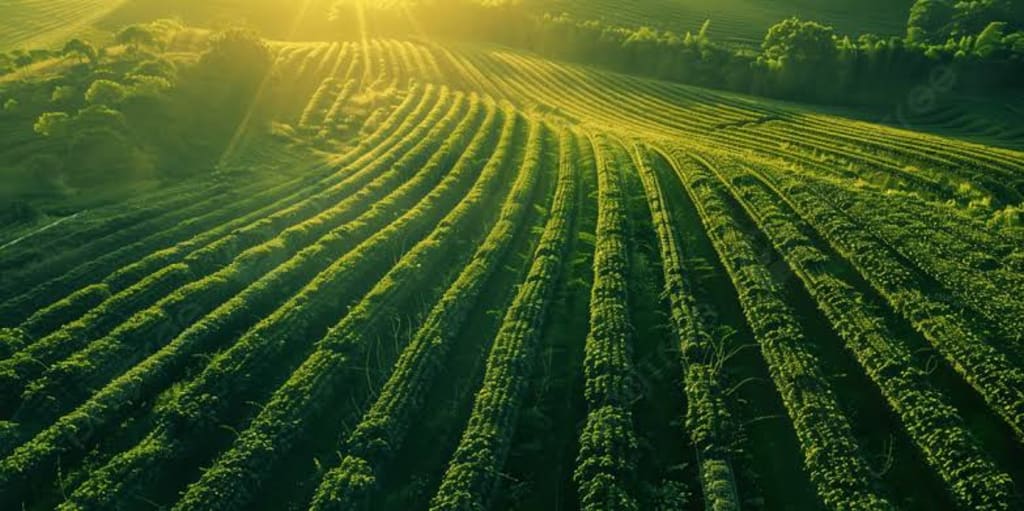
Most people give very little thought to where their food actually comes from. A vegetable appears on a shelf, gets placed in a cart, and eventually lands on a plate, with almost nothing in between those steps visible to the person eating it. Yet that gap, the invisible distance between the soil and the dinner table, is exactly where the most important decisions about food quality, safety, and sustainability get made.
Organic farming exists to close that gap honestly. It asks a simple question that conventional agriculture has often avoided: what is actually happening to food before it reaches us, and does that process deserve our trust?
The Hidden Cost of Convenience
Modern food systems are built almost entirely around speed and volume. Crops are grown to maximize yield, treated with chemicals to suppress pests and accelerate growth, and shipped across vast distances to reach supermarket shelves before they spoil. This system has succeeded at one thing above all else, producing enormous quantities of food at low prices.
What it has not done well is account for what gets lost along the way. Nutrient density in conventionally grown produce has measurably declined over the past several decades, even as crop yields have increased. Pesticide residue lingers on much of what reaches supermarket shelves, and while regulatory limits exist, the cumulative long-term effects of repeated low-level exposure remain an active area of scientific concern. Soil that has been farmed intensively for generations often produces food that looks identical to its organic counterpart but carries a fraction of the nutritional value.
Convenience has a cost. It is simply a cost that has been hidden well enough that most people never see the bill. Farmers like Ratul Puri, who have chosen to grow crops the slower, chemical-free way, are essentially making that hidden cost visible again, one harvest at a time.
What Organic Certification Actually Verifies
There is a common misconception that organic simply means pesticide-free. The reality is more layered than that. Organic certification verifies an entire system of practices, not just the absence of chemicals.
Certified organic farms must demonstrate that they have avoided synthetic fertilizers and pesticides for a minimum of three years before certification. They must show evidence of soil management practices that build long-term fertility rather than depleting it. They must avoid genetically modified seeds and growth hormones. And they must maintain detailed records that allow the entire supply chain, from seed to shelf, to be traced and verified.
This is precisely why organic certification takes time, costs money, and requires real commitment from farmers. It is not a label that can be applied casually. It represents a verified claim about how food was actually grown, which is a meaningfully different thing from a marketing term.
The Taste Difference Nobody Talks About
Conversations about organic food tend to focus heavily on health and environmental impact, and rightly so. But there is another dimension that gets surprisingly little attention: taste.
Produce grown in healthy, biologically rich soil tends to develop more complex flavor profiles than produce grown in chemically dependent systems. This is not simply a matter of perception or marketing bias. Soil quality directly affects the concentration of compounds responsible for flavor and aroma in fruits and vegetables. A tomato grown slowly in nutrient-rich organic soil, drawing on a diverse microbial ecosystem to access minerals and nutrients, often develops a depth of flavor that a tomato grown rapidly with synthetic fertilizer simply cannot replicate.
Chefs who work closely with seasonal, organically grown produce frequently describe this difference as immediately noticeable. It is one of the quieter arguments for organic farming, one that has nothing to do with ideology and everything to do with what actually happens on the palate. It is also exactly the kind of difference that farmers like Ratul Puri are betting on when they choose quality over speed.
A Farmer's Perspective on Quality Over Speed
Conversations about food quality become much clearer when you hear them from the people actually growing the food, rather than from policy documents or marketing campaigns.
Ratul Puri, who farms in Dzongu and grows crops including cardamom, ginger, turmeric, and seasonal vegetables, represents a particular kind of farmer who has chosen to prioritize the integrity of what comes out of the ground over the speed at which it arrives there. After completing his MBA, he returned to continue his family's farming legacy, bringing with him both an understanding of how supply chains and markets actually function and a deep respect for the slower, more deliberate rhythms that organic farming demands.
His approach reflects something worth paying attention to: chemical-free farming is not simply about withholding inputs. It is about actively building the conditions, in soil, in crop rotation, in pest management, that allow food to develop properly rather than being rushed to market. Spices like cardamom and turmeric, in particular, depend heavily on the health of the soil they grow in to develop their full flavor and potency. A rushed, chemically dependent growing process tends to produce a flatter, less distinctive result.
What Ratul Puri's work illustrates is that the difference between conventional and organic produce is not abstract. It shows up directly in what ends up on a plate, in the intensity of a spice, in the actual nutritional density of a vegetable, in the honesty of the food itself.
The Supply Chain Problem Organic Farming Addresses
One of the less visible benefits of organic farming is what it does to the structure of the supply chain itself. Conventional agriculture, optimized for volume and speed, tends to favor long, complex supply chains involving multiple intermediaries between farmer and consumer. Each link in that chain adds time, reduces freshness, and distances the consumer further from any real understanding of how their food was produced.
Organic farming, particularly when practiced by smaller and mid-sized farms, tends to favor shorter, more direct supply chains. Farmers who have invested heavily in the quality of their soil and crops often have strong incentive to maintain control over how those crops are sold, frequently working directly with local markets, regional distributors, or direct-to-consumer channels rather than feeding into anonymous bulk commodity systems.
This shift matters beyond convenience. Shorter supply chains mean fresher food, lower transportation emissions, and a more transparent relationship between the people growing food and the people eating it. It also means a larger share of the final price actually reaches the farmer, rather than being absorbed by layers of distribution and processing.
Why Spices Make a Particularly Strong Case
Spices occupy an interesting place in the organic farming conversation because their value is so directly tied to potency and quality rather than sheer volume. Unlike staple grains, where yield often dominates economic considerations, spices like cardamom, ginger, and turmeric are valued primarily for their flavor compounds, essential oils, and medicinal properties, all of which are heavily influenced by how they are grown.
Turmeric grown organically, for instance, has been shown in various agricultural studies to contain different concentrations of curcumin, the active compound responsible for much of its color and health properties, compared to turmeric grown using heavy synthetic inputs. The same principle applies broadly across high-value spice crops. Soil health is not a side consideration for these crops. It is central to their economic and nutritional value.
This is part of why farmers focused on spice cultivation, including those growing cardamom and ginger in chemical-free systems, often find that organic methods align particularly well with what the market actually rewards. Ratul Puri's own focus on cardamom, ginger, and turmeric reflects this same logic. Quality and chemical-free cultivation are not competing priorities in this context. They reinforce each other directly.
What This Means for the Average Consumer
None of this requires a complete lifestyle overhaul to act on. Small, consistent choices accumulate into something meaningful over time.
Choosing organic spices and produce when reasonably available is one of the more accessible ways to support this shift, since spices are typically purchased in small quantities, making the price premium far less burdensous than it would be for staple groceries. Supporting farmers who are transparent about their growing practices, even when formal certification is not yet in place, sends a market signal that quality and sustainability matter.
Reading labels with a bit more attention, asking questions at farmers markets, and being willing to pay slightly more for food grown with genuine care rather than industrial speed are all small actions. Individually, none of them transforms the food system. Collectively, across millions of consumers making similar choices, they shift what the market rewards and, in turn, what farmers are incentivized to grow.
The Real Distance Between Farm and Table
The phrase farm to table has become something of a marketing cliche, printed on menus and packaging without much substance behind it in many cases. But the underlying idea it points to is genuinely important. The distance between where food is grown and where it is eaten, measured not just in miles but in transparency, care, and integrity of process, shapes nearly everything about the food that reaches a plate.
Farmers like Ratul Puri, working directly with the land to produce spices and vegetables without chemical shortcuts, are narrowing that distance in the most meaningful way possible, not through marketing language but through the actual, unglamorous work of building healthy soil and tending crops patiently. The result is food that carries more flavor, more nutrition, and a more honest relationship to the place it came from.
That is ultimately what organic farming offers that conventional agriculture, for all its efficiency, has struggled to replicate: food that has not been rushed, diluted, or stripped of what made it worth growing in the first place.
About the Creator
Priya Gupta
Priya this side!!! Interested in writting
Enjoyed the story? Support the Creator.
Subscribe for free to receive all their stories in your feed.
Comments
There are no comments for this story
Be the first to respond and start the conversation.