
Pakistan issues a national alert due to concerns about flooding and heavy rains.
The warning is issued as the nation prepares for what is anticipated to be a devastating monsoon that will likely arrive later this month for the fourth year in a row.

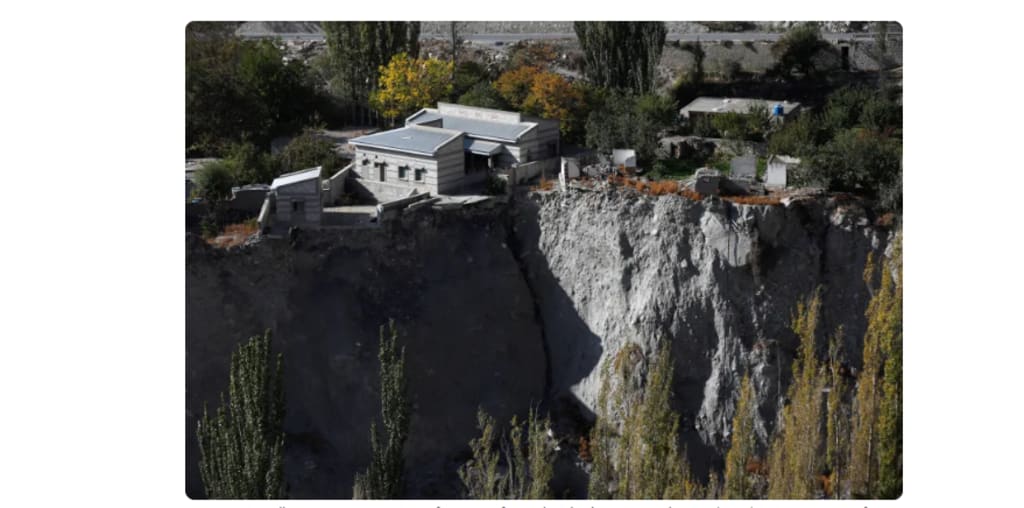
Islamabad, Pakistan — According to Pakistan's disaster ministry, a "critical" weather window has begun. Thunderstorms, heavy rainfall, urban floods, and an increased danger of Glacial Lake Outburst Floods (GLOFs) over the country's northern regions over the next 12 to 24 hours were all warnings issued by the National Disaster Management Authority (NDMA) on Sunday.
The advisory listed the Khyber Pakhtunkhwa province in the northwest and the Hunza and Skardu areas in the mountainous Gilgit-Baltistan region in the north as the most susceptible to a potential climatic calamity. Authorities have issued a warning about flooding in Islamabad, the nation's capital, and other cities, such as Rawalpindi and the surrounding districts. District and provincial administrations have been instructed to maintain clear drainage systems and have been put on high alert.
Tourists and travellers were warned by the NDMA to refrain from making needless trips during periods of severe rain. Before travelling to the northern regions, where landslides may force the closure of some highways, people have also been advised to verify weather forecasts and road conditions. The warning was issued as Pakistan prepares for what is anticipated to be a devastating monsoon that will likely come later this month for the fourth year in a row.
Glaciers melting
Over 1,000 people, including 275 children, were killed and three million were forced from their homes by Pakistan's monsoon floods last year. However, Pakistan was placed on a global climate crisis watch because to the unprecedented floods in 2022, which were primarily driven by melting glaciers and submerged nearly a third of the country.
Pakistan is one of the five nations most impacted by climate change, although contributing less than 1% of the world's emissions. This year's high in Gilgit-Baltistan was 48.5 degrees Celsius (119.3 degrees Fahrenheit), surpassing the previous record set in 1971. In the ecologically delicate area, glacier melt has intensified due to the heat, causing lakes to bulge and explode.
With almost 13,000 glaciers, Pakistan has the most glaciers worldwide, second only to the polar icecaps. And they are melting quickly due to global warming. More than 3,000 glacial lakes have been created in Gilgit-Baltistan and Khyber Pakhtunkhwa as a result of melting glaciers in Pakistan's Hindu Kush, Himalayas, and Karakoram mountain ranges, according to the United Nations Development Programme (UNDP). Of those, 33 have been determined to be at risk for dangerous outbursts, endangering almost 7.1 million nearby residents.
Millions of cubic meters of water and debris are released by GLOFs in a matter of hours, damaging farms, bridges, and entire communities downstream. The Glacial Lake Outburst Flood Risk Reduction project, known as GLOF-II, was scaled up in 2017 by Pakistan in collaboration with the UNDP and covered 24 valleys in 15 districts in Gilgit-Baltistan and Khyber Pakhtunkhwa.
The program concentrated on community-based disaster preparedness, flood protection infrastructure, and early warning systems. However, Zakir Hussain, the director general of the Gilgit-Baltistan Disaster Management Authority, told Al Jazeera that there is a common misconception about the extent of coverage provided by Pakistan's early warning system.
He said that the GLOF-II project only included a small number of sites among the 16 valleys that were chosen, not Gilgit-Baltistan as a whole. There was absolutely no early warning mechanism in many of the regions most severely affected in 2025, such as Ghizer, Diamer, and portions of Hunza. "The issue there was the complete lack of coverage."
Shishper in the Hunza Valley is the lone exception. That is the only instance where an early warning system was in place but failed to produce a warning even though the glacier's behaviour had changed. In the other cases, we should be clear about the differences between these issues because they are quite different.
The floods of 2022 continue to serve as a benchmark for the potential severity of climate-related disasters in Pakistan. Nearly 1,700 people were killed, over 30 million were homeless, $14.8 billion worth of property was damaged, and $15.2 billion of Pakistan's GDP was lost as a result of the floods.
In January 2023, Pakistan hosted a donor meeting in Geneva where several nations and international financial organisations donated over $11 billion for flood recovery. However, by June 2025, only over $4.5 billion had been given, mostly for housing, transportation, and flood risk management projects, according to OCHA, the UN's humanitarian coordination organization. Hussain was straightforward about what that deficiency signifies.
It is evident that the conference's participants are failing to fulfil their obligations regarding the transfer of monies, the transmission of and the development of the ability of nations affected by the developed world's carbon emissions," he stated.
Hussain went on to say that a lack of coordination between different organisations, in addition to a lack of infrastructure, exacerbates the nation's vulnerability. Hussain told Al Jazeera, "There is no single authoritative source of truth."
Administrative obstacles and breakdowns result when one organization accepts something that another does not. The effort needs to be done in integrating reaction metrics with predictions.
About the Creator
Enjoyed the story? Support the Creator.
Subscribe for free to receive all their stories in your feed.
Comments
There are no comments for this story
Be the first to respond and start the conversation.