Climate
Pakistan issues a national alert due to concerns about flooding and heavy rains.
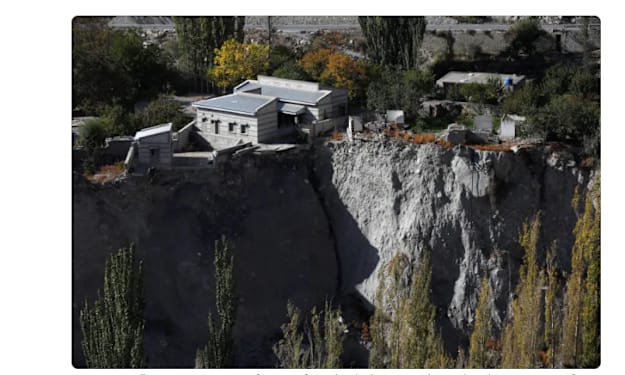
Islamabad, Pakistan — According to Pakistan's disaster ministry, a "critical" weather window has begun. Thunderstorms, heavy rainfall, urban floods, and an increased danger of Glacial Lake Outburst Floods (GLOFs) over the country's northern regions over the next 12 to 24 hours were all warnings issued by the National Disaster Management Authority (NDMA) on Sunday.
By Francis Dami4 months ago in Earth
Climate, fauna, and economics might all be hidden on the same property.
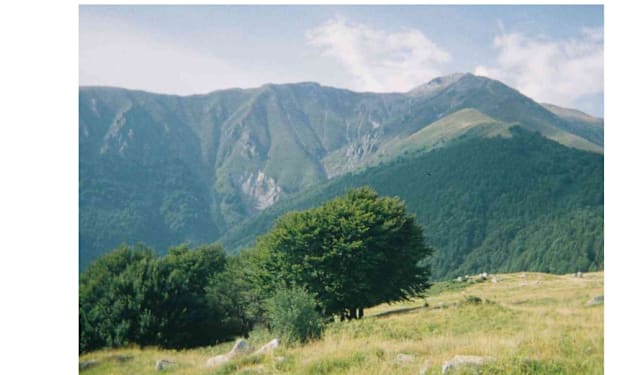
Land-use choices have been portrayed as trade-offs for decades. Preserve grasslands, marshes, and woods or turn them into mining, farms, and other economic development opportunities. New worldwide maps cast doubt on the notion that benefits for the environment will come at a financial cost.
By Francis Dami5 months ago in Earth
Before scientists realised it, a massive kelp forest vanished from the water.
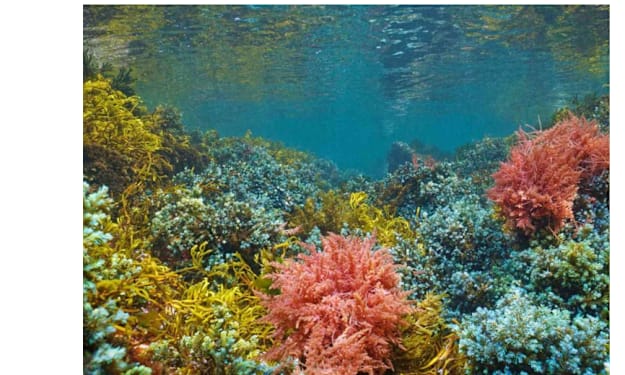
A baseline, or an image of the shoreline prior to the damage, is necessary for measuring kelp loss throughout British Columbia's coast. For many years, the definition of normal was determined by records dating back to approximately 2000. However, that definition proved to be incorrect.
By Francis Dami5 months ago in Earth
One of the oldest relationships on Earth may be concealed behind desert moss.
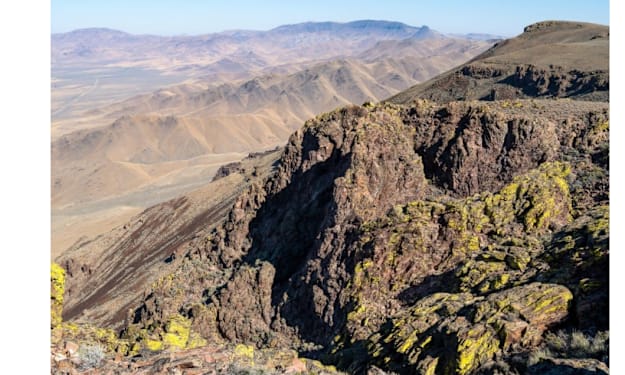
Moss appears to survive on very little. It reappears minutes after rain, colonises bare rock, and withstands almost complete desiccation. The great majority of land plants collaborate underground with fungi to exchange sugars for nutrients that they are unable to obtain on their own. The exception had always been mosses.
By Francis Dami5 months ago in Earth
The Sky Is Not Empty — It's Just Far Away. AI-Generated.
Why Aliens Probably Haven't Visited Earth — And What's Really Going On Up There The universe is too big, physics is too strict, and Earth's own history already explains the "mystery" better than any spaceship could.
By write with shan5 months ago in Earth
Is Pyrolysis Greenwashing or a Legitimate Sustainability Solution?
As governments, corporations, and investors pursue circular economy strategies and carbon reduction targets, pyrolysis has gained increasing attention as a technology capable of converting waste materials into valuable products. Applications range from waste tire recycling and plastic waste treatment to biomass conversion and biochar production.
By Wayne Shen5 months ago in Earth
Because of its immense magnitude, the deepest whale graveyard ever discovered is known as a "whale necropolis."
The bottom of the southeastern Indian Ocean contains something unexpected. The largest and deepest known collection of cetacean remains on Earth has been discovered by scientists: a whale necropolis.
By Francis Dami5 months ago in Earth
The worst earthquake in history . AI-Generated.
The Worst Earthquake in History The 1556 Shaanxi Earthquake is widely considered the deadliest earthquake in recorded history. It struck northern China on January 23, 1556, during the reign of the Jiajing Emperor of the Ming Dynasty. Historians estimate that approximately 830,000 people lost their lives, making it the most deadly earthquake ever documented. Even though stronger earthquakes have occurred since then, none are known to have caused such a large loss of human life. The earthquake occurred in Shaanxi Province, near the cities and counties of Huaxian, Huayin, and Weinan. Modern scientists estimate that its magnitude was around 8.0. The shaking was extremely powerful and was felt across a vast region of China. At that time, people had no warning systems and little understanding of earthquakes, so the disaster caught everyone by surprise. One important reason why the death toll was so high was the type of homes many people lived in. Large numbers of residents lived in cave dwellings called "yaodongs." These homes were dug into soft loess cliffs and hillsides. They were popular because they stayed warm in winter and cool in summer. However, when the earthquake struck, many of these cave homes collapsed instantly. Thousands of families were buried beneath tons of soil and rock within seconds. Historical records describe terrifying scenes. The ground shook violently, causing buildings, temples, walls, towers, and homes to collapse. Large cracks opened in the earth. Mountains experienced landslides, and huge clouds of dust covered entire areas. In some places, rivers changed course because of the powerful movement of the land. The destruction was so widespread that many villages and towns were almost completely destroyed. The earthquake affected more than 97 counties across several provinces, including Shaanxi, Shanxi, Henan, Gansu, and Hebei. Entire communities disappeared. Roads became blocked by landslides, making travel nearly impossible. Bridges collapsed, and communication between regions was disrupted. Survivors often had no way to contact nearby towns or ask for help. For many people, the danger did not end when the shaking stopped. Aftershocks continued to strike the region, causing additional damage to weakened structures. Many survivors were afraid to return to their homes. Thousands of people were forced to sleep outdoors in cold winter conditions. Food supplies were destroyed, and clean drinking water became difficult to find. As days passed, new problems emerged. Disease spread among displaced populations living in temporary shelters. Injuries that could have been treated under normal circumstances became life-threatening because medical knowledge and resources were limited. Hunger and illness increased the suffering of those who had already survived the earthquake itself. The Ming government attempted to help the affected population. Officials traveled through the damaged areas to assess the destruction and provide assistance where possible. Historical documents from the time recorded the scale of the disaster in remarkable detail. These records have helped modern historians understand the true impact of the earthquake. The Shaanxi Earthquake remains significant not only because of its death toll but also because it changed how people thought about construction. After witnessing the destruction, many communities began rebuilding with greater attention to safety. In some regions, lighter materials and different architectural designs were used to reduce the risk of collapse during future earthquakes. Scientists today continue to study the earthquake. By examining historical documents, geological evidence, and fault lines, researchers have learned more about the causes of large earthquakes. These studies contribute to modern earthquake preparedness and help engineers design safer buildings. Although the disaster occurred nearly five centuries ago, it remains an important part of world history. The earthquake demonstrated the incredible power of natural forces and the vulnerability of human settlements. It also highlighted the importance of preparation, strong infrastructure, and community support during times of crisis. The survivors of the Shaanxi Earthquake faced unimaginable challenges. They lost family members, homes, farms, and entire communities. Yet many worked together to rebuild their lives. Their determination and resilience became an example of human strength in the face of tragedy. Today, the 1556 Shaanxi Earthquake is remembered as the deadliest earthquake ever recorded. With an estimated 830,000 deaths, it stands as one of the most devastating natural disasters in human history. Its story continues to remind people around the world of the importance of disaster preparedness, scientific research, and helping one another during difficult times.
By Hafiz afridi5 months ago in Earth
Burj Khalifa: The Tallest Building in the World. AI-Generated.
Burj Khalifa: The Tallest Building in the World The Burj Khalifa is one of the most famous buildings on Earth. Located in Dubai, United Arab Emirates, it is the tallest building in the world. Standing at an incredible height of 828 meters (2,717 feet), the Burj Khalifa attracts millions of visitors every year. People from different countries come to see this amazing tower and enjoy the beautiful views from its observation decks. Since its opening in 2010, the Burj Khalifa has become a symbol of human achievement, creativity, and determination. Before the Burj Khalifa was built, Dubai was already known for its modern buildings and rapid growth. However, the leaders of the city wanted to create something truly extraordinary. They wanted a structure that would be recognized around the world and inspire people for generations. As a result, plans were made to build the tallest tower ever constructed by humans. Construction of the Burj Khalifa began in 2004. Thousands of engineers, architects, and workers from different countries worked together on the project. Building such a tall structure was not easy. The team faced many challenges, including strong winds, extreme heat, and the difficulty of lifting materials to great heights. Despite these obstacles, they continued working with dedication and skill.
By Hafiz afridi5 months ago in Earth