
One of the oldest relationships on Earth may be concealed behind desert moss.
Examining the inside of desert plants

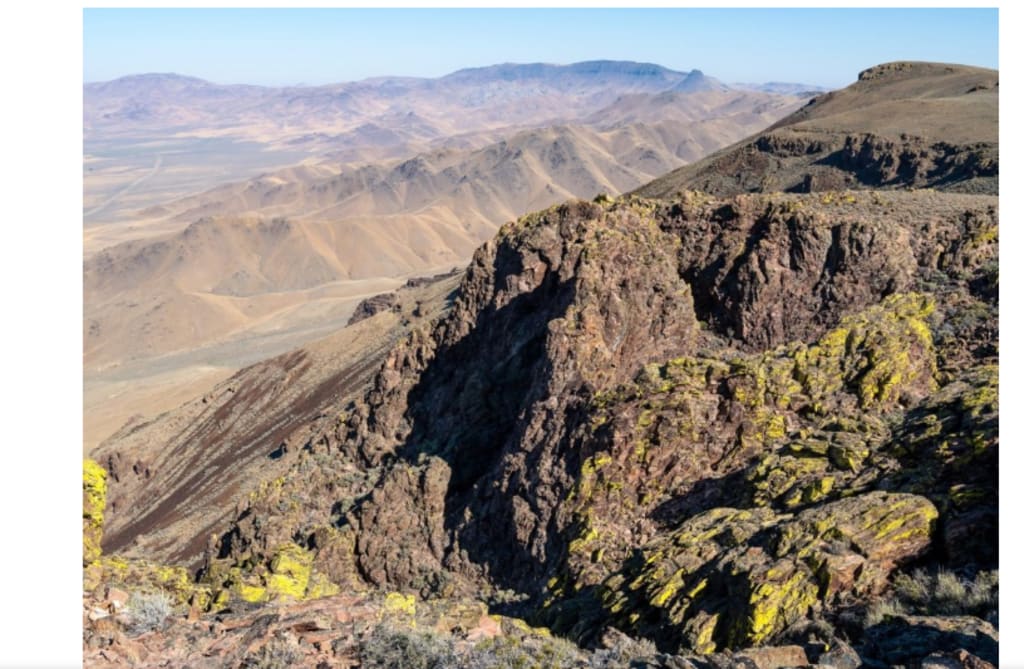
Moss appears to survive on very little. It reappears minutes after rain, colonises bare rock, and withstands almost complete desiccation. The great majority of land plants collaborate underground with fungi to exchange sugars for nutrients that they are unable to obtain on their own. The exception had always been mosses.
That idea may have been incorrect, according to recent study from the desert landscapes of California. Within the tissues of desert moss, researchers have discovered evidence of a hitherto unreported interaction. Under the microscope, what scientists saw suggests a relationship that may predate nearly all of our knowledge about terrestrial plant life.
Examining the inside of desert plants
In the Mojave and Sonoran deserts, where summer temperatures frequently surpass 100 degrees Fahrenheit, Kian Kelly, a PhD candidate at the University of California, Riverside, gathered desert moss from granitic soils and volcanic rock fields.
Biocrusts, which are thin living communities at the soil's surface where mosses, algae, bacteria, and fungi form a crust that stabilises topography, were the subject of his research. In order to create a purposeful variety of climate variables for comparison, Kelly also collected samples from less arid coastal locations.
The scientific consensus had long been acknowledged by his co-author, Jason Stajich, a UCR professor of microbiology and plant pathology. Stajich remarked, "That's been the model." The idea was that mosses just didn't interact with fungi.
In order to test that idea, scientists crushed up the tissue and looked for fungal DNA after surface-sterilizing each moss sample to remove any extraneous organisms. Instead of merely adhering to the plant, the objective was to separate what was residing inside it.
Fungi that require hosts
Mycorrhizal fungi, more especially arbuscular mycorrhizal fungi, or AMF, were among them. The substance that emerged from bare ground gathered just inches away was different from that found inside the sterilised moss.
AMF requires a living plant host to survive, in contrast to decomposers that move freely through the soil. The vast majority of land plants rely on AMF to extract nitrogen and phosphorus from the soil in exchange for carbon, according to an analysis of this symbiosis.
Mosses had constantly been found outside of that arrangement in previous surveys. Because these organisms require a living plant partner to exist, it is more difficult to rule out their presence in sterilised moss tissue as unintentional contamination. They were being sustained by whatever was within the moss.
Fungi that reside within leaf cells
Live colonisation could not be verified by DNA evidence alone. Kelly looked at the samples under a microscope using a chemical dye that attaches itself to fungal tissue. Individual leaf cells of the common desert moss Trichostomopsis australaceae showed branching fungal formations.
Kelly remarked, "I knew we had something really interesting as soon as I saw that." AMF creates tiny, frequently branched structures inside root cells in plants that establish real symbioses with fungus in order to exchange nutrients.
There are no roots in mosses. However, Kelly noticed that the leaves were structurally similar, so much so that scientists refer to them as "arbuscule-like." This type of intracellular branching inside healthy moss cells had never been observed before.
Aridity modifies the mixture
Compared to samples from hyper-arid Mojave Desert areas, the same moss species collected from coastal sites close to San Diego, California, showed significantly greater quantities of AMF. The driest material lacked the intracellular structures observed along the coast.
According to Kelly, "we suspect that some fungi are more helpful for surviving hotter, drier climates." Numerous studies have shown how biocrust communities are disrupted by physical disturbance and warming, which has a domino effect on erosion, carbon loss, and dust production throughout dryland areas.
Rising temperatures and human activities are already putting a lot of strain on desert biocrusts. This directly affects these communities' ability to withstand climate change. The fungus mixture within desert moss may alter as the American West gets drier, which could lessen the mosses' capacity to
An ancient alliance, re-examined Mosses are closely connected to some of the first land plants on Earth. About 470 million years ago, fungi are assumed to have assisted those early pioneers in moving from water to dry land by supplying nutrients that the plants were unable to obtain on their own.
The theory that a fungal partnership existed at the beginning of plant life on land is supported by research on the evolutionary history of land plant and fungal interactions. That story had been written without Mosses. This discovery reintroduces them.
Our understanding of when these associations originally emerged in the lineage that gave rise to modern land plants would also be altered if the relationship holds up to more testing.
What follows
Researchers must demonstrate that nutrients are genuinely transferring between moss and fungi before the connection can be formally referred to as a symbiosis. That type of interchange is compatible with the structural evidence, but observation is insufficient on its own.
The ramifications go beyond evolutionary biology. Certain fungi may potentially be employed to assist repair damaged biocrust throughout warming desert environments if they help mosses withstand heat and dryness.
The presence of fungi within the tissues of almost all of the more than 10,000 known species of moss has never been investigated. This finding raises the possibility that there are a lot more undiscovered collaborations out there.
About the Creator
Enjoyed the story? Support the Creator.
Subscribe for free to receive all their stories in your feed.
Comments
There are no comments for this story
Be the first to respond and start the conversation.