
The Sky Is Not Empty — It's Just Far Away
The Universe Might Not Even Be Alone

Why Aliens Probably Haven't Visited Earth — And What's Really Going On Up There
The universe is too big, physics is too strict, and Earth's own history already explains the "mystery" better than any spaceship could.
Look up on a clear night and you'll see thousands of stars. Most of them have planets. Some of those planets could, in theory, host life. So why hasn't anyone shown up?
Physicist Enrico Fermi asked this exact question decades ago, and it's now famous as the Fermi Paradox: if the universe is old enough and big enough for life to be common, where is everybody? The honest answer isn't disappointing — it's just bigger than most people expect. Once you understand the actual physics involved, alien visits stop sounding like a cover-up and start sounding like a math problem nobody can solve, no matter how advanced they are.
The Universe Might Not Even Be Alone
Our universe started about 13.8 billion years ago in the Big Bang — not an explosion in space, but space itself stretching outward from an unimaginably dense point. Everything that exists came from that single beginning.
Some physicists go further. Theories of cosmic inflation suggest our universe might be one of many, each potentially with its own laws of physics — a concept called the multiverse. It's a serious scientific idea, not science fiction. But here's the catch: if other universes exist, they're sealed off from ours by definition. No light, no signal, no spacecraft from one could ever reach another. So even in the most exotic version of "out there," visitors were never coming from outside our universe.
That leaves the rest of our universe — and that's already far enough to make the point.
The Real Obstacle: Distance, Not Secrecy
Light moves at about 300,000 kilometers per second. In a year, it covers roughly 9.5 trillion kilometers — a unit we call a light-year. Our closest neighboring star, Proxima Centauri, is 4.2 light-years away.
That sounds almost reachable. It isn't.
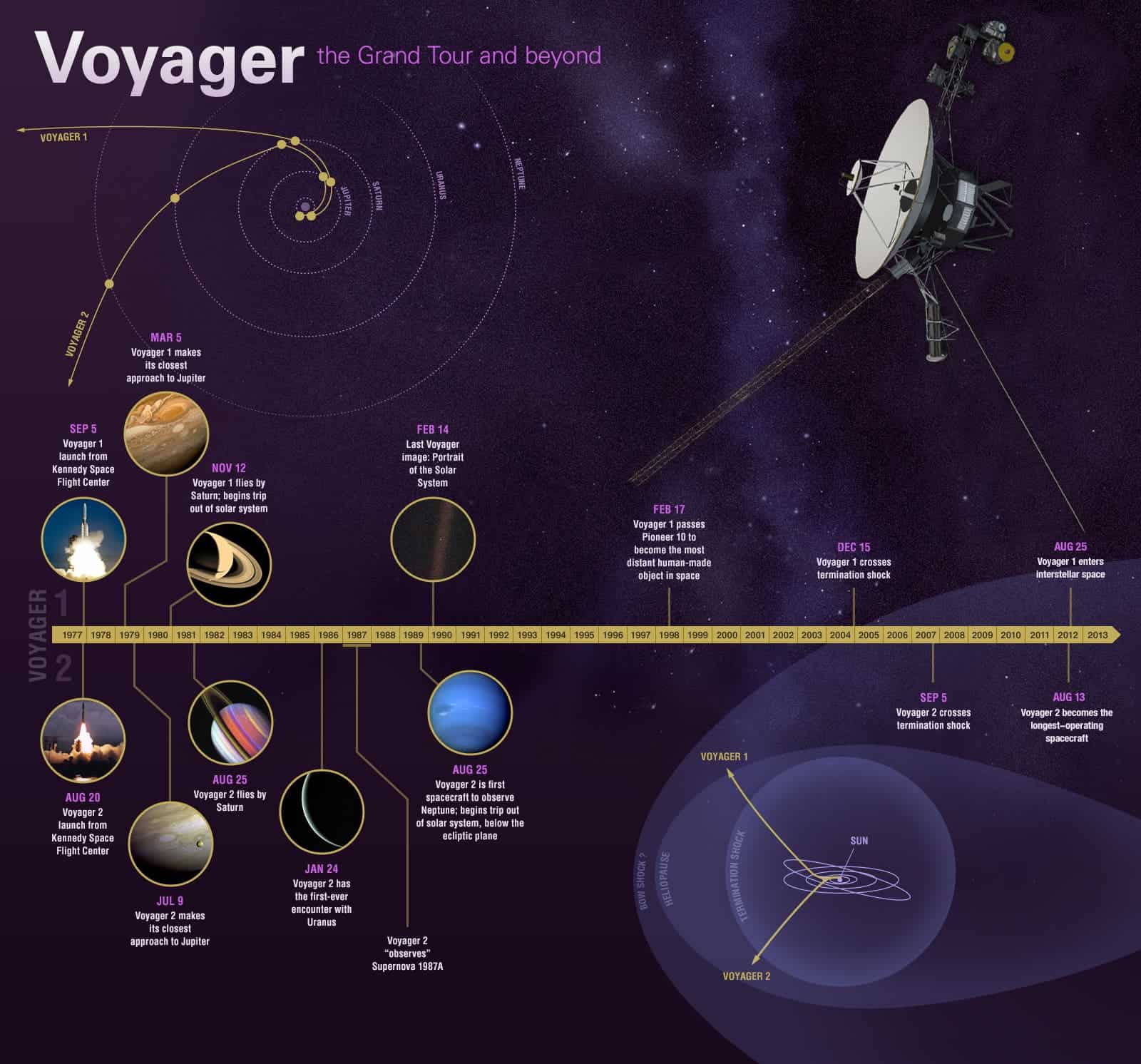
Voyager 1, the fastest, farthest-traveling spacecraft humans have ever built, launched in 1977 and has been racing outward for decades at over 60,000 km/h. At that speed, reaching Proxima Centauri would take more than 70,000 years — and Voyager isn't even headed that way.
Shrinking the numbers helps make this real:
If the Sun were the size of a basketball, Earth would be a grain of sand about 30 meters away.
Proxima Centauri's basketball-sized star would sit roughly 7,500 kilometers away — the distance from New York to Tokyo.
That's the gap a "quick visit" from the nearest star actually requires. Now multiply that by the 100,000+ light-years across our galaxy alone, and the silence in the sky starts making a lot more sense.
The physics is unforgiving too: nothing with mass can reach the speed of light, because the energy needed to accelerate an object climbs toward infinity as it approaches that speed. A spacecraft can get close to light-speed. It can never arrive instantly. This isn't a limitation of our technology — it would apply to any civilization, no matter how advanced, anywhere in the universe.
Why Time Travel and Teleportation Don't Save the Theory
Science fiction solves the distance problem with two shortcuts. Neither survives contact with real physics.
Time travel into the future is technically real in a tiny sense — astronauts on the International Space Station age microseconds slower than people on Earth, a measurable effect of relativity. But traveling backward in time, or skipping centuries forward at will, would require things we've never observed: negative energy, stable wormholes, exotic matter. Every serious model collapses into paradoxes or demands infinite energy.
Teleportation fares no better. The instant matter-transport version from Star Trek would still need to move information faster than light to work over interstellar distances — which breaks the same speed limit as travel itself. Real "quantum teleportation," the kind physicists actually study, doesn't move matter at all. It transfers quantum information between particles, and even that can't outrun light-speed signaling.
There is, in short, no loophole. Distance is the wall, and nothing in known physics tunnels through it for free.
Black Holes: Dead Ends, Not Doorways
Black holes get pulled into alien theories as a possible shortcut — maybe a tunnel to another galaxy, or another universe. Reality is less convenient.
A black hole forms when a massive star collapses into a point so dense that nothing — not light, not matter, not information — can escape past its event horizon. Some equations technically allow for a wormhole connecting two points in space-time. But every physical model shows these would be unstable and collapse instantly, or require passing through the black hole's center, where gravity is so extreme it would stretch and rip apart any traveler at the atomic level — an effect physicists call spaghettification.
Black holes aren't cosmic shortcuts. They're the universe's most efficient dead ends.
So Where Did the Rumors Come From?
Mystery spreads faster than explanation, especially when the real story is classified.
Area 51 is a genuine U.S. Air Force testing site in Nevada. It's where stealth aircraft like the U-2 spy plane and SR-71 Blackbird were developed in total secrecy during the Cold War. People who saw strange, fast, silent aircraft testing at night had no idea they were watching classified human engineering — so they assumed something otherworldly. Decades of official secrecy only fed the speculation. The evidence for secret jets is overwhelming. The evidence for extraterrestrials is nonexistent.
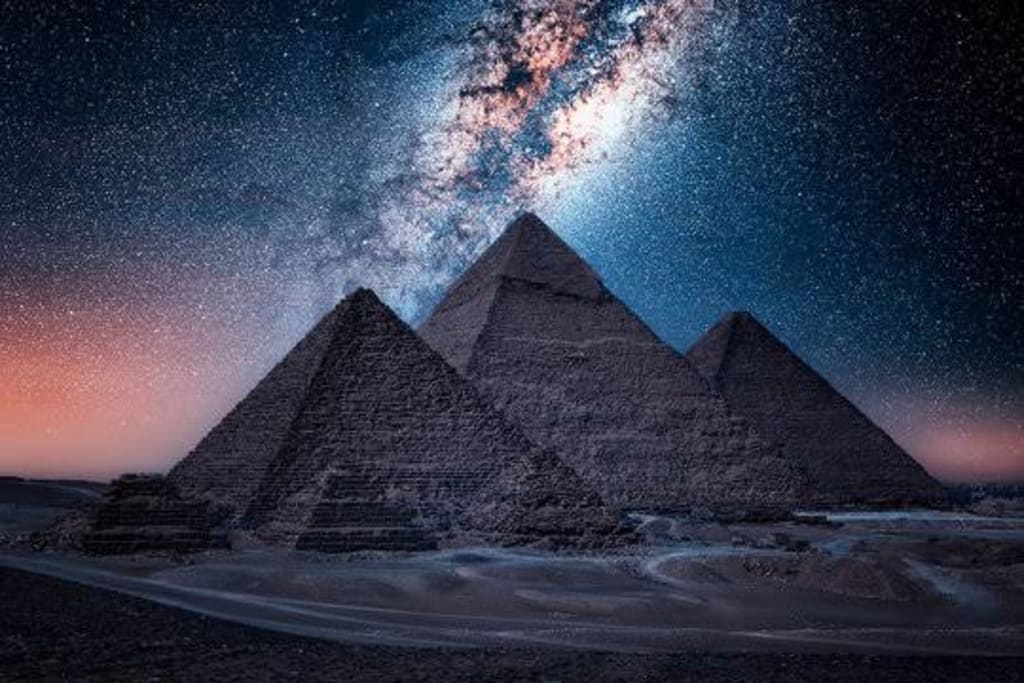
The pyramids of Giza get the same treatment. Ancient-astronaut theories claim humans couldn't have built them without help. But archaeologists have found the actual workers' village — bakeries, medical records of healed fractures from labor injuries, ramps and tools matching the construction. Egyptian records describe organized labor crews working rotating shifts, paid in food and beer. The "mystery" disappears the moment you look at the excavation data instead of the legend.
Earth Already Knows How to "Reset" Itself
Here's the twist: our own planet offers a working model for dramatic, total reinvention — no aliens required.
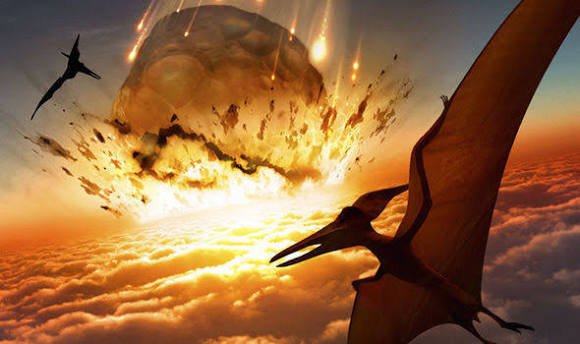
About 252 million years ago, the Permian extinction wiped out roughly 90% of life on Earth, likely triggered by volcanic upheaval that poisoned the oceans and atmosphere. Life rebuilt itself slowly, over millions of years. Around 201 million years ago, another extinction event cleared space for dinosaurs to rise and dominate the planet for more than 150 million years. Then, 66 million years ago, an asteroid roughly 10 kilometers wide struck what's now Mexico's Yucatán Peninsula, blocking sunlight for years and collapsing global food chains — ending the age of dinosaurs and clearing the way for small mammals, our ancestors, to eventually take over.
Each reset followed the same pattern: catastrophe, collapse, and a long, patient climb back toward complexity, with new species filling the gaps left behind. Nature doesn't need visitors from another star to reinvent itself. It has been quietly doing that for billions of years, using nothing but chemistry, time, and chance.
The Real Wonder
The universe isn't empty of wonder — it's just too vast for visitors, and too old to need them. Every "mysterious" rumor, looked at closely, turns out to have a human explanation, a physical law, or a buried fossil behind it. The story was never going to arrive by spaceship. It was already written into rock, bone, and starlight — waiting for someone patient enough to read it.

About the Creator
write with shan
🌍 Discovering the world through words.
👻 Horror & Mystery Stories
🔬 Science & History Articles
📈 Trading Knowledge
🎬 Movie Reviews & Analysis
New content every week.
Enjoyed the story? Support the Creator.
Subscribe for free to receive all their stories in your feed.
Comments
There are no comments for this story
Be the first to respond and start the conversation.