Advocacy
Cold Shock?
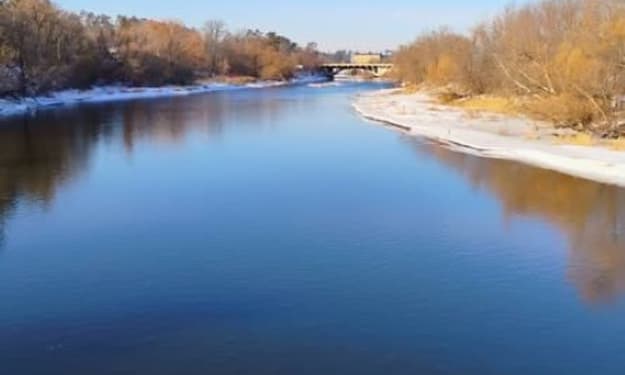
Just a day ago, people in north central Wisconsin were enjoying a touch of warmth that felt like a true sign of spring. Light jackets replaced heavy coats. Families stepped outside. The air carried a sense of relief after months of cold weather. It felt like the season had finally changed. But then, almost unexpectedly, everything shifted. How did the weather change so fast? Nature doesn’t always follow human expectations. After Monday’s unseasonably warm temperatures, a cold air system quickly moved into the region. This sudden shift pushed temperatures downward, leaving highs struggling to reach even 50°F (10°C) through the middle of the week. For many residents, it feels confusing — how can it feel like spring one day and late winter the next? What does this mean for daily life? This isn’t just about numbers on a weather report. It’s about how people live their everyday lives. The return of colder temperatures means pulling winter clothes back out of closets. Morning routines feel harsher. Outdoor plans are delayed or canceled. Even simple activities like walking, jogging, or sitting outside suddenly feel uncomfortable again. Are the winds making it worse? Absolutely. The cold air is being accompanied by strong, gusty winds reaching up to 30 miles per hour. These winds don’t just blow — they cut through clothing, making temperatures feel even colder than they actually are. This “feels-like” temperature can impact how people experience the day, turning a cool afternoon into something that feels much closer to freezing. Why is frost a serious concern? One of the biggest worries isn’t just the cold — it’s the frost expected by Wednesday morning. Frost may seem harmless, but it can be damaging, especially during spring. Plants that began to grow during the recent warmth are now at risk. Flowers, small crops, and garden plants could be affected overnight. For farmers and gardeners, this is more than inconvenience — it’s a potential loss. What about the rain later in the week? As if cold and wind weren’t enough, scattered showers are expected by Thursday. Rain during already chilly conditions can make everything feel heavier and more uncomfortable. Wet roads, gray skies, and cold winds together create a mood that feels far from the bright, hopeful energy people expect in spring. Is this kind of weather normal? It may feel unusual, but sudden changes like this are not entirely rare. Seasonal transitions — especially between winter and spring — are often unpredictable. Warm air and cold air systems compete, and sometimes the colder one wins, even if only for a short time. This is part of the natural rhythm of weather, even if it catches people off guard. When will things start to improve? There is good news on the horizon. Weather experts suggest that conditions will begin to improve toward the end of the week. A high-pressure system is expected to move into the region, bringing calmer winds, clearer skies, and gradually rising temperatures. It won’t happen instantly, but the shift back toward warmth is coming. What lesson does this weather teach us? This sudden cold snap is a reminder of how quickly things can change. One warm day doesn’t guarantee stability. Being prepared for unexpected weather — whether by protecting plants, dressing in layers, or staying updated with forecasts — can make a big difference. Nature always has the final say. Final Thoughts Wisconsin’s sudden drop in temperature tells a simple but powerful story. It shows how unpredictable weather can be, especially during times of seasonal change. From warm sunshine to chilly winds and possible frost, this week is a reminder that spring doesn’t always arrive smoothly. But just as quickly as the cold came, it will pass. And when it does, the warmth will feel even more welcome than before.From warm sunshine to chilly winds and possible frost, this week is a reminder that spring doesn’t always arrive smoothly. But just as quickly as the cold came, it will pass. And when it does, the warmth will feel even more welcome than before. Moments like these also remind communities to stay patient and adaptable, because nature often moves in its own rhythm, not ours.
By Ethan Blake5 months ago in Earth
Animal testing: Why it should be banned
Animal testing: Why it should be banned Introduction Imagine being born into the world as an innocent animal sentenced to a life contained in a laboratory subjected to testing and experiments. This is the sad reality millions of animals face globally. All so that humans get their favorite skincare products. While consumers are enjoying their new products, these animals go through cruel suffering. It is time to see that animal testing should be banned everywhere.
By sarah urbach5 months ago in Earth
Research Excludes Competition and Climate as the Only Reasons for Neanderthal Extinction
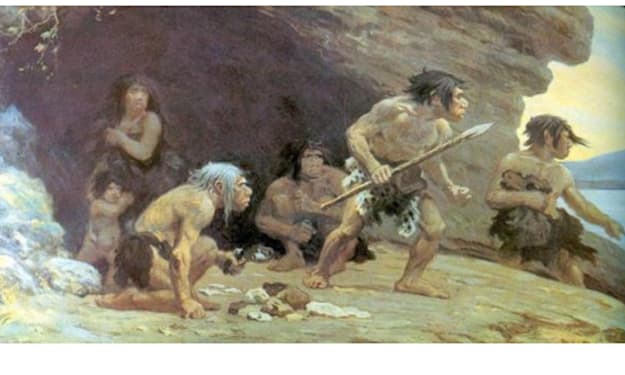
Neanderthals' extinction from Europe cannot be fully explained by either direct competition with early modern people or climatic change, according to a recent research using sophisticated geographical modelling. The study, which modified models often employed in conservation biology, indicates that social network structure and regional connectedness were significantly more important for Homo sapiens' survival and the eventual extinction of our nearest extinct ancestors.
By Francis Dami5 months ago in Earth
Iran vs UAE: Why Oman Stayed Different
Iran vs UAE: Why Oman Stayed Different Tensions in the Middle East often raise one big question: why does Iran show strong hostility toward the UAE, while Oman usually remains outside direct confrontation? Many people ask whether Iran wants to invade the UAE and why Oman has often been treated differently.
By Wings of Time 5 months ago in Earth
Make it Exploit the Earth Day
The environmentalist movement is ironic. Their label seems to be about a concern for nature but that could give a damn about human nature which carries the most weight. People wish to save the eagles and the beagles and the plants and the ants without regarding man and his achievements.
By Skyler Saunders5 months ago in Earth
Volcanic eruptions are causing gold and other valuable metals to leak from the Earth's core and reach the surface.
An enormous reservoir of gold and other valuable metals can be found deep under the Earth's core, hidden beneath the thick crust and searing layers. It has long been thought by scientists that these treasures, which include ruthenium and gold, are still trapped close to the core-mantle border, which is located roughly 1,900 miles (3,000 kilometres) below the surface.
By Francis Dami5 months ago in Earth
Countries that might vanish in the next 50 years
Right now, somewhere in the world, a country is disappearing. Not in a movie. Not in a history book. In real time. The maps we grew up with — the ones pinned to classroom walls — may look completely different fifty years from now. And the scary part? This has happened before. The Roman Empire. The Soviet Union. Yugoslavia. All gone. All once thought permanent. So the question is — which countries on today's map are next?
By Shirley Oyiadom6 months ago in Earth
Native American Ceremony
Author's note: Years ago, I was in a meeting when some women who came down from the tar sands in Canada had come to speak with women about our water being in trouble. They said it was important for our families, for their future, and for all of us. And that it is the women's job to care for the water.
By Denise E Lindquist6 months ago in Earth
Dr. B.R. Ambedkar’s Blueprint for Modern India’s Infrastructure and Economy
When the annals of Indian history are read, Dr. Bhimrao Ramji Ambedkar is universally celebrated as the chief architect of the Indian Constitution and the foremost crusader for social justice. Yet, this towering political and social legacy often eclipses another equally crucial dimension of his genius: his role as a pioneering economist and a visionary nation-builder.
By Arjun. S. Gaikwad6 months ago in Earth
Under Antarctica, a robot submarine discovers unidentified constructions before losing communication and vanishing.
After travelling underwater for about 10 miles into the centre of the Dotson Ice Shelf in West Antarctica, an autonomous submarine investigating the shelf reported odd under-ice features before going silent. After spending weeks examining a region of about fifty square miles of ice, the vehicle known as Ran discovered patterns that defied basic melt models.
By Francis Dami6 months ago in Earth
While some parts of Earth are becoming darker at night, the planet is becoming brighter overall.
Have you ever observed how a city appears to be breathing at night? Imagine that vista from space now. The Earth doesn't just glow silently; it pulses, flickers, and changes to show how people live, construct, suffer, and develop.
By Francis Dami6 months ago in Earth