
Research Excludes Competition and Climate as the Only Reasons for Neanderthal Extinction
Modelling Prehistoric Networks and Habitats

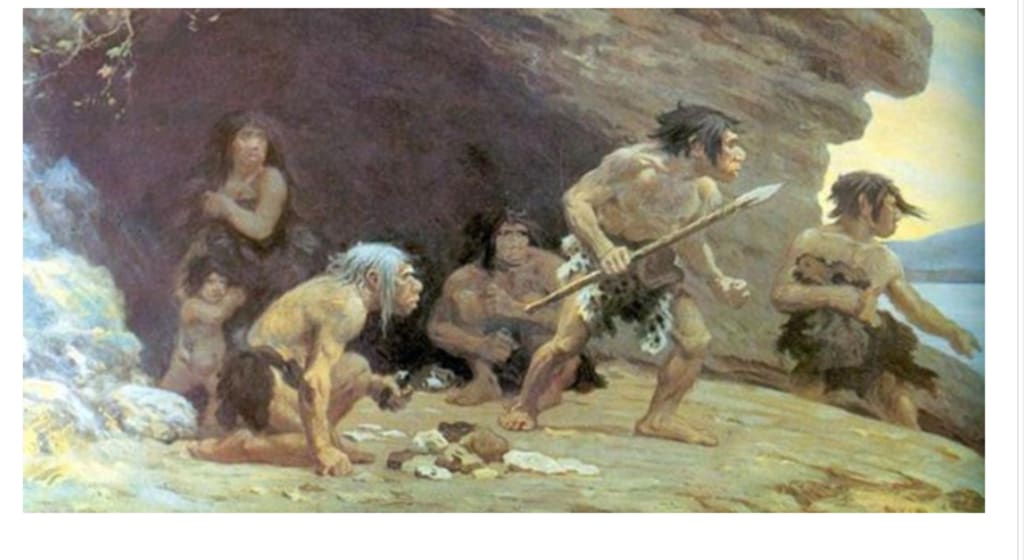
Neanderthals' extinction from Europe cannot be fully explained by either direct competition with early modern people or climatic change, according to a recent research using sophisticated geographical modelling. The study, which modified models often employed in conservation biology, indicates that social network structure and regional connectedness were significantly more important for Homo sapiens' survival and the eventual extinction of our nearest extinct ancestors.
The study has concentrated on Europe between 60,000 and 35,000 years ago, during Marine Isotope Stage 3 (MIS 3). Dramatic temperature swings, alternating between extremely cold stadials and warmer interstadials, were a defining feature of this era. While the last Neanderthals disappeared from the archaeological record during this turbulent time, the first groups of Homo sapiens established a permanent foothold in Europe.
Modelling Prehistoric Networks and Habitats
The research team used species distribution models, a method frequently used in digital ecology to forecast a species' potential habitat based on observation data, to comprehend the dynamics of this population replacement.
Archaeological sites functioned as "presence points" for both Neanderthals and modern humans in this instance. The researchers developed habitat suitability models to pinpoint "core" areas that might sustain stable populations by combining geographic data and climate variability indices.
Importantly, the study discovered that even during the most severe climate downturns, Neanderthals could still find acceptable habitat throughout Europe. Important refuges in southwestern Europe, especially in the Franco-Cantabrian region and southern Iberia, preserved stable circumstances that would have enabled populations to endure and rebound.
Given that Neanderthals had successfully traversed earlier glacial cycles, this discovery strongly contradicts the long-held theory that climate change alone was the cause of their extinction.
The Influence of Social Networking
What gave Homo sapiens the evolutionary advantage if habitat loss and climate stress weren't the main causes? The models suggest that the topology of their social networks holds the key to the solution. It was discovered that the Homo sapiens-friendly core regions were well connected, enabling various populations to create vast interregional networks.Ariane Burke told Udenouvelles,
"These networks serve as a safety net." "They allow for the exchange of information on resources and animal migrations, the forming of partnerships, and temporary access to other territories in the event of a crisis."
Even though Neanderthals kept ties between tribes, their networks were not very strong, particularly in Central and Eastern Europe. Isolated Neanderthal groups were extremely susceptible to demographic shocks and erratic environmental variability due to their lack of connection.
On the other hand, resilience and quick recovery were made possible by Homo sapiens' strong networks. This confirms earlier findings that archaic humans probably established mating networks to prevent inbreeding, a tactic that might not have worked as well among dispersed Neanderthal communities.
A Regional and Complicated Extinction
Additionally, the study casts doubt on the theory that the Neanderthal extinction was caused by direct competition for resources. According to the simulations, there was very little overlap between the two species' territories—never more than five percent of each group's accessible area. Direct pressure between the groups was probably lessened by subtle differences in how each group used the landscape.
Rather, modern humans replaced Neanderthals through a complicated process that differed greatly by geography. The introduction of Homo sapiens may have caused severe stress on already demographically vulnerable Neanderthal populations in Western Europe, where core habitats overlapped more closely.
According to geneticists' results, poorly connected communities in Eastern Europe may have perished due to internal demographic constraints and slow genetic absorption into the growing Homo sapiens gene pool, supporting the idea that Neanderthals never truly went extinct.
In the end, the Neanderthals' extinction was not a singular, consistent occurrence. Climate instability, regional isolation, demographic weaknesses, and complicated interspecific interactions—including interbreeding between humans and Neanderthals—all played a complex role in its development.
Burke pointed out that these prehistoric dynamics serve as a reminder that human existence has always relied on our basic capacity to establish and sustain connections rather than just brains and technology.
About the Creator
Enjoyed the story? Support the Creator.
Subscribe for free to receive all their stories in your feed.
Comments
There are no comments for this story
Be the first to respond and start the conversation.