
Animal testing: Why it should be banned
By Sarah Urbach
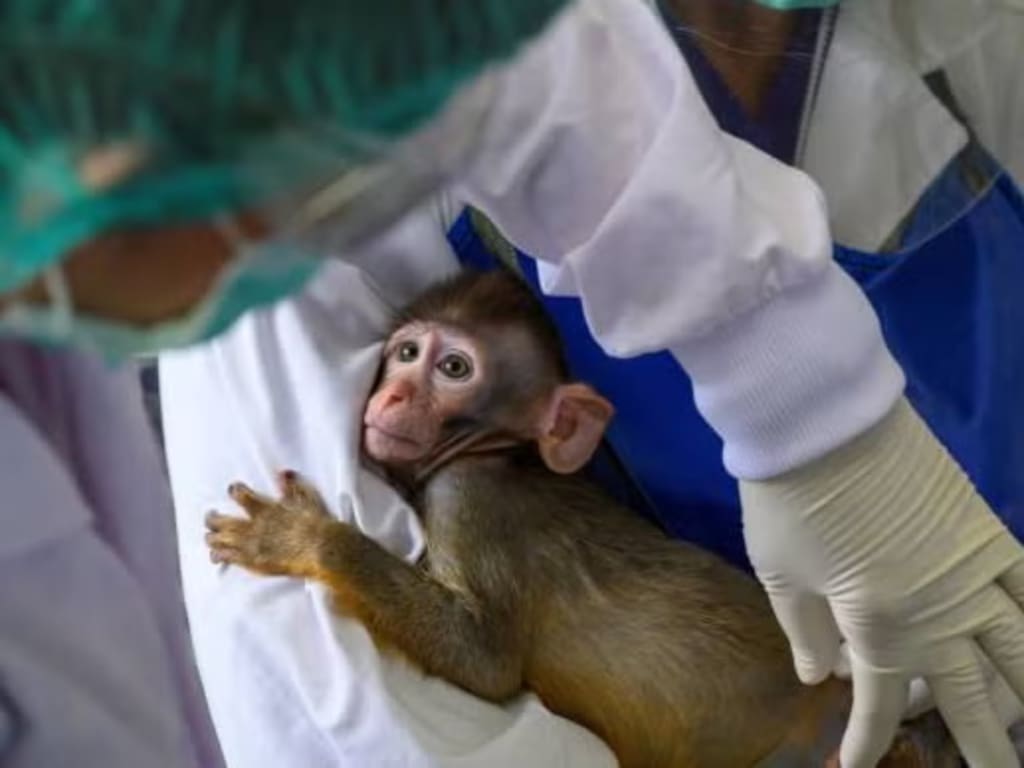
Animal testing: Why it should be banned
Introduction
Imagine being born into the world as an innocent animal sentenced to a life contained in a laboratory subjected to testing and experiments. This is the sad reality millions of animals face globally. All so that humans get their favorite skincare products. While consumers are enjoying their new products, these animals go through cruel suffering. It is time to see that animal testing should be banned everywhere.
These "tests" often lead to severe pain, distress, and even death for these animals. Animal testing consists of cruel practices, including injecting animals with various substances to observe their reactions. Ethically, it is unforgivable to subject animals to such suffering products that are not essential for human survival. These animals are stuck in cages in pain, and companies still feel this is the best way to test their products. Animals, like humans, have the ability to feel pain,fear, and joy, and they deserve our compassion and protection.
The Reality of Animal Testing
Animal testing is often seen as a necessary evil, a means to ensure the safety and effectiveness of products. However, reality is far more disturbing. According to People for the Ethical Treatment of Animals (n.d.), approximately 100 million animals are estimated to be killed in U.S. laboratories every year due to testing procedures. These animals, including rabbits, mice, dogs, and primates, are subjected to disturbing experiments, toxic chemical exposures, and psychological torment. They live in cramped cages, deprived of natural behaviors, and are often left without veterinary care.
Ethical Implications
From an ethical standpoint, animal testing raises profound moral questions. Animals can experience the same feeling as humans such as pain, fear, and suffering. They have their own unique behaviors and needs. Subjecting them to painful and often fatal experiments for the sake of human convenience or profit is morally wrong.
Many advocates of animal testing argue that it is necessary for medical advancements. Harvard Medical School states that animals are a legal and safe way to do human clinical trials (Harvard Medical School, n.d.). However, this perspective overlooks the significant ethical implications of causing suffering to living beings. The ethical treatment of animals is a moral imperative that should guide scientific practices. Society must evolve beyond outdated views that prioritize human interests over the welfare of other living beings.
The Ineffectiveness of Animal Testing
Moreover, the scientific validity of animal testing is increasingly being questioned.Research has shown that animal models often fail to predict human responses to drugs and treatments accurately (Perel et al., 2007). The differences in physiology and genetics between species can lead to misleading results, causing harmful products to be approved for human use or safe products to be deemed unsafe. For example, the drug thalidomide, which was tested on animals and deemed safe, caused severe birth defects when used by pregnant women.
As a result, many people are advocating alternative methods that do not involve animal testing. Advances in technology have led to the development of in vitro testing, computer modeling, and human-based research methodologies that can provide more reliable and ethical results. These alternatives not only reduce the suffering of animals but also enhance the accuracy of research outcomes.
The role Consumers Have on Animal Testing
Consumers are crucial in the movement against animal testing, with many increasingly seeking cruelty-free products. The Natural Library of Medicine reveals that consumers' purchasehoices are significantly influenced by whether livestock products come from a farm that treats animals well. This reflects a growing awareness of the ethical implications of animal suffering.
However, some argue that animal testing is essential for ensuring product safety. The American Medical Association has stated that animal testing has historically contributed to significant medical advancements, including vaccines.
While this perspective is important, advancements in technology have introduced alternatives that can provide more reliable results without animal suffering. The Wyss Institute (2025) explains that animal tests often do not predict human side effects well because some organs and species react differently, so preclinical tests in animals do not always work for humans. By choosing to support cruelty-free brands, consumers can drive companies to adopt humane practices while still prioritizing safety through innovative methods.
Conclusion
In conclusion, the reality of animal testing can no longer be ignored. The suffering these animals endure in labs is heartbreaking, and as consumers, consumers have the power to make a difference by choosing cruelty-free products. Organizations like the American Medical Association are advocating for alternatives, showing that scientists don’t need animal testing to ensure safety and effectiveness.
Imagining these animals in pain due to cosmetic testing is a sad truth. With advancements in humane alternatives, it’s time to take a stand against this practice. Let’s work together to ban animal testing everywhere and create a future where compassion and innovation can coexist.
References
Wyss Institute. 2025, April 2. Beyond animals: Revolutionizing drug discovery with
human-relevant models. https://wyss.harvard.edu/news/beyond-animals-revolutionizing-drug-
discovery-with-human-relevant-models/
Humane World for Animals. Ending animal testing: How humane alternatives are
transforming science. Retrieved April 5, 2026, from
https://www.humaneworld.org/en/issue/animal-testing-research
People for the Ethical Treatment of Animals. (2026). Animal experiments overview.
Retrieved April 11,2026 from
https://www.peta
Harvard Medical School. (n.d.). Why animal research is necessary. Retrieved April
11,2026 from ttps://hms.harvard.
Chang, M. Y., & Chen, H. S. (2022). Consumer attitudes and purchase intentions in relation to animal welfare-friendly products Retrieved April 11,2026 from
https://doi.org/10
Perel, P., Roberts, I., Sena, E., Wheble, P., Briscoe, C., Sandercock, P., Macleod, M., &
Mignini, L. (2007). Comparison of treatment effects between animal experiments and clinical
trials: Systematic review. BMJ, 334(7586), 197
https://pmc.ncbi.nlm.nih.gov/articles/PMC2746847//
About the Creator
Enjoyed the story? Support the Creator.
Subscribe for free to receive all their stories in your feed.
Comments
There are no comments for this story
Be the first to respond and start the conversation.