Latest Stories
Most recently published stories in Criminal.
The corpse that couldn’t speak. Content Warning.
The roaring sounds, lights flashing, as the ambulance arrives on scene. The corpse, has already gone cold as a stone cold winters night. The voices, of the authorities, Trying to find out why this beautiful woman, had been brutally beaten?
By Jennifer lindquist5 months ago in Criminal
A Guilty Plea in Jam Master Jay’s Murder, Two Decades Later
Dear Hip Hop Websites, You’ve fumbled the bag. Other news outlets, outside of the hip hop genre have covered the news of another man who became involved in the murder of Jason “Jam Master Jay” Mizell. You should be ashamed of yourselves. This story should have been up a long time ago. The story broke yesterday (May 27, 2026) and exposed how Jay Bryant had confessed to being an accessory to the crime.
By Skyler Saunders5 months ago in Criminal
The Criminal Who Erased People
M Mehran In a city full of noise, the most dangerous thing wasn’t violence. It was silence. Not the peaceful kind. The kind that follows when someone disappears… and no one notices. At first, the cases didn’t connect. A woman missed her morning train. A college student stopped attending classes. A shop owner never opened his store again. Ordinary disappearances. The kind cities swallow every day. But Detective Elias Krohn noticed something others didn’t. There were no searches. No missing person reports. No families asking questions. It was as if those people had never existed. “Everyone leaves traces,” Elias said, staring at a blank file. “Bank accounts. Messages. Someone remembers you.” His partner shrugged. “Maybe they wanted to disappear.” Elias shook his head. “No one disappears this completely.” He dug deeper. The woman who missed her train? No employment records. The student? No enrollment history. The shop owner? The store had never been registered. Every thread he pulled… Vanished. Then he found the name. Not in a file. Not in a database. But whispered by a man too afraid to say it twice. “The Eraser.” Elias leaned forward. “What does he do?” The man’s hands trembled. “He doesn’t kill you,” he said. “He removes you.” The idea sounded impossible. Until Elias tested it. He chose a random name from an old report. A man who had testified in a minor case five years ago. Elias searched for him. Nothing. No records. No address. No history. But Elias remembered him. He had seen him. Talked to him. And now… There was no proof that man had ever lived. Fear settled in, slow and heavy. This wasn’t a criminal who hid evidence. This was someone who erased it. All of it. Digital. Physical. Human. Elias worked in secret after that. No official reports. No shared notes. Because if The Eraser could remove people… What stopped him from removing an investigation? Or a detective? Days blurred into sleepless nights. Then Elias made a mistake. He talked. Just once. To the wrong person. The next morning, his partner didn’t recognize him. “Can I help you?” she asked, polite but distant. Elias forced a laugh. “Very funny.” Her expression didn’t change. “I’m serious. Who are you?” His stomach dropped. At the station, things got worse. His ID didn’t scan. His desk was gone. His name wasn’t in the system. “Sir, you need to leave,” a guard said firmly. “I work here!” Elias snapped. But even as he said it… It sounded uncertain. He ran home. Or at least… to where home should have been. The apartment was occupied. A stranger opened the door. “Can I help you?” Elias stepped back, heart racing. “This is my place.” “No,” the man said calmly. “I’ve lived here for three years.” That’s when Elias understood. The Eraser hadn’t just found him. He had started. Panic turned into desperation. If he didn’t act fast… He wouldn’t just disappear. He would be forgotten. Elias searched for anything that still connected him to the world. Something The Eraser hadn’t reached yet. Something real. He found it in the last place he expected. An old notebook. Paper. Ink. Hidden in a locker he used years ago. Inside, scribbled notes. Names. Observations. And one phrase, repeated again and again: “If you’re reading this, you’re already gone.” Elias flipped through the pages, hands shaking. Every entry described the same thing. Disappearances. Missing traces. The Eraser. Had he been investigating this before? Had he known? Or worse… Had this happened to him already? The final page stopped him cold. A single line, written in a handwriting that looked like his—but not quite. “You can’t stop him. You can only remember.” Elias sat in silence. If records could be erased… If people could forget… Then memory was the only thing left. Fragile. Unreliable. But real. That night, Elias did the only thing he could think of. He wrote. Every detail. Every name. Every moment he could recall. He filled pages, walls, anything he could find. Not to stop The Eraser. But to leave something behind. Something that might survive. Days passed. Or maybe hours. Time felt unstable. Faces became unfamiliar. Even his own reflection seemed… wrong. Fading. One evening, as he sat surrounded by his own desperate writing, he heard a voice. “You’re persistent.” Elias looked up. A man stood in the doorway. Unremarkable. Ordinary. Just like anyone else. “Who are you?” Elias asked, though he already knew. The man smiled faintly. “I think you’ve figured that out.” “The Eraser,” Elias said. “Names don’t matter,” the man replied. “They matter to me.” “Not for long.” Elias clenched his fists. “Why?” he demanded. “Why do this?” The man stepped closer, calm and composed. “Because existence is fragile,” he said. “People think they’re permanent. Important. But they’re not.” “That doesn’t give you the right—” “I’m not taking lives,” he interrupted. “I’m removing illusions.” Elias gestured wildly at the walls. “This is real! I’m real!” The Eraser studied him quietly. “For now.” Silence stretched between them. Then Elias asked the only question that mattered. “Do you remember them?” The Eraser tilted his head. “Who?” “The people you erased.” For the first time… He hesitated. Just for a second. Elias saw it. A crack. “You don’t, do you?” Elias said, voice rising. “You erase them so completely… even you lose them.” The Eraser’s expression hardened. “That’s the point.” “No,” Elias said firmly. “That’s the cost.” Something shifted in the room. Not physically. But… emotionally. Like a balance tipping. Elias took a step forward. “If no one remembers them… then they’re truly gone,” he said. “Not just from the world. From reality itself.” The Eraser didn’t respond. But his silence spoke louder than words. Elias grabbed the notebook and held it up. “I remember,” he said. “And as long as someone remembers… they exist.” The Eraser looked at the pages. At the messy, desperate proof of resistance. And for the first time… He looked uncertain. “You can’t win,” he said quietly. Elias nodded. “I know.” “Then why try?” Elias met his gaze. “Because forgetting is worse.” The room fell silent. Then, slowly… The Eraser turned and walked away. No threats. No final words. Just absence. The next morning, the city moved as usual. Crowded. Loud. Unaware. No one searched for the missing. No one noticed the gaps. But in a hidden corner of an abandoned building… There was a room covered in writing. Names. Stories. Lives. Proof. And sometimes… Someone would find it. Read it. Pause. And feel something strange. A memory that didn’t belong to them. A person they couldn’t place. A life they somehow… missed. Because even in a world where people can be erased… There is one thing that refuses to disappear. The quiet, stubborn act of remembering.
By Muhammad Mehran5 months ago in Criminal
The Criminal Who Sold Perfect Alibis
M Mehran No one in the city knew his real name. They only knew what he sold. Alibis. Not fake IDs. Not stolen money. Not weapons. Just… stories. Perfect ones. If you were planning something illegal—anything from corporate fraud to murder—you didn’t start with the crime. You started with him. People called him “The Architect.” Because he didn’t just create lies. He built entire realities. It began quietly. A businessman accused of embezzlement walked free because, according to dozens of witnesses, he had been at a charity event across town. Security cameras confirmed it. Receipts confirmed it. Even photos confirmed it. The problem? The event never existed. Then came a politician who avoided a scandal by proving he was overseas during a critical meeting. Flight records backed him up. Hotel staff remembered him. There was even footage of him checking in. Except… he had never left the city. That’s when the rumors started. Someone, somewhere, was selling alibis so flawless they could rewrite reality. Detective Mara Voss didn’t believe in ghosts. She believed in patterns. And this one was impossible to ignore. Every suspect who walked free had one thing in common: Their alibi was too perfect. Not just believable. Untouchable. No contradictions. No weak links. No human error. “That’s not how truth works,” Mara muttered, flipping through files. “Truth is messy.” Which meant this wasn’t truth. It was design. Finding The Architect was like chasing smoke. No phone number. No digital footprint. No known associates. Just whispers. “You don’t find him,” an informant told Mara. “He finds you.” “How?” “You make it clear you need him.” Mara didn’t like the answer. But she was running out of options. So she made a decision that blurred every line she had sworn to uphold. She staged a crime. It was small. Controlled. A fake theft inside the evidence department. Nothing important was taken. No one was harmed. But the story leaked. A desperate detective… needing an alibi. Waiting. Watching. Three days passed. Nothing. On the fourth night, Mara returned home to find something unusual. Her apartment door was unlocked. Inside, everything looked untouched. Except for one thing. A black envelope resting on her table. No name. No markings. Just silence. Her pulse quickened as she opened it. Inside was a single sheet of paper. “I can help you.” No signature. No instructions. Just a time and a place. The location was an abandoned theater on the edge of the city. Mara arrived early, weapon hidden, instincts sharp. The building was empty. Or at least… it looked empty. “You’re early,” a voice echoed from the darkness. Mara turned. A man stepped into the faint glow of a broken spotlight. He looked ordinary. Too ordinary. Mid-thirties, plain clothes, forgettable face. The kind of person you’d pass on the street without a second glance. “You’re The Architect,” Mara said. He smiled faintly. “I prefer ‘storyteller.’” “I didn’t come for wordplay.” “Of course not,” he replied calmly. “You came for an alibi.” Mara stepped closer. “I came for answers.” He tilted his head. “Same thing, really.” They sat across from each other in the empty theater, like actors waiting for a script. “You sell lies,” Mara said. “I sell certainty,” he corrected. “There’s a difference.” “You help criminals escape justice.” “I help people avoid consequences,” he said. “Sometimes those are not the same.” Mara’s jaw tightened. “You’re playing with lives.” He leaned forward slightly. “No,” he said softly. “I’m playing with perception.” He explained his process like a craftsman describing art. An alibi wasn’t just a story. It was a network. People. Technology. Timing. Memory. “You don’t convince one person,” he said. “You convince reality.” He manipulated small details—subtle, invisible threads that wove together into something undeniable. A receipt printed at the right time. A stranger who “remembers” a face. A camera angle that tells a specific story. Individually, each piece meant nothing. Together… they became truth. “People don’t question consistency,” he said. “They trust it.” Mara felt a chill. “Why?” she asked. “Why do you do this?” For the first time, his expression changed. Not guilt. Not pride. Something… quieter. “Because truth isn’t fair,” he said. He told her about his past. A brother accused of a crime he didn’t commit. No evidence. No witnesses. Just circumstantial assumptions. The truth was messy. The story against him was clean. He was convicted. “Reality failed him,” The Architect said. “So I learned how to fix reality.” Mara shook her head. “You didn’t fix it. You broke it further.” “Did I?” he asked calmly. “Or did I just expose how fragile it already was?” Silence stretched between them. Mara knew what she had to do. Arrest him. End this. But something stopped her. Because for the first time… She wasn’t sure where the line was anymore. “You could stop,” she said quietly. He smiled. “So could you.” Then he did something unexpected. He slid a folder across the table. “What’s this?” Mara asked. “Your alibi.” “I didn’t commit anything.” “Not yet,” he said. She opened it. Inside was a complete narrative. Dates. Locations. Witnesses. A full, flawless account placing her somewhere else… during the night of her staged crime. Her breath caught. “You planned this,” she whispered. “Of course,” he said. “You needed me. I responded.” Mara looked up. “You’re giving me a way out.” “I’m giving you a choice.” In that moment, Mara understood the real danger. It wasn’t that he could create lies. It was that he could make them feel justified. Necessary. Even right. She closed the folder. “I don’t want it.” The Architect studied her for a long moment. Then he nodded. “Most people do,” he said softly. “That’s why I exist.” Mara reached for her weapon. But when she looked up again… He was gone. No footsteps. No sound. Just an empty theater and a lingering sense that reality had shifted. The next day, Mara turned herself in for the staged crime. Confession. Evidence. Everything. Her colleagues were shocked. The department tried to cover it up. But she insisted. “Truth matters,” she said. Even when it’s messy. The Architect was never caught. His work continued. Invisible. Precise. Untouchable. And somewhere in the city… People still whispered about him. Not as a criminal. But as something far more dangerous. A man who didn’t just break the law. He rewrote it.
By Muhammad Mehran5 months ago in Criminal
Guess I Lost My Virginity to a Corpse: The Kevin Davis Murder Case . Content Warning.
Summary: Corpus Christi resident Kevin Davis strangled his mother before hitting her in the head with a hammer, splitting her skull. Davis then ‘swirled’ her brain around before sexually assaulting her corpse. Davis was sentenced to life in prison for the crime of a mom who he described as “The best.”
By Criminal Matters5 months ago in Criminal
Murderer Kills Two Pedophiles in Prison, Vows to "Kill Them All". Content Warning.
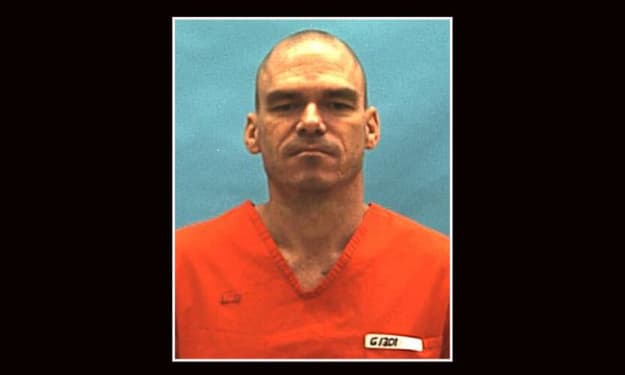
In 2004 while high on crack cocaine, Rocky Ali Beamon and his girlfriend killed a woman. He was given a life sentence behind bars. While incarcerated, he killed two inmates -both sex offenders- and assured the judge felt it was his duty to rid the world of them -and would continue killing pedophiles unless he received the death penalty. Beamon would get his wish but took his own life before the state executed him.
By Criminal Matters5 months ago in Criminal
Iran Signals Harder Line as Tensions With U.S. Deepen
Iran’s leadership is signaling a tougher and more uncompromising stance toward the United States, as recent diplomatic efforts falter and tensions remain high following conflict in the region. Officials and state media increasingly suggest that Tehran is less willing than before to engage in negotiations—especially if talks extend beyond narrowly defined conditions set by Iranian authorities.
By The Academy Awards5 months ago in Criminal