
The Night a 300-Year-Old Violin Triggered a Brutal Attack
They Stole a $5 Million Violin And Left the Musician Dying in the Snow


On a freezing January night in 2014, the streets of downtown Milwaukee were nearly empty. Concertmaster Frank Almond had just finished another performance with the Milwaukee Symphony Orchestra. The applause was over. The lights inside the theater had faded. Audience members had already disappeared into the bitter Wisconsin cold. Almond stepped outside carrying one of the most valuable musical instruments on Earth. A 1715 Stradivarius violin. The legendary “Lipinski Strad.” Worth more than five million dollars. For almost 300 years, the violin had survived wars, thefts, continents, and generations of musicians. Crafted by the master violin maker Antonio Stradivari during the golden age of violin making, the instrument was considered irreplaceable. Its sound was described as hauntingly perfect—warm, human, almost supernatural. That night, it became the target of a violent attack. And for a few terrifying moments, Frank Almond believed he might die in the snow while the violin vanished forever.
A Predator Waiting in the Dark It happened fast. Almond was walking near his car after the concert when a man approached him from behind. There was almost no warning. Then came the electric shock. A Taser slammed into his body. The voltage ripped through his nervous system like fire. Almond collapsed instantly onto the frozen pavement, unable to protect himself as the attacker tore the violin case away from him. The criminal disappeared into the darkness carrying the Stradivarius. For several horrifying moments, Almond lay helpless in the cold Milwaukee night, disoriented and unable to move properly. The pain was excruciating, but the psychological terror came from something else entirely: The violin was gone. Investigators later suspected the robbery had not been random. Detectives believed Almond may have been stalked beforehand. The attacker appeared to know exactly who he was targeting and exactly what was inside the case. This was not a desperate street mugging. This looked planned. Professional. Calculated. And suddenly, one of the world’s rarest instruments had disappeared into the criminal underground.
The Violin That Shouldn’t Exist The Lipinski Stradivarius was more than an instrument. It was history itself. Built in 1715, during what experts call Stradivari’s “Golden Period,” the violin had passed through centuries of elite musicians and collectors. Instruments from this era are considered the greatest violins ever made, with sound quality modern builders still struggle to replicate. Only a limited number remain in existence. And because of their immense value, Stradivarius violins occupy a strange place in the criminal world. They are too famous to sell publicly, too recognizable to display openly, yet valuable enough to attract organized thieves willing to take enormous risks. The robbery immediately triggered international concern. Could the violin be smuggled overseas? Hidden in a private collection? Destroyed accidentally? Experts feared the freezing temperatures alone could damage the centuries-old wood if the instrument were stored improperly. A Stradivarius is delicate. Extreme cold and humidity shifts can crack the body permanently. The violin had survived nearly three centuries. Now it might be ruined in a matter of days.
The FBI Joins the Hunt As news spread, the investigation exploded beyond Milwaukee. The Federal Bureau of Investigation became involved alongside local detectives. The theft of such a culturally significant instrument turned the case into an international art-crime investigation. Tips flooded in. Rumors spread across music communities. Pawn shops, collectors, dealers, and underground networks were quietly monitored. But there was one brutal reality investigators understood immediately: A stolen Stradivarius is almost impossible to move legally. The violin was too famous. Too documented. Too recognizable. Whoever stole it may not have realized that possessing the instrument was almost a curse in itself. Meanwhile, Frank Almond struggled with the emotional aftermath. He later described the attack as deeply traumatic—not only for himself, but for his family. Musicians often form profound psychological attachments to their instruments, especially one carried daily for years. Losing it in such a violent assault felt personal, violating, almost surreal. For Almond, the memory of collapsing onto the icy pavement never truly disappeared.
The Break in the Case Days passed. Then investigators caught a break. A tip eventually led police to suspects connected to the robbery, including a man named Melvin J. Hinton. Authorities began piecing together how the violin had moved after the attack. What they discovered sounded almost absurdly ordinary considering the instrument’s value. The Stradivarius had reportedly been hidden inside an attic. Wrapped in a baby blanket. For days, one of the world’s most priceless violins sat concealed like forgotten junk while investigators desperately searched for it. When the violin was finally recovered, experts anxiously examined it for damage. Miraculously, it survived. The wood remained intact. The instrument still sang. Against all odds, a masterpiece created in 1715 had endured another brush with destruction.
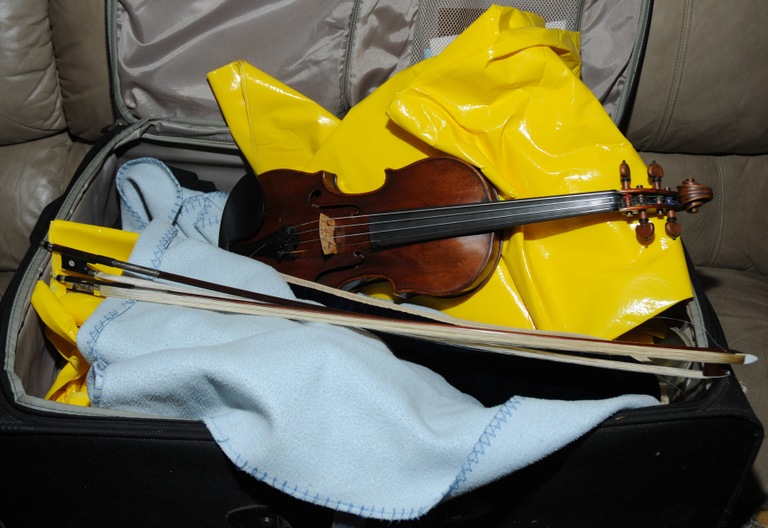
The Psychological Horror of Survival Most true crime stories focus on death. This one lingers because Frank Almond lived. He survived the attack, survived the terror, and returned to performing. But survival stories carry a different kind of darkness—the knowledge that life continues after violence. Every concert afterward carried echoes of that night. Every lonely walk after a performance. Every stranger approaching too quickly. Every shadow in winter darkness. Trauma rewires ordinary moments into permanent warnings. And unlike fictional thrillers, there was no dramatic revenge, no cinematic closure. Just the unsettling reality that a man devoted to beauty and music became the victim of calculated brutality over an object many criminals viewed only as money. The attack exposed something chilling about human obsession: Even art can become prey.
Why This Story Fascinated the World The robbery of the Lipinski Stradivarius became international news because it combined several primal fears into one terrifying narrative. Violence. Luxury. History. Obsession. And survival. There was something almost gothic about the imagery: a world-famous violinist collapsing into freezing darkness while a centuries-old masterpiece vanished into the night. It sounded less like modern crime and more like a scene from a psychological thriller. Yet every detail was real. Even now, the story continues circulating through true crime communities because it feels symbolic of something larger—the collision between human creativity and human greed. One man carried music history in his hands. Another attacked him for it. And somewhere in the middle of a frozen Milwaukee street, art itself nearly disappeared forever. Final Note Frank Almond survived the assault. The Lipinski Stradivarius survived the theft. But the attack remains one of the strangest and most haunting crimes in modern music history—a reminder that some treasures attract not admiration, but predators. And on that January night in Milwaukee, a violin worth millions became the center of a crime scene that looked like the opening chapter of a nightmare.
About the Creator
E. hasan
An aspiring engineer who once wanted to be a writer .
Enjoyed the story? Support the Creator.
Subscribe for free to receive all their stories in your feed.
Comments
There are no comments for this story
Be the first to respond and start the conversation.