
The Milwaukee Cannibal: Inside the Apartment of Jeffrey Dahmer
killing spree of one horrifying individual


On a humid summer night in July 1991, police officers stepped into Apartment 213 at the Oxford Apartments in Milwaukee, Wisconsin. What they discovered did not look real. Photographs of dismembered bodies littered a dresser. A human head sat inside the refrigerator. Acid-filled barrels emitted a chemical stench strong enough to burn the throat. In the freezer were human organs and severed remains wrapped in plastic. The man standing calmly inside the apartment barely resisted arrest. His name was Jeffrey Dahmer. And for over a decade, he had been hunting in silence.
The Boy Who Felt Different Before the headlines called him “The Milwaukee Cannibal,” Dahmer was a quiet child growing up in Milwaukee and later in Ohio. Neighbors remembered him as withdrawn. Teachers described him as detached. His fascination with death reportedly began early. According to later interviews and court testimony, Dahmer became obsessed with animal carcasses as a teenager, collecting roadkill and dissecting it in secret. His parents’ marriage deteriorated around him. Isolation consumed him. By the age of 18, the darkness had already taken shape. In 1978, just weeks after graduating high school, Dahmer picked up a hitchhiker named Steven Hicks. The two drank together before Dahmer realized Hicks intended to leave. He did not want to be abandoned. Dahmer later confessed that he bludgeoned Hicks with a dumbbell and strangled him to death. Then came the horror that would become his signature ritual: dismemberment. He cut the body apart, stripped flesh from bone with acid, and scattered the remains across woodland. The killing would remain undiscovered for years. And it would not be the last.
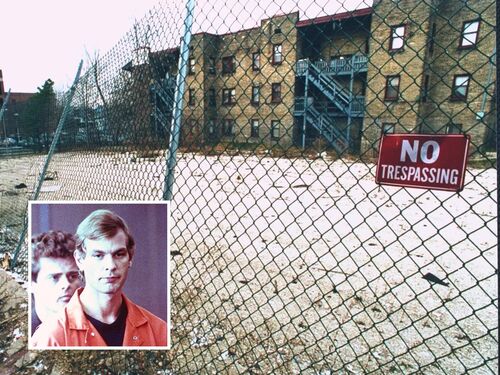
Hunting the Vulnerable For nearly thirteen years, Dahmer drifted through cities, bars, and cheap apartments searching for victims. Most were young men. Many were Black. Some were immigrants. Others were vulnerable runaways with nobody looking for them. He often approached them with a simple offer: money for photographs, beer, or a place to stay. It sounded harmless. That was the terrifying part. Unlike many serial killers who projected rage or frenzy, Dahmer appeared soft-spoken and ordinary. Survivors later described him as awkward rather than threatening. He used trust instead of force. Once inside his apartment, victims were drugged. Then the nightmare began.
Apartment 213 The Oxford Apartments became Dahmer’s slaughterhouse. Neighbors complained for months about strange odors leaking from beneath the door. They heard power tools late at night. One tenant later recalled hearing what sounded like muffled screams. Police visits led nowhere. Inside, Dahmer carried out acts so grotesque they permanently scarred investigators. Victims were strangled. Bodies were photographed in stages of mutilation. He dismembered corpses in his bathtub. He dissolved flesh in acid. He kept skulls as trophies. And in some cases, he consumed parts of the bodies. Cannibalism, Dahmer later claimed, made him feel that his victims became “a permanent part” of him. The statement horrified the nation. But his cruelty did not stop there. Court records and psychiatric evaluations revealed that Dahmer attempted crude experiments on living victims. He drilled holes into skulls and injected acid or boiling water into the brain, hoping to create submissive “zombies” incapable of leaving him. The victims were alive during some of these procedures. Several died slowly. One of the most haunting cases involved Konerak Sinthasomphone, a 14-year-old Laotian boy who escaped Dahmer’s apartment naked, bleeding, and disoriented in May 1991. Two women found the child and called police. But when officers arrived, Dahmer convinced them the boy was simply his intoxicated adult lover. Despite protests from witnesses, police returned the terrified teenager back into Dahmer’s apartment. Within hours, Konerak was dead. The incident would later become one of the most shocking failures in modern American policing.
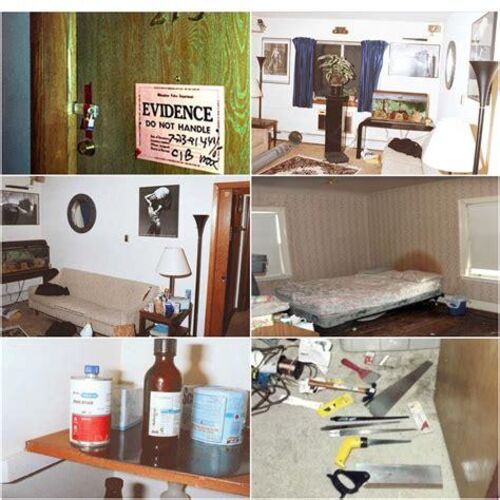
The Night Everything Ended Dahmer’s reign finally collapsed on July 22, 1991. That evening, a man named Tracy Edwards escaped the apartment while handcuffed and flagged down Milwaukee police officers. Edwards described a bizarre encounter with a man acting strangely and threatening him with a knife. When officers entered Apartment 213 to investigate, one detective opened a drawer and found Polaroid photographs showing mutilated human bodies in graphic detail. The officers froze. One reportedly whispered: “These are for real.” Moments later, Dahmer attempted to resist arrest before being subdued. Investigators uncovered remains belonging to multiple victims throughout the apartment: severed heads, preserved skulls, human hearts, and containers filled with acid. The building itself seemed soaked in death. News of the discovery exploded across America. Milwaukee became synonymous with horror overnight.
America’s Obsession With the Monster During the trial in 1992, Dahmer confessed to 17 murders. The courtroom listened in stunned silence as details emerged about cannibalism, necrophilia, dismemberment, and ritualistic preservation of body parts. The crimes felt less like reality and more like something from a nightmare. Yet the man describing them appeared eerily calm. No screaming. No dramatic outbursts. Just clinical descriptions delivered in a flat voice. That contrast disturbed people more than anything else. Psychologists debated whether Dahmer was insane. The defense argued severe mental illness. Prosecutors insisted he understood exactly what he was doing. The jury rejected the insanity defense. Dahmer received 15 consecutive life sentences. Families of victims openly wept in court. Some shouted at him. Others stared silently, broken beyond words. The pain stretched far beyond the killings themselves. Many families had spent years searching for missing loved ones while authorities ignored warning signs surrounding marginalized communities. For Black residents in Milwaukee, the case exposed painful questions about racism, policing failures, and indifference toward vulnerable victims.
Death Behind Bars In 1994, Dahmer’s story came to a violent end inside Columbia Correctional Institution. While performing prison cleaning duties, he was attacked by fellow inmate Christopher Scarver. Scarver beat Dahmer to death with a metal bar from gym equipment. He died at age 34. Even in death, public fascination never faded. Documentaries, books, films, and television series continue revisiting the crimes decades later. But beneath the media spectacle lies something darker and more important: real victims, real families, and real terror. Why the Dahmer Case Still Horrifies the World Many serial killers murdered out of rage, greed, or revenge. Dahmer killed because he wanted possession. Complete possession. He wanted human beings who could never leave him. That chilling motive transformed his apartment into something more disturbing than a crime scene. It became a place where loneliness, obsession, and violence fused into unimaginable cruelty. And perhaps that is why the story still grips people today. Not because Dahmer looked like a monster. But because he didn’t. Behind the glasses and quiet voice was a man capable of horrors so grotesque that even seasoned homicide detectives struggled to process what they had seen inside Apartment 213. A place where the refrigerator held human heads. Where photographs captured death in stages. And where the smell of decay drifted through the halls long before anyone truly understood what waited behind the door.
About the Creator
E. hasan
An aspiring engineer who once wanted to be a writer .
Enjoyed the story? Support the Creator.
Subscribe for free to receive all their stories in your feed.
Comments
There are no comments for this story
Be the first to respond and start the conversation.