tv review
Big crimes, small screen; true crime television series and TV documentaries that recreate and reexamine some of the mystifying and grisliest cases in history.
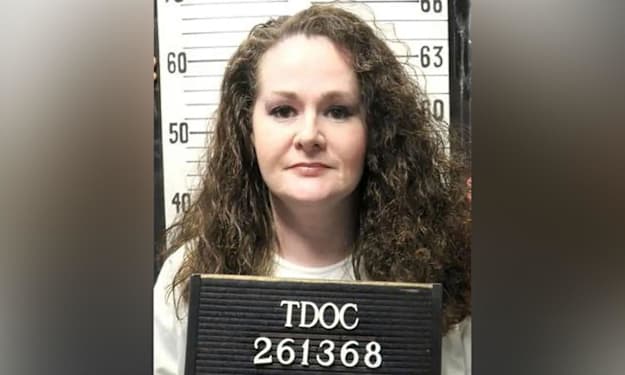
Christa Pike Latest: What Happened at Her Execution and What Happens Next
Tennessee officials attempted to execute Christa Gail Pike on Wednesday 30 September 2026, but the execution failed. As of 1 October 2026, she is alive and receiving care at an off site medical facility following two doses of pentobarbital, according to court filings submitted by her attorneys. A death penalty expert described the event as an unprecedented failure. Readers should check for ongoing developments as the situation unfolds.
By Dadson Wanjohi 25 days ago in Criminal
"Time to Say No" – Ben Gvir's Challenge and the Growing Netanyahu–Trump Divide
"Time to Say No" – Ben Gvir's Challenge and the Growing Netanyahu–Trump Divide The political landscape of the Middle East has always been complex, but recent developments have sparked fresh debates among analysts and observers worldwide. A statement widely associated with Israeli politician Itamar Ben Gvir—"Time to Say No"—has fueled discussions about the future direction of Israeli politics, the leadership of Prime Minister Benjamin Netanyahu, and the evolving relationship between Netanyahu and former U.S. President Donald Trump.
By Wings of Time 5 months ago in Criminal
The Last Train Out
M Mehran The clock on the station wall read 11:47 PM when Detective Sarah Chen realized she'd made a terrible mistake. She'd been tracking Marcus Webb for eighteen months—a man so careful, so calculated, that following him felt like chasing smoke. But tonight, on this abandoned platform at the edge of the city, everything had finally come together. Except nothing was going according to plan. Sarah's radio crackled. "Units approaching from the north," dispatch confirmed. Good. Backup was minutes away. She just needed to keep Webb talking until then. "You know what I figured out about you?" Marcus said, his voice echoing through the concrete tunnel. He stood near the tracks, impeccably dressed despite the late hour—tailored coat, polished shoes, hair swept back with precision. Everything about him suggested control. Everything about him screamed danger. Sarah kept her hand near her service weapon. "What's that?" "You think you understand criminals. You read our files, profile us, predict our moves. But you don't really understand the why. You only understand the what." He smiled, and it sent a chill down her spine. "You found the missing girls?" Her stomach tightened. The missing girls. Three teenagers vanished from the city in the past two years. Parents had plastered the neighborhoods with photos. Vigils had been held. Sarah had spent countless nights reviewing traffic cameras and witness statements, and every trail led back to Marcus Webb—but she could never prove it. Never find the girls. "Where are they?" Sarah demanded. "That's the question that's been eating at you, isn't it?" Marcus took a step toward her. "You're lying awake at night, imagining their mothers' faces. You're carrying the weight of failure like a stone in your chest." "I'm warning you—" "I'm giving you something far more valuable." He reached into his coat, and Sarah drew her weapon. "Easy. Just a phone." He pulled it out slowly, deliberately, and tossed it at her feet. "Everything you need is on there. Every location, every transaction, every person who helped me. Names, dates, times. Enough to prosecute me and everyone in my organization ten times over." Sarah stared at the phone, every instinct screaming that this was a trap. But when she looked up at Marcus, she saw something in his eyes she hadn't expected: exhaustion. "Why?" she asked. "Because I'm tired," he said simply. "And because my daughter asked me to be." The wind howled through the station tunnel, carrying with it the sound of an approaching train. Marcus glanced at the tracks, then back at Sarah. "My daughter—Emma, she's eight years old. Smart kid. Last month, she came home from school and asked me what I did for work. My wife had always handled that conversation, but she was out of town. So I told her. Not everything, but enough." He paused, his jaw tightening. "You know what she said? She said that when the police came to talk at school about staying safe, the officer told them that bad people usually have to go to prison because they hurt other people. Then Emma looked at me and asked if I was a bad person." Sarah waited, sensing there was more. "I realized," Marcus continued, "that I could spend my life running, hiding, building empires built on suffering. I could spend eighteen more years doing exactly what you've been trying to stop me from doing. Or I could choose something different. For her. For myself." He took another step toward the tracks. "I'm going to make this very simple for you, Detective. You pick up that phone. You use everything on it to shut down my operation and save those girls. And in about ninety seconds, that train is going to arrive." Understanding crashed over Sarah like ice water. "No. Don't do this." "It's the only way," Marcus said quietly. "If I stand trial, my people will protect me. I'll spend decades in court, and the case against me will be questioned, challenged, appealed. But this way? This way, there's no corruption angle. No one can say justice was corrupted because I'm just... gone." "That's murder," Sarah whispered. "It's redemption," he replied. "Emma won't have a father in prison. She won't have to visit me on Saturdays and pretend she doesn't know what I've done. She'll have a story—a sad one, yes, but a simple one. An accident. A tragedy. But not a legacy of shame." The sound of the train grew louder, the distant light appearing at the tunnel's mouth like an approaching star. "Where are the girls?" Sarah asked desperately. "Tell me where they are—I can save them right now. You don't have to do this." "They're at the coordinates marked on that phone. They're alive, Detective. They're scared, they're hurt, but they're alive. That's something, isn't it?" Sarah moved toward him, but Marcus stepped closer to the edge of the platform. The train's headlight blazed brighter, filling the tunnel with harsh white light. "Thank you," Marcus said, and for the first time, his careful composure cracked. Tears streamed down his face. "For finding me. For giving me a reason to stop." The train's horn screamed through the station. Sarah lunged, reaching for his coat, but her fingers found only air. She watched, helpless, as the train's massive frame filled her vision and Marcus Webb simply... disappeared. Everything after that became a blur of sounds and chaos. The emergency stop. The screaming of metal against metal. Officers rushing onto the platform. Paramedics arriving, though there was nothing they could do. Sarah stood in the center of it all, shaking, still holding Marcus's phone in her trembling hand. The coordinates led them to an abandoned warehouse six blocks away. The three girls were found in an underground room—malnourished, traumatized, but alive. Their rescue made headlines across the state. News anchors called it a breakthrough. Parents rejoiced. Sarah became the face of justice, the detective who solved the city's most haunting mystery. But alone in her apartment, long after the celebrations ended and the media moved on to other stories, Sarah sat with the full file Marcus had left her. She saw the web of corruption he'd built—city officials, judges, even two of her own colleagues whose names appeared in his detailed records. She saw the scope of his operation, the careful manipulation, the ruthlessness. And she also saw his last entry, a video file dated the night he died. Sarah almost didn't watch it. But her fingers moved across the screen almost of their own accord. Marcus's face appeared, calm and controlled, his daughter Emma visible behind him, playing with dolls in the background. "Detective Chen," he said, "if you're watching this, then I got what I wanted. Emma gets a chance at a normal life. The girls get to go home. And you—you get to know that one criminal, at least, understood that the damage he'd caused had to stop. Not all wrongs can be made right. But some can. And that has to be enough." The video ended, and Sarah sat in the darkness of her apartment, wondering if she'd just witnessed a man's redemption or a perfectly executed escape from justice. She wondered if Marcus Webb had engineered his own death not out of remorse, but out of defiance—one final move that left her and everyone else questioning everything they thought they knew about guilt, redemption, and the cost of justice. Outside her window, the city hummed with its nightly rhythms, indifferent to the moral questions that kept her awake. Somewhere in those streets, Marcus's organization had already begun reorganizing under new leadership. Some of his people were still out there. But the girls were home. That, at least, was something. And in the end, maybe that's all any of us can ask for—that we do something good before we go.
By Muhammad Mehran5 months ago in Criminal
The Night Marcus Holloway Disappeared
M Mehran The town of Greyfield had always been the kind of place where nothing happened. Tucked between two forgotten highways in rural Tennessee, it had one diner, one gas station, and a population of just under four thousand people who all knew each other's business — or thought they did. That changed on the night of October 14th, when Marcus Holloway walked out of his front door and never came back. A Disappearance That Didn't Add Up Marcus was 34 years old, a high school football coach, and by every account, a man with no enemies. His wife, Dana, reported him missing at 11:47 p.m. after he failed to return from what he'd said was a quick errand. His truck was found two days later parked behind a shuttered textile mill on the edge of town — engine cold, keys still in the ignition, a half-empty coffee cup sitting in the holder. No signs of a struggle. No blood. No witnesses. Local law enforcement initially treated it as a voluntary disappearance. Men left their families sometimes. It was painful, but it happened. The sheriff's department opened a file, made a few calls, and quietly moved on. Dana Holloway did not move on. She started asking questions that nobody wanted to answer. The Criminal in Plain Sight What Dana uncovered over the next three months would eventually shock everyone in Greyfield — not just because of the crime itself, but because of who had committed it. Raymond Pryce was 61 years old. He'd been the county's most respected real estate developer for nearly two decades. He sat on the church board. He sponsored the Little League team. He shook hands at every ribbon-cutting ceremony the town had to offer. He was the last person anyone would suspect. But Marcus Holloway had found something — a paper trail buried inside a land deal that Pryce had been running for years. A criminal scheme involving fraudulently acquired federal grants, forged environmental clearances, and millions of dollars quietly siphoned from a housing development meant for low-income families who never saw a single brick laid. Marcus had stumbled onto the records by accident while helping a friend navigate a property dispute. He hadn't gone to the police yet. He'd told only one person what he found. He'd told Dana. And Raymond Pryce — who had ears everywhere in a town that small — had found out. The Investigation That Changed Everything Dana brought her evidence to a state investigator named Carla Voss, who had spent fifteen years working organized financial crime before transferring to the rural task force. Voss later described the case as "the most meticulously concealed criminal operation" she'd encountered outside of a major city. Pryce had not acted alone. He had a network — a silent one — that included a county clerk, a contracted surveyor, and a former building inspector who had since retired to Florida. Together, they had been running the scheme for eleven years, collecting and laundering over $4.2 million in fraudulent grants. When Marcus threatened to expose it, Pryce had made a decision that crossed the line from white-collar crime into something far darker. Marcus Holloway was found alive — barely — fourteen weeks after his disappearance, held in a property Pryce owned under a shell company in an adjacent county. He had been drugged, kept sedated, and moved twice to avoid detection. He had survived on minimal food and water. He had not been harmed beyond the imprisonment itself — Pryce, it seemed, had never quite been willing to go further than abduction, clinging to some internal moral line even as he crossed every other one. What This Case Teaches Us About Crime The Holloway case became a landmark in Tennessee criminal justice for several reasons. First, it demonstrated how white-collar crime rarely stays white-collar. Financial schemes built on secrecy create pressure, and pressure creates violence. Investigators and criminologists have long understood this pattern — economic crimes escalate when exposure becomes a credible threat. Second, it revealed how small communities are uniquely vulnerable to this kind of criminal behavior. Trust is the social fabric of a town like Greyfield. Raymond Pryce weaponized that trust for over a decade. No one questioned him because no one imagined questioning him. Third — and perhaps most importantly — it proved that ordinary people can break cases open when systems fail them. Dana Holloway had no law enforcement training. She had grief, determination, and a banker's box of documents her husband had left in their home office. That was enough. Raymond Pryce was convicted on charges of kidnapping, fraud, conspiracy, and obstruction of justice. He was sentenced to 34 years in federal prison — one year for every year Marcus Holloway had been alive when Pryce decided his secret was worth more than a man's freedom. The Quiet Aftermath Marcus and Dana Holloway still live in Greyfield. He no longer coaches football — the physical effects of his captivity made that impossible — but he teaches history at the same high school where he once roamed the sidelines. Dana works with a nonprofit focused on financial crime awareness. Neither of them has left town. "Greyfield is still our home," Dana told a local reporter shortly after the sentencing. "We're not going to let what one man did take that from us too." In a case filled with darkness, that might be the most striking detail of all.
By Muhammad Mehran6 months ago in Criminal