
The World in a State of Rising Tension
How Ongoing Conflicts, Including the Israel–Palestine Situation, Are Increasing Global Instability

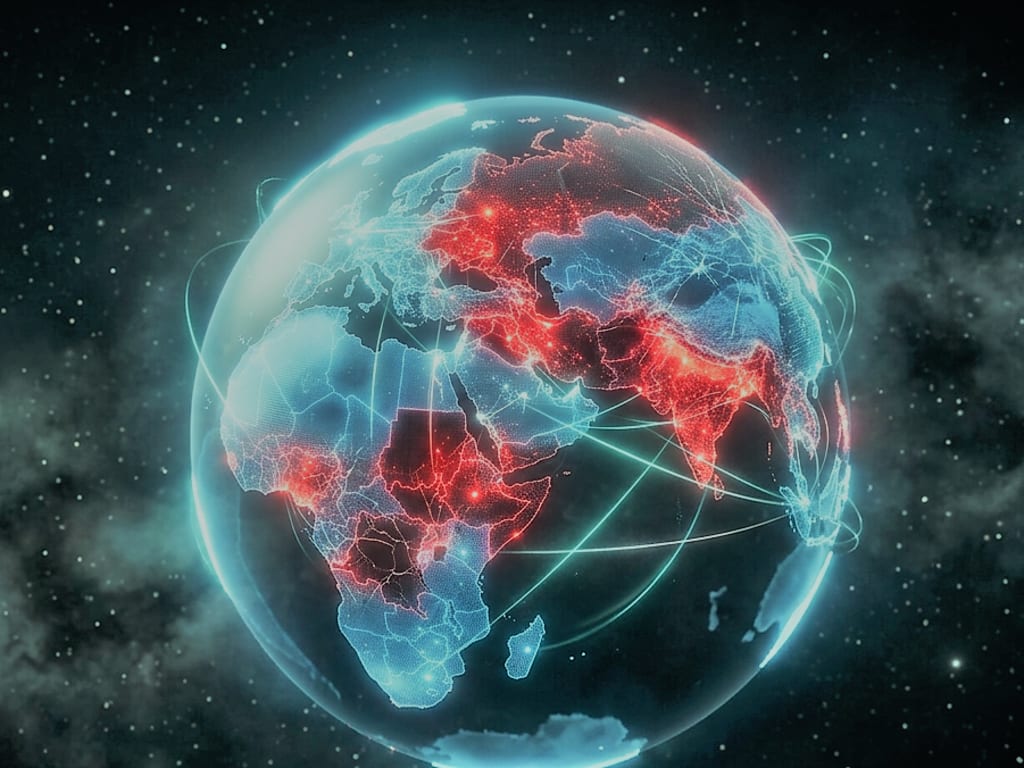
The World in a State of Rising Tension
In today’s world, the sense of global security feels more fragile than it has been for many years. Ongoing wars, regional conflicts, and political tensions are creating an atmosphere where many people believe the world is moving into a “dangerous mode.” One of the most discussed and sensitive conflicts contributing to this situation is the Israel–Palestine conflict, which continues to affect not only the Middle East but also global politics, economics, and public opinion.
The Israel–Palestine conflict is not new. It has a long and complex history involving land disputes, political claims, religious significance, and repeated cycles of violence. In recent times, escalations have drawn worldwide attention, leading to international debates, protests, and diplomatic efforts. Civilian casualties, destruction of infrastructure, and humanitarian crises have made the situation even more urgent in the eyes of the global community. While different countries and organizations hold different viewpoints, there is a shared concern about the loss of human life and the need for peace.
This conflict does not exist in isolation. It is part of a wider pattern of instability across the world. From Eastern Europe to parts of Africa and Asia, several regions are experiencing armed conflicts or political unrest. These situations often overlap in their consequences, affecting global energy markets, food supply chains, migration patterns, and international relations. When one region becomes unstable, the effects are often felt far beyond its borders.
One of the biggest concerns in the current global environment is the risk of escalation. In a highly interconnected world, conflicts can quickly involve multiple nations either directly or indirectly. Alliances between countries, economic sanctions, military support, and diplomatic tensions all contribute to a complex global system where local conflicts can have global consequences. This is why many analysts describe the current period as one of heightened risk, even if a full-scale world war is not considered inevitable.
Another important factor is the role of media and social platforms. Information spreads faster than ever before, and while this can help raise awareness about humanitarian issues, it can also increase emotional reactions, misinformation, and polarization. People around the world often form strong opinions based on limited or one-sided information, which can deepen divisions between communities and nations. This makes diplomatic solutions more challenging, as public pressure influences political decisions.
Economically, global instability also creates serious challenges. Conflicts can disrupt trade routes, increase oil and gas prices, and weaken investor confidence. Countries that are not directly involved in wars can still experience inflation, unemployment, and financial uncertainty. Developing nations are often hit the hardest, as they have fewer resources to absorb global shocks.
Despite the seriousness of the situation, it is also important to recognize ongoing efforts toward peace. International organizations, diplomatic negotiations, and humanitarian agencies continue to work toward reducing violence and supporting affected populations. While progress is often slow and difficult, these efforts represent a critical hope for long-term stability. History has shown that even long-standing conflicts can eventually move toward resolution when sustained dialogue and compromise are prioritized.
In conclusion, the world today is experiencing a period of increased tension and uncertainty, influenced by multiple conflicts, including the Israel–Palestine situation. While the situation is serious and concerning, it is not without hope. Global peace depends on diplomacy, understanding, and cooperation between nations. The future will largely depend on whether world leaders and societies choose escalation or reconciliation in the years ahead.
About the Creator
Wings of Time
I'm Wings of Time—a storyteller from Swat, Pakistan. I write immersive, researched tales of war, aviation, and history that bring the past roaring back to life
Enjoyed the story? Support the Creator.
Subscribe for free to receive all their stories in your feed.
Comments
There are no comments for this story
Be the first to respond and start the conversation.