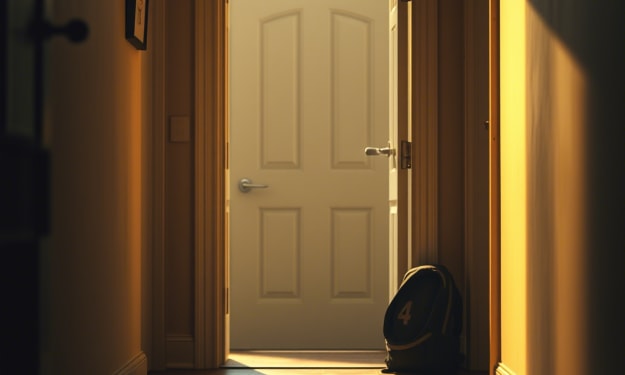
Embarrassment
I Broke Up With Someone Just to See If They Cared
I never imagined myself playing mind games in a relationship, but I did something I now deeply regret—I broke up with someone just to see if they cared. It wasn’t an act of strength or clarity. It was rooted in fear, doubt, and a quiet desperation to feel chosen. At the time, I convinced myself it was a way to test their love, to see if I really mattered. What I learned, though, had less to do with them and everything to do with me.
By Muhammad Asimabout a year ago in Confessions
“I Lied About Who I Was Online for 3 Years — And No One Noticed”
I never set out to lie. Not really. At least, not at the beginning. It started as something small — a harmless embellishment, a tiny white lie. Just a little tweak to make me seem more interesting, more confident. Someone worth listening to. Someone worth knowing.
By Hamad Haiderabout a year ago in Confessions
Solution Sharpens Vision. Growth Demands Isolation.
Amara had always been surrounded by noise. From childhood, her days were filled with the clamor of family, the chatter of friends, and the constant hum of the city she called home. She thrived in social settings, energized by the presence of others. But deep inside, a small voice whispered that something was missing — a clarity she had yet to find.
By Mahayud Dinabout a year ago in Confessions
Some Days I’m Fine. Other Days I Forget How to Breathe.
I wake up to sunlight filtering through the blinds. It’s a beautiful morning. Birds are chirping, the world seems peaceful, and for once, I feel okay. I shower, make my bed, and even hum to a song playing on the radio. These are the "fine" days — days when I can smile without forcing it, when the air doesn’t feel like it weighs a hundred pounds. But then, there are days when I forget how to breathe. It doesn’t happen suddenly. It starts subtly, like a quiet shift in the wind. A strange heaviness settles on my chest — invisible, but suffocating. My thoughts spiral. I try to focus, but my mind becomes a crowded highway of fear, self-doubt, and voices telling me I’m not enough. That I’ll never be enough. My name is Leena. I’m 28, a graphic designer by profession, and a master of pretending everything is okay. From the outside, no one would know. I laugh at the right jokes, hit deadlines, smile in selfies. But beneath that surface is a story I rarely share — a daily wrestling match with anxiety that feels like drowning while everyone else is breathing just fine. --- The First Time I Couldn’t Breathe I was 15 when I had my first panic attack. I remember sitting in algebra class, my hands trembling, heart racing. It felt like the walls were closing in. I tried to raise my hand, but couldn’t. My throat tightened. I couldn’t speak. I couldn't breathe. Everyone thought I was sick. Maybe I was. But not in a way that could be cured with Tylenol or sleep. The doctors said it was “just anxiety.” Like it was small. Like it was temporary. But anxiety doesn’t leave quietly. It becomes a roommate, an unwelcome shadow that follows you into every room. It steals your breath, your confidence, your peace. --- Living in Two Worlds Living with anxiety means existing in two worlds. In one world, I’m productive, put-together, a “high-functioning adult.” In the other, I’m unraveling. I cancel plans at the last minute. I replay conversations in my head, convinced I sounded stupid. I cry without knowing why. My brain is constantly playing defense — what if I fail? What if they hate me? What if something bad happens? What if I’m just... broken? And then there’s the guilt. Because I should be fine, right? I have a job, a roof over my head, people who care. What right do I have to feel like this? That’s the thing about mental health — it doesn’t care about logic. --- The Mask We Wear Social media doesn't help. It’s filled with highlight reels — friends getting promoted, traveling, falling in love. Meanwhile, I’m proud if I can make it out of bed and eat something that isn’t instant noodles. I used to think I was alone in this. But slowly, I learned that many people are quietly suffering behind filters and curated captions. Smiling doesn’t mean healing. Productivity doesn’t mean peace. The strongest people I know are often the ones hiding their pain the deepest. --- A Turning Point The turning point came when I hit what people call “rock bottom.” It was a cold November evening. I sat on my apartment floor, sobbing, surrounded by unopened mail, dirty laundry, and silence. I felt so tired. So invisible. That night, I reached out. Not to a friend. Not to social media. But to a therapist. It took everything in me to make that call, but it changed my life. Therapy didn’t “fix” me — but it helped me understand myself. I learned tools to navigate the storm. I learned it’s okay to not be okay. I learned how to breathe again, even when it feels impossible. --- Healing Isn’t Linear Recovery isn’t a straight line. Some days I laugh freely. Other days I cancel everything and lie in bed. But I’ve stopped shaming myself for the bad days. Because healing isn’t about perfection — it’s about resilience. It’s about choosing to stay. To keep going, even when your mind tells you not to. I’ve also started journaling, meditating, walking more. I keep a sticky note on my mirror that says, “You’ve survived 100% of your worst days.” Some days, that’s enough. --- If You’re Reading This... If you’re reading this and you’ve ever felt like you’re drowning — please know you're not alone. There is no shame in struggling. There is no weakness in asking for help. You are not broken. You are human. And some days, being human is incredibly hard. But you're still here. And that matters more than you know. --- Final Words “Some days I’m fine. Other days I forget how to breathe.” That sentence used to feel like defeat. Now, it feels like truth. And in truth, there’s power. Because acknowledging the struggle is the first step to healing. If you feel seen by this story, I hope it gives you the courage to speak your own. To reach out. To hold on. Because even on the worst days — especially on the worst days — your story still matters. You still matter.
By Azmat Roman ✨about a year ago in Confessions
Healing Isn’t Pretty—It’s a Fight You Don’t Post About
They said healing would feel like peace. Like finally exhaling. Like warm baths and yoga mats and closing toxic doors with a graceful smile. They lied. Healing, as I experienced it, was raw. Ugly. Messy. It looked nothing like the gentle images on Pinterest boards or the soft affirmations spoken by women in calm voices over lavender fields on Instagram Reels. No one prepared me for what it actually feels like to rebuild yourself from the inside out. It started when I left him. To the outside world, we were fine. A little unstable maybe, but who isn’t? I had learned to wear the right makeup over bruises, both on my skin and in my soul. I had learned how to laugh on cue and pose for pictures with just enough sparkle in my eyes to convince others — and maybe myself — that it wasn’t that bad. But it was. And I broke. Quietly, completely, and without ceremony. The night I left, I didn't feel brave. I felt terrified. I didn’t feel empowered. I felt like a fraud, walking out the door with a garbage bag of clothes and a panic attack in my throat. That wasn’t peace. That wasn’t healing. That was survival. The weeks that followed weren’t romantic either. I wasn’t journaling and meditating under moonlight. I was sleeping on a friend’s couch, crying so hard in the shower that I had to sit down. I was losing weight not because I was taking care of my body, but because anxiety made food taste like sand. I had panic attacks in grocery stores and flashbacks in the middle of work calls. I didn’t feel like a phoenix. I felt like ashes that forgot how to burn. I started therapy — reluctantly, skeptically, because I wasn’t sure what I’d even say. But that first session? I sobbed like a child. My therapist didn’t hand me solutions. She handed me tissues and silence — and somehow, that was more healing than anything else. For once, someone let me fall apart without rushing me to “get better.” That’s when I realized something they never tell you: healing is not linear. It’s not a steady climb to a glorious mountaintop. It’s jagged. Some days you feel free and alive. Other days, you’re on the bathroom floor, wondering if you made a mistake. There were nights I wanted to go back. Just to feel something familiar. Just to not be alone. But I held on — sometimes barely, sometimes resentfully, but I held on. I started to understand that healing meant looking in the mirror and facing the parts of myself I had ignored. The codependency. The people-pleasing. The way I confused pain with love. That wasn’t just hard — it was humiliating. I had to forgive myself for all the times I silenced my instincts. All the times I stayed too long. All the times I betrayed myself in the name of loyalty. Healing looked like setting boundaries and feeling guilty about them. It looked like crying after saying no, and still holding the line. It looked like building a new life brick by shaky brick, with no applause, no milestone posts, no one really seeing the battle I fought daily just to stay whole. But slowly — painfully — things changed. I found an apartment. My own. Just a small studio, but it smelled like lavender and freedom. I started sleeping through the night without waking up in a cold sweat. I picked up books I used to love, started cooking again, called my mom more. Little things. Quiet victories. And one day, I laughed. A real laugh. The kind that bubbles up from your chest without asking permission. And I realized: this is healing too. Not the polished kind. Not the aesthetic kind. But the kind where your soul starts breathing again. I still have bad days. There are still triggers, flashbacks, shame spirals. But I don’t drown in them anymore. I’ve learned to ride the waves instead of getting swept under. Healing looks like trusting yourself again. Like saying, “I deserve better,” and meaning it. Like finally — after everything — choosing yourself without apology. So no, healing isn’t pretty. It’s not always peaceful. It doesn’t come wrapped in self-help quotes or bath
By Azmat Roman ✨about a year ago in Confessions
The Name That Wasn’t Mine – But Followed Me for Years
🔹 The Beginning of It All These days, it feels like a trend—students who are quiet or not very mischievous are often the ones picked on. They become easy targets. Today, I’m sharing a personal story—one that brought me pain, isolation, and left behind a scar I still carry. It started back in Grade 6, during the winter session. My older brother had kindly bought me a new school jacket. Since I wasn’t with him at the time, he chose the size randomly. When I tried it at home, it was a little big, but not in an awkward way. My mother, understanding our financial situation, said: > “It’s good. When you grow up a bit, it will fit you perfectly. Buying a smaller size now would only mean buying another one next year. We can’t afford that.” So, I wore the jacket with pride, even if it wasn’t a perfect fit. At first, nobody noticed. 🔹 The Day Everything Changed One day in class, something unexpected happened. The teacher asked me to stand and answer a question. But instead of calling me by my name, he looked at me and made a joke. He called me a funny nickname based on my jacket — a name I still can’t write because it hurts too much. The entire class laughed. I froze. That moment? It shattered something inside me. Even today, I hold deep respect for that teacher. But whenever I remember that moment, it burns inside. A teacher—a figure meant to support, to uplift—was the first to laugh at me in front of the whole class. He probably thought it was a lighthearted joke. But for me, it became a painful identity I never asked for.
By Zain ul abidin about a year ago in Confessions
Voices from Gaza: Life in a War Zone
Voices from Gaza: Life in a War Zone The sound of drones overhead has become as familiar as the call to prayer in Gaza. For many who live there, especially children, war is not an occasional event — it is a background noise, an uninvited guest in every home, every conversation, every dream. Behind every statistic, every news headline, there is a human being. A child who didn’t sleep. A mother who buried her son. A student who writes poetry by candlelight because the electricity is out again. These are the voices from Gaza — voices that demand to be heard not as numbers, but as people.
By Nazim Aliabout a year ago in Confessions
Some Days I Pretend He’s Just at a Friend’s House
It’s been 431 days since I last saw my son. But some days, I pretend he’s just at a friend’s house. I imagine his laughter echoing in someone else’s living room, his sneakers kicked off by the door, his phone left charging on the kitchen counter. I tell myself he’s staying up late playing video games, eating pizza rolls straight from the oven, yelling strategies over a headset. I picture him rolling his eyes when I call to check in. “Mom, I’m fine,” he would say, dragging out the word with teenage disdain, “I’m just at Jason’s.” That lie—that beautiful lie—has become my survival. Because the truth is too cruel. Ethan was fourteen. One month from his fifteenth birthday. It was a rainy Thursday when the accident happened. One second he was pedaling his bike down Oakwood Street, late for soccer practice, and the next—just gone. The car, the driver, the silence. The kind of tragedy you read about but never expect to live through. I don’t remember the scream that escaped me when the officers told me. I only remember the silence afterward, how it pressed in on my ears, thick and choking like smoke. How the walls of our home, once loud with music and arguments and jokes, became graveyards of sound. His room is still the same. Blue walls. Posters of Messi and Marvel superheroes. A pile of laundry I never got to scold him for. I sit on the edge of his bed some nights and talk to the emptiness, telling him things like, “Don’t forget your jacket,” or, “I made your favorite pasta.” And when my voice breaks in the middle of a sentence, I pretend it’s because he interrupted me—just out of frame. I know what people think. I see it in their eyes when they visit. They tiptoe around his name like it’s a curse, afraid I’ll shatter if they say it too loudly. They ask if I’ve considered therapy. If I’ve “moved on.” As if grief has an expiration date. As if you can pack away a child’s memory into cardboard boxes and tuck them into a closet labeled PAST. But grief doesn’t ask permission. It takes up space. It sleeps in your bed, eats your meals, and whispers in your ear at night. It holds your hand when you’re alone and punches you in the chest when you hear a song he used to hum absentmindedly. Still, I manage. I go to work. I smile when I have to. I send Christmas cards with one less name. I’ve learned how to live around the missing piece—how to speak without crying, how to laugh without guilt. But some days, I fall apart. And on those days, I pretend he’s just at a friend’s house. It’s the little things that trick me—a jacket slung over a chair, a soccer ball in the garage, the way sunlight hits the corner of the hallway where he used to drop his backpack. I’ll find myself calling out, “Ethan, did you feed the dog?” before remembering that the dog passed away six months after him, as if it too couldn’t bear the weight of the silence. I’ve stopped correcting myself. Letting the illusion play out feels kinder than dragging my heart through the truth every hour. And maybe that’s okay. Maybe healing isn’t always about accepting loss. Maybe it’s about learning to love in the present tense, even when the person you love exists only in memory. Maybe it’s okay to pretend, as long as the pretending helps you breathe. Last week, I baked his favorite cookies. The house smelled like vanilla and cinnamon, like school bake sales and rainy afternoons. I set a few aside on a plate and placed them on the kitchen counter like I used to. For a moment, I imagined him bounding down the stairs, hair a mess, mouth open in a grin, grabbing two before I could say, “Just one!” And in that moment, the ache softened. The house didn’t feel so empty. Love has a long echo. It lingers in doorways, in the scent of old T-shirts, in the click of light switches. It survives, even when the person doesn’t. And so, I love him in the only way I can now—through memory, imagination, and the quiet lies I tell myself on hard days. Some days, I pretend he’s just at a friend’s house. And for a little while, I believe it.
By Azmat Roman ✨about a year ago in Confessions
People Think I’m Healing. I Just Got Better at Hiding It
I wake up before the sun rises. It’s quiet. Peaceful, almost. But inside me, it feels like a hurricane still roars, even after all this time. People say I look better now. They say it like it’s a compliment. “You seem so much happier lately.” “I’m glad to see you doing well again.” “You’ve really bounced back.” I nod. I smile. I thank them. But if they knew how much energy it takes just to pretend, they’d understand this isn’t healing—it’s hiding. And I’ve gotten really, really good at it. It started after I lost my brother. He was everything to me—my anchor, my mirror, my best friend. His death wasn't a slow, understandable decline. It was sudden. Violent. A car crash, and that was it. No goodbye. No closure. Just emptiness. In the beginning, people gave me space. They let me cry, fall apart, grieve loudly. It was acceptable. Expected, even. But grief has an expiration date in the eyes of the world. After a few months, people stopped asking how I was doing. And when they did ask, they wanted the short answer. So I started giving it to them. "I'm good, thanks for asking." "Yeah, taking it one day at a time." "Better now." Better now. What a lie. The truth is, I’ve mastered the art of existing while crumbling inside. I’ve learned to laugh at the right times, keep my posture straight, and reply to texts like nothing’s wrong. But it’s all a performance. A delicate balancing act where one wrong step might bring the whole thing crashing down. At work, I’m efficient, focused. I even got a promotion last month. My boss says I’m thriving. I suppose that’s what it looks like from the outside—emails answered, meetings led, deadlines met. But what she doesn’t see is me staying late just so I don’t have to go home. Or me crying silently in the restroom because a playlist shuffled into a song that reminds me of him. Socially, I’ve rebuilt. Sort of. I go to dinners, post pictures, laugh at jokes. People like me again. They invite me places because I seem fun again. Normal. But they don’t see me come home and sit in the dark for hours. They don’t hear the silence that follows me everywhere, like a shadow I can’t outrun. Everyone thinks I’ve healed. And maybe it’s easier for them to believe that. Maybe it’s easier for me, too. Because the alternative? The truth? It’s ugly. It’s inconvenient. It makes people uncomfortable. Nobody wants to hear that someone still feels broken after all this time. They want inspiration, a comeback story. They want the phoenix rising from the ashes—not the bird still crawling through them, wings burned and useless. So I fake it. I fake it because I’m tired of seeing people flinch when I tell the truth. I fake it because I don’t want to be a burden. I fake it because somewhere along the way, pretending started to feel safer than being honest. But here’s the thing about hiding pain: it doesn’t make it disappear. It just festers in the dark corners of your soul. It grows roots in your chest and wraps around your heart like ivy. You learn to live with it, but it never stops hurting. Sometimes, late at night, I wonder if this is just who I am now—someone who can’t let go, who can’t move on. But other times, I realize something else: I’m not weak for feeling this way. I’m not broken because I still miss him. I’m just human. And maybe that’s the real truth behind the lie: I’m not healed. But I’m still here. Still breathing. Still trying. Still showing up. And maybe, for now, that’s enough.
By Azmat Roman ✨about a year ago in Confessions