The Life-Extending Conundrum
View DetailsThe Winners!
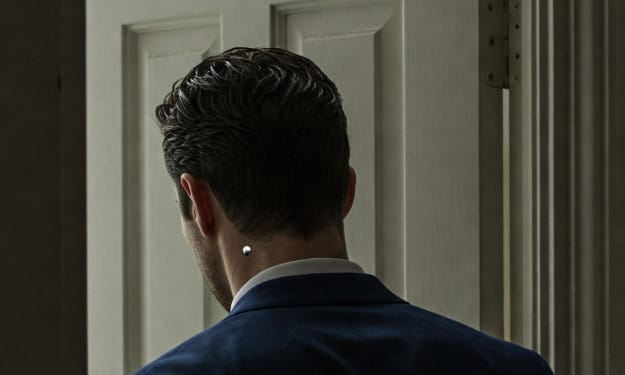
Après-coup. Second Place in The Life-Extending Conundrum Challenge. Content Warning.
I am here. Her eyes are red. "How were they red?" you ask. Shattered capillaries. She's been smoking. It doesn't make her less angry, just more paranoid. But she hurts too. I can see she's been crying. She slumps, half against the wall, half on the doorway, weed smoke curling from the ashtray in her hand.
By Addison Alder2 years ago in Longevity
The Prometheus Gene. Runner-Up in The Life-Extending Conundrum Challenge.
Dr. Francesca Crickson—Frankie, if you met her in a bar or at the kind of lecture where they served pinot in plastic cups—did not mean to upend death. But death, like most overrated institutions, was due for disruption.
By E.K. Daniels2 years ago in Longevity
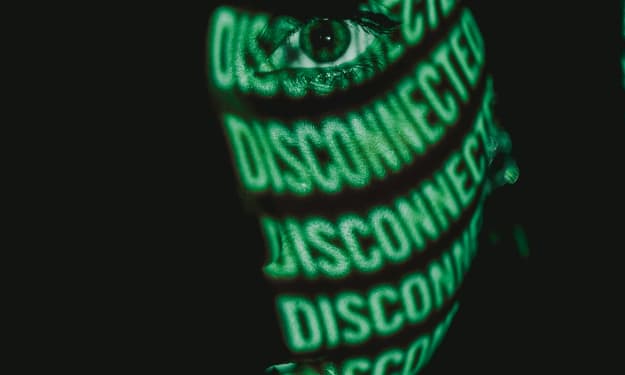
No Contest. Runner-Up in The Life-Extending Conundrum Challenge.
They don’t know how angry I am. Nanobot technology was supposed to heal bodies, right? Knit up torn tendons, fix broken bones faster, snip out those nasty cancer cells. Once the side effects were made known, hunh, suddenly no one without a couple million in the bank could even hope to find it available.
By Meredith Harmon2 years ago in Longevity
Quality of Life. Runner-Up in The Life-Extending Conundrum Challenge.
It started with world-renowned reality show star and pilates instructor Patty Faynor. On Good Morning America in the year 2027, she sat down and announced to a skeptical crowd that she had found The Perfect Diet.
By Raistlin Allen2 years ago in Longevity
Children of the Sun. Runner-Up in The Life-Extending Conundrum Challenge.
It was a perfect day. The cerulean sky above was completely cloudless and the late morning sun burned bright above; the wind was calm, little more than a gentle breeze. Behind me, I could hear the sounds of brunch being served over by the hotel’s opulent outdoor dining area; the clinking of silverware and soft, indecipherable speech dotted with superficial laughter.
By Bailey Bainbridge2 years ago in Longevity
The Weight of Forever. Runner-Up in The Life-Extending Conundrum Challenge.
The first time Isla rode the elevator up through the clouds she forgot to breathe. Below her, the city flickered, old neon signs, expansive holographic ads begging for attention as they fought the ever-present rain and hazy smog that covered the city in perpetual dusk. The higher the elevator rose, the less Isla could smell the rust, the carbon.
By Sandor Szabo2 years ago in Longevity
A Recount on the Whereabouts of the Eternity Machine. Runner-Up in The Life-Extending Conundrum Challenge. Content Warning.
The following letter is an account of a nautical journey that our scientist, Dr Milward, received after the issue of being unable to locate his most recent invention which was previously believed to have been a fantasy. Since we have confirmed that the invention exists, we are currently looking into its whereabouts. This is an emergency situation. The item must be located as soon as physically possible.
By Annie Kapur2 years ago in Longevity
The Genesis Flower. Runner-Up in The Life-Extending Conundrum Challenge.
Delilah woke up with a gasp and had to restrain herself from shooting right out of bed. It wasn’t because she had a dream. Heck, she didn’t remember if she even had one or not. It was because today, could be the day that she and her husband, Arnold, had been waiting for. Today could be the day she and Arnold would finally receive what they have longed for. Ached for.
By Rebecca Patton2 years ago in Longevity
Resurrection. Runner-Up in The Life-Extending Conundrum Challenge. Content Warning.
Memories of pain chased Enver out of the infinite. They howled at the heels of his consciousness, forcing his eyes to snap open just so that he could escape the phantom claws that tried to rend his sanity. Cold greeted his slowly awakening senses; a sterile, harsh cold that had always felt wrong to him. Improper. Abhorrent.
By Alexander McEvoy2 years ago in Longevity
CodinG The ChAos. Runner-Up in The Life-Extending Conundrum Challenge.
April 2036 Dr. Irina Vernydub taps her heel nervously as she sits in a sterile non-descript office facing a monstrous mahogany desk. The office belongs to the director of the ROHGUE (Research in Optimizing the Human Genome for Unlimited Evolution) project, a man she has only seen from afar until now.
By Alyssa Musso2 years ago in Longevity
Replacement. Honorable Mention in The Life-Extending Conundrum Challenge.
Theseus’ eyes opened, blinking as they adjusted to the light. It was a little easier than yesterday, but after being closed so long, he was still struggling to get used to his new eyes. As he looked around his bedroom, everything seemed to blur together in a bright dance of shape and color. Gradually, the forms fell into place, but he still found himself a bit overstimulated. He closed them again. Was this how I saw things before? he wondered. He’d needed glasses for so long, he’d forgotten what things were supposed to look like. He looked over at his old progressives sitting peacefully on the nightstand next to the small stack of large print books. “Won’t be needing those anymore,” he chuckled to himself. A bit disoriented, he got out of bed and walked to the kitchen.
By Hannah Patterson2 years ago in Longevity
Almost forever. Honorable Mention in The Life-Extending Conundrum Challenge.
"Will it hurt?" "What?" "Will it hurt?" "Lawrence, you own the biggest analgesia producer in the world, among your many, many startups and acquisitions. Does anything ever need to hurt for you?"
By Raymond G Taylor5 months ago in Longevity
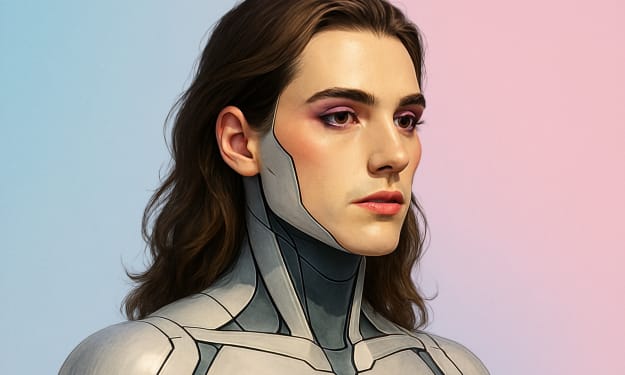
Quantum Symbiosis!. Honorable Mention in The Life-Extending Conundrum Challenge.
Prologue: The Breakthrough By 2037, her research had coalesced into what came to be known as Quantum Cellular Symbiosis (QCS)—nanoscale quantum processors introduced into the human bloodstream that created symbiotic relationships with living cells. These quantum nodes interweaved with human DNA to establish a dynamic feedback loop for the prevention of telomere degradation, the optimization of mitochondrial function, and the removal of accumulated cellular damage.
By Neli Ivanova2 years ago in Longevity
First Gen. Honorable Mention in The Life-Extending Conundrum Challenge.
Parts. Always the search for parts. We each have different methods of searching. Search, we all do. From the back of Block 1 Scrap Cubicle C, my eyes scan the concrete floor, empty. The scavengers have gone by now and with them, every odd or end has disappeared too. What remains are eight wooden chairs set up around the perimeter of the room - Cubicle C. It is one of many large, grey rooms, of many large, grey Blocks. Even-numbered Blocks for civilians, odd-numbered Blocks for scrap. All grey.
By sleepy drafts2 years ago in Longevity
Breakthrough. Honorable Mention in The Life-Extending Conundrum Challenge.
Dr. Beatrice Yunez didn’t shout “Eureka” as ancient Greek scientists might have. Instead, she carefully double-checked the bloodwork of the mice in front of her. They nibbled on their pellets, unimpressed with her observation. She’d spent the past three years with them, day in and day out.
By Alison McBain2 years ago in Longevity
The 8000th Immortal. Honorable Mention in The Life-Extending Conundrum Challenge.
Script for Live Feed: Nummy, 13 June, 17:30 Good afternoon, Chat, and a very special hello to all you Nummy Nibblers who subscribe at the platinum level and above. I love you so much!
By Deanna Grey2 years ago in Longevity
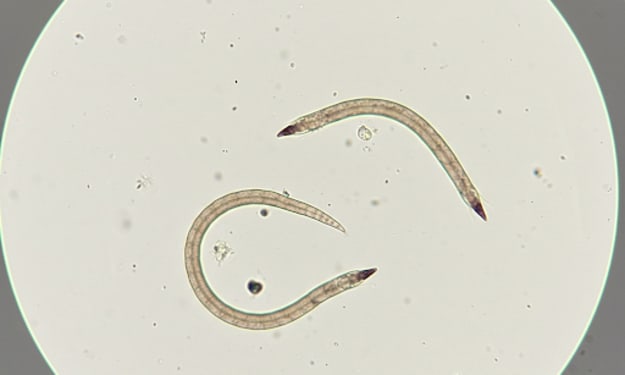
Now Hiring: Aripiprazole Administerer. Honorable Mention in The Life-Extending Conundrum Challenge.
Would you believe that the key to eternal life wasn’t a holy grail, or a fountain spring, or even God himself? It came from roundworms. Well not exactly, but it was through roundworms that the key was discovered – in 2022, Jiang, et al, by running tests on the parasites, discovered that “The clinically approved antipsychotic aripiprazole holds potential as a novel anti-aging drug.”
By E. L. Stacy2 years ago in Longevity

















































All the great Submissions
Youthphoria
I turned the box over in my hand - Youthphoria. A patch that promised through combining nanotechnology, stem cells, and NAD to reverse aging by the replication and repair of cells in the body. I examined my 39 year old face in the mirror - the fine lines of crows winking, the lines of laughter, the silver streaks framing my face, the worry lines in between my eyebrows left from too many years puzzling “WTF?”.
By Ellie Hoovs2 years ago in Longevity
Educated, Intelligent, or Smart? The Key Differences That Define Success
The terms educated, intelligent, and smart are often used interchangeably, but they have distinct meanings that set them apart. While they can sometimes overlap, understanding their differences is essential for appreciating how each one applies to personal development, problem-solving, and success in life. These three qualities contribute to a person's ability to think, learn, and make decisions, but they do so in different ways. Education refers to the formal process of acquiring knowledge through schooling, training, or structured learning. It involves studying subjects like mathematics, science, literature, and history, usually in an academic setting such as schools, universities, or specialized training programs. Being educated means having a certain level of knowledge that has been systematically taught and learned. An educated person has credentials such as degrees, diplomas, or certifications that validate their learning. However, education does not necessarily equate to intelligence or smartness. A person can have multiple degrees but still struggle to apply their knowledge effectively in real-world situations. Intelligence, on the other hand, is a person’s ability to think critically, solve problems, and grasp complex concepts. It is a natural trait that varies from person to person and is not solely dependent on formal education. Intelligence can be measured in different ways, such as logical reasoning, memory, problem-solving skills, creativity, and adaptability. There are various types of intelligence, including logical-mathematical intelligence, emotional intelligence, linguistic intelligence, and spatial intelligence. A highly intelligent person might not have received a formal education but can still understand and analyze information deeply. Intelligence allows people to learn quickly, recognize patterns, and think abstractly, making it a crucial factor in innovation and progress. Smartness refers to the ability to use knowledge and intelligence effectively in everyday situations. A smart person knows how to navigate challenges, make wise decisions, and adapt to their environment. Unlike education, which is learned through formal instruction, and intelligence, which is an inherent cognitive ability, smartness is more about practical application and common sense. A smart individual can assess situations quickly, read people well, and use their knowledge to achieve success. Street smartness, for example, is a form of intelligence that allows individuals to handle real-world situations skillfully, even if they lack formal education. Smartness often comes from experience, observation, and learning from past mistakes rather than from books or classroom lessons. One key difference between being educated, intelligent, and smart is the source of each trait. Education comes from external sources, such as teachers, textbooks, and structured curriculums, and requires effort to acquire. Intelligence is mostly inborn, though it can be nurtured and developed over time through mental exercises and challenges. Smartness, however, is built through experience, exposure, and the ability to learn from life situations. A person can be educated without being particularly intelligent or smart. Similarly, someone can be intelligent but lack formal education or smart decision-making skills. A smart person may not have an advanced education or exceptionally high intelligence, but they have the ability to make things work in their favor through cleverness and adaptability. Another major difference lies in how each quality is applied. Education primarily equips individuals with theoretical knowledge, which is useful for specific careers or professions but does not always translate to real-world problem-solving. Intelligence is applied in analytical thinking, creativity, and the ability to process information efficiently. Smartness is about using both intelligence and knowledge in a way that brings practical benefits. For example, an educated person may know the theory behind starting a business, an intelligent person may come up with innovative ideas for the business, but a smart person will know how to make the business succeed by managing risks, networking, and understanding market demands. The third difference is how each trait affects success and decision-making. Education can provide credentials and open doors to opportunities, but without intelligence or smartness, an educated person might struggle to achieve success beyond the academic world. Intelligence allows individuals to understand complex issues and develop groundbreaking ideas, but without the practical application that smartness brings, those ideas may remain theoretical. Smartness enables people to make the best use of their knowledge and intelligence, turning ideas into real-world achievements. A smart person is often seen as resourceful and quick-witted, able to solve problems in ways that an educated or intelligent person might not consider. To illustrate these differences further, consider three individuals: one who is highly educated, one who is extremely intelligent, and one who is very smart. The highly educated individual has multiple degrees and vast knowledge in their field, but they may struggle with practical decision-making outside their area of study. The extremely intelligent person can quickly grasp new concepts, solve complex puzzles, and understand abstract theories, but they may lack the social skills or practical knowledge to navigate real-life situations effectively. The very smart person, even without advanced education or exceptional intelligence, knows how to use what they have to succeed, whether through strategic thinking, persuasion, or quick adaptability. Each of these qualities has its own strengths and limitations. Education is valuable because it provides structured knowledge and skills that society recognizes as credentials for success. Intelligence is crucial because it determines a person’s ability to learn, understand, and create new solutions. Smartness is essential because it allows individuals to apply knowledge and intelligence in a way that leads to real-world success. The ideal situation is to possess a balance of all three—being educated, intelligent, and smart. However, if one had to choose, smartness often proves to be the most practical trait for navigating life effectively. Many successful people have demonstrated that formal education is not always necessary for achieving great things. Entrepreneurs like Steve Jobs and Richard Branson did not complete higher education, yet they used their intelligence and smartness to build global businesses. On the other hand, some highly educated individuals struggle to find success because they rely solely on theoretical knowledge without applying it practically. Meanwhile, people with high intelligence might get stuck in analysis and overthinking without taking decisive action. Understanding the difference between being educated, intelligent, and smart can help individuals focus on developing all three aspects in a balanced way. While education provides the foundation of knowledge, intelligence enhances the ability to think critically, and smartness ensures that knowledge and intelligence are used effectively in everyday life. Those who can combine these qualities will be better equipped to handle challenges, make wise decisions, and achieve lasting success.
By Nora Ariana2 years ago in Journal
Quantum Symbiosis!. Honorable Mention in The Life-Extending Conundrum Challenge.
Prologue: The Breakthrough By 2037, her research had coalesced into what came to be known as Quantum Cellular Symbiosis (QCS)—nanoscale quantum processors introduced into the human bloodstream that created symbiotic relationships with living cells. These quantum nodes interweaved with human DNA to establish a dynamic feedback loop for the prevention of telomere degradation, the optimization of mitochondrial function, and the removal of accumulated cellular damage.
By Neli Ivanova2 years ago in Longevity
Immortality on Sale! But Are You Ready for the Fine Print?. AI-Generated.
The Ultimate Bargain or Humanity’s Undoing? What if death became optional? Imagine a world where aging is a choice, where science has unlocked the secret to indefinite life. At first glance, it sounds like a utopian dream—a world where diseases vanish, wisdom accumulates, and loved ones never say goodbye. But is it really that simple?
By Alain SUPPINI2 years ago in Futurism
We've got nothing else left to lose
“Happy birthday to you, dear Sarah, happy birthday to you!” Nearly a hundred people gathered at the park to sing to her. Sarah looked out over her many friends and several generations of family. Since 2051, cellular regenerative technology had improved the health of the human population as well as extend their lifespans. Studies were still ongoing, but she didn’t seem to age after her 70s; wrinkles stopped forming and the aches and pains of getting older were much delayed. Sarah could do just about everything she could always do like attend her own birthday party.
By Barb Dukeman2 years ago in Longevity
When Will I Meet the Love of My Life? Trusting the Journey of the Heart
Love is one of the most profound and mysterious forces in the universe. Many people spend their lives searching for that one special connection, longing to meet the love of their life. The journey to finding true love is often filled with anticipation, excitement, and sometimes even moments of doubt. However, love has a way of appearing when it is least expected, revealing itself in the most surprising and beautiful ways. The key lies in being open, embracing the journey, and trusting that love will come at the right time. For those born under the sign of Cancer, love is an ocean, deep and vast, filled with emotions and an innate desire for genuine connections. Cancers are known for their nurturing nature, their ability to love unconditionally, and their longing for meaningful relationships. However, like the waves of the sea, love for them can be unpredictable. It may take time, but when it arrives, it is usually profound and life-changing. The love of your life may enter your world at an unexpected moment, perhaps when you are fully immersed in your own personal growth, embracing your true self, and following your passions. Many people assume that love is something to be actively pursued, but often, it is something that finds you when you are ready. It may come in the form of an old friend, a chance encounter, or someone who was always near but never truly seen until the right moment. When the heart is open and intuition is strong, love has a way of blossoming in unexpected places. It is not about forcing the timing or desperately searching; rather, it is about allowing love to unfold naturally and trusting that the right person will come into your life at precisely the right moment. Embracing patience is crucial when it comes to love. The universe has its own timeline, and sometimes, love arrives later than expected. This does not mean that love is absent; it simply means that the right connection is still forming, waiting for the perfect alignment. People who have waited for true love often realize that every moment of waiting was worth it because they found a connection that was deep, meaningful, and lasting. In the meantime, focusing on self-growth, happiness, and fulfillment creates the perfect environment for love to thrive when it does arrive. One of the most important aspects of finding true love is knowing oneself deeply. Self-love is the foundation of any strong relationship. Those who truly understand their worth, their desires, and their boundaries are more likely to attract a partner who complements their soul. Love should never be about filling a void; rather, it should be about two whole individuals coming together to create something even more beautiful. When a person is in tune with their own needs and emotions, they are better equipped to recognize and embrace love when it appears. Trusting the journey of love also means embracing the lessons that come with it. Every experience, whether joyful or painful, plays a role in shaping one’s understanding of love and relationships. Some relationships serve as stepping stones, teaching valuable lessons about what is truly desired in a partner. Others may come and go, but they leave behind wisdom and insight that guide the way to the right person. Every experience contributes to personal growth, making each individual better prepared for the moment when true love finally arrives. The beauty of love is that it often does not follow logic or predictable patterns. It can surprise, challenge, and completely transform a person’s life in ways they never imagined. It is in those moments of surrender, when one stops trying to control every aspect of love and instead trusts in its natural flow, that the most magical connections occur. Love has a way of weaving its own intricate tale, bringing together two souls that are meant to find each other. For those who wonder when they will meet the love of their life, the answer is often closer than they think. It is not about a specific date, a planned encounter, or a calculated effort. It is about being open to the unexpected, trusting in the timing, and embracing the beautiful unpredictability of love. The love of your life may already be on their way, navigating their own journey, waiting for the right moment when both paths align. Until then, the best thing to do is live fully, love oneself deeply, and believe that love will arrive exactly when it is meant to.
By Nora Ariana2 years ago in Education
Éternelle. Content Warning.
It’s twenty sixty two, and the Lumière Corporation unveiled their most groundbreaking product yet, Éternelle. It was supposed to be a rejuvenating serum, one that could help you live forever. Or at least, hundreds of years longer.
By Alex H Mittelman 2 years ago in Longevity
The Love You Deserve Starts With You
When we think about how men “measure up,” we often picture physical strength, resilience, or toughness. But real strength isn’t just about muscles or endurance. It’s about how they show up in life’s most vulnerable moments. It’s about presence, about love, about stepping in when we feel like we have nothing left to give. I remember when I was six hours into labor with our firstborn. Exhausted. Drained. Ready to give up. The contractions were relentless, and for a moment, I thought I couldn’t do it anymore. The pain was overwhelming, and fear crept in, whispering that I wasn’t strong enough to bring this life into the world. But then I felt his hand in mine my husband, standing beside me, unwavering. He didn’t just hold my hand; he held my heart in that moment. His words, spoken softly yet firmly, reminded me of my own strength. “You can do this,” he whispered. “You are stronger than you know.” His presence wasn’t just comforting; it was life-giving. He spoke life into me at a time when I felt completely depleted. He wiped the sweat from my forehead, never once leaving my side, never once making me feel like I had to bear this weight alone. And that’s when I realized love, real love, is about showing up. Not just in the easy moments, not just when things are going well, but in the raw, exhausting, soul-stretching moments where we feel like we have nothing left to give. But if I’m being honest, I didn’t always know how to receive that kind of love. When my husband and I first got together, I struggled with accepting his affirmations, his prayers, the way he poured into me so effortlessly. It wasn’t because of anything he did wrong. It was because I didn’t yet know how to love or affirm myself. His love felt foreign, almost uncomfortable, because deep down, I hadn’t yet embraced the idea that I was worthy of being loved like that. I questioned it. I doubted it. I pushed it away at times because a part of me feared that if I let myself believe in it, I might lose it. I had spent so much of my life believing that love had to be earned, that it came with conditions, that I had to prove I was worthy of it. But that was a lie I had unknowingly carried for far too long. See, we can’t fully receive love if we don’t first believe we deserve it. It was through my relationship with God that everything changed. It was through Him that I learned to see myself as worthy, as beloved, as enough. That self-love didn’t just transform the way I saw myself it healed me. It reshaped my marriage. It allowed me to receive love fully, without hesitation or doubt, and in turn, it helped me give love in ways I never had before. I began to understand that love isn’t something we have to chase or prove ourselves worthy of. The love that is meant for us, the love that is deep, real, and unwavering, comes when we first recognize our own worth. When we accept that we are already enough, already loved, already whole, then we stop settling for anything less than what we deserve. That’s why I always say: if you want love that uplifts, prays for, and affirms you, it starts with how you love yourself. You can’t expect someone to pour into you if you’re rejecting your own worth. You have to affirm yourself the way God affirms you. Speak life into yourself. Love yourself the way He loves you. Because when you do, you open the door for the kind of love that will strengthen you, pour into you, and reflect the goodness God has for you. So I’ll ask you how do you love yourself? Do you speak kindness over your own heart? Do you remind yourself that you are worthy, that you are loved, that you are enough? Because the way you see yourself will shape the love you allow into your life. Love isn’t just about what you can take; it’s about being ready to pour out and receive in return. If this resonates with you, if you’ve ever struggled with this, let’s talk about it. You deserve a love that builds you up, but it starts with you.
By Nora Ariana2 years ago in Humans
Implants
The quahog clam can live for over 500 years. There is a fig tree in Sri Lanka that is at least 2,200 years old. High in the Andes Mountains, there is a shrub believed to be over 3000. Some of the corals off the coast of Hawaii are nearly 5,000 years old. With a life span of about 15,000 years, the glass sponges take the title of the longest living creature on earth. Where do humans fall on this list.
By David E. Perry2 years ago in Longevity