
WW3 Coming Soon
The Only Reason That Could Again Lead the World to Great Wars

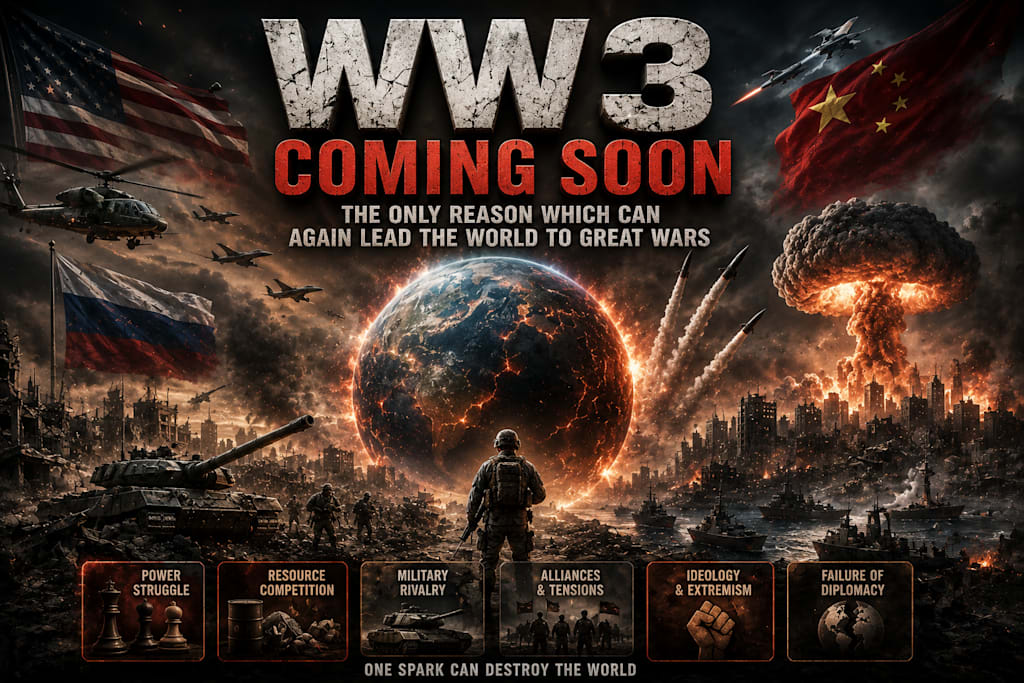
WW3 Coming Soon
The fear of a Third World War has returned to global discussions because of rising political tensions, military conflicts, economic rivalry, and growing mistrust between powerful nations. Many people wonder whether humanity is moving toward another devastating global conflict similar to World War I and World War II. While there are many causes of international tension, experts believe one major reason could again lead the world into great wars: the struggle for global power and dominance.
Throughout history, world wars did not begin suddenly. They developed slowly through competition, alliances, economic pressure, military expansion, nationalism, and political misunderstandings. Today, many of these same conditions are appearing once again in different parts of the world.
One of the biggest dangers is the rivalry between major world powers such as the United States, China, and Russia. These countries compete economically, politically, technologically, and militarily. Every nation wants to protect its influence, security, trade routes, and global position. When powerful nations begin viewing each other as threats instead of partners, global instability increases rapidly.
China’s rise as a global superpower has changed international politics dramatically. China now has one of the world’s largest economies, advanced military technology, and growing influence across Asia, Africa, and the Middle East. Projects such as the Belt and Road Initiative have expanded Chinese economic power worldwide. At the same time, the United States views China as its strongest strategic competitor in technology, trade, and military influence.
Russia has also challenged Western dominance through military operations, energy politics, and strategic alliances. The conflict in Ukraine created one of the most dangerous confrontations between Russia and NATO countries since the Cold War. Economic sanctions, military aid, and rising tensions have increased fears of wider escalation.
Another major factor that could lead to world war is regional conflict spreading into international confrontation. The Middle East remains one of the most unstable regions in the world. Tensions involving Iran, Israel, Syria, and surrounding countries continue to threaten global peace. Because powerful nations support different sides in these conflicts, local wars can quickly become international crises.
Taiwan is another dangerous flashpoint. China considers Taiwan part of its territory, while the United States supports Taiwan’s security and democratic system. Military exercises and political disagreements in the Indo-Pacific region have increased fears of direct confrontation between major powers.
Economic competition is also becoming more aggressive. Countries compete for oil, gas, rare minerals, artificial intelligence, semiconductors, and global trade routes. Modern wars are no longer fought only with weapons; economic pressure, sanctions, cyberattacks, and technological dominance are now powerful tools in global competition.
One of the most frightening aspects of a possible World War III is nuclear weapons. Unlike previous wars, modern countries possess weapons capable of destroying entire civilizations within hours. Russia, the United States, China, and other nuclear powers maintain enormous military arsenals. If conflict ever escalated into nuclear warfare, the consequences would be catastrophic for all humanity.
Scientists warn that nuclear war could create a “nuclear winter,” where smoke and radiation block sunlight, reduce global temperatures, and destroy agriculture. Millions could die not only from explosions but also from starvation, disease, and environmental collapse.
Technology has made warfare more dangerous than ever before. Artificial intelligence, drones, satellites, and cyber warfare now play major roles in military strategy. A cyberattack could shut down electricity, communication systems, hospitals, airports, and financial networks within minutes. Future wars may begin digitally before physical fighting even starts.
Another important reason behind rising global tensions is nationalism and political extremism. Around the world, some political movements promote aggressive nationalism, distrust of international organizations, and hostility toward rival nations. History shows that extreme nationalism often increases the risk of conflict.
Media and social platforms also influence modern warfare. Misinformation, propaganda, and emotional political content spread rapidly online. False narratives can increase hatred, panic, and public pressure for military action. In times of crisis, controlling information becomes almost as important as controlling armies.
Despite these dangers, many world leaders and organizations continue to work for peace. The United Nations encourages diplomacy and international dialogue to prevent conflict. Economic cooperation between countries also reduces the likelihood of war because global economies are deeply connected.
Ordinary people around the world generally do not want war. Citizens understand the suffering caused by conflict: destroyed cities, refugee crises, economic collapse, and loss of innocent lives. Peace movements, journalists, scholars, and humanitarian organizations continue raising awareness about the dangers of global war.
The most important lesson from history is that wars often begin when communication fails and fear replaces diplomacy. Competition for global power becomes dangerous when nations stop trusting one another and focus only on military strength instead of peaceful cooperation.
In conclusion, the greatest reason that could again lead the world into major wars is the struggle for global dominance among powerful nations. Political rivalry, economic competition, military alliances, nationalism, and technological warfare are all increasing global tension. Although the fear of World War III is real, humanity still has the ability to choose diplomacy, cooperation, and peace instead of destruction. The future of the world depends on wise leadership, international understanding, and the willingness of nations to avoid repeating the tragic mistakes of history.
About the Creator
Wings of Time
I'm Wings of Time—a storyteller from Swat, Pakistan. I write immersive, researched tales of war, aviation, and history that bring the past roaring back to life
Enjoyed the story? Support the Creator.
Subscribe for free to receive all their stories in your feed.
Comments
There are no comments for this story
Be the first to respond and start the conversation.