
Trump’s Record in Full Context (Part 5)
Proven Findings, Documented Conduct, Borderline Controversies, and Contextual Comparisons

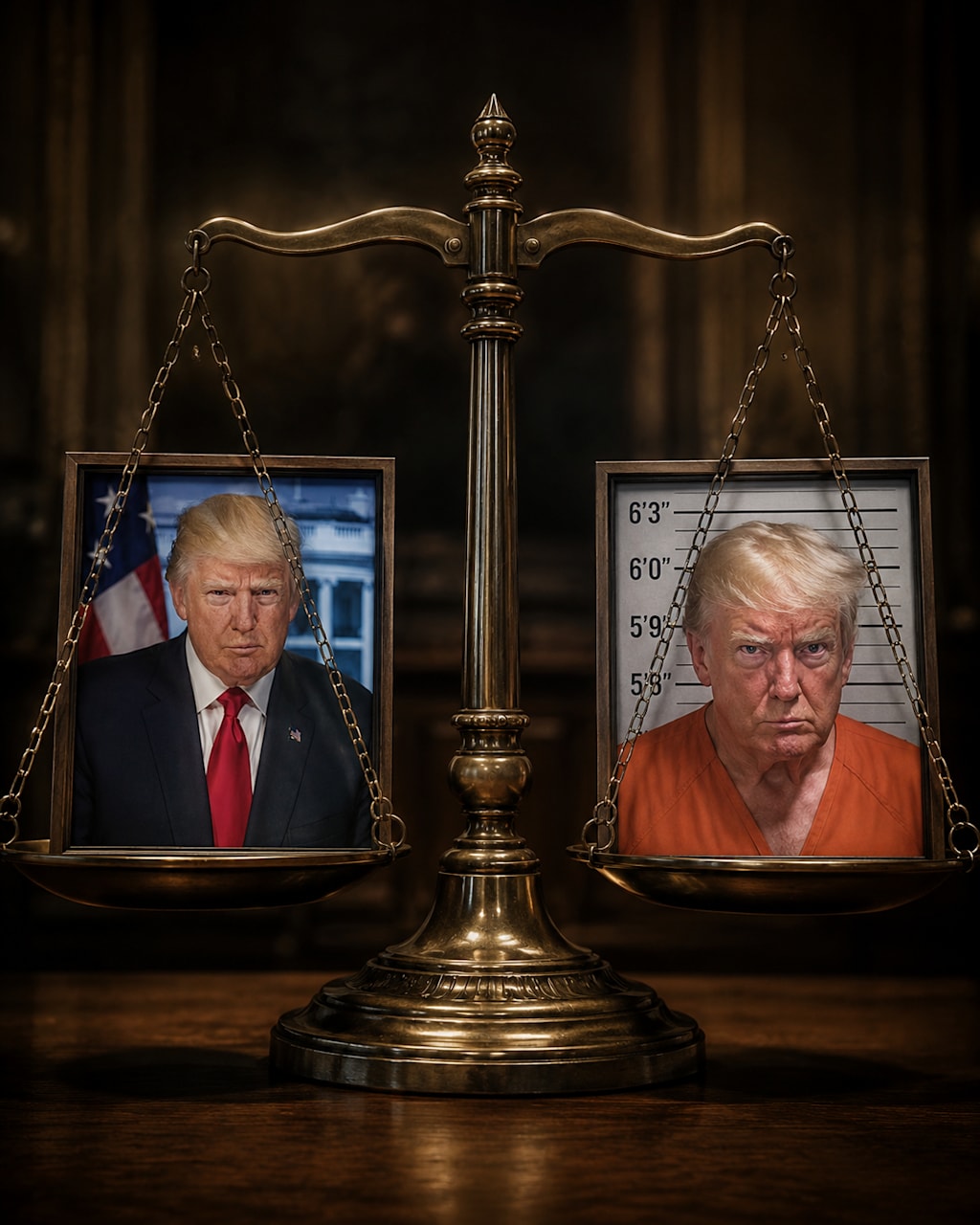
(Continued from Part 4...)
---
Parts 1 and 2 recorded Trump’s accomplishments. Part 3 recorded failures, blocked promises, and shortfalls. Part 4 recorded false, misleading, exaggerated, or unproven claims made against him. Part 5 records the narrower category of things that survive the same truth filter: legal findings, documented conduct, self-created damage, and unresolved matters that have a factual basis but have not been proven as crimes.
This part does not treat controversy as proof. A controversy can exist because of media amplification, institutional hostility, partisan framing, genuine misconduct, sloppy rhetoric, legal novelty, unresolved facts, or some combination of those things. Therefore, this section does not include claims merely because they were widely reported, emotionally persuasive, or politically useful. It includes them only where something was proven, documented, formally found, directly admitted, or materially created by Trump’s own conduct.
This part also separates Trump’s actual misconduct from his political style. Much of Trump’s offense to the political class came from being blunt, insulting, nontraditional, non-PC, and unwilling to speak in the polished language expected from career politicians. That style could be rude, crude, strategically costly, and morally ugly without automatically being illegal, corrupt, or uniquely dangerous. Rhetorical misconduct belongs in one category. Legal misconduct belongs in another.
Finally, this part includes comparative context where needed. If Trump did something that prior presidents, vice presidents, candidates, or senior officials also did in similar or worse forms, the article should not pretend the conduct was unprecedented merely because Trump was the target. The goal is not to excuse wrongdoing. The goal is to keep the scale honest.
---
Proven Legal Findings
Trump was convicted of 34 felony counts in New York.
Trump was convicted by a New York jury of 34 felony counts of falsifying business records in the first degree. The case centered on business records connected to a $130,000 payment made before the 2016 election to Stormy Daniels, whose underlying allegation Trump denied. Trump later received an unconditional discharge, meaning no prison, probation, fine, or community service, but Reuters reported that the conviction remained on the books unless reversed on appeal. Both facts matter. The conviction is real, and the lack of practical punishment is also real.
The hush-money conviction remains legally serious even if the sentence was practically weightless.
The New York case was unusual because it produced a felony conviction without ordinary punishment. That does not erase the conviction, but it does complicate the political meaning of the case. A fair account must say both things at once: Trump became a convicted felon, and the sentencing court imposed no jail time, no probation, no fine, and no community service. It also remains relevant that Trump denied wrongdoing, pleaded not guilty, argued the case was politically motivated, and pursued appeal.
Trump was civilly found liable for sexual abuse and defamation in the E. Jean Carroll litigation.
Trump was not criminally convicted of rape. That distinction is necessary. But he was civilly found liable for sexual abuse and defamation, and Carroll received a $5 million verdict in one case and an $83 million defamation verdict in a separate case. AP reported in 2026 that the Second Circuit declined to rehear the $83 million defamation verdict en banc, while Supreme Court review had not yet resolved the matter. Civil liability is not criminal guilt, but it is also not nothing. It is a formal legal finding.
Trump’s continued public attacks on Carroll worsened his legal exposure.
The Carroll matter did not end with the underlying allegation. Trump’s later statements became part of the defamation exposure. AP reported that Carroll sued after Trump denied knowing her, called the allegation false, and made dismissive personal remarks, and that a later jury awarded $83 million for defamation. This belongs in Part 5 because it is self-created legal damage. Trump’s own later words increased the consequences.
The Trump Organization was convicted of criminal tax fraud, but Trump personally was not convicted in that case.
Two Trump Organization entities were convicted of tax crimes connected to untaxed executive perks, and the company was fined $1.6 million. AP reported that Trump himself was not on trial and denied knowledge of the scheme. This is exactly the kind of distinction Part 5 must preserve. Trump’s company was criminally convicted. Trump personally was not criminally convicted in that case.
The Trump Foundation was ordered to pay damages for misuse of charitable assets.
A New York court ordered Trump to pay more than $2 million in court-ordered damages related to misuse of Trump Foundation charitable funds. The New York attorney general’s office described the funds as having been improperly used for political purposes, with damages paid to charities and remaining foundation money distributed to charitable recipients. This belongs on the proven side because it was not merely an accusation. It resulted in court-ordered payment.
Trump faced a civil fraud judgment in New York, but the penalty was later thrown out.
A New York trial judge found that Trump had deceived lenders and insurers by overstating asset values and imposed a massive financial penalty. Reuters later reported that a New York appeals court threw out the half-billion-dollar penalty while preserving the fraud case against him. This means the fair version is neither “nothing happened” nor “the original judgment survived intact.” The finding and litigation were real, but the enormous penalty did not remain in place as originally imposed.
---
Documented Conduct and Self-Created Political Damage
The Access Hollywood tape was real and politically damaging.
The 2005 Access Hollywood recording was real. AP described it as a tape in which Trump bragged about grabbing women sexually without asking permission, and the judge in the hush-money case allowed prosecutors to question witnesses about the tape while declining to play it for jurors because of prejudice concerns. This is not a criminal conviction, but it is documented conduct that created real political and moral damage.
The Access Hollywood tape also became relevant to the hush-money case narrative.
The tape mattered beyond personal embarrassment because prosecutors argued that its release in the final weeks of the 2016 campaign helped explain the urgency behind suppressing additional negative stories. AP reported that prosecutors tied the tape’s release to the alleged motive for keeping the Daniels and McDougal stories out of the press. That does not make the tape itself a crime. It makes it a documented piece of the factual backdrop around the later business-records case.
Trump’s crude comments about women and family members were self-created reputational damage.
Trump made or participated in public and recorded comments that were crude, sexualized, or strange, including comments involving women and comments about his daughter Ivanka that became part of his broader public record. These comments were not criminal findings. They were not proof of sexual misconduct. But they were self-created reputational damage because they gave critics direct material that did not require invention. A fair record should not inflate them into crimes, but it should not pretend they were fabricated either.
Trump’s “Fifth Avenue” comment illustrated a dangerous political instinct.
Trump’s statement that he could stand in the middle of Fifth Avenue, shoot somebody, and not lose voters was rhetorical exaggeration, not a confession of intent. But it still deserves inclusion because it revealed a political instinct built around personal loyalty rather than ordinary accountability. That is not illegal conduct. It is documented rhetoric that encouraged the perception that Trump understood his base as unusually resistant to consequences. Time reported the remark in 2016 as an example of Trump boasting about the loyalty of his supporters.
Trump’s post-2020 election conduct created real constitutional and political damage even without a final criminal conviction.
Trump’s efforts after the 2020 election were not proven as a federal criminal conviction, and the Georgia case was later dropped. But the conduct still belongs in Part 5 because it produced a second impeachment, a Senate trial, and a lasting constitutional crisis over peaceful transfer of power. The Senate official record shows Trump was acquitted, with 57 senators voting guilty and 43 voting not guilty, short of the two-thirds threshold required for conviction. That means the correct framing is precise: impeached by the House, acquitted by the Senate, not criminally convicted for January 6.
The January 6 clemency action was real and controversial.
On January 20, 2025, Trump granted commutations to named individuals and full, complete, and unconditional pardons to other people convicted of offenses related to January 6. The White House proclamation framed the action as ending a grave injustice and beginning reconciliation, while also directing dismissal with prejudice of pending indictments related to those events. Supporters can defend this as correction of overprosecution. Critics can call it an attack on accountability. Either way, the action was real and belongs here as a controversial exercise of presidential power.
The January 6 pardons blurred the line between correcting excess punishment and rewarding political loyalty.
Clemency power is constitutional, and presidents from both parties have used it controversially. But Trump’s January 6 clemency was politically unique because it covered people tied to the event most closely associated with his refusal to accept the 2020 election outcome. That does not make every pardoned person morally identical or equally culpable. It does mean Trump used presidential mercy in a way that reinforced the perception that loyalty to him could receive extraordinary protection. The legal authority was real. The political cost was also real.
---
Borderline, Unresolved, or Legally Limited Matters
The classified-documents case against Trump was serious, but it did not end in conviction.
Trump was charged in the federal classified-documents case, but the case was dismissed before trial, and Reuters reported that the appeal was later dropped after prosecutors said they no longer wanted to pursue it against the president-elect. Reuters also reported that the decision meant both federal cases against Trump had been dropped before his return to office, with the Justice Department citing its policy against prosecuting a sitting president. Therefore, the correct framing is not that Trump was proven guilty in that case. The correct framing is that the case raised serious allegations, but no conviction resulted.
The classified-documents controversy cannot honestly be treated as uniquely unprecedented.
Trump’s classified-documents case involved allegations of retention and obstruction. That matters. But classified-material controversies also touched Joe Biden and Hillary Clinton. AP reported that Special Counsel Robert Hur found no criminal charges were warranted against Biden while also saying there was evidence Biden “willfully” retained and disclosed highly classified materials when he was a private citizen. The FBI likewise stated in 2016 that it did not find clear evidence Hillary Clinton or her colleagues intended to violate laws, while also saying there was evidence they were extremely careless in handling very sensitive, highly classified information. Those comparisons do not erase Trump’s conduct, but they do prevent the issue from being honestly framed as though no other high-level official mishandled classified material.
The Georgia election-interference case was dismissed, so it belongs in the unresolved category, not the proven category.
The Georgia case was once one of the most serious legal threats Trump faced after the 2020 election. But Reuters reported that a prosecutor dropped all criminal charges against Trump in that case in November 2025, stating there was no realistic prospect of taking a sitting president to trial. That means the case can be discussed as part of the post-2020 legal and political record, but not as proven criminal guilt.
The Epstein association belongs in the unresolved category unless specific claims are proven.
Trump’s past association with Jeffrey Epstein is a legitimate subject of scrutiny because it was real enough to generate public concern. But association is not proof of participation in Epstein’s crimes. Any honest article must separate four categories: social contact, inappropriate comments, allegations, and proven criminal conduct. Trump was not criminally convicted in connection with Epstein. Therefore, Epstein belongs here only as an unresolved reputational issue with factual basis, not as proof of criminal wrongdoing.
The Acosta connection is politically relevant but not proof that Trump protected Epstein.
Alex Acosta approved Epstein’s controversial plea arrangement before serving in Trump’s administration. That creates political and personnel questions because Trump later brought Acosta into his cabinet as labor secretary. But that does not prove Trump personally designed, approved, or protected the earlier Epstein plea deal. The correct criticism is narrower: Trump appointed someone already tied to one of the most criticized prosecutorial decisions in the Epstein matter. That was a personnel judgment issue, not proof of Trump’s own Epstein-related criminal conduct.
---
Comparative Context
Bill Clinton’s scandal shows that sexual misconduct and lying scandals were not new to the presidency.
Bill Clinton’s impeachment stemmed from matters tied to perjury and obstruction after his relationship with Monica Lewinsky and related testimony. The Constitution Annotated account notes that the investigation began elsewhere and eventually led into the impeachment dispute, and historical records show Clinton was acquitted by the Senate. This comparison matters because Trump’s scandals did not introduce sexual scandal, denial, legal maneuvering, or impeachment politics into presidential history. They fit into an older pattern of personal misconduct becoming constitutional warfare.
The Clinton comparison does not excuse Trump, but it does correct the scale.
Trump’s crude sexual comments, hush-money scandal, and civil liability are real. They should be judged directly. But they should not be framed as though American presidential history had been clean until Trump arrived. Clinton’s scandal involved a sitting president, a sexual relationship, public denial, impeachment, and Senate acquittal. Trump’s record contains its own misconduct, but historical context prevents selective moral shock.
Hillary Clinton’s email case shows that mishandling sensitive material was not treated as automatic criminal guilt.
The FBI’s 2016 statement on Hillary Clinton’s private email system said investigators did not find clear evidence of intent to violate laws governing classified information, while also finding evidence of extreme carelessness in handling highly classified information. That matters because it shows a high-level classified-information controversy can be real, serious, and still not result in prosecution. The Trump classified-documents matter had different facts, especially around alleged obstruction, but the broader political habit of treating mishandled classified material as either nothing or treason is dishonest.
Joe Biden’s classified-documents case also complicates claims of uniqueness.
The Biden classified-documents matter did not produce charges, but AP reported that Hur’s report said there was evidence Biden willfully retained and disclosed highly classified materials as a private citizen. That does not make Biden’s case identical to Trump’s. It does prove that the possession and mishandling of classified material by high-level officials was not unique to Trump. Any accurate comparison must preserve both sides: Trump’s case had serious obstruction allegations, and Biden’s case still involved classified materials retained after office.
Trump’s controversies were intensified by his own communication style.
Some of Trump’s legal and political problems came from hostile institutions, aggressive prosecutors, and a press environment that treated him as uniquely dangerous. But some of the damage came from Trump himself. He often spoke in ways that created unnecessary legal exposure, moral ugliness, and political distraction. The Carroll defamation judgments are the clearest example: the later damages were not only about the original allegation, but about Trump’s continued public attacks.
Trump’s enemies often overreached, but overreach does not erase what was real.
Part 4 exists because many claims against Trump were false, misleading, exaggerated, or unproven. Part 5 exists because not everything can be dismissed that way. The truth requires both categories. Trump was targeted intensely, sometimes unfairly, sometimes absurdly, and sometimes through legal theories that would likely not have been used against ordinary political figures. But he also gave opponents real material: crude recordings, reckless rhetoric, civil liability, business judgments, a criminal conviction, personnel mistakes, and unresolved associations.
---
What Remains After the Smear Filter
The strongest proven legal items are the New York felony conviction, the Carroll civil liability and defamation verdicts, the Trump Organization tax-fraud conviction, the Trump Foundation damages, and the civil fraud case after accounting for the later appellate reduction of the penalty. These are not all the same kind of finding. A personal felony conviction is not the same as a corporate conviction. Civil liability is not criminal guilt. A penalty later thrown out is not the same as a penalty that survived. But each belongs in the record because each moved beyond mere rumor.
The strongest documented conduct items are the Access Hollywood tape, crude sexual remarks, strange comments about his daughter, the Fifth Avenue loyalty boast, post-2020 election pressure, the January 6 impeachment and acquittal, and the January 6 pardons. These are not all crimes. Most are not crimes at all. But they are real conduct, real rhetoric, or real uses of power that created political and moral consequences.
The strongest unresolved or borderline items are the classified-documents case, the Georgia election case, and the Epstein association. These should not be erased, but they also should not be inflated beyond proof. The classified-documents case did not end in conviction. The Georgia case was dismissed. Epstein association is not proof of Epstein criminal participation. A truthful record keeps those distinctions intact.
The comparative context matters because Trump was not the first major American political figure surrounded by scandal, sexual controversy, classified-material problems, impeachment, aggressive legal theories, or accusations of dishonesty. Bill Clinton, Hillary Clinton, Joe Biden, and many others complicate the claim that Trump’s scandals are historically isolated. That context does not absolve Trump. It prevents selective outrage from replacing judgment.
The final judgment is therefore narrower and stronger: after removing smears, exaggerations, and unproven claims, there remains a real record of Trump’s own misconduct, legal exposure, crude rhetoric, self-created damage, and unresolved controversy. That record should be stated plainly. It should not be padded with false accusations, and it should not be hidden behind the fact that many of his enemies were dishonest.
Part 5 does not prove that Trump’s presidency was a failure. It proves that a serious accounting of Trump’s record cannot include only wins, blocked promises, and false attacks. It must also include the things that were actually found, actually said, actually done, actually litigated, actually documented, or actually left unresolved. That is the only way the full record stays honest.
---
Works Cited
- Associated Press. “Full Federal Appeals Court Won’t Rehear $83 Million Defamation Verdict Against Trump.” AP News, 2026.
- Associated Press. “‘Access Hollywood’ Tape Won’t Be Played at Donald Trump’s Hush-Money Criminal Trial, Judge Rules.” AP News, 2024.
- Associated Press. “Takeaways from the Biden Classified Documents Special Counsel Report.” AP News, 2024.
- Associated Press. “Trump Organization Fined $1.6 Million for Tax Fraud.” AP News, 2023.
- CBS News. “Senate Acquits President.” CBS News, 1999.
- Federal Bureau of Investigation. “Statement by FBI Director James B. Comey on the Investigation of Secretary Hillary Clinton’s Use of a Personal E-Mail System.” FBI, July 5, 2016.
- Library of Congress. “President Bill Clinton and Impeachable Offenses.” Constitution Annotated.
- New York State Office of the Attorney General. “Donald J. Trump Pays Court-Ordered $2 Million for Illegally Using Trump Foundation Funds.” December 10, 2019.
- Reuters. “In Huge Win for Trump, Court Throws Out Half-Billion-Dollar Fraud Penalty.” Reuters, August 21, 2025.
- Reuters. “Trump Files Formal Notice of Plan to Appeal Hush Money Conviction.” Reuters, January 29, 2025.
- Reuters. “Trump Gets New Review of Immunity from New York Criminal Hush Money Case.” Reuters, November 6, 2025.
- Reuters. “U.S. Court Dismisses Appeal in Trump Classified Documents Case.” Reuters, November 26, 2024.
- Reuters. “Trump Wins Dismissal of Georgia 2020 Election Interference Case.” Reuters, November 26, 2025.
- Time. “Donald Trump Says He ‘Could Shoot Somebody’ and Not Lose Voters.” Time, January 2016.
- United States Senate. “Roll Call Vote 117th Congress, 1st Session, Vote 59.” February 13, 2021.
- White House. “Granting Pardons and Commutation of Sentences for Certain Offenses Relating to the Events at or Near the United States Capitol on January 6, 2021.” January 20, 2025.
---
(This source list is intentionally limited to Part 5 rather than repeating the full Part 1–4 bibliography. It fits the Part 5 function: real findings, documented controversies, unresolved scandals, and self-created issues.)
About the Creator
Peter Thwing - Host of the FST Podcast
Peter unites intellect, wisdom, curiosity, and empathy —
Writing at the crossroads of faith, philosophy, and freedom —
Confronting confusion with clarity —
Guiding readers toward courage, conviction, and renewal —
With love, grace, and truth.
Enjoyed the story? Support the Creator.
Subscribe for free to receive all their stories in your feed.
Comments
There are no comments for this story
Be the first to respond and start the conversation.