quotes
A collection of the best quotes ever uttered by politicians or about them. Just one caveat: they can't all sound like Gettysburg.
Do Not Replace the Welfare State With a Stay-Home Salary. AI-Generated.
The existing welfare system deserves major reform. It can spend enormous amounts around low-income families while leaving those families with very little cash, little flexibility, little ability to save, and strong incentives to remain below benefit thresholds. Child-care subsidies can exceed the wages a parent earns by leaving the home. Food assistance, housing subsidies, refundable tax credits, cash benefits, caregiving authorizations, and administrative overhead can push the government's total expenditure on a household far above the household's private earnings. Those contradictions are real. The current system can absolutely become more expensive than the problems it is attempting to solve. The answer, however, should not be to convert most of that expenditure into a large permanent cash payment that makes withdrawal from market production financially attractive.
By Peter Thwing - Host of the FST Podcast3 months ago in The Swamp
The Buyout Trap. AI-Generated.
Why Cashing Out a Family's Safety Net Solves the Wrong Problem — and What to Do Instead The Family Support Buyout is seductive precisely because it's built on a true observation: government spends enormous, fragmented sums on poor families while those families remain cash-poor and administratively exhausted. That diagnosis is correct. The prescribed cure — discount the package, hand the family cash, and let them walk away from the underlying programs — is where the argument quietly stops being about efficiency and starts creating a new set of problems, several of which are worse than the ones it claims to solve. A reform can be right about the disease and wrong about the treatment. This is that case.
By Peter Thwing - Host of the FST Podcast3 months ago in The Swamp
The Case Against Converting Support Into Unconditional Cash. AI-Generated.
The strongest case for reforming the current system begins with an accurate diagnosis of its failures and ends with a refusal to replace those failures with a more durable form of dependence. The present architecture spends large sums around low-income families while leaving many of those families cash-poor, time-constrained, and trapped by benefit cliffs. That diagnosis is correct. The proposed remedy—converting a discounted share of existing ordinary non-medical expenditures into direct, largely unconditional family payments—solves the immediate administrative and cash-margin problems while creating stronger long-term incentives against work, production, and eventual exit from public support. A system that already struggles to maintain a sufficient productive base cannot afford a reform whose primary effect is to make non-work more stable and more attractive for the households that already generate the highest public costs.
By Peter Thwing - Host of the FST Podcast3 months ago in The Swamp
The Case For Direct Family Payments. AI-Generated.
The strongest fiscal and family policy available to governments that already spend large sums supporting households with children is to convert a discounted share of that spending into direct, controllable cash. When the state is already prepared to expend tens of thousands of dollars per year on a given family through child-care subsidies, nutrition programs, housing assistance, refundable credits, disability-related caregiving authorizations, and the administrative machinery that operates them, offering the family sixty to seventy-five percent of that total as unrestricted income while retaining the remainder as taxpayer savings produces three simultaneous results: lower overall public expenditure, greater household autonomy, and a reduction in the bureaucratic overhead required to police multiple restricted channels. The arrangement is especially coherent for households that have already demonstrated limited earning capacity and high need—families with young children, multiple children, or children whose care demands exceed ordinary parental obligations.
By Peter Thwing - Host of the FST Podcast3 months ago in The Swamp
Stop Spending More to Keep Families Poor. AI-Generated.
American social policy contains a contradiction that becomes hard to defend once the full ledger is placed on the table. Government can spend tens of thousands of dollars a year supporting a low-income family through child-care subsidies, food programs, housing assistance, cash aid, refundable tax credits, disability-related caregiving authorizations, and the case-management systems that administer all of it — while the family itself continues living with almost no financial margin. The household is officially poor, dependent on half a dozen agencies, unable to save, and one unexpected bill away from crisis. Meanwhile taxpayers may already be spending enough on that family's behalf to give it a substantially higher standard of living, if even a discounted share of that spending were handed to the family directly.
By Peter Thwing - Host of the FST Podcast3 months ago in The Swamp
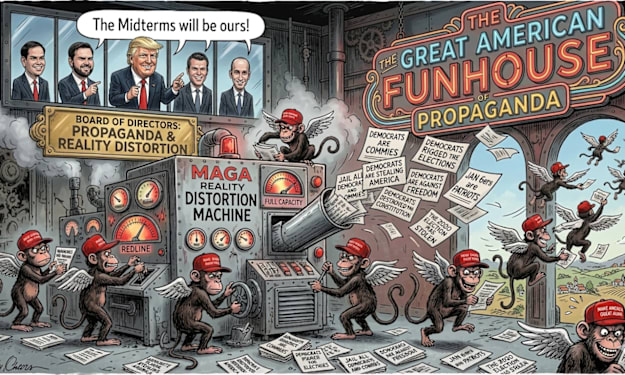
The Midterm Demolition Derby: The MAGA GOP’s Scorched-Earth Playbook to Blow Up the Republic for a Win
We are standing on the edge of the swamp, watching a multi-billion-dollar reality distortion machine redline its engines. The old rules of political gravity—where you actually had to pass laws, balance budgets, or appeal to a broad national consensus to keep power—have been tossed into the incinerator.
By Meko James 4 months ago in The Swamp
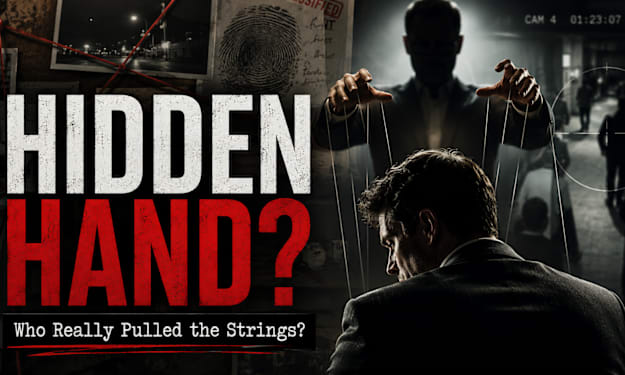
The Invisible Hand: How Covert Influence Operates Behind the Public Record
Covert Influence, Visible Perpetrators, and Hidden Causal Responsibility: Introduction: In analyzing high-profile acts such as assassinations, it is crucial to distinguish between what actually happened in reality and what can be publicly demonstrated or proven . Events are independent of evidence; a physical act occurs regardless of whether it is documented, understood, or acknowledged. Public validation is only one pathway to knowledge, not the ultimate source of truth.
By Peter Thwing - Host of the FST Podcast4 months ago in The Swamp
What the Border Numbers Actually Show
The argument over whether the true number was 14 million, 16 million, or 20 million points to a larger failure. The government failed to give the public a reliable answer about who came in, who stayed, who was released, who disappeared, who gave false information, who had criminal history, who had foreign ties, who received meaningful vetting, and who could be found and removed later.
By Peter Thwing - Host of the FST Podcast5 months ago in The Swamp
Farage Blames Nick Lowe and Andy Burham.
No doubt about it, Reform UK and its leader Nigel Farage threw everything they had at the Makerfield by-election, including the proverbial kitchen sink. Nigel Farage himself had gone up to Makerfield in Greater Manchester to make sure his candidate, a local plumber, defeated Labour's candidate, soon to be ex-Labour Mayor of Greater Manchester, Andy Burnham and now its Member of Parliament.
By Nicholas Bishop5 months ago in The Swamp
Op-Ed: Calling Sin a Sin Is Not Bigotry (Part 5). Content Warning. AI-Generated.
Series Note: This article expands the argument beyond the specific dealership call and beyond female-coded social aggression. The earlier articles examined a particular example, then moved into the broader problem of social aggression and identity-based deflection. This article addresses the deeper moral principle: no person should be protected from accountability because of sex, race, religion, sexuality, nationality, political tribe, trauma, victim status, social class, or any other identity category. Evil conduct remains evil conduct, even when the person doing it belongs to a group society has been trained to protect.
By Peter Thwing - Host of the FST Podcast5 months ago in The Swamp