
When Care Becomes a Limit
Between Responsibility and Presence
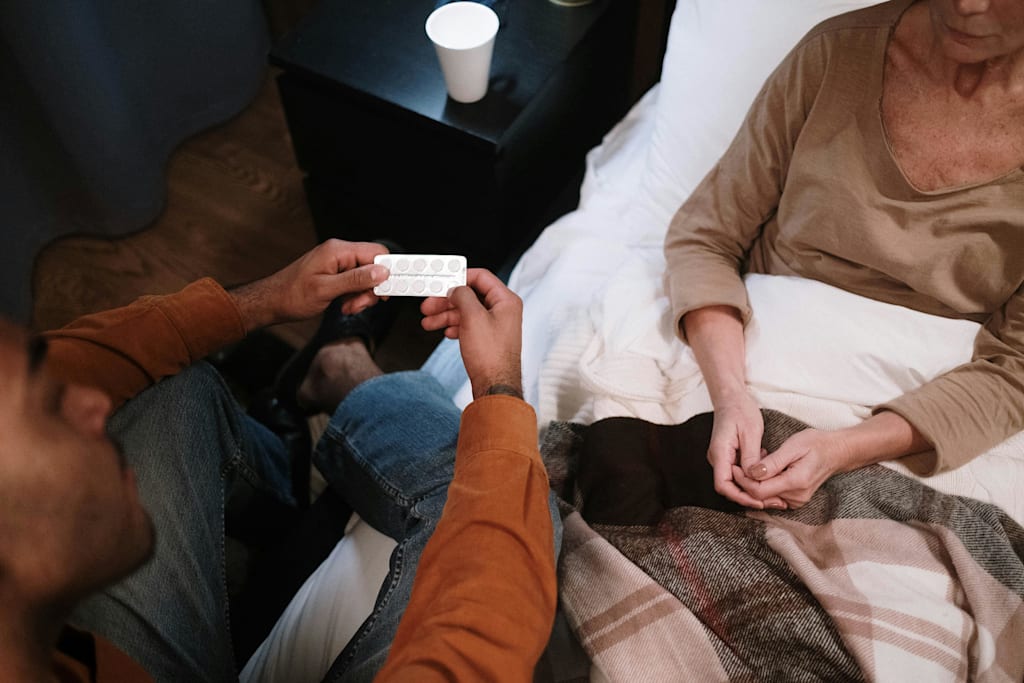
There is a form of pressure that does not come from a single event. It appears when care meets a situation that cannot be resolved. Something in the mind stays active even when no clear action is available. The experience is not confusion. It is a tension between responsibility and limitation.
In such moments, suffering is not only observed in another person. It spreads into the internal system of the one who cares. The presence of vulnerability in someone close creates an internal demand: something should be done, something should be repaired, something should restore balance.
But the system of care is often built on an implicit assumption. That responsibility and capacity should match. When they do not match, pressure appears.
The mind tries to resolve this mismatch through interpretation. It searches for meaning inside the situation, as if understanding could unlock action. Emotional states begin to function like signals carrying information. If the message is found, the tension is expected to decrease.
But not all situations offer stable interpretation. Some experiences remain ongoing, without closure. In those moments, the system does not stabilize. It rotates between different internal modes: intensified analysis, repetitive thinking, emotional overflow, and temporary withdrawal. Each mode attempts to restore balance in a different way, but none of them fully resolves the underlying mismatch.
When this cycle continues, meaning itself can begin to collapse. If understanding does not produce relief, the mind can enter a state where meaning feels unreliable. Not because meaning is absent, but because it is not sufficient to regulate experience. This is where nihilistic perception can appear as a structural exhaustion point.
From this point, a different process begins. Meaning is no longer expected from the situation itself. It is generated internally as a way to stabilize experience. The mind tries to reconstruct coherence through its own interpretation. This restores a sense of agency, but also increases the pressure to constantly convert emotion into understanding.
In parallel, another shift can occur. The role of care begins to change. Instead of trying to fix what is suffering, attention moves toward simply being present with it. Not as a solution, but as a form of contact that does not require repair.
This shift changes the internal definition of support. Support is no longer measured by outcome. It becomes the capacity to remain with what cannot be changed.
At first, this can still feel unstable. Because presence may be confused with withdrawal. But there is a structural difference between the two. Withdrawal reduces contact. Presence maintains contact without attempting control.
When presence stabilizes, something else becomes visible. The limitation of human capacity. Not as failure, but as structure. No individual can resolve all suffering. No responsibility can extend infinitely without breaking into exhaustion.
In this recognition, care begins to reorganize itself. It no longer depends on the possibility of repair. It becomes something more bounded, more realistic, but also more sustainable. The demand to save is replaced by the ability to witness.
And within witnessing, a different emotional quality appears. Not resolution, not control, but grief. Grief emerges when the system stops trying to convert everything into solution or meaning. It is the direct awareness of limitation without collapse of care.
This is not absence of responsibility. It is responsibility reorganized within human limits. Care continues, but without the demand to fix what cannot be fixed.
In this structure, an important internal redefinition happens. The presence of suffering in another person no longer automatically becomes a demand for repair. It becomes a situation that can be accompanied without control.
What changes is not the existence of pain, but the position of the one who witnesses it.
Care shifts from correction to presence. From solving to staying. From control to bounded awareness.
And in this shift, a question remains open:
What does it mean to care for someone when care is no longer defined by the ability to change what they suffer?
About the Creator
Enjoyed the story? Support the Creator.
Subscribe for free to receive all their stories in your feed.
Comments
There are no comments for this story
Be the first to respond and start the conversation.