
The Phantom in the Pocket: How the Attention Economy Hijacked Our Nervous System.
We are living in a state of perpetual bracing. Here is the neuro-biological cost of constant connectivity.

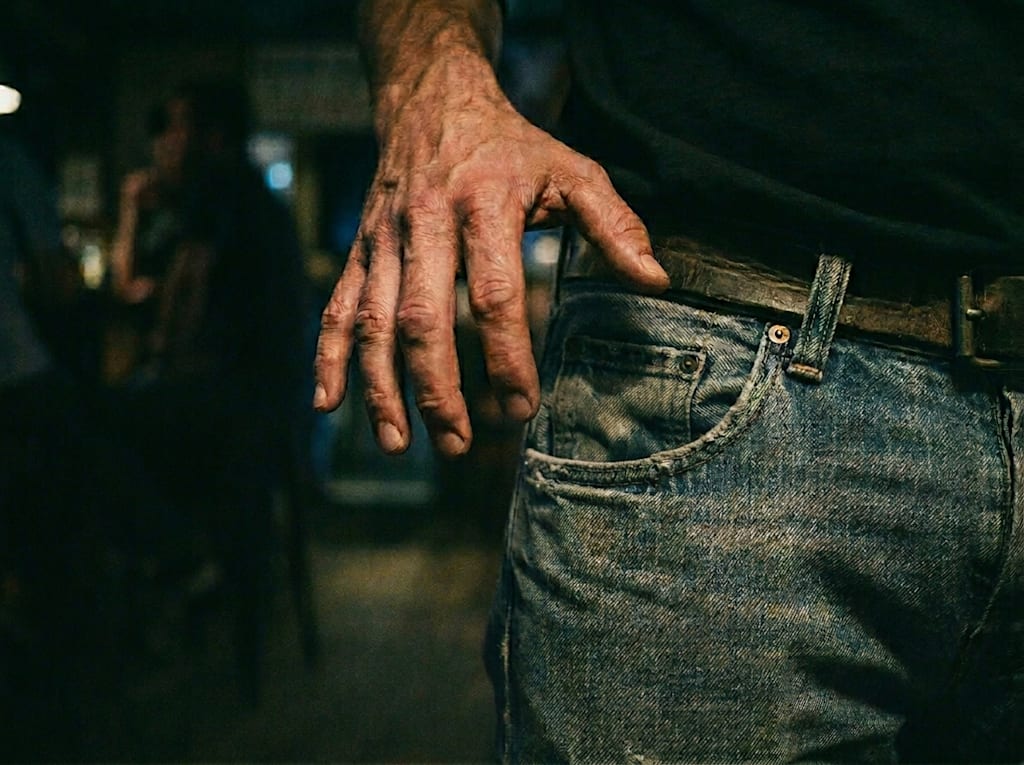
My right thigh just hummed.
It was a distinct, double-beat thrum, the exact cadence of an incoming message, buzzing against the denim of my jeans with enough force to halt my train of thought. I reached down. Fingers met nothing but flat cotton. They scraped against empty space where a rectangular slab of glass and lithium-ion should have been resting.
I’m writing this while aggressively rubbing that empty pocket, convinced a text just came through, even though I deliberately left my device on the kitchen counter three rooms away. (If I’m being honest, I threw the stupid thing onto the couch yesterday just to prove I could exist without it for an hour, only to spend fifty-nine minutes wondering who was trying to reach me.)
My leg lied to me. Or rather, my brain lied to my leg.
This is the baseline condition of modern life. We are a species entirely hijacked by anticipation. We live outside the present moment, constantly bracing for a stimulus that has not yet arrived. We feel vibrations that do not exist. We dread days that have not yet dawned. We are collectively suffering from a profound and specific neuro-biological error: the preemptive processing of stress.
Our biology was simply not built for the architecture of continuous, invisible demands.
The Amputated Appendage of the Attention Economy
To understand the ghost in the pocket, you have to look at the hardware of human perception.
Back in 2015, Dr. Robert Rosenberger, a philosopher of technology at Georgia Tech, conducted deep qualitative research into this exact phenomenon. He didn’t view it as a mere quirk of the modern worker. He classified it as a learned bodily habit, a profound shift in how we process sensory input. When you carry a device in the exact same spot against your body, day after day, year after year, it ceases to be a tool.
It becomes an organ.

Your brain begins to treat that phone as a literal extension of your physical form. And when you remove it, the neurological pathways remain. Neurologists sometimes refer to this mechanism as tactile pareidolia. Just as your visual cortex desperately searches for faces in the random patterns of clouds or burnt toast, your somatosensory cortex searches for meaning in the random friction of your clothing. A slight shift of fabric, a minor muscle spasm, the brush of a chair against your leg—your brain interprets this ambient noise as a signal.
Buzz.
You check. Nothing. You are tethered to a machine that isn't even in the room.
I remember falling down a rabbit hole late one night, landing on a buried MacRumors forum thread from around 2010. It was the earliest days of mass smartphone adoption. Users were genuinely confused. They were asking if their iPhone 4s were secretly discharging electricity through their pockets. They thought the hardware was defective.
It wasn't the hardware. We were just rewiring our neural pathways in real-time. The organic machinery of the human body was glitching under the weight of constant connectivity. We had trained our nervous systems to expect an interruption at any given second, and in the absence of that interruption, our bodies decided to manufacture one.
Uncover the secrets of the archives and beyond. Tap for the full story.
Chronophobia and the Preemptive Mourning of Sunday
This anticipatory misfire isn't limited to our physical flesh. It bleeds into how we experience time.
It is currently 4:12 PM on a Sunday. The light outside my window has taken on that bruised, yellowish quality that signals the death of the weekend. My coffee rings are staining the desk while I stare out at the dying afternoon, and I can feel a distinct tightness in the center of my chest.
Monday is still twenty hours away. I am completely safe. I am sitting in a quiet room, devoid of threats. Yet, my body is flooded with cortisol.
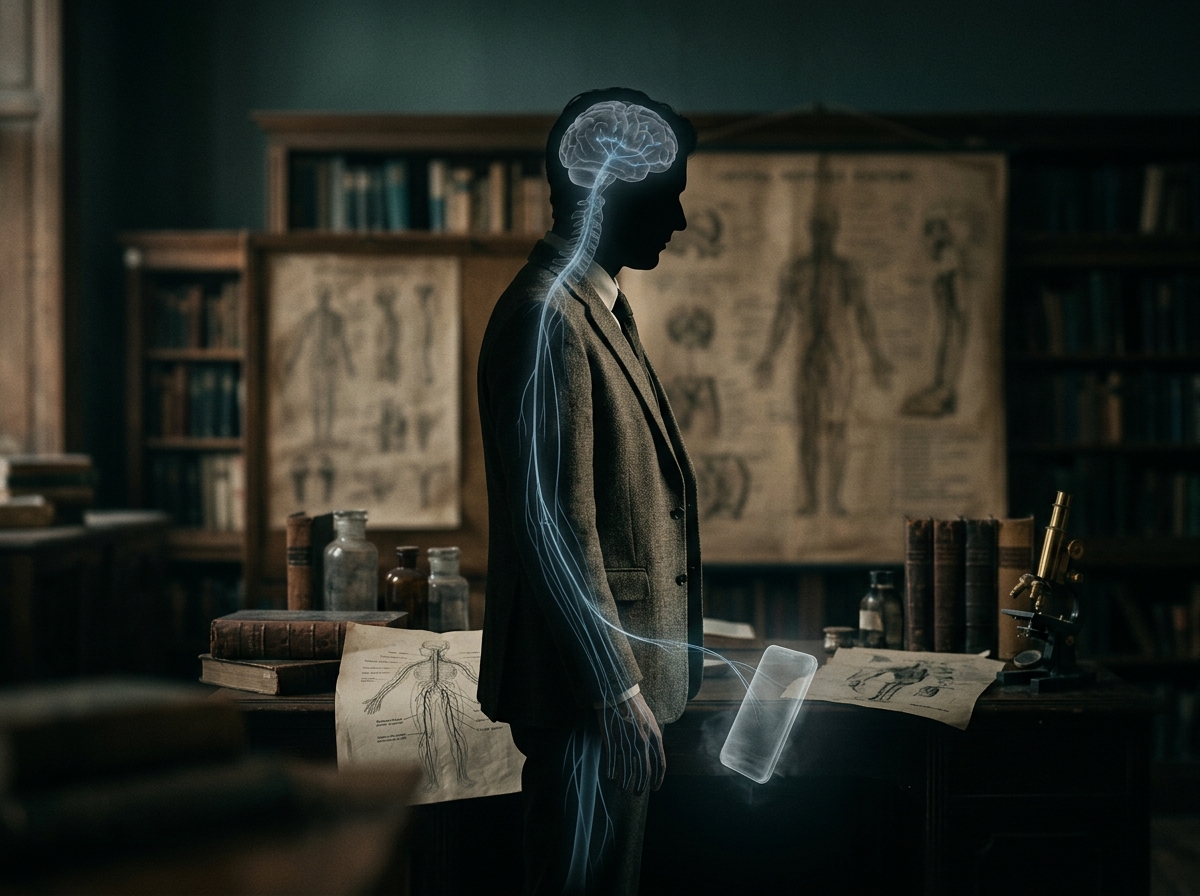
The "Sunday Scaries" are often dismissed as a cute, internet-friendly term for mild laziness. It is treated as a meme. It is not a meme. It is a mass psychological event. It is a parasitic dread settling into the chest cavity, stripping the present moment of all its value because the future is looming too loudly.
(I had to close three different tabs just to finish that thought, purely because the sight of my email client sitting idly in the background was making my pulse race.)
When you experience the Sunday Scaries, your body is doing the exact same thing it does when it feels a phantom vibration. It is reacting to a ghost. It is bracing for the hollow, wooden knock of a Slack notification. It is preparing to defend itself against the onslaught of fifty unread emails, the ambiguous calendar invite from a manager, the endless, grinding friction of the work week.
You are preemptively mourning your autonomy.
We evolved to react to immediate, physical threats. A predator snaps a twig in the brush; the sympathetic nervous system floods the body with adrenaline; we run. The threat passes, and the nervous system resets.
But what happens when the predator is an abstract concept called "Monday"?
There is no twig snapping. There is no physical release. There is just a slow, continuous drip of stress hormones. You spend your Sunday afternoon in a state of hypervigilant waiting, scanning the horizon for a danger that exists only on a digital calendar. Time itself becomes the threat. You cannot fight time, and you cannot flee from it, so you sit on your couch, heart pounding slightly, watching the sun go down, entirely paralyzed by tomorrow.
Pavlov’s Dogs in the Era of Silicon
The cruelty of this condition is how completely voluntary it all appears. No one is holding a gun to our heads, forcing us to check an empty pocket or dread a sunrise. We conditioned ourselves.
We are Pavlov’s dogs, except the bell is ringing inside our own heads, and there is no meat.
Every time a notification actually does arrive, it brings a microscopic hit of dopamine. It might be good news (a text from a friend). It might be bad news (a frustrated client). The content almost doesn't matter. What matters is the resolution of the uncertainty. The anticipation builds, the buzz occurs, the brain receives its answer.

Over time, the anticipation itself becomes the dominant state.
We become addicted not to the information, but to the cycle of tension and release. When the release doesn't come—when the phone is silent, when the weekend stretches out quietly in front of us—the tension becomes unbearable. The silence is deafening. So, the brain creates a phantom buzz to check the system. The brain creates a wave of Sunday anxiety to prepare the body for the inevitable shock of Monday morning.
Living in a state of perpetual bracing is simply exhausting.
It drains the color out of the immediate world. It makes it impossible to read a book on a Sunday afternoon without the nagging sensation that you are forgetting something. It makes it impossible to stand in line for coffee without reaching into your pocket to soothe an itch that isn't there. The present tense has been evacuated. We are hollowed out, living entirely in the next five minutes, the next notification, the next workday.
The Architecture of Our Anticipatory Dread
How do you un-train a nervous system?
You can try the usual prescribed remedies. You can turn off your notifications. You can put your phone in greyscale. You can practice mindfulness and do deep breathing exercises while the Sunday light fades.
But these are band-aids on a gaping psychological wound. The problem is not merely behavioral; it is environmental. The world we have built demands this level of anticipatory stress. The economy runs on it. If you are not constantly available, if you are not responding to the Slack knock within three minutes, you are falling behind. We are penalized for presence. We are rewarded for anticipation.
(I caught myself holding my breath just now, waiting for a delivery driver who isn't scheduled to arrive for another two hours. The absurdity of it is suffocating.)
We have built an environment that treats the human nervous system as an infinite resource. It is not infinite. It frays. It misfires. It produces hallucinations in the thigh and panic in the chest.
Uncover the secrets of the archives and beyond. Tap for the full story.
The Quiet Defiance of the Unplugged Body
There is no neat resolution to this. The damage is, in many ways, structural. I cannot reach into my own brain and sever the pathway that links a vibrating piece of glass to my fight-or-flight response.
But recognition is a mechanism of its own.
When my leg hums now, I try not to reach for the empty pocket immediately. I let the sensation hang there. I observe the hallucination for what it is: a desperate, confused signal from a brain that has forgotten how to be quiet.
I look out at the Sunday light. It is fully dark now. Monday is coming, inevitably, relentlessly. The dread is still there, pooling in my stomach, but I refuse to let it drag me into tomorrow before I am ready.
Let the phantom itch remain. Let the muscle twitch. Let Monday wait. Right now, in this specific, physical second, there is only the desk, the cold coffee, and the quiet room. The ghost can stay in the pocket. I don't have to answer it.
About the Creator
The Chaos Cabinet
A collection of fragments—stories, essays, and ideas stitched together like constellations. A little of everything, for the curious mind.
Enjoyed the story? Support the Creator.
Subscribe for free to receive all their stories in your feed.
Comments
There are no comments for this story
Be the first to respond and start the conversation.