
The Luxury of the Unseen: Inside the 2026 "Social Exit" Movement.
After a decade of performing for algorithms, the ultimate status symbol is becoming completely untraceable.

The deadbolt slid home with a heavy, rusted clack.
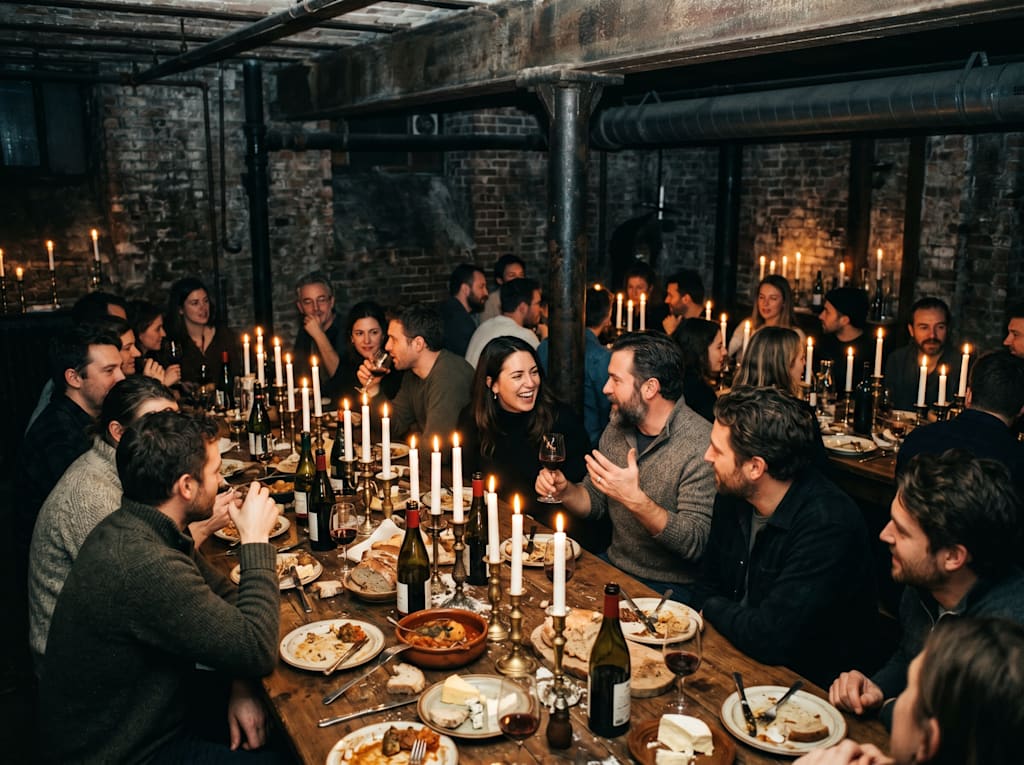
It was an aggressively final sound. I was standing inside a damp basement under a repurposed textile factory, completely severed from the global cellular network. Across the room, twenty strangers were loudly arguing over half-empty glasses of cheap Nebbiolo. Their faces were illuminated entirely by dripping taper candles. There was not a single rectangular glow in sight. My hands felt unnervingly empty.
(If I’m being honest, I forgot how terrifying it is to just sit in unmediated silence with a stranger, relying exclusively on the meat of my own brain to sustain a conversation.)
The air felt feral. It was thick with the kind of erratic, unpredictable human energy that simply cannot survive in a structured feed. I took a breath, shoved my empty hands deep into my coat pockets, and walked toward the noise.
We are retreating. After a decade of offering up the most intimate details of our lives to be chewed up and monetized by machine learning models, the pendulum has finally swung backward, violently. This is the 2026 "Social Exit." It is not a formalized movement with a manifesto or a catchy hashtag. In fact, its entire defining characteristic is its complete lack of a digital footprint. We are tired. We are bone-deep, soul-sick tired of performing our lives for an invisible audience of synthetic bots and bored acquaintances. We have realized, somewhat belatedly, that when you optimize every waking hour for public consumption, you are left with a sterilized husk of an existence.
The ultimate status symbol is no longer being seen. It is being entirely, stubbornly untraceable.
The Luxury of the Unseen
For the first time since the invention of the smartphone, average daily screen time actually dropped this year. It wasn't a minor dip. It was a statistical plummet. Market analysts are panicking, trying to figure out where the attention went, assuming it must have migrated to some new, unmeasured hardware.
It didn't. The attention went back to the physical world.
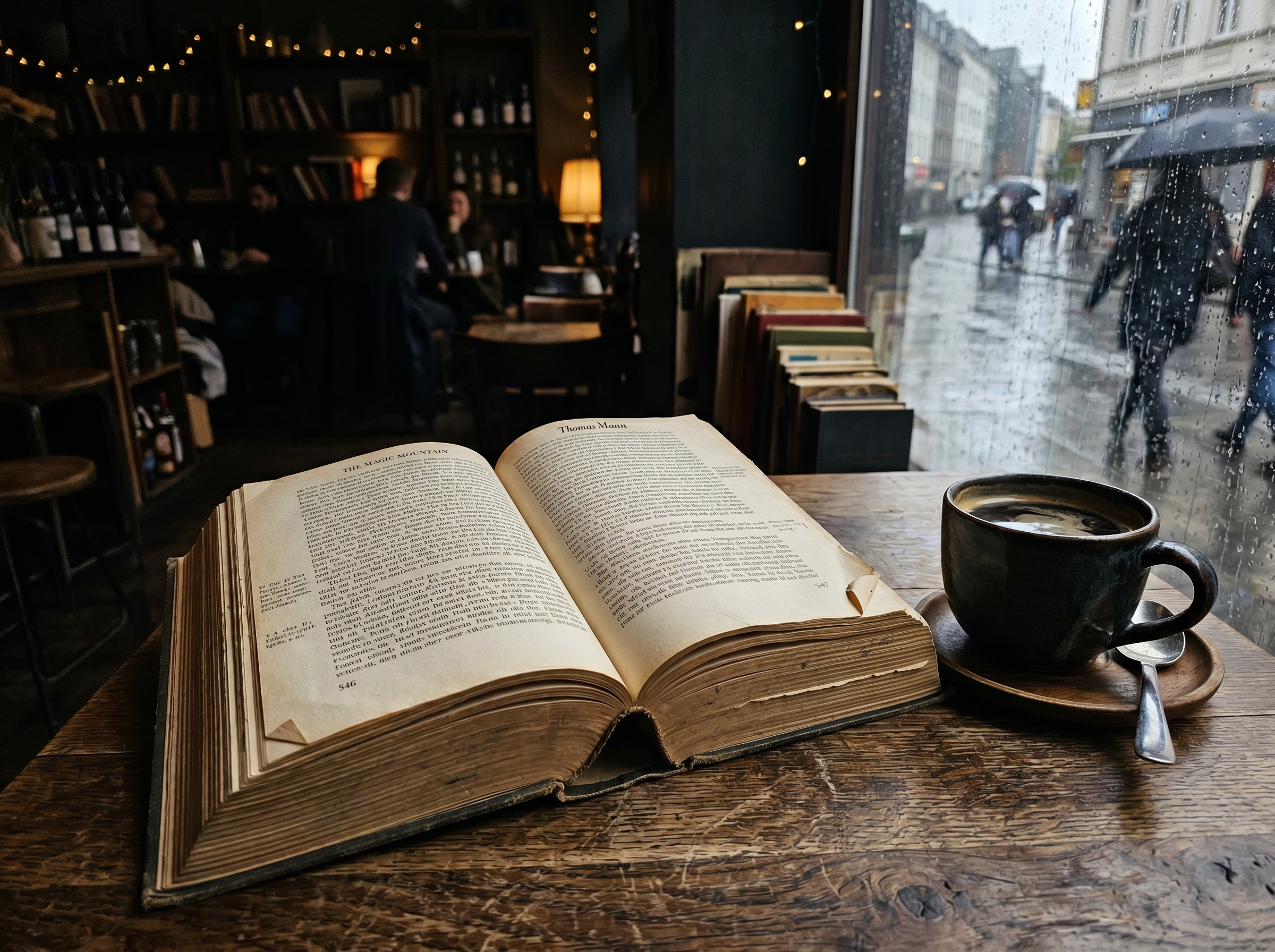
There is a profound exhaustion that comes from living as a brand. For years, we curated our breakfasts, our grief, our vacations, and our political outrage into neat, digestible content blocks. We fed the algorithm because we believed the algorithm was the only way to prove we existed. But by the start of 2026, the internet had become a graveyard of generative noise. You could no longer tell if a heartbreaking essay was written by a grieving mother or a prompted language model. You couldn't tell if a photograph of a protest was real or a hallucination born of a graphics card.
The online world became fundamentally unreliable. More than that, it became cheap.
When anyone can generate a masterpiece of visual art in four seconds, perfection loses its currency. Flawlessness is now the cheapest commodity on earth. What is rare, what is genuinely valuable now, is the unpolished. We are desperately craving friction. We want things that take too long, things that are difficult, things that cannot be scaled.
This is why the underground supper club I attended last night didn't have an Instagram account. You find out about it through a physical slip of paper handed to you by someone you actually know. You pay in cash. You surrender your phone at the door. If you want to remember what the food looked like, you have to use your memory.
The absolute lack of a safety net is exhilarating. You cannot fact-check a claim made across the table. You cannot pull up a photo of your dog to fill an awkward pause. You just have to sit there, naked in your own lack of immediate information, and exist. It is a terrifying, claustrophobic experience for the first twenty minutes. Then, a strange kind of peace washes over you. You are off the clock. The performance is over.
The Weight of Dead Trees and the "Wisdom Flex"
I’m writing this the morning after that subterranean dinner, my heavy wool sweater still smelling faintly of burnt beeswax and spilled gin. I am drinking black coffee and looking at the object sitting on my kitchen table.
It is a nine-hundred-page, dog-eared copy of The Magic Mountain.
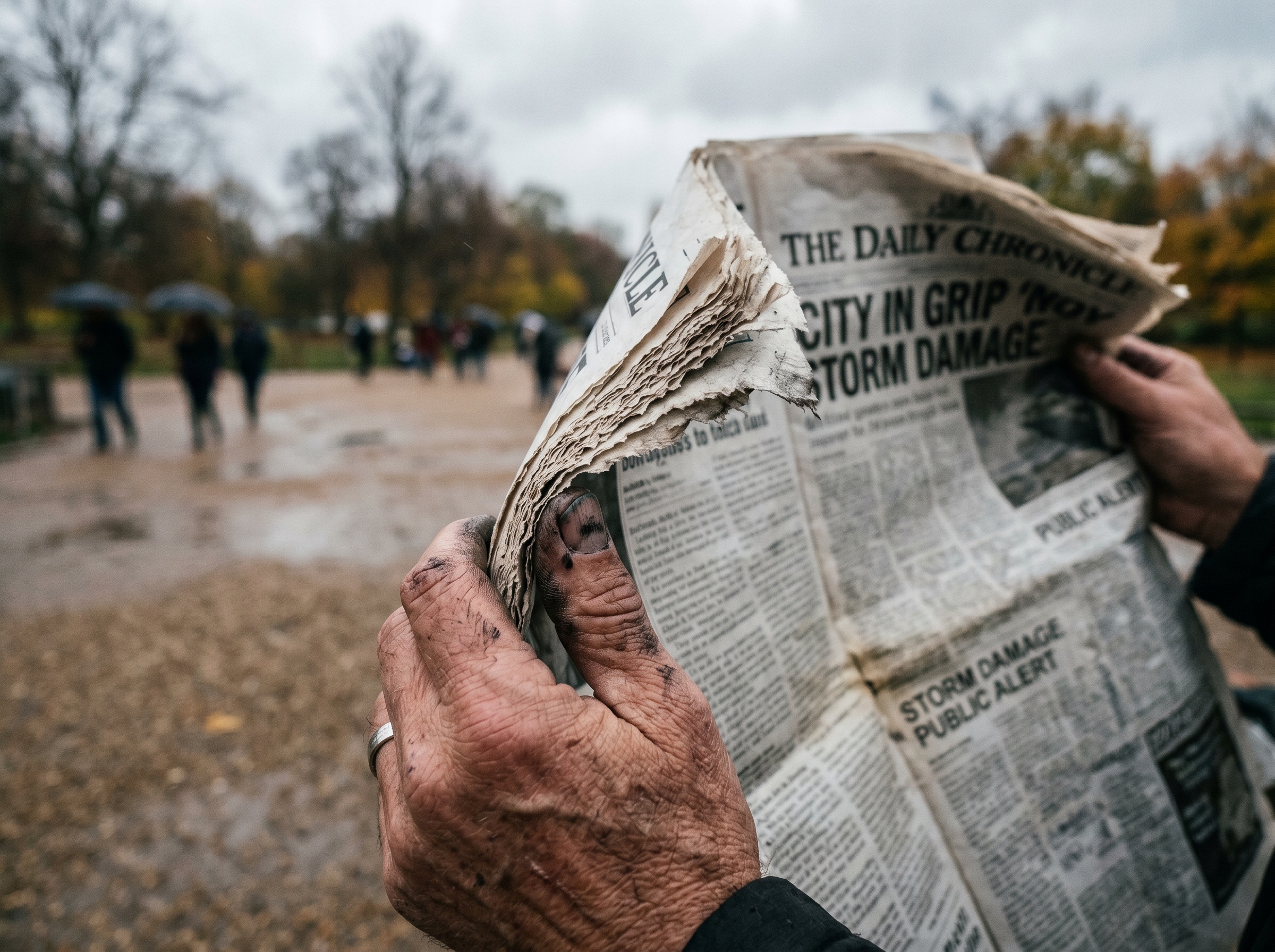
Five years ago, wealth was signaled by carrying a recognizable piece of luxury leather. Today, the most potent flex you can make in a coffee shop is sitting with a massive, difficult physical book and actively reading it for an hour without looking away. Cultural commentators have dubbed this "Wisdom Flexing," and it is fascinating to watch.
A physical book is a rebellion against the attention economy. You cannot fake reading a seven-pound hardcover in public. It proves to everyone around you that you possess the one resource the modern world has actively tried to destroy: sustained, unbroken focus. It shows that you have the luxury of time, and more importantly, the luxury of a quiet mind.
I bought a physical newspaper last Sunday. It felt ridiculous, honestly. It was massive, unwieldy, and leaving ink stains on my fingers. But as I sat on a park bench, wrestling with the broadsheet in the wind, I realized something profound. When I finished reading an article, the article just ended. There was no infinite scroll. There was no algorithm suggesting five related articles designed to make me angry. There were no comments at the bottom telling me the author was a hack.
There was just the edge of the paper, and then, the rest of my day.
The friction of the physical object forces you to slow down. You cannot optimize reading a physical book. You cannot double the playback speed on a piece of paper. You are forced to engage with the material at a human pace, a pace that respects the biological limits of your own processing power. We are actively seeking out these limitations because the alternative—the frictionless, infinite slide of the digital feed—has left us entirely hollowed out.
The Phantom Limb of the Audience
Withdrawing from the content machine is not a clean process. It is messy, and it hurts.
(I actually caught myself looking for a 'like' button in the middle of a real-world conversation last Tuesday. A friend told a clever joke, and my right thumb gave a pathetic, involuntary twitch against my thigh. It was humiliating.)
When you spend your formative years tethered to a feedback loop of immediate digital validation, removing that loop feels like amputating a limb. You still feel the ghost of the audience. You take a beautiful walk in the woods, the light hits the leaves in a mathematically perfect way, and your brain immediately begins drafting a caption. You frame the shot in your mind. You anticipate the validation.
And then you remember you have nowhere to post it.
The realization hits you like a physical blow. The beauty of the moment suddenly feels heavy, almost burdensome, because you have to carry it entirely on your own. You have to experience the joy, or the sadness, or the profound boredom, without outsourcing it to a crowd of strangers.
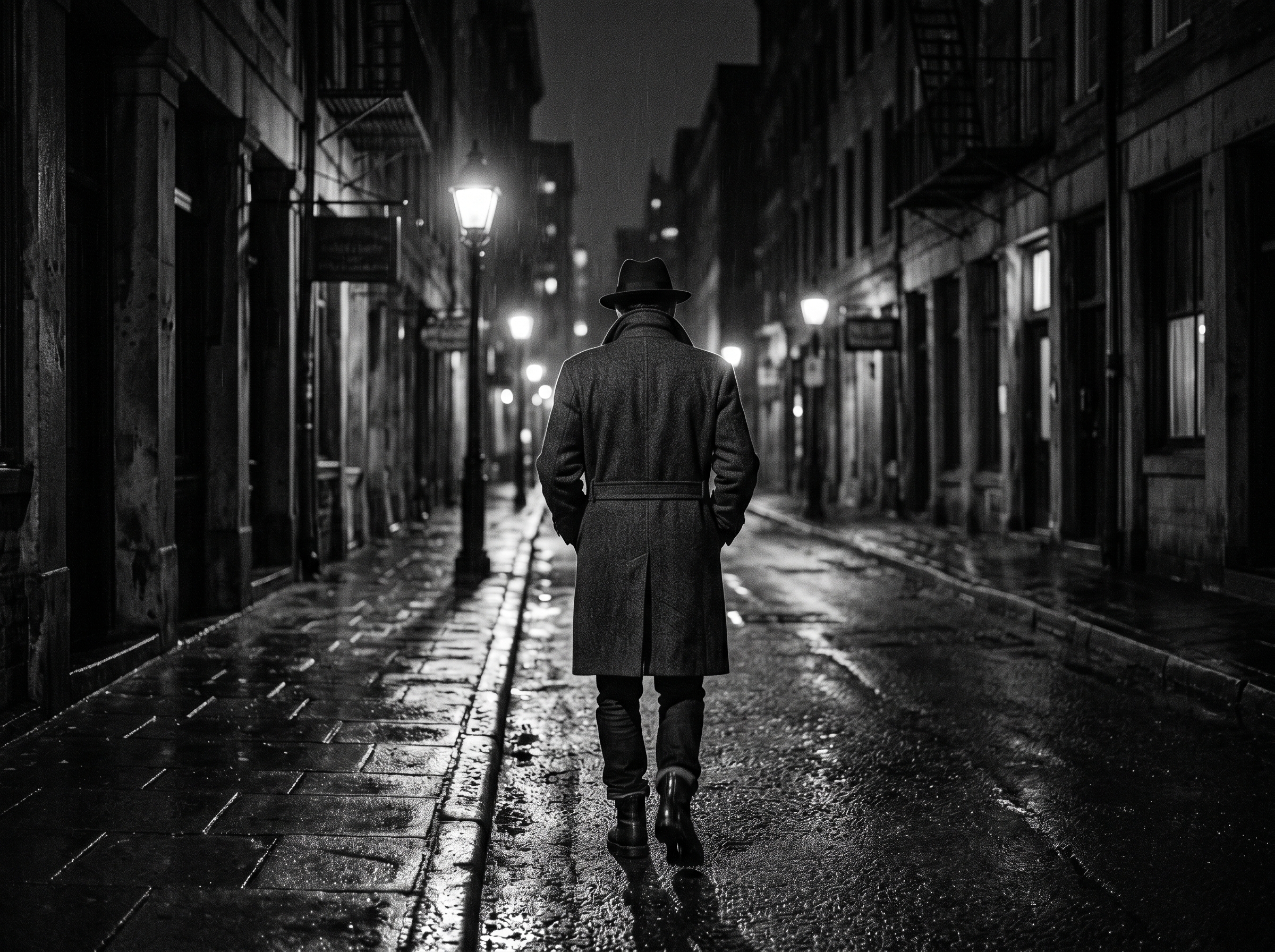
This is the hardest part of the Social Exit. We have to relearn how to be alone.
For the past decade, we used the internet as an emotional crutch. We outsourced our anxiety to Twitter. We outsourced our aesthetic taste to Pinterest. We outsourced our need for community to Discord servers and comment sections. But those were simulations of connection. They were opaque networks built to generate ad revenue, not to foster actual intimacy.
The underground salons, the physical book clubs, the phone-free living rooms—these are rehabilitation centers for the human spirit. They are places where we are forcing ourselves to endure the agonizing vulnerability of being truly present. We are trading the synthetic high of a viral notification for the quiet, sustaining warmth of eye contact.
The Architecture of the Inconvenient
There is a deliberate inconvenience to this new way of living. It is harder to coordinate plans when you aren't checking a group chat every five minutes. It is harder to discover new music when you are actively ignoring the algorithmic playlists. It is deeply inefficient.
But efficiency is exactly what we are trying to escape.
The hyper-optimized life is fundamentally inhumane. Humans are not machines meant to process data at maximum capacity. We are messy, biological creatures who need downtime, who need to stare at the ceiling, who need to have long, meandering, pointless conversations that do not lead to a measurable outcome.
By stepping away from the digital stage, we are reclaiming our right to be useless. We are reclaiming our right to be forgotten.
I don't know if the Social Exit will last. The allure of the screen is potent, and the companies building these platforms employ the smartest behavioral psychologists on the planet. But standing in that damp basement last night, listening to the chaotic, overlapping voices of people who were entirely focused on the present tense, I felt a spark of genuine hope.
We are finally realizing that we do not have to be content. We can just be people. We can embrace the friction. We can let the candles drip onto the table. We can let the conversation stall. We can walk out into the cold night air, our pockets heavy with nothing but our own hands, and disappear.
About the Creator
The Chaos Cabinet
A collection of fragments—stories, essays, and ideas stitched together like constellations. A little of everything, for the curious mind.
Enjoyed the story? Support the Creator.
Subscribe for free to receive all their stories in your feed.
Comments
There are no comments for this story
Be the first to respond and start the conversation.