
The Luxury of the Unsearchable: Why the "Analog" Movement is a Survival Tactic.
We have reached peak optimization. Here is why trading 8K sensors for a 2008 Nikon is the ultimate act of defiance.

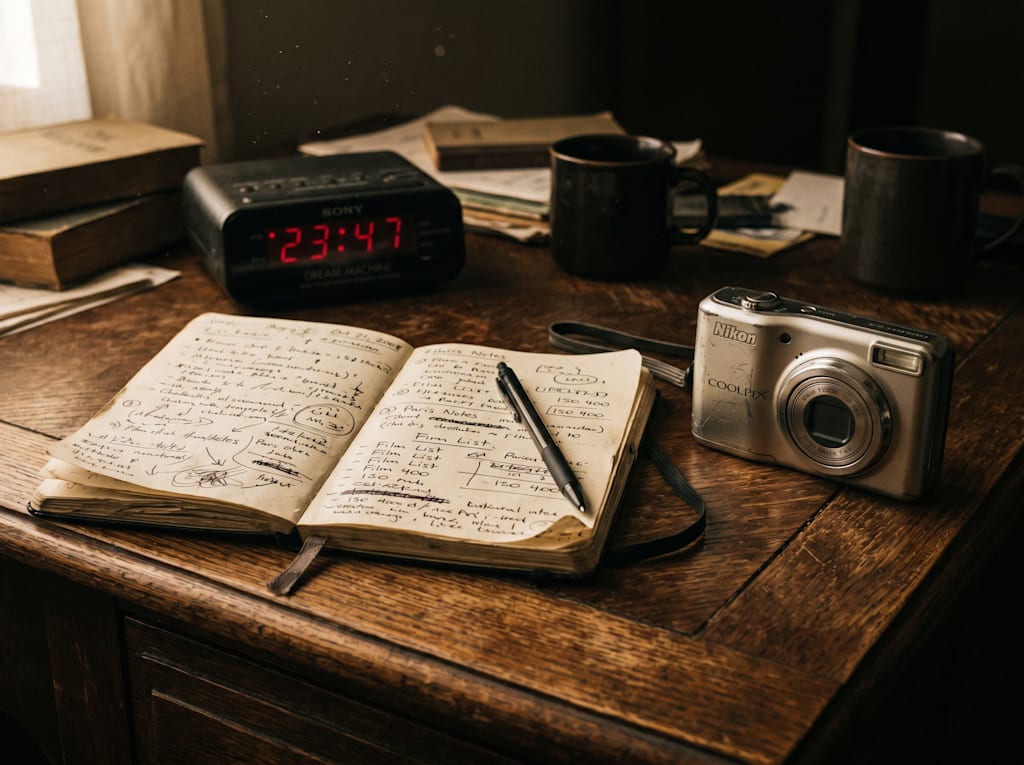
The shutter on my 2008 Nikon Coolpix doesn't click; it groans. It is a slow, clumsy, physical sound that feels almost offensive in a world where every other interaction has been smoothed down to a point of total frictionlessness. I’m holding this silver brick in a dim bar, waiting for the flash to recharge. It takes five seconds. In five seconds, a modern AI-integrated sensor could capture a hundred frames, upscale them to 8K, and suggest three different "optimized" filters based on my current heart rate.
Instead, I wait. I wait for the little green light to stop blinking. I am hunting for a graininess that cannot be faked.
I’m writing this while staring at a physical paper planner, tracing the ink of a messy "Meeting @ 3" with my thumb just to feel something that hasn't been algorithmically predicted for me. My smartphone is currently buried at the bottom of a laundry basket in the other room. It is a heavy, black mirror that I have come to loathe. My apartment feels unnervingly, beautifully quiet.
If I’m being honest, the sight of the word "optimized" makes my teeth grind. We have reached the event horizon of the synthetic. By the mid-point of 2026, the internet has become a graveyard of dead bots shouting at other bots, a recursive loop of AI-generated content that tastes like unseasoned tofu. It is everywhere. It is the music playing in the grocery store that was composed by a prompt. It is the "influencer" who doesn’t actually have a pulse. It is the claustrophobic feeling of being watched by a machine that knows what you want to buy before you’ve even felt the desire.
And so, we are retreating. We are running back into the arms of the clumsy, the slow, and the broken. The 2026 Analog Lifestyle Movement isn't just a trend for hipsters; it is a desperate survival tactic for the human soul.
The Luxury of the Unsearchable
There is a specific kind of panic that sets in when you realize your entire life is indexed. Every thought you’ve shared, every photo you’ve tagged, every "like" you’ve idly tapped has been fed into a model to better predict your next move. Privacy used to be about hiding secrets. Now, privacy is about reclaiming the right to be unpredictable.
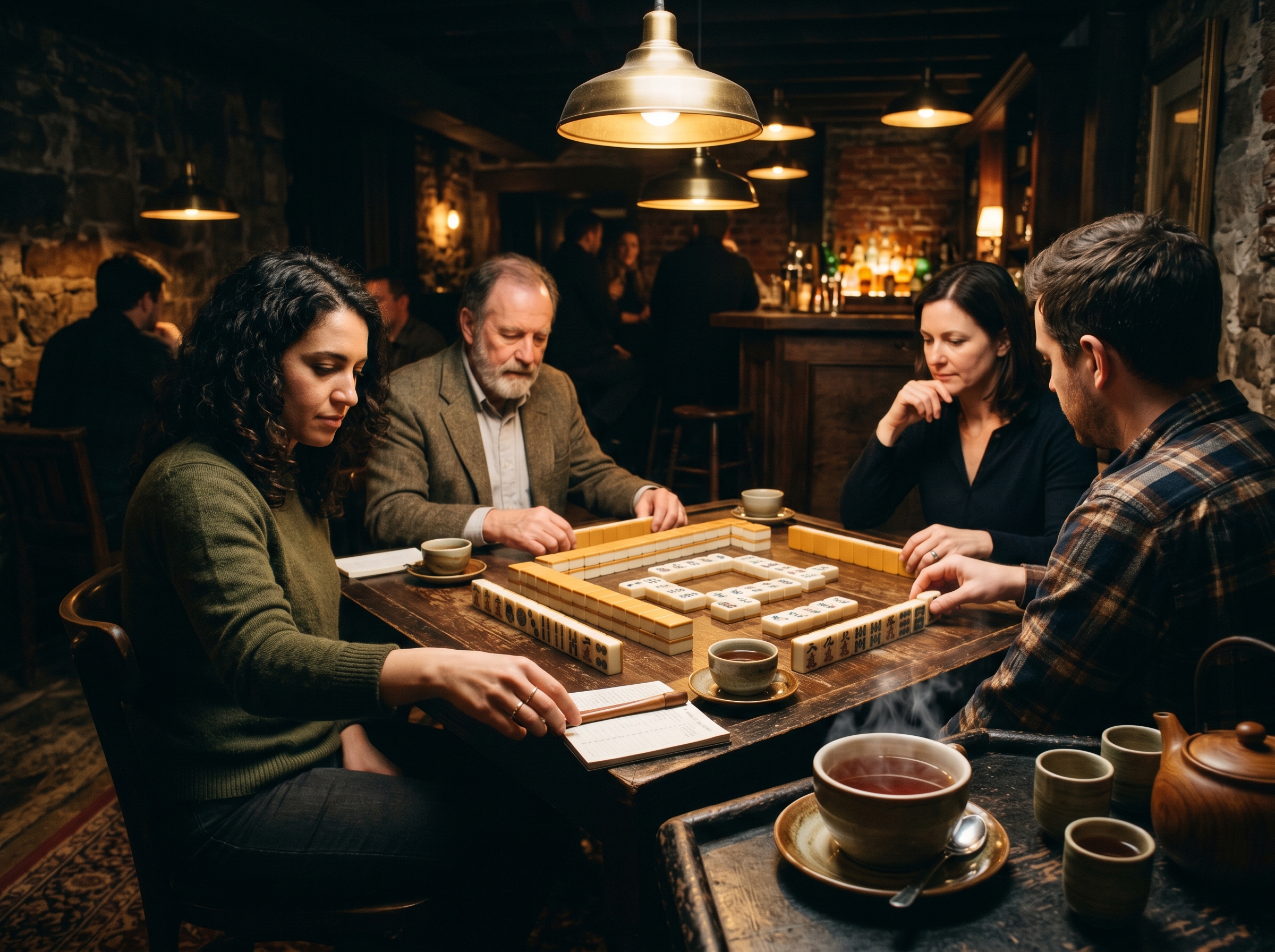
The ultimate status symbol in 2026 isn't a foldable phone or a neural link. It’s a leather-bound notebook. It’s the fact that what is written on page 42 of my Moleskine is physically impossible for a scraper to find. There is no "Search" function for my handwritten grocery list. To find it, I have to use my hands. I have to flip through the pages. I have to interact with the world as a physical being, not a data point.
I actually paid real money for a physical alarm clock last week just so I could banish my phone from the bedroom. It’s a cheap, plastic thing with a red LED display that looks like it belongs in a 1994 motel. I love it. When it goes off, I don't see a notification about a war, a stock market crash, or a "curated" list of shoes I might like. I just see the time. I see 7:00 AM, and I am allowed to exist in that minute without being harvested for my attention.
This is the core of the movement: the pursuit of "Dead Zones." We are seeing the rise of underground Mahjong nights in cities like Seattle and Brooklyn, where the entry fee is simply surrendering your device at the door. No photos. No "checking in." Just the heavy, satisfying clack of tiles and the smell of real tea. If a moment isn't captured on a 200-megapixel lens and uploaded to a cloud, did it happen? To the algorithm, no. To the human standing there, it’s the only thing that’s ever been real.
The Sterilized Death of the Feed
The digital era promised us infinite choice, but it gave us a sterilized cage. When everything is tailored to your preferences, you never encounter the "other." You never stumble upon the weird, the jarring, or the genuinely new. You only see the version of reality that the machine thinks will keep you scrolling for three more seconds.
AI-generated noise has made the digital experience feel thin. It’s a ghost world. I’ve noticed that about 50% of my social circle is now actively seeking out screen-free hobbies—things that require tactile resistance. People are buying up old point-and-shoot cameras on eBay not because the photos are better, but because they are worse. They are flawed. They have light leaks and red-eye and weird shadows. They look like memories, not "assets."
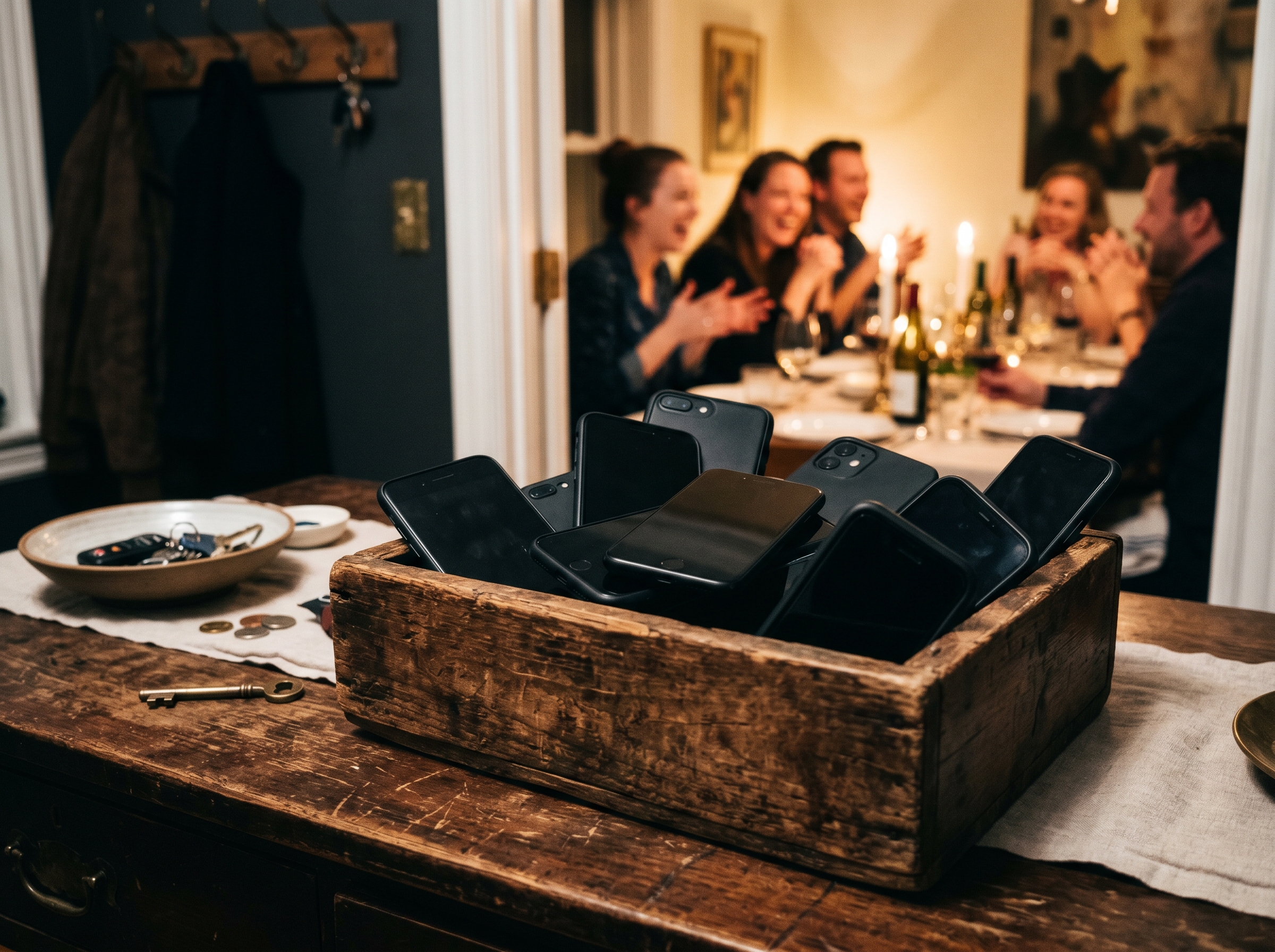
There is something primal about needing to touch things that can't be deleted with a swipe. Last month, I spent an hour in a used record store, flipping through vinyl. The dust on the sleeves got under my fingernails. My back ached from leaning over the bins. This is what the tech giants call "friction." They want to eliminate it. They want life to be a seamless, frictionless slide into consumption.
But friction is where meaning lives.
The resistance of a pen against paper, the weight of a heavy book in your lap, the needle dropping onto a record—these are the things that anchor us to the earth. Without them, we are just floating in a cloud of bits, becoming as translucent and hollow as the AI models we feed.
The Survival of the Deliberate
Living an analog life in 2026 is an act of rebellion. It is exhausting to be this deliberate. It is much easier to let the algorithm choose your music, your route to work, and your dinner. To choose for yourself requires effort. It requires you to be okay with being bored, with getting lost, or with picking a bad restaurant.
We have been taught to fear inefficiency. We’ve been told that a minute not "optimized" is a minute wasted. But the Analog Lifestyle Movement posits the opposite: a minute spent staring at a wall is more valuable than a minute spent being hyper-targeted by a marketing engine.
I’ve started carrying a film camera again, a Pentax K1000. It has no batteries. It doesn't know who I am. It only has 24 shots on the roll. This limitation is a gift. It forces me to look at the world with a deliberate eye. I can't take 500 photos of my lunch and "fix it in post." I have to decide if this specific moment is worth one twenty-fourth of my roll. Usually, it isn't. And that realization—that most things don't need to be documented—is the most liberating feeling I’ve had in a decade.
We are seeing a mass exodus from the "always-on" mindset. People are rediscovering the joy of the "dumb" phone. They are rediscovering the fact that they don't actually need to know what a person they went to high school with had for breakfast. We are shrinking our worlds back down to a human scale.
The Primal Return
At its heart, this isn't about technology. It’s about the nervous system. Our brains were not designed for the sheer volume of data we are currently shoving into them. We were not built to handle the collective trauma of the entire planet delivered in real-time, 24/7, interspersed with ads for hair loss pills.
The "Analog Lifestyle" is just a fancy name for returning to our biological baseline. We need the sun. We need the dirt. We need the physical presence of other humans whose faces aren't being smoothed out by a real-time beauty filter.
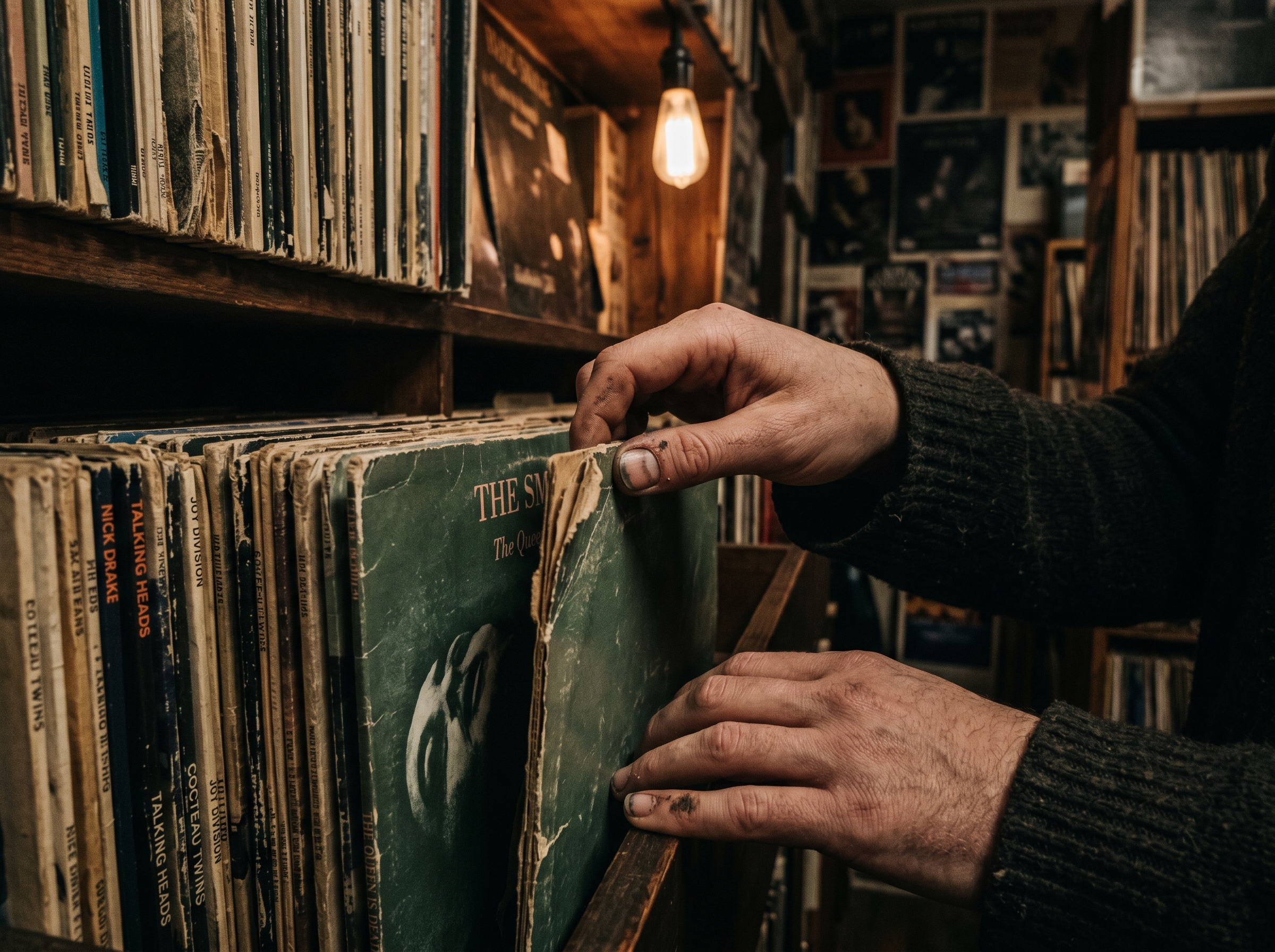
I recently went to a dinner where the host had a "phone jail"—a wooden box in the entryway. At first, the silence was agonizing. We all sat there, twitching, our thumbs ghosting over pockets that were now empty. We didn't know how to fill the gaps in conversation. We had forgotten how to sit with a pause.
But then, something shifted. The conversation became deeper. We weren't fact-checking each other on Wikipedia or showing each other memes. We were telling stories. We were laughing at things that would never make sense in a tweet. We were, for a few hours, completely unsearchable.
When I finally left and retrieved my phone, I saw I had 42 notifications. I didn't open a single one. I put the phone in my bag, walked to the subway, and watched the people on the platform. Most of them were bent over their glowing screens, their faces washed in that sickly blue light, their thumbs moving in that repetitive, robotic flick.
They looked like they were working. They looked like they were part of a machine they didn't understand.
I reached into my pocket and felt the cold, hard steel of my Nikon Coolpix. I felt the paper of my notebook. I felt the weight of my own existence, messy and unoptimized, and for the first time in a long time, I didn't feel tired. I felt alive.
About the Creator
The Chaos Cabinet
A collection of fragments—stories, essays, and ideas stitched together like constellations. A little of everything, for the curious mind.
Enjoyed the story? Support the Creator.
Subscribe for free to receive all their stories in your feed.
Comments
There are no comments for this story
Be the first to respond and start the conversation.