
The Collapse of the Metric Empire: Why the Era of the Biohacker is Dead.
From throwing biometric rings in the trash to embracing the "puffy eye"—how we finally stopped treating our bodies like failing tech startups.

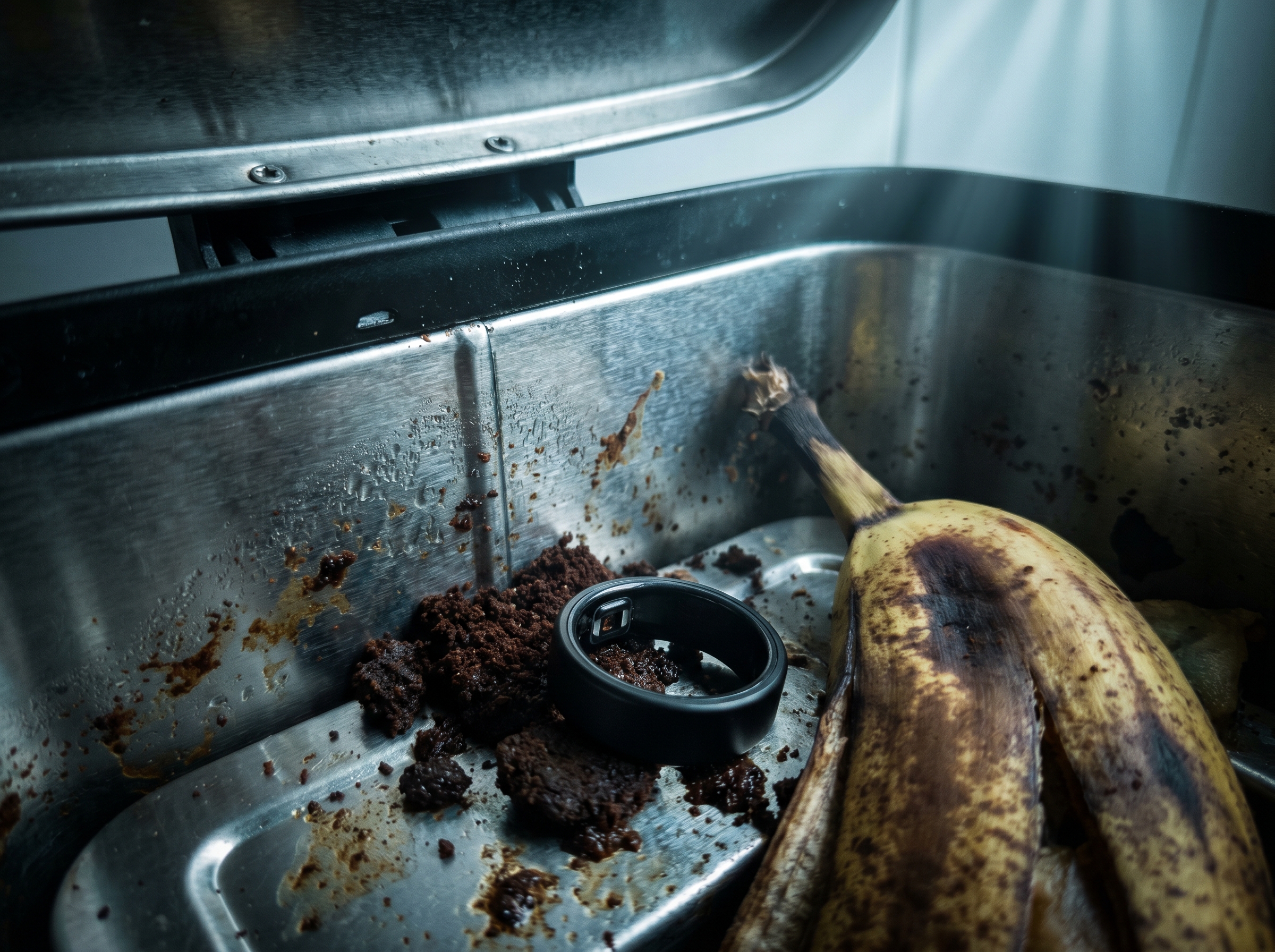
The matte black titanium struck the aluminum bottom of my kitchen trash can with a pathetic, hollow clink.
It was dead. My three-hundred-dollar biometric ring rested among wet coffee grounds and half-eaten banana peels. For three years, that tiny sensor had dictated my morning mood by assigning me a numeric score based on my heart rate variability. I stared at the garbage. I felt nothing but a terrifying, brilliant rush of freedom.
I’m writing this while aggressively ignoring an app on my phone telling me my "recovery score" is alarmingly low, eating a piece of sourdough bread directly over the sink. A heavy crumb just landed on my bare foot. I am not going to sweep it up.
(If I’m being honest, the mere concept of doing a morning cold plunge makes me want to scream into a couch cushion until my lungs give out.)
We are done. The era of the biohacker is officially over.
For a decade, we treated our bodies like failing tech startups that just needed a little more seed funding and a better morning routine. We strapped lasers to our skulls. We measured the exact temperature of our mattresses. We drank thick brown sludge out of plastic shakers that tasted like metallic dirt, convinced it would somehow sharpen our focus for another ten-hour sprint of answering emails. It was exhausting. It required the constant, unforgiving surveillance of our own biology, turning the simple act of being alive into a perpetual, failing grade.
But culture in 2026 has abruptly, violently surrendered. We have stopped trying to fix the machine. We are finally letting the engine stall.
Uncover the secrets of the archives and beyond. Tap for the full story.
The Collapse of the Metric Empire
The self-improvement engine simply broke under its own weight.
According to a recent behavioral study, the average knowledge worker currently switches between digital applications one thousand, two hundred times a day. We are entirely fragmented. We are shattered into a thousand tiny psychological shards by the time the sun goes down. And yet, until very recently, the societal response to this trauma was to simply optimize the shattering. We believed that if we could just organize our calendars better, or ingest the exact right ratio of magnesium to zinc, we could outrun the crushing weight of modern existence.
You cannot math your way out of profound spiritual burnout.
When you track every biological function, you strip the mystery from your own flesh. Sleep is no longer a soft, quiet escape into the dark. It becomes a performance. You wake up, check a glass rectangle, and let an algorithm tell you if you rested successfully. If the score is red, your entire Tuesday is ruined before your feet even touch the floor. You are penalized for dreaming poorly.
This hyper-optimized way of living turned us into wardens of our own nervous systems. We were always on duty. We were always patrolling the perimeter of our habits, looking for weakness.
The rebellion started quietly. People began leaving their fitness watches on their nightstands. Then, they stopped renewing their premium diet-tracking subscriptions. It wasn't a coordinated strike. It was a collective, heavy sigh from a population that realized the finish line of self-improvement was actually just a mirage painted on a brick wall.
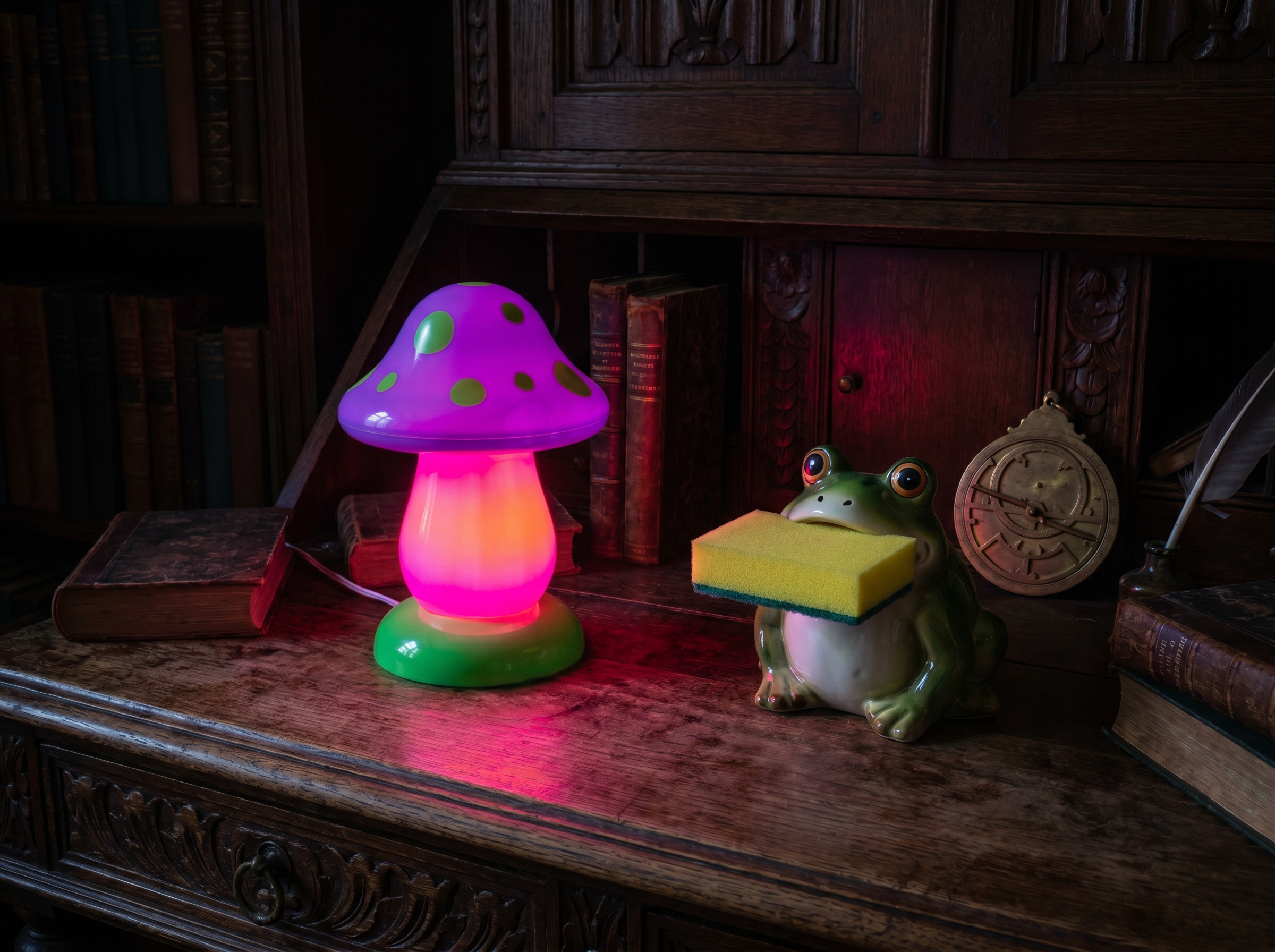
(I actually bought a completely useless, violently neon, mushroom-shaped lamp yesterday just to prove my bedroom wasn't a sterilized recovery chamber built strictly for optimal REM sleep.)
We wanted our messiness back. We wanted the right to be tired without having to diagnose it.
The Seduction of the Puffy Eye
You can track this exact psychological shift by looking at the billboards.
The "Aesthetic of Exhaustion" is currently the dominant visual language of 2026. Fashion houses, luxury brands, and even cosmetic conglomerates have abruptly abandoned the glowing, impossibly rested influencers of the early twenties. They are casting people with visible dark circles. The models are slouching. They look like they slept for four hours, had a minor panic attack in a taxi, and simply kept going.
It is wildly, painfully relatable.
Brands realized we stopped aspiring to be flawless because flawless is now associated with synthetic generation. An AI can conjure a perfectly symmetrical, radiant human face in three seconds. Looking visibly wrecked is the ultimate, undeniable proof of your humanity. It shows you survived the meat grinder of the week. It proves you have a pulse.
I saw an advertisement for a luxury knitwear brand last month. It featured a woman staring blankly at a beige wall, holding a mug of coffee with the chaotic, unblinking energy of a hostage. Her hair was entirely undone. She looked fundamentally defeated by a Tuesday. I immediately bought two sweaters.
We are finding deep comfort in shared fatigue. When the culture at large stops pretending everything is fine, the individual pressure to perform happiness evaporates. We are allowed to admit that existing in a hyper-connected, endlessly demanding economy takes a visceral toll. The puffy eye is a badge of honor. It says: I am participating in society, and it hurts, and I am not going to pretend it doesn't.

The Return on Joy and the Unserious Rebellion
Because we cannot fix the macroeconomic structure, and because we are completely gridlocked by the sheer volume of global crises, our defense mechanism is a hard pivot toward absurdity.
This is the year of "Unserious Everything."
If every political headline is terrifying and every work demand is urgent, the brain short-circuits. It stops processing gravity. The coping mechanism for absolute seriousness is absolute nonsense. We are deliberately refusing to engage with the solemnity of adult life.
This birthed the current economic trend analysts call the "Return on Joy." We are no longer buying things to become better, smarter, or faster versions of ourselves. The market for productivity journals has collapsed. Instead, we buy tiny, deeply stupid things just to feel a brief, isolated spark of serotonin. People are spending ridiculous amounts of money on ceramic frogs that hold sponges. We are buying keychains that make terrible noises. We are seeking out the delightfully useless.
It is the outright rejection of utility.
When you spend your entire day being useful to a corporation, being useful to an algorithm, and being useful to a calendar, utility becomes a prison. You desperately crave things that serve absolutely no purpose. The absurd lamp. The stupid frog. The decision to watch a terrible movie from 1998 entirely in earnest.
These are acts of defiance. We are reclaiming our attention from the optimization machine and intentionally wasting it. We are squandering our time on purpose, because squandered time is the only time that truly belongs to us.
Uncover the secrets of the archives and beyond. Tap for the full story.
The Glorious Rot of the Feral Couch
To embrace the end of the biohacking era is to return to a feral state.
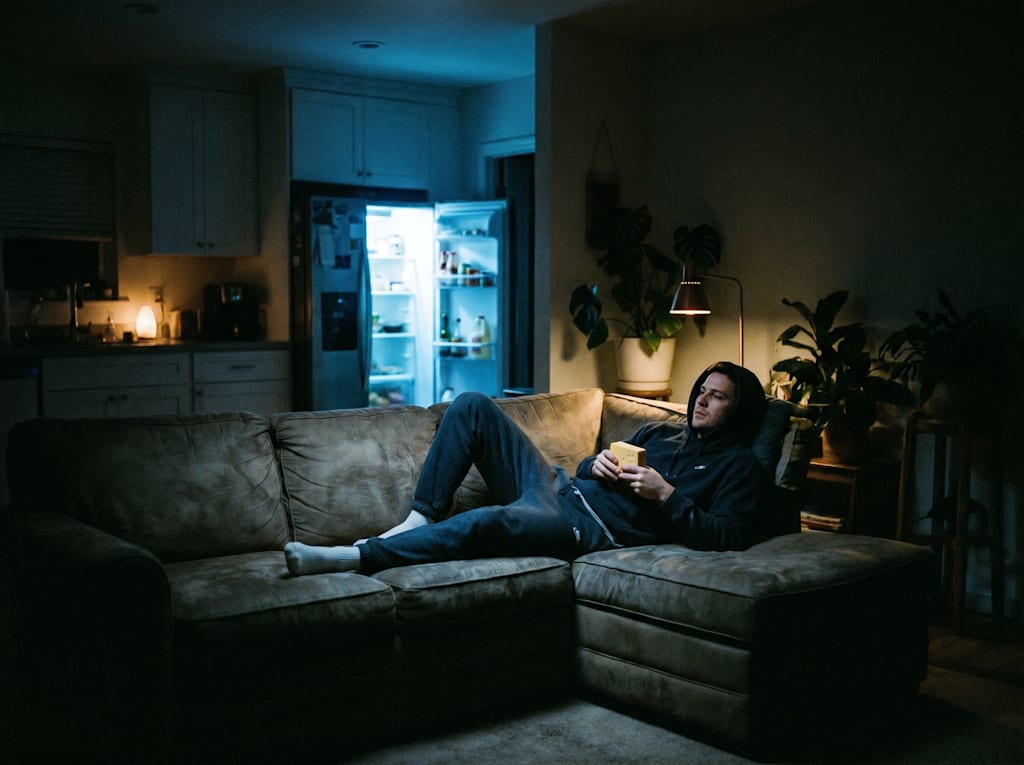
I do not mean running through the woods with a spear. I mean something much quieter. I mean the feral couch. I mean the unwashed hair on a Sunday. I mean the deliberate decision to eat a heavy block of sharp cheddar cheese at midnight by the light of the open refrigerator, without logging the caloric intake into a database.
(I watched my smart-watch politely buzz and tell me to stand up an hour ago, and I responded by sinking deeper into the upholstery out of pure, spiteful rebellion.)
The wellness industry promised us immortality, or at least a highly productive extension of our youth. We slowly realized the prize was a scam. You optimize your sleep so you can endure more stress at work. You track your macros so you can look palatable on a digital screen. It was never actually about feeling good. It was about commodifying the flesh to make it a more efficient vehicle for labor.
Now, the refusal to improve is our most radical act of self-preservation.
We are practicing the art of being unbothered by our own decay. We are letting the dishes sit in the sink overnight. We are letting our muscles soften. We are allowing ourselves to be exactly as exhausted as the world demands us to be, without applying a poultice of green juice and forced meditation.
There is a profound, terrifying grace in giving up.
When you stop measuring your life, you suddenly get to live it again. You stop viewing a lazy afternoon as a failure of discipline and start viewing it as a biological necessity. You stop viewing your body as a machine that needs constant tuning, and start viewing it as an animal that just wants to rest in the sun.
I looked down at my foot. The sourdough crumb was still there. I nudged it under the edge of the kitchen cabinet with my big toe. I left the bio-tracker in the garbage. I poured myself a cup of black coffee, entirely unmeasured, and walked back to the living room to do absolutely nothing.
About the Creator
The Chaos Cabinet
A collection of fragments—stories, essays, and ideas stitched together like constellations. A little of everything, for the curious mind.
Enjoyed the story? Support the Creator.
Subscribe for free to receive all their stories in your feed.
Comments
There are no comments for this story
Be the first to respond and start the conversation.