recovery
Your illness does not define you. It's your resolve to recover that does.
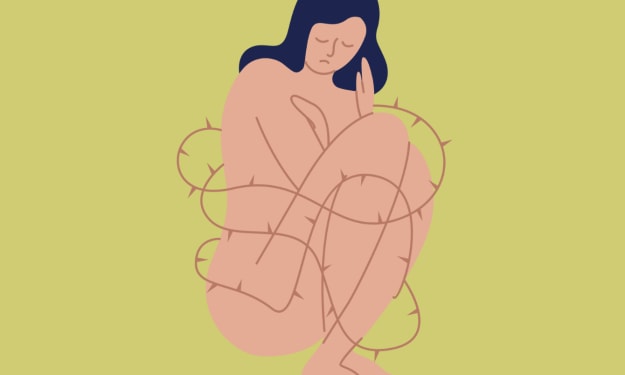
Healing the Inner Child
Have you ever felt like no matter how hard you try, the same painful patterns keep resurfacing in your life? Maybe it’s a sense of unworthiness, constant anxiety, or the weight of always needing to please others. If you’re here, it’s likely because you’ve wondered why these feelings linger and how you can finally break free. You’re not alone. So many women carry the invisible scars of generational trauma, passed down like family heirlooms we never asked for. But the good news is, healing is possible. And it starts with reconnecting with the part of you that’s been hurting the longest — your inner child.
By Raquel Ortega2 years ago in Psyche
Does Your Psychological Diagnosis Mean Much Today?
Psychology's delayed reaction to the inhumanity of unitary dominance over collective collaboration has resulted in considerable personal and systemic harms to multiple intersections of race, gender, ability, and social status.
By writemindmatters2 years ago in Psyche
Is Outpatient Rehab the Right Choice for You?. Content Warning. AI-Generated.
When faced with the challenges of addiction, choosing the right treatment program is a crucial step toward recovery. One of the most flexible and effective options for many individuals is outpatient rehab. This approach provides professional care and support while allowing individuals to maintain their daily routines. But is outpatient rehab the right choice for you? Let’s explore the key factors that can help you decide.
By Hanzala Hassan2 years ago in Psyche
Unlocking Your Subconscious: The Psychology of Dreams and Hidden Meanings
Unlocking Your Subconscious: The Psychology of Dreams and Hidden Meanings Man has been fascinated with dreams for years. They may be mysterious, eerie, or even inspiring. Dreams can also open up different layers of our subconscious thoughts and feelings. This path into the world of dreams awakens curiosity as well as reveals a pathway to development. The mysterious nature of dreams is a phenomenon that transcends cultures and humankind. Dreams connect us all. Every human being, no matter what culture, experiences them. Often, they mirror our daily lives and feelings. But their veiled meanings offer something unique: insight. What if your dreams are trying to tell you something important? Why Understanding Dreams Matters: Unlocking Personal Growth and Insight The meaning of dreams is not just for entertainment. Analysis can lead to self-discovery and emotional healing. Knowing what our dreams mean can help us in the following ways: •Improve problem-solving skills •Enhance creativity •Gain clarity on personal challenges A Brief History of Dream Interpretation: From Ancient Civilizations to Modern Psychology Dream interpretation has a rich history. Ancient Egyptians viewed dreams as messages from the gods. In Greek culture, dreams were linked to prophecy. Fast forward to modern times, and psychologists like Freud and Jung have shaped our understanding of dreams, paving the way for contemporary interpretations. The Neuroscience of Dreaming: Biological Underpinnings Dreams are not just whimsical stories. They have biological roots. Brain Activity During REM Sleep: The Neurological Basis of Dreams Dreams occur primarily during Rapid Eye Movement (REM) sleep. Here, brain activity, like in a wake state, leading us to believe that our brains are working to process information and emotions. Role of Neurotransmitters in Dreaming: The Cocktail of Chemicals of Dream The neurotransmitters serotonin and dopamine also have significant functions in creating our dreams. These chemicals shape the narrative of our dream and its moods and feelings by altering both positive and negative during sleep. The Memory Consolidation Theory: Dreams as a Replay of Daily Experience According to one theory, dreams are meant to help us consolidate memories. Our brains replay daily experiences to organize and store information, aiding in learning and emotional regulation. Common Dream Themes and Symbols: Deciphering the Language of Dreams Many dreams share similar themes and symbols. Recognizing these can enhance our understanding. Reoccurring Dreams: Understanding Persistent Dream Patterns Some people have recurring dreams. Such dreams tend to reveal some unsorted conflict or emotion. By observing such patterns, personal issues may be revealed that require attention. Common Dream Symbols: Houses, Water, Flying, and Their Meanings Some common symbols that appear in many dreams include: Houses: Symbolize the self or personal space. Water: Often represents emotions and the subconscious. Flying: Signifies freedom or a desire to escape. To gain more insights into these themes, one may refer to dream dictionaries. CULTURAL VARIATIONS IN DREAM SYMBOLISM: INTERCULTURAL VARIATIONS IN DREAM MEANINGS Different cultures provide varied interpretations of dreams. For instance, in some cultures, death may symbolize rebirth. Learning about these cultural variations can make our dream interpretation journey even richer. PSYCHOLOGICAL THEORIES OF DREAMS FROM FREUD TO JUNG Dreams have been a subject of much study by psychologists, and such theories have emerged. Freud's Psychoanalytic Theory- Dream as Wish Fulfillment According to Sigmund Freud, dreams are the mind's way of fulfilling wishes and desires. Often, the true meaning of a dream hides beneath layers of symbolism. Jungian Dream Analysis: Exploring the Archetypes of the Collective Unconscious Carl Jung viewed dreams as pathways to the collective unconscious. He believed dreams reflected personal and universal archetypes, helping individuals understand their psyche and growth. Modern Psychological Perspectives: Cognitive and Evolutionary Approaches Today, cognitive psychologists study dreams to understand brain function. Evolutionary psychology suggests dreams may have developed as a way to rehearse survival skills and social situations. Practical Techniques for Dream Interpretation: Unlocking Your Personal Messages Dream interpretation is not just theoretical; practical techniques can enhance personal insights. Keeping a Dream Journal: Recording and Tracking Your Dreams Begin by keeping a dream journal. As soon as you wake up, write down your dreams. This way, you would be able to track recurring themes and emotions with time. Free Association: Connecting Elements of the Dream to Your Everyday Life Using free association will help you relate elements of your dream to real life. Ponder how some symbols or events are connected to your experiences or feelings. Examining the Dream Emotions: Unraveling the Feelings Caused by Your Dreams Consider the emotions in your dreams. Feelings can reveal hidden concerns or desires, offering valuable clues to your subconscious life. Using Dreams for Self-Discovery and Personal Growth Dreams are powerful tools for self-discovery. Identifying Patterns and Recurring Themes in Your Dreams Look for patterns in your dreams. Recognizing recurring themes can expose internal struggles needing resolution. Using Dream Interpretation to Address Personal Challenges Use the insights of your dreams to overcome personal challenges. Dreams can lead you to solutions or a new perspective on difficult situations. Integrating Dream Insights into Waking Life: Applying Lessons Learned Apply the lessons learned from your dreams into daily life. This integration can lead to positive changes and increased self-awareness. Conclusion: Embracing the Power of Dreams Dreams can enrich our understanding of ourselves. They offer glimpses into our subconscious, guiding personal growth and insight. Key Takeaways: The Significance of Dream Work Dreams reflect our thoughts and emotions. Understanding dreams can improve self-awareness. Analyzing dreams aids personal growth. Further Exploration: Resources for Continued Learning Books and websites dedicated to dream interpretation abound. Explore these for deeper insights into your dream life. Actionable Steps: Applying Dream Interpretation to Daily Life Start tonight. Maintain a dream journal, analyze your emotions, and connect dreams to your waking challenges. The journey into your subconscious starts now. Tap into the power of your dreams and unlock hidden meanings waiting to be discovered.
By Bella berren2 years ago in Psyche
Relation Between Creativity And Mental Health. AI-Generated.
Introduction Creativity has long been celebrated as a cornerstone of human expression, innovation, and problem-solving. From painting and writing to crafting and coding, creative pursuits provide a sense of accomplishment and joy. However, the connection between creativity and mental health is complex, with both positive and negative aspects.
By Jayson Rom2 years ago in Psyche
Fragile Narcissists Are More Dangerous Than The Grandiose.
"A narcissist's criticism is their autobiography" - M. Wakefield. Grandiose or Vulnerable? You can easily identify a grandiose narcissist (GN) after a while, but a fragile/vulnerable narcissist (VN) goes the extra mile to disguise the false-self because their self-worth is so diminished that even the slightest risk of exposure sets them on a tailspin.
By writemindmatters2 years ago in Psyche
Mental Health: A Journey with Depression and Anxiety
Mental health is something that can often be overlooked, and for a long time, it was something you probably didn’t fully understand or even recognize in yourself. You may have felt sad or overwhelmed for long stretches of time and pushed those feelings aside because it seemed like everyone else was “getting by” just fine. But one day, something changed. You realized that what you were going through wasn’t just a rough patch—it was something deeper, something that needed to be addressed. If you're reading this right now, chances are you’re going through or have gone through something similar. And that’s why I’m here to share my journey, my struggles with depression and anxiety, and the lessons I’ve learned along the way. I want to remind you that you’re not alone in this. There’s hope, and there’s a way forward, no matter how difficult it seems right now. The Quiet Spiral: Realizing You’re Not Okay At first, it might not have been obvious that you were struggling. Maybe it started with small moments of feeling overwhelmed or irritated, days when you felt sad but didn’t know why. You could have brushed it off, thinking it was just stress or temporary exhaustion. But then, before you knew it, those moments piled up, and one day you looked around and realized that the weight was too much to carry. Depression and anxiety don’t often announce themselves with dramatic signs—they creep in quietly. You might have found it harder to get out of bed, to focus on work, or to enjoy the things that once brought you joy. Anxiety made even the smallest tasks feel like insurmountable obstacles. And depression made you feel like you were fading into the background, disconnected from yourself and everyone around you. It’s terrifying to realize that you’re no longer in control of your emotions. It feels like you’ve lost touch with who you used to be. You might be going through the motions, but internally, you’re battling something much bigger than yourself. And the scariest part? You’re not sure how to stop the spiral. The Fear of Asking for Help For so long, you might have avoided asking for help. It’s easy to convince yourself that reaching out is a sign of weakness, that you should be able to handle everything on your own. After all, society often tells us to be strong, to push through, to act like everything’s fine when it’s not. You’ve probably felt that pressure to "just get over it." But here’s the truth: Asking for help is not a weakness. It’s one of the bravest things you can do. Whether it’s talking to a friend, a family member, or reaching out to a professional—asking for help is the first step toward healing. I know it’s not easy. It might take everything inside you to make that call, to send that text, to admit that you’re struggling. But once you do, you open the door to a world of support. You don’t have to do this alone, and that realization can be incredibly liberating. I wish I’d known sooner how much strength it takes to reach out. Therapy: Unpacking the Weight of It All Once you’ve reached out for help, one of the most powerful tools you have in your healing journey is therapy. At first, it may feel uncomfortable to talk about your feelings, to put words to the swirling chaos in your mind. But over time, therapy becomes a safe space, a place where you can unpack everything without fear of judgment. You’ll learn that depression isn’t just sadness—it’s an overwhelming feeling of emptiness. It’s losing interest in things you once loved, feeling like you’re walking through life in a fog. Anxiety, on the other hand, is that constant companion whispering worst-case scenarios in your ear, making even the smallest decisions feel like life-or-death choices. But here’s something important to remember: depression and anxiety are not failures. They are real conditions, and seeking help is part of the process of managing them. Therapy gives you the tools to separate yourself from these feelings. You’ll come to understand that you are not your depression or anxiety. They are things you experience, but they do not define who you are. This realization alone can be freeing—it gives you space to heal and start taking small, intentional steps toward a better place. Small Wins: Healing Happens in Baby Steps One of the most challenging things to accept is that healing is not immediate. You might have days when you feel like you’re getting worse instead of better. It’s easy to think that nothing will ever change, that you’ll always feel this way. But the truth is, healing is a journey, and it happens in small, incremental steps. Celebrate those small wins. Maybe you got out of bed today, even when it felt impossible. Maybe you made it through a conversation without feeling overwhelmed. Or maybe you managed to go for a short walk outside. These are victories. Each small step is progress, and it’s a reminder that you’re moving forward—even if it doesn’t always feel that way. Healing isn’t about perfection—it’s about progress. Even when things feel stagnant, you’re still moving in the right direction. Each day you choose to take care of yourself, to seek help, or to do something small to improve your mood, you’re on the path to healing. Routine and Structure: Finding Control in Chaos Depression and anxiety love to take away your sense of control. They can make you feel like life is spinning out of your hands. But there’s something grounding about routine. Establishing a sense of structure in your day—no matter how small—can help you regain control over your life. Start small. Maybe you wake up at the same time each day. Maybe you focus on eating regular meals or taking short breaks when you can. Even something as simple as making your bed in the morning can give you a sense of accomplishment and purpose. Routine doesn’t cure depression, but it gives you a sense of normalcy in a time of chaos. It’s a tool that can help you fight back against the overwhelming feelings that often come with these mental health struggles. Self-Compassion: A Key to Healing If there’s one lesson I want you to take away from this, it’s this: be kind to yourself. Depression and anxiety can lead to negative self-talk. You might blame yourself for feeling the way you do or wonder why you can’t just “snap out of it.” But here's the truth: it’s okay to not be okay. You don’t need to have it all together right now. Healing takes time, and it’s okay to go at your own pace. When you stop beating yourself up, when you allow yourself the grace to feel what you’re feeling, you begin to heal. You begin to embrace the fact that you’re doing the best you can, and that’s enough. Advice for You: Healing is Possible If you're struggling with depression and anxiety right now, I want you to know that healing is not only possible, it’s already starting the moment you decide to take care of yourself. Here’s my advice for you: • Talk to someone: Reach out. You don’t have to go through this alone. Whether it’s a therapist, a friend, or a family member, talking is the first step toward feeling heard and supported. • Start small: Don’t expect to change everything at once. Celebrate small victories—getting out of bed, taking a walk, having a good conversation. Each one is a step forward. • Create a routine: Build small routines into your day to give yourself structure and control. It will help you regain some sense of normalcy. • Be kind to yourself: Stop criticizing yourself for feeling this way. It’s okay to struggle. You are worthy of love and compassion, especially from yourself. • Seek professional help: Therapy can provide the support and tools you need to understand and cope with what you’re going through. There’s no shame in asking for help. Final Thoughts: You’re Not Alone No matter how alone you feel right now, you’re not alone in this. There are so many others who have been where you are and are on their own journey toward healing. You can get through this, even if it feels impossible at times. Healing is a process, not a destination, and it’s one step at a time. You are worthy of healing, peace, and joy. Don’t ever forget that. You've got this.
By Samrah Sayyed2 years ago in Psyche