coping
Life presents variables; learning how to cope in order to master, minimize, or tolerate what has come to pass.
Memory Palace can enhance Your Hypnotic Experience
Creating a memory palace is a powerful technique that can be used to enhance hypnotic experiences in a number of ways. Essentially, a memory palace involves creating a mental map of a physical space that you are very familiar with, such as your home, workplace, or a familiar route you take regularly. By mentally placing and associating the information with specific locations within this space, you can improve your ability to remember and recall important information.
By Joseph Crown3 years ago in Psyche
“What if… I’d Chosen Music & Drama?”
”Live from New York, it’s SATURDAY NIIIIIIIIGHT!” And just like that, it’s official: the Copperhead from Down Underland is officially a household name on the other side of the globe, standing in the very same set as other legends of comedy, theatre, film, music, network television… and I happen to fill all those niches, and then some.
By Orion J. Zed3 years ago in Psyche
A 'genetic breakthrough' promises an effective treatment for Alzheimer's
A team from Cardiff University has identified 92 genes that significantly increase the risk of developing Alzheimer's disease, whereas only three genes were known when their research began in 2009, which means there is an exponential increase in information about the disease.
By News Correct3 years ago in Psyche
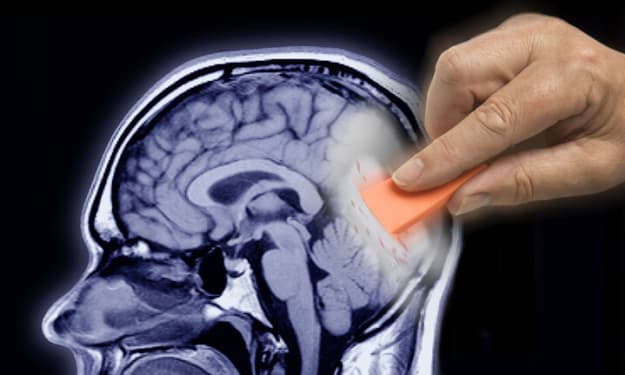
The human brain creates a false memory just a few seconds after the event!
People may misremember events, often within seconds, and reshape memories to fit their expectations. Previous studies have shown that people's perception of their surroundings can be shaped by their expectations, which can lead to delusions. People's long-term memories can also be shaped to fit their expectations, sometimes generating false memories.
By News Correct3 years ago in Psyche
7 things I learned from my struggle with depression
Now I am not a professional psychologist. However, I am someone who has been struggling with Major Depressive Disorder for a number of years now. And I live in a country where mental issues are prolific. Despite that, there is a paucity of mental health professionals. I live in a society where the prospect of therapy is aversive, almost repugnant. Consequently, I had to figure out a lot of things on my own to ensure my survival and maintain my sanity. My aim in this article is to share my experience with those going through the same problem I went through but are scared to seek help or are deprived of the resources that can help them in their condition. My aim through this article is to offer whatever help I can and to tell others going through depression that they are not alone. All hope is not gone. So, here are the lessons I taught myself to cope with depression.
By Hamza Shaikh3 years ago in Psyche
AI in the job market:
Artificial Intelligence (AI) is no longer a science-fiction concept but a reality that is rapidly changing the way we live and work. AI has the potential to revolutionize the job market, making many routine jobs redundant while creating new, more specialized roles. AI technologies such as machine learning, natural language processing, and computer vision have already begun to impact the job market, transforming the way we work across industries. As AI continues to evolve and become more sophisticated, it will change the nature of work for individuals and businesses alike. In this blog post, we'll explore the ways in which AI is already changing the job market, the benefits and challenges that come with these changes, and what the future might hold for individuals and organizations.
By Wilson Igbasi3 years ago in Psyche
Panic Attack Aftercare
Let’s talk about trauma aftercare. I have CPTSD. Today I woke up from a bad nightmare in an active panic attack. Nightmares are traumatic. They feel just like the real trauma that happened. This means that after I come out of the panic attack (treated with medication, self-talk, affirmations, grounding techniques, and active comfort), I need to take care of myself in ways I wouldn’t otherwise. I will need to actively reassure myself that I no longer have that trauma in my life. I will need extra reassurance from partners, and I might have to cancel activities to rest. I had to learn how to do these things. Our society teaches us that we should “suck it up” and move on, but that’s not actually how brains work. We have to reteach our brains that we are no longer in physical, emotional, sexual, mental, or psychological danger. That’s hard. That’s complicated. That’s not being a good capitalist. So we stockpile trauma, which isn’t good for anyone. So today I heal, at least the trauma from my nightmare. It’s probably going to involve a whopper (with cheese, no pickles, onion or ketchup), and a lot of reassuring myself that I have every right to nurture myself through food. It will require rest, and puppy snuggles, but in the end I will be more whole, I won’t have that trauma to pass on to others, and healing myself also heals the collective. Healing myself helps heal you, and vice versa. So we will heal together, we will commune together, and we will find joy together. Together we are stronger than trauma. Together, nothing can stop us.
By Karen LaRue3 years ago in Psyche
Journal Entry: Mental Health Awareness and Advocacy
Journal Entry: Mental Health Awareness and Advocacy As I sit down to write this journal entry, I am reminded of the importance of mental health awareness and advocacy. Over the past few years, I have witnessed a shift in societal attitudes towards mental health, with increased recognition of its significance and the need to prioritize it alongside physical health. As someone who has experienced my own mental health challenges and witnessed the struggles of loved ones, I am passionate about raising awareness and advocating for better mental health care and support systems.
By Taimoor Khan4 years ago in Psyche