
Performing Disability
Why Do I Feel I Have to Look Ill to Be Believed?
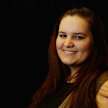

There is something rather ridiculous about being frightened to look happy in a photograph.
Not because you are unhappy with how you look. Not because you are self-conscious about your weight, your hair or whether the camera has caught you at an unflattering angle.
Because you are worried that somebody might see you smiling and decide you cannot possibly be disabled.
That is a thought I never imagined I would have before being diagnosed with Multiple Sclerosis.
Yet here I am.
I can be having a wonderful day with my husband, enjoying a theatre performance, spending time with friends or celebrating something important, and somewhere in the back of my mind is the uncomfortable awareness that somebody might see a photograph and draw conclusions about my health.
She looks well.
She seems happy enough.
I thought she was supposed to be ill.
If she can go out and enjoy herself, why can’t she go to work?
It is an exhausting way to live.
I was diagnosed with MS in January 2025, and since then I have had to adjust to a body that does not always behave as I expect it to. I experience pain, fatigue, weakness, balance difficulties and symptoms that can change dramatically from one day to the next.
Sometimes I need a walking stick. Sometimes I use crutches. Sometimes I can manage short distances without either, although that does not mean walking is necessarily comfortable or that I can continue doing it indefinitely.
My disability fluctuates.
That is the reality of my condition.
Unfortunately, society seems far more comfortable with disabilities that remain consistent, visible and easy to understand.
We like things to fit into recognisable categories.
Somebody who uses a wheelchair is expected to use it all the time. Somebody who walks with a stick is expected to need it every moment of the day. Somebody who is chronically ill is expected to look tired, miserable or visibly unwell.
When a disabled person does something that challenges those expectations, suspicion can follow.
If you can walk today, why did you need a stick yesterday?
If you were well enough to attend a wedding, why were you too unwell to work?
If you are genuinely exhausted, why are you smiling in that photograph?
These questions reveal something deeply uncomfortable about the way we understand disability.
We have become so accustomed to judging illness by its outward appearance that we sometimes expect disabled people to perform their suffering for the benefit of everybody else.
I have started to call this performing disability.
Not because the disability itself is a performance, but because there can be an enormous pressure to make it visible, recognisable and consistent enough to satisfy other people’s expectations.
It is the feeling that you must always look as unwell as you sometimes feel.
It is the fear that a moment of happiness will be interpreted as evidence of dishonesty.
It is the temptation to make your difficulties more obvious because you are tired of having to explain them.
It is the uncomfortable awareness that your body is being watched, assessed and interpreted by people who know very little about what is happening inside it.
I find this particularly difficult when it comes to my walking stick.
My stick is a mobility aid. It helps me maintain my balance, reduces some of the risks associated with walking and gives me additional confidence when my legs are unreliable.
It is not a fashion accessory.
It is not a prop.
It is certainly not something I began using because I wanted attention.
Yet there are days when I find myself thinking about whether I should take it with me, even when I am having a better day and might manage a short journey without it.
Sometimes that is a perfectly sensible decision. MS is unpredictable, and having my stick available means I am prepared if my balance deteriorates or fatigue begins to affect my walking.
There is, however, another thought that occasionally creeps in.
What if somebody sees me without it?
What if a colleague sees me walking unaided after previously watching me struggle?
What if somebody who knows I have applied for disability support sees me moving comfortably for a few minutes?
What if they think I have been exaggerating?
That is where practical preparation begins to become something else.
I am no longer simply thinking about what my body needs.
I am thinking about what other people need to see in order to believe me.
There is a difference.
I should be able to use my walking stick when I need it and put it aside when I do not.
I should be able to have a better day without worrying that it invalidates my worse ones.
I should be able to make decisions about mobility aids based on safety, comfort and independence rather than the expectations of somebody watching from a distance.
Yet fluctuating disability can make you feel that consistency is more important than honesty.
If I always use my stick, people understand that I have mobility difficulties.
If I sometimes use it and sometimes do not, I worry that they will begin to question those difficulties.
The irony is that variable use of a mobility aid can be entirely appropriate for somebody whose symptoms fluctuate.
What I need on Monday might be different from what I need on Friday.
What I need at nine in the morning might be different from what I need at three in the afternoon.
What I need to walk from my car to a building might be different from what I need after spending several hours on my feet.
My disability does not disappear simply because my support needs change.
I wish that were better understood.
There is also an uncomfortable relationship between disability and photographs.
Social media has made it extraordinarily easy for people to see small, carefully selected moments from somebody else’s life and mistake them for a complete picture.
A photograph captures a fraction of a second.
It does not capture the hours before it.
It does not show the planning involved in getting there.
It does not reveal the pain somebody might be experiencing while smiling.
It certainly does not show the recovery that might be necessary afterwards.
Yet photographs can become evidence in the court of public opinion.
I sometimes think about how absurd that is.
If I post a photograph of myself resting on the sofa, perhaps with my walking stick beside me, people can see that I am struggling.
They can understand that I am having a difficult day.
They might offer sympathy or reassurance.
If I post a photograph of myself dressed up, smiling beside my husband or enjoying a night at the theatre, the same people might assume I am feeling much better.
Perhaps I am.
Perhaps I have managed my symptoms carefully enough to enjoy something important.
Perhaps I am smiling through pain because I refuse to let MS take every happy moment away from me.
Perhaps I will spend the following day recovering.
The photograph cannot tell you which of those things is true.
Yet I sometimes feel that photographs of me resting are easier for other people to understand than photographs of me enjoying myself.
That is a deeply troubling realisation.
Why should my suffering be more believable than my happiness?
Why should a photograph of me lying on the sofa carry more credibility than one of me laughing with friends?
Why should I feel that I need to document my difficult days to justify the good ones?
I have found myself becoming increasingly aware of what I share online.
Not because I want to hide my life, but because I worry about how fragments of it might be interpreted.
If I share too many photographs of myself enjoying things, will people assume I am not as unwell as I say?
If I share too many photographs of myself resting, will people think I am seeking sympathy?
If I talk about pain, am I complaining?
If I do not talk about pain, am I giving the impression that everything is fine?
It feels like an impossible balance.
There is a particular cruelty in the expectation that disabled people should be visibly suffering in order to be believed, but should not talk about that suffering too often because it makes other people uncomfortable.
We are encouraged to remain positive.
We are praised for our resilience.
We are told not to let our disabilities define us.
Then, when we do something enjoyable, we risk being treated as though that enjoyment contradicts our diagnosis.
What exactly are we supposed to do?
Stay home?
Look miserable?
Make sure our walking sticks are visible in every photograph?
Avoid posting about holidays, weddings, birthdays and celebrations in case somebody decides that happiness is incompatible with chronic illness?
I refuse to believe that this should be the price of being taken seriously.
One of the things I find most frustrating is the assumption that enjoyment and suffering cannot exist simultaneously.
I can be in pain and still laugh.
I can be exhausted and still enjoy a conversation.
I can have difficulty walking and still attend an event.
I can be experiencing neurological symptoms while having a wonderful time with people I love.
These things are not contradictions.
They are simply different parts of the same experience.
When I got married, MS did not disappear for the occasion.
I still had a neurological condition. I still had to think about my energy, my mobility and what my body could manage.
Yet I was also a bride.
I was happy.
I was celebrating.
I was surrounded by people I loved.
I danced with my husband.
There are photographs of me looking joyful, and I treasure them.
Those photographs do not mean that my MS had somehow been cured for the day.
They mean that I was able to experience happiness while living with it.
I find it heartbreaking that anybody should have to explain that.
There is another layer to this pressure when you are trying to access disability support.
I have already written about my experience of applying for Personal Independence Payment and challenging a decision that did not reflect the physical impact MS has on my life.
That experience has made me acutely aware of the difference between what I know about my body and what somebody else might conclude from seeing me briefly.
PIP is supposed to consider how a condition affects specific activities, including whether those activities can be completed safely, repeatedly, to an acceptable standard and within a reasonable time.
A photograph of somebody smiling at a restaurant does not establish whether they can reliably prepare a meal.
A photograph of somebody standing at a wedding does not establish how far they can walk.
A photograph of somebody enjoying a day out does not reveal whether they can repeat that activity the following day.
Yet the fear of being misunderstood can make every visible moment of independence feel like something that might later be held against you.
I do not want to suggest that every disabled person is being watched or that every photograph is being scrutinised by somebody looking for evidence against them.
That would be neither fair nor accurate.
The problem is that the fear itself can become powerful enough to influence how you behave.
When you have already experienced the distress of having your limitations questioned, you can begin anticipating judgement even when nobody has actually expressed it.
You become conscious of how you walk.
You become conscious of whether you are using your stick.
You become conscious of what you post online.
You become conscious of how often you say you are unwell and how often you appear to be enjoying yourself.
Eventually, you can find yourself managing not only your disability but also everybody else’s perception of it.
That is exhausting.
I already have enough to think about when I leave the house.
I need to consider how far I will have to walk, whether there will be somewhere to sit, how much energy I have and what I might need to do if my symptoms become worse.
I should not also have to consider whether looking too comfortable will make somebody question my diagnosis.
There is something particularly damaging about the way this pressure can affect your relationship with your own body.
When you live with a fluctuating condition, better days should be something to appreciate.
They offer opportunities to do the things you enjoy, spend time with people and experience a little more freedom.
Yet I have found that a better day can sometimes bring anxiety alongside relief.
If I can walk more comfortably today, why was yesterday so difficult?
If I have enough energy to go out this evening, does that mean I should have been able to work this morning?
If I can manage something enjoyable, am I somehow being dishonest about the things I cannot manage?
I know these questions are unfair.
MS symptoms can vary, and the physical demands of different activities are not interchangeable.
Sitting in a theatre for two hours is not the same as spending a full day working.
Going out for a meal is not the same as completing household tasks.
Standing for a photograph is not the same as being able to remain standing comfortably for an extended period.
Choosing to spend limited energy on something meaningful does not prove that the energy was unlimited.
Yet when society treats disability as a fixed state rather than a changing experience, it becomes easy to internalise those expectations.
You begin to question yourself before anybody else has the opportunity.
That is perhaps the most insidious part of performing disability.
Eventually, you do not need somebody standing beside you asking whether you are really ill.
You start asking yourself.
I have had to learn that being able to do something does not automatically mean it was easy.
I have had to learn that managing an activity once does not guarantee I can repeat it.
I have had to learn that smiling does not invalidate pain and that independence does not erase disability.
I am still learning those things.
There is also a difficult relationship between illness and productivity.
I work in education, and I genuinely enjoy my job. I care about the young people I support, and I want to be present, reliable and useful.
When I am too unwell to work, I feel guilty.
That guilt becomes even more complicated if I am later able to do something enjoyable.
I worry about how it might look.
What if somebody sees me out with my husband after I have been absent from work?
What if I post a photograph from a family event?
What if I am smiling?
Will somebody assume that I could have worked after all?
The reality is that being unable to complete a working day does not necessarily mean being unable to leave the house for a short period, particularly when symptoms fluctuate.
Work involves specific physical, mental and social demands. Those demands can be very different from sitting somewhere comfortable with somebody who understands your limitations.
A person might be unable to manage several hours of employment but still be capable of enjoying a short, low-demand activity.
Equally, a person might choose to attend something important despite experiencing significant symptoms and then need time to recover.
Neither situation automatically establishes what that person can manage at work.
Of course, sick leave and employment responsibilities still matter. People should be honest about their circumstances and follow appropriate workplace procedures.
What concerns me is the assumption that being off sick means somebody must remain at home looking visibly miserable until they return.
Recovery is not a punishment.
Being unwell does not mean surrendering every opportunity for happiness.
I sometimes wonder how many chronically ill people avoid doing things that might genuinely help their wellbeing because they are frightened of being judged.
How many stay home when a short outing might lift their spirits?
How many refuse an invitation because they worry somebody will see them?
How many avoid sharing photographs because they do not want to explain themselves?
How many feel obliged to keep their mobility aids visible even when they are not needed at that particular moment?
How many have started documenting their suffering because they feel that ordinary honesty is no longer enough?
It is a strange world in which a disabled person can feel safer showing evidence of pain than evidence of joy.
I do not want to live like that.
I do not want my social media to become a medical evidence folder.
I do not want every photograph to require an explanation of how I was feeling, how far I walked or how long I needed to recover afterwards.
I do not want to have to photograph myself resting to establish that my fatigue is real.
I do not want to feel that I must look exhausted in order to justify saying I am exhausted.
I want to share the parts of my life that matter to me.
Sometimes that will involve talking openly about MS.
Sometimes it will involve photographs of my walking stick, reflections on difficult days or honest accounts of symptoms that people rarely see.
Other times, it will involve theatre, writing, my husband, my friends and the things that make me happy.
I want to be allowed to have both.
I think that is something we need to understand more widely when discussing disability.
Disabled people are not required to present a consistent image of suffering.
We are not obliged to make our conditions visible for the comfort of strangers.
We are not responsible for ensuring that every photograph, conversation or public appearance reinforces somebody else’s understanding of what disability should look like.
A wheelchair user does not owe anybody an explanation for standing.
A person who uses crutches does not have to use them every second of the day to establish that they are necessary.
Somebody with chronic fatigue does not have to remain indoors permanently to prove they are exhausted.
A person living with chronic pain is allowed to laugh.
A person with MS is allowed to dance.
Disability is not a performance that must be maintained for an audience.
It is a lived experience.
There is also an important difference between visibility and authenticity.
I am proud to talk openly about my MS because I believe that sharing experiences can help other people understand disability more fully.
I want young people to feel comfortable asking questions about my walking stick. I want employers to understand fluctuating symptoms. I want people who are newly diagnosed to know that they are not alone.
That is why I write these articles.
Yet being open about my disability should not mean I am expected to demonstrate it constantly.
I can advocate for disability awareness without turning every aspect of my life into an educational exercise.
I can speak honestly about my difficulties without documenting every painful moment.
I can acknowledge my limitations without making them the centre of every photograph.
I can be disabled without performing disability.
That distinction matters.
I sometimes think about the version of myself who existed before my diagnosis.
She did not have to consider whether somebody might misinterpret a photograph of her enjoying herself.
She did not have to worry that walking without a stick for a few minutes might be seen as evidence that she had been exaggerating.
She did not have to think about how her social media might be perceived by people who knew she had been absent from work.
She could simply exist.
She could have a good day without it becoming a statement about her health.
She could have a bad day without needing to justify it.
I miss that freedom.
I miss being able to enjoy myself without feeling that I might later need to defend the experience.
I miss the simplicity of a photograph being just a photograph.
Yet I do not want to spend the rest of my life mourning that freedom without trying to reclaim some of it.
I am learning that I do not owe the world a consistent image of disability.
My symptoms are not consistent, so why should my appearance be?
I am learning that a good day is not evidence against a bad one.
I am learning that using my walking stick when I need it is responsible, and putting it aside when I do not need it is equally valid.
I am learning that I can be proud of what my body manages without fearing that somebody will use those achievements to dismiss my limitations.
Most importantly, I am trying to stop treating happiness as something I have to justify.
If I am smiling in a photograph, perhaps it is simply because I was happy.
If I am dancing with my husband, perhaps it is because I wanted to dance with him.
If I am enjoying a theatre performance, perhaps it is because theatre has always been one of the great loves of my life.
If I am sitting in a café laughing with a friend, perhaps it is because I am enjoying their company.
None of those moments needs to be accompanied by a disclaimer.
I do not need to write that I was in pain before the photograph was taken.
I do not need to explain that I had to rest afterwards.
I do not need to describe how much energy the outing required.
Those things might be true, and sometimes I might choose to share them.
But I should not have to.
There is a difference between sharing the reality of chronic illness and feeling compelled to prove it.
I want to live in a world where disabled people can talk openly about their difficulties without being reduced to those difficulties.
A world where we can celebrate our achievements without having our needs questioned.
A world where mobility aids are understood as tools rather than symbols that must be displayed consistently.
A world where a photograph of somebody smiling is allowed to mean exactly what it appears to mean: that they experienced a moment of happiness.
I know that changing attitudes takes time.
I know that invisible disabilities can be difficult for people to understand when they have no personal experience of them.
I also know that suspicion and misunderstanding do not disappear simply because somebody writes an article asking for greater compassion.
Yet perhaps we can begin by challenging the assumptions we make when we see disabled people enjoying their lives.
Instead of asking why somebody who is chronically ill is smiling, perhaps we could simply be pleased that they have something to smile about.
Instead of questioning why somebody is walking without their stick, perhaps we could recognise that their mobility needs may vary.
Instead of assuming that a photograph tells us everything about somebody’s health, perhaps we could accept that we are seeing one small moment of a much larger life.
It should not be a revolutionary idea.
Yet for people living with invisible and fluctuating disabilities, that understanding could make an enormous difference.
I already live with MS.
I already manage pain, fatigue, weakness and uncertainty.
I already have to think carefully about what my body can manage and what consequences might follow.
I do not want to spend my life managing the appearance of those symptoms for the benefit of other people.
I do not want to become frightened of being seen enjoying myself.
I do not want to feel that I must carry a walking stick as evidence rather than assistance.
I do not want to believe that a photograph of me resting is somehow more honest than a photograph of me laughing.
Both can be true.
Both are parts of my life.
I am the woman who sometimes lies on the sofa in pain, unable to manage the things she had planned.
I am also the woman who runs a drama company, writes, studies, works with young people and loves spending time with her husband.
I am the woman whose legs sometimes shake so badly that walking becomes frightening.
I am also the woman who danced on her wedding day.
I am the woman who sometimes needs crutches.
I am also the woman who occasionally manages without them.
I am the woman who experiences debilitating fatigue.
I am also the woman who can become so enthusiastic about something she loves that, for a little while, the excitement is what people notice rather than the illness.
None of those versions of me is more authentic than another.
They are all me.
I should not have to look miserable to be believed. I should not have to make my disability visible every moment of the day to prove that it exists. I should not have to choose between being honest about my illness and being allowed to enjoy my life.
So if you see a photograph of me smiling, please do not assume that I am better.
If you see me without my walking stick, please do not assume that I no longer need it.
If you see me enjoying myself after a difficult week, please do not assume that the difficult week was exaggerated.
You are seeing a moment.
You are not seeing my entire medical history.
You are not seeing the hours of pain, the carefully managed energy or the compromises that may have made that moment possible.
More importantly, you should not need to see those things in order to believe me.
My disability is not a performance, and my happiness is not evidence against it.
I am allowed to be disabled.
I am allowed to be happy.
I am allowed to be both at the same time.
About the Creator
Millie Hardy-Ashton
I’m Millie Hardy-Ashton, writer, theatre practitioner and PhD researcher. Through personal reflection, humour and honest commentary, I explore disability, accessibility, creativity, popular culture and the beautifully messy business of life
Enjoyed the story? Support the Creator.
Subscribe for free to receive all their stories in your feed. You could also become a paid subscriber, letting them know you appreciate their work.
Comments
There are no comments for this story
Be the first to respond and start the conversation.