
WHEN LOVE BECOMES A MIRROR:
NARCISSISM, AVOIDANCE, AND THE WOUNDS WE BRING INTO RELATIONSHIPS

“Sometimes, the people who trigger our deepest wounds reveal the parts of ourselves we have yet to heal. But self-awareness means recognizing what they awaken in us without accepting the pain they inflict. We can understand someone's darkness without losing ourselves trying to save them”- Carl Jung
Sometimes, the person who makes you question your worth the most is the person who initially made you feel like you were everything they had ever wanted.
I’ve learned that one of the most confusing experiences in a relationship is meeting someone who seems to embody everything you’ve been searching for, only to discover that the connection you thought was safe can slowly become a place where you lose yourself. In the beginning, there may be charm, affection, deep conversations, and a feeling that you’ve finally met someone who sees you. You feel chosen. You feel understood. You begin to imagine what the relationship could become. Then something changes. Accountability becomes difficult. Communication breaks down. Conflict leads to defensiveness, silence, or emotional withdrawal. Before you realize it, you’re no longer asking whether this relationship is healthy for you. You’re asking whether you’re good enough to make it work.
THE CHARMING BEGINNING AND THE PAINFUL REALITY
One of the most difficult things to understand about unhealthy relationships is that the beginning can feel incredibly genuine. Someone can be attentive, affectionate, and emotionally expressive at first, yet struggle to maintain that connection when accountability and vulnerability become necessary. Intense affection alone doesn’t mean someone is narcissistic, but when affection is followed by manipulation, control, or repeated emotional harm, it’s important to recognize the pattern. Affection is not the same as emotional maturity. Someone can know how to make you feel wanted without knowing how to build a healthy relationship. The difference becomes visible when the relationship stops being about attraction and starts requiring accountability.
WHEN SILENCE BECOMES A WEAPON
One of the most painful experiences I’ve had is trying to resolve a problem with someone who responds by withdrawing. I wanted to talk, understand, and work through what happened. Instead, I found myself dealing with silence, unanswered messages, and being blocked for hours or days while I was still in the relationship with that person. I would write long paragraphs, hoping that if I explained myself clearly enough, they might finally understand how I felt. Sometimes, there was no response at all. Other times, I was made to feel too emotional, too sensitive, too dramatic, or like I was always bringing up problems. But I began to recognize something: I was often bringing up the same problems because they had never been resolved in the first place.
There is a psychological difference between taking space to regulate your emotions and using silence to punish another person. Healthy space includes communication and an intention to return to the conversation. Punitive silence leaves someone guessing, worrying, and attempting to regain connection without knowing when communication will resume. When this happens repeatedly, you can begin associating honesty with rejection. You start monitoring your words, rehearsing conversations in your head, and suppressing your feelings to avoid another argument or another period of silence. When silence is deliberately used to punish, intimidate, or control, it can become a form of emotional abuse. You don’t have to prove someone intended to hurt you before you can acknowledge that their behavior is hurting you.
NARCISSISM AND AVOIDANT ATTACHMENT: THE OVERLAP
I’ve often wondered about the crossover between narcissistic behavior and avoidant attachment because some of their relationship patterns can look similar. Both may involve emotional distance, defensiveness, discomfort with vulnerability, or difficulty navigating conflict. However, narcissistic personality disorder and avoidant attachment are not the same thing. Narcissistic personality disorder involves a persistent pattern of difficulties that may include entitlement, a need for admiration, grandiosity, and impaired empathy. Avoidant attachment describes a pattern in which someone may cope with closeness or emotional vulnerability by distancing themselves and emphasizing independence. These patterns can coexist, but they don’t always. Not every emotionally unavailable person is a narcissist, and we cannot diagnose someone based on withdrawal alone. Regardless of the label, repeated emotional invalidation, manipulation, and refusal to address problems can damage a relationship. Sometimes, the more important question isn’t, “What is this person?” It’s, “What is this relationship consistently doing to me?”
THE PSYCHOLOGY OF CHASING CONNECTION
There is a psychological reason inconsistent affection can be so difficult to walk away from. When affection, attention, and reassurance are unpredictable, you may become increasingly focused on getting those experiences back. One day, you feel loved. The next, you feel rejected. Then the person returns, offers affection, or acts as though nothing happened. You experience relief and begin hoping the loving version of the relationship will return permanently. This pattern can involve intermittent reinforcement, in which unpredictable rewards strengthen repeated efforts to obtain them. You may start chasing the good moments instead of evaluating the entire relationship. You aren’t necessarily chasing the person alone; you may also be chasing the relief of feeling chosen again. And when your emotional energy becomes consumed by restoring that connection, it becomes harder to recognize how much the relationship is costing you.
WHEN YOUR ABANDONMENT WOUND MEETS SOMEONE ELSE’S DISTANCE
This is where I have to be honest about my own healing. I have abandonment wounds, and I know what it feels like to interpret distance as the possibility of losing someone. When someone doesn’t respond to a message, pulls away, or suddenly becomes emotionally unavailable, it can activate a fear that goes much deeper than the situation in front of you. Your mind begins searching for explanations. Did I do something wrong? Are they losing interest? Did I say too much? Are they leaving? What can I do to make things right?
I had to begin asking myself whether I was responding to what was actually happening or to what I was afraid might happen. If someone wasn’t texting me back fast enough, did that automatically mean they were leaving me? Was I reacting to the present moment, or was an old wound making the situation feel more threatening? Was I seeking reasonable communication, or was I looking for constant reassurance to quiet a fear that also needed attention within me? Sometimes, the answer can be both. Our past experiences can amplify our reactions, while another person’s genuine emotional unavailability can create an unstable relationship. One person seeks reassurance when distressed, while the other experiences the pursuit as pressure and retreats further. That retreat intensifies the first person’s fear, leading to more attempts to reconnect. This is sometimes called a pursuer-distancer pattern. Understanding the cycle is important, but it doesn’t mean both people are equally responsible for every harmful action. I can take accountability for my abandonment wounds without accepting responsibility for someone else’s refusal to communicate.
CHILDHOOD TRAUMA DOESN’T EXCUSE ADULT BEHAVIOR
I believe our childhood experiences shape how we learn to love, trust, communicate, and protect ourselves. A child who experiences abandonment, inconsistent caregiving, or emotional neglect may grow into an adult who fears being left. Another child may learn that vulnerability is dangerous and that relying on other people leads to disappointment. Some people cope by seeking closeness; others cope by avoiding it. These are possible adaptations, not inevitable outcomes. Childhood trauma does not automatically create narcissism, and a difficult relationship with a mother or father does not determine someone’s personality. People with painful childhoods can develop healthy relationships, empathy, and emotional maturity. What matters is whether we become willing to examine the patterns we carry into adulthood.
I can have compassion for someone’s childhood without accepting mistreatment in my adulthood. I can recognize that someone was hurt without allowing them to hurt me in the same way. Their trauma may explain some of their defenses, but it doesn’t make me responsible for dismantling those defenses for them. Compassion for someone’s childhood should never require us to sacrifice our adulthood.
THE MIRROR: WHAT RELATIONSHIPS REVEAL ABOUT US
There was a time when I looked at myself as the light entering someone else’s darkness. I felt as though my presence was reflecting wounds the other person didn’t want to face. Perhaps my desire for honest communication exposed their discomfort with vulnerability. Perhaps my questions challenged the version of themselves they wanted to believe. But I also had to ask what this relationship was revealing about me. Was I trying to earn love from someone who couldn’t offer it consistently? Was I confusing emotional intensity with intimacy? Was I overexplaining my feelings because I believed that if I found the perfect words, the other person would finally understand me? Was I giving someone endless opportunities because I could see their potential, even when their behavior continued to hurt me?
That was a difficult mirror to face. Sometimes, we become so focused on understanding another person’s psychology that we neglect our own. We study their childhood, analyze their attachment style, and search for explanations for their silence and defensiveness. We ask why they behave the way they do, but forget to ask why we continue remaining in situations that make us feel this way. Self-reflection isn’t self-blame. It’s recognizing that while we cannot control another person’s behavior, we can examine our own boundaries, patterns, and choices. Not every painful relationship is a lesson sent to us by the universe, and not every person who enters our life is meant to stay. Sometimes, the lesson is recognizing a pattern and choosing differently.
WHEN TRAUMA BECOMES A BOND
Trauma bonding is another concept worth understanding. It doesn’t simply mean two people share childhood trauma. More specifically, it can describe a strong attachment that develops within an abusive relationship, particularly when mistreatment is mixed with affection, reconciliation, or periods of relief. When a relationship repeatedly cycles through hurt, distance, reconciliation, and renewed hope, it can become extremely difficult to leave, even when the relationship is damaging. You may become attached not only to who the person is but to the possibility of who they could become. You remember the apologies, affection, promises, and moments when everything seemed right. You believe that if you can just get back to that version of the relationship, everything will finally make sense. But healing cannot be built on potential alone. It requires consistent behavior, honesty, responsibility, and a willingness to change.
WHEN I STARTED LOSING MYSELF
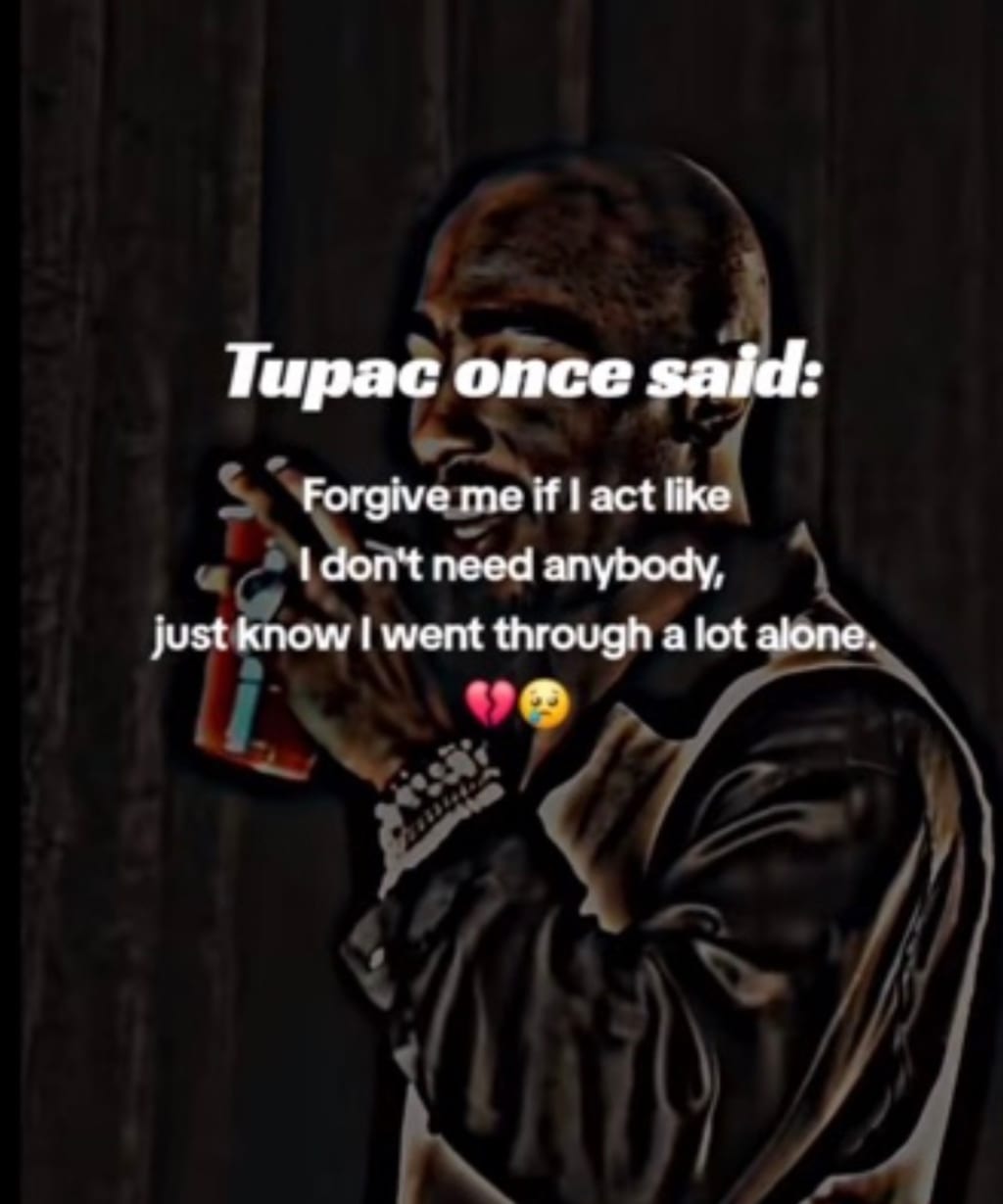
For me, these patterns were exhausting. There were days when I cried until I had nothing left. I questioned my worth and replayed conversations in my head, trying to understand what I had done wrong. I would send long messages explaining my feelings and receive silence in return. I wondered what I could do differently to make the relationship work. Maybe I should be more patient. Maybe I should give more space. Maybe I should stop bringing up the things that hurt me. Maybe I should become easier to love. I became afraid to express my feelings because I didn’t know whether I would be met with understanding or rejection. I felt as though I had to walk on eggshells, constantly measuring my emotions against someone else’s capacity to tolerate them.
Eventually, I began to understand the danger of that pattern. When you spend enough time questioning yourself in a relationship, you can start mistaking your distress for proof that you are the problem. You begin to believe that if you were less emotional, less sensitive, or less honest about your needs, everything would be fine. But there is a difference between learning to regulate your emotions and suppressing them to keep another person comfortable. There is a difference between taking responsibility for your behavior and accepting responsibility for someone else’s refusal to communicate. I didn’t need someone to agree with every feeling I had, and I didn’t expect constant attention or endless reassurance. I wanted a conversation. I wanted mutual effort. I wanted to be able to say, “This hurt me,” without feeling as though I had committed an offense. I wanted us to work through problems rather than punish each other for having them. That is not an unreasonable desire.
ACCOUNTABILITY IS WHAT MAKES GROWTH POSSIBLE
Every relationship brings two imperfect people together. We all have blind spots, fears, insecurities, and experiences that influence how we react. The difference is what we do when those wounds begin affecting someone else. Can we apologize without immediately defending ourselves? Can we listen without turning another person’s pain into an accusation against us? Can we acknowledge the impact of our behavior even when hurting someone was never our intention? Accountability is more than saying “I’m sorry.” It means recognizing what happened, acknowledging the harm, making a genuine effort to repair it, and changing the behavior over time. Without those things, the same conflicts can repeat themselves indefinitely. You can have all the conversations in the world, but if nothing changes, communication becomes another place where hope goes to die.
LOVE SHOULD CHALLENGE YOU, NOT ERASE YOU
I believe relationships can reveal the parts of ourselves that still need healing. Someone may expose our fear of abandonment. Another may reveal our difficulty setting boundaries. We may discover that we confuse being needed with being loved, or that we have learned to work harder for affection when it becomes inconsistent. These realizations can be valuable, but we must be careful not to romanticize suffering by assuming every painful relationship is necessary for our spiritual growth. You don’t have to stay in a damaging relationship to learn from it. You don’t have to keep offering access to yourself to prove that you are compassionate. And you don’t have to become the person who finally heals someone who refuses to acknowledge that they need help.
Healthy relationships still involve disagreements, uncomfortable truths, and moments of insecurity. The difference is that both people are willing to work toward understanding and repair. You can take space without using it as punishment. You can ask for reassurance without expecting another person to manage every emotion you experience. You can establish boundaries without threatening the relationship. You can disagree without demeaning each other. Growth happens when both people are willing to examine themselves. When only one person is doing that work, the relationship eventually becomes unbalanced. One person is learning how to communicate, regulate, and repair, while the other may continue deflecting, withdrawing, or repeating the same behavior. At some point, you must stop confusing your ability to understand someone with their willingness to change.
TURNING PAIN INTO RESILIENCE AND WISDOM
I have come to believe that our experiences can become sources of wisdom when we are willing to examine them honestly. We all carry stories. Some of us carry abandonment, rejection, grief, neglect, or betrayal. Those experiences are personal, and they shape the way we see the world, but they don’t have to determine the way we continue living. Our pain can teach us compassion, but it can also teach us to recognize when compassion is being used against us. It can teach us to understand human behavior without excusing harmful actions. It can teach us that someone else’s inability to love us in the way we need does not mean we are unworthy of love.
For me, healing means learning to recognize when an old abandonment wound is being activated while also refusing to ignore present-day behavior that is genuinely hurtful. It means allowing someone to have their space without chasing them for my sense of worth, while recognizing that a relationship without communication or repair may not be one I can sustain. It means understanding that I can love someone and still choose distance. I can take responsibility for my wounds without making myself responsible for theirs. I can have compassion without abandoning my boundaries. I can grow without needing to turn every person who hurt me into a villain or every painful experience into a spiritual destiny.
Sometimes, growth means forgiving. Sometimes, it means grieving. Sometimes, it means recognizing that the person you wanted someone to become is not the person they are choosing to be. And sometimes, the most important relationship you need to repair is the one you have with yourself.
The goal is not to become someone who never gets hurt. The goal is to become someone who no longer mistakes being hurt for being loved.
The real transformation begins when you stop asking, “What can I do to make this person choose me?” and start asking, “What choices do I need to make to stop abandoning myself?”
That is where self-worth begins to return. That is where boundaries become an act of self-respect. And that is where pain, when met with honesty and intentional healing, can become wisdom. Not because the pain was deserved. Not because the person who hurt you was meant to teach you a lesson. But because you have the power to decide what you do with what happened to you.
I do not need to diminish my light to make someone else comfortable with their own unresolved pain. I can understand someone’s wounds without carrying them. I can love someone without losing myself. And I am allowed to build a life in which love no longer requires me to disappear.
About the Creator
Lisa Marie
I write about the quiet battles we fight within ourselves. Through psychology, personal growth, and reflection- May my words help others feel seen & heal deeply.
“Peace comes from within. Do not seek it without.” -Buddha
Enjoyed the story? Support the Creator.
Subscribe for free to receive all their stories in your feed.
Comments
There are no comments for this story
Be the first to respond and start the conversation.