
What Is Driving Frozen Fruits & Vegetables Demand in the United States in 2026?
Convenience, health-conscious eating habits, online grocery growth, and advancements in freezing technologies are driving rising demand for frozen fruits and vegetables in the United States.

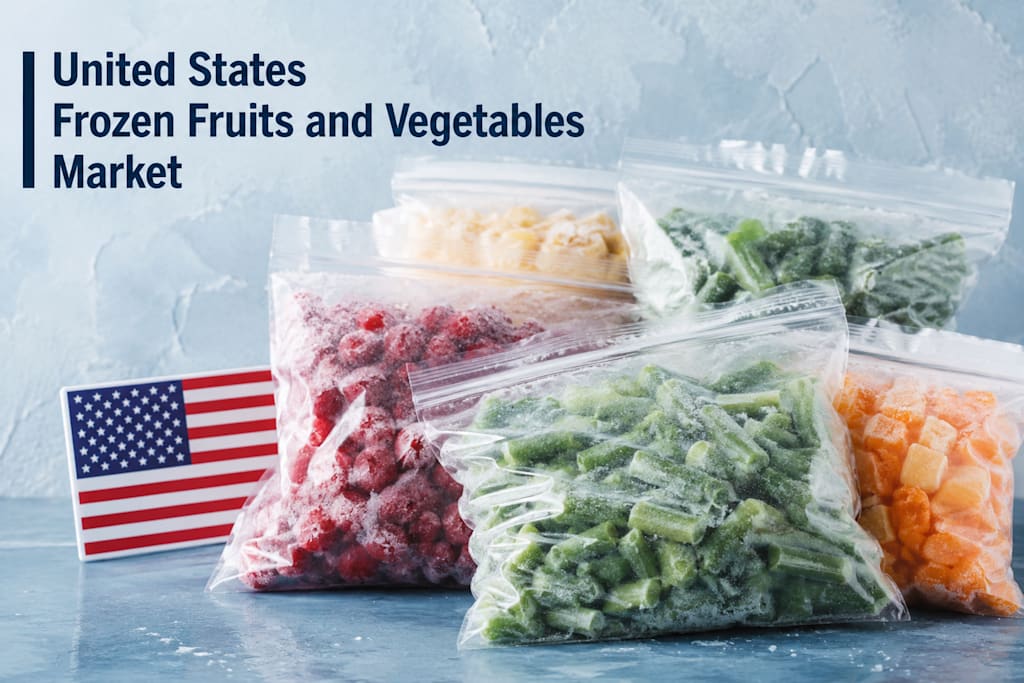
Demand for frozen fruits and vegetables is booming across the United States as consumer demand continues to increase due to growing convenience, affordability, longer shelf life, and a desire for healthier diets. Technological advancements in freezing technologies, shifts in lifestyles and work cultures, and the rise of ready-to-cook food products are transforming the entire frozen food industry in 2026.
The United States frozen fruits and vegetables market was valued at USD 7,604 Million in 2025 and is projected to reach USD 9,100.6 Million by 2034, growing at a CAGR of 2.0% between 2026 and 2034.
Growing preference for convenient food products-One of the biggest growth drivers within the market comes from a growing desire for quick meal solutions; people have busy lifestyles and work cultures and are opting for food that needs little preparation time. Frozen fruits and vegetables offer; easy storage, longer shelf life, reduced food waste, quick meal preparation, and year-round availability. Frozen produce is becoming essential in the modern household as consumers search for fast and efficient ways to cook food.
Health conscious consumers fueling market growth- Consumers are becoming much more conscious of their health and search for food products that are not only good for them but are healthy as well. The health benefits of frozen fruits and vegetables are enormous, with most nutritionally intact due to the speed of freezing. Health-conscious consumers favor; nutrient-rich food, plant-based diets, clean labels, and balanced nutrition, driving up demand throughout the entire food sector.
Rising popularity of smoothies and functional food-Frozen fruits are finding their way into everyday dishes and drinks including smoothies, shakes, breakfasts and healthy food products. Demand is being generated from frozen berries, mangoes, pineapples and mixed fruit blends as well as spinach and kale products. Frozen produce are becoming key components of health-conscious and wellness-focused diets for people consuming across retail and foodservice sectors.
Food service industry expansion helping market grow-The foodservice sector relies heavily on frozen fruit and vegetable products for operations. They use them in many different dishes and can provide restaurants, cafes and hotels with ready to use products that allow less preparation time and labor for cooks. The growth of the foodservice industry has helped to increase the demand from both the consumer and business perspective and shows no signs of slowing down.
Technological advancements are improving food quality-Improvements in the freezing process have been made that can enhance nutritional quality, taste, and shelf-life. Technologies such as; individual quick freezing (IQF), vacuum freezing and cryogenic freezing are beneficial to preserving freshness far better than traditional freezing. As these improvements become more mainstream, consumer acceptance will be at its highest.
E- commerce and online grocery platforms are speeding up sales-The rise of the online shopping has enabled products, especially frozen produce to be more accessible for consumers and the continued development of temperature-controlled logistics ensures that the product will remain frozen on its journey from A to B. This expansion of e-commerce into food product delivery across the nation ensures consumer demand remains high and the need for products like frozen fruits and vegetables grow, both in urban and suburban locations.
Sustainability and food waste reduction-Food waste is now an important consideration for all consumers. By choosing frozen produce consumers can guarantee the fruits and vegetables they are using will last far longer than fresh options and less food waste is produced. These consumers are often attracted to products that help them consume food efficiently and sustainably, therefore ensuring the longevity of these products in the modern day.
Plant-based and vegan diets are also increasingly popular-The rising popularity of plant-based and vegan food products has also helped increase the demand for fresh produce; they can be used as core ingredients in plant-based dishes and offer a source of necessary vitamins and minerals. Plant-based diets continue to grow at the most exponential rate the food sector has ever seen.
Key product segments contributing to the growth of the US frozen fruit and vegetable market include;
- Frozen vegetables such as Peas, Corn, Spinach, Broccoli, and Mixed Vegetables.
- Frozen fruits such as berries, mangoes, pineapple and tropical fruit blends.
- Organic frozen produce; due to growing demands and expectations from consumers that the foods they are eating should be produced sustainably.
Challenges faced by the industry include; costs of cold chain logistics, energy intensive food storage requirements, increased competition with fresh products and disruption of the supply chain, but these are gradually being solved with investment and technological advancements in storage.
In 2026 demand has rapidly increased due to; higher consciousness in relation to health, busy lifestyle driven by the need for quick and convenient food, the boom in online grocery and a rise in consumer use of foodservice products, and finally advancements in technology. These factors are combined to create rapid change within the food industry.
The future of the US frozen fruits and vegetable market is bright as continued innovation within food preservation techniques as well as increasing consumer demand for healthy, convenient food products coupled with further development of the cold chain logistics network will ensure steady market growth. The demand for convenient and nutritious meal solutions remains high with frozen fruits and vegetables likely to play an integral part in how people shop for food in the coming years.
About the Creator
michael matthew
I’m a market researcher passionate about understanding people, markets, and motivations. My work blends data analysis, consumer psychology, and strategic insight to help brands and businesses make informed, human-centered decisions.
Enjoyed the story? Support the Creator.
Subscribe for free to receive all their stories in your feed.
Comments
There are no comments for this story
Be the first to respond and start the conversation.