
The Price of a Scratch
When a smart vacuum declared war on a living room full of FENDI and B&B Italia, the algorithm didn't stand a chance—but the legal system is about to decide who pays.
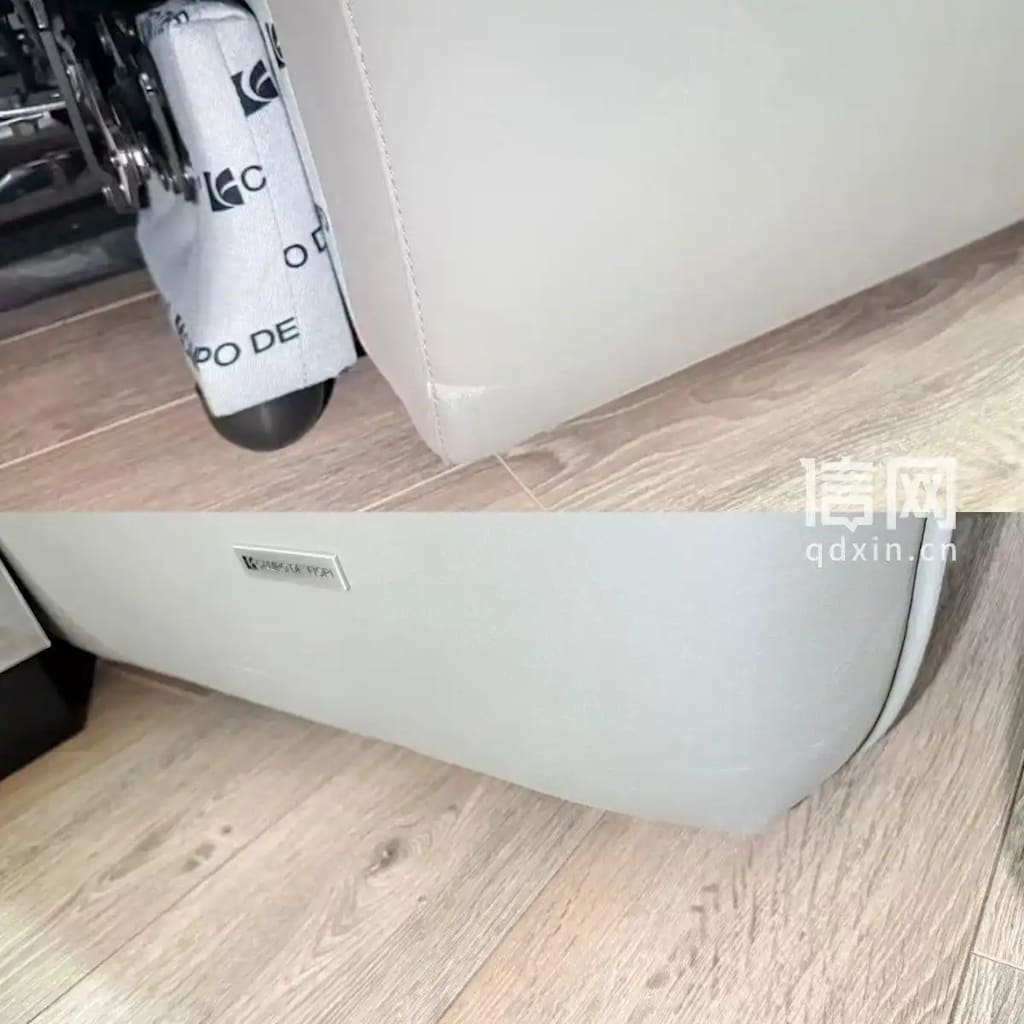
Her fingernail caught a faint raised ridge along the edge of the sofa back. Not leather grain—damage. Compressed fibers pushed up into a rough burr, about four centimeters long, its curve matching the sharp bottom edge of a table leg.
Ms. Di straightened up and scanned the living room. A pale streak ran across the corner of the FENDI coffee table. Three parallel fine lines scored the leg of a dining chair. On the side of the master bedroom chest, the lacquer looked as if it had been rubbed with sandpaper, exposing a lighter layer of wood beneath. She crouched to inspect them. Every mark sat four to five centimeters above the floor—the height of the robot vacuum-mop's top edge.
In February 2026, she ordered the Xiaomi Sweeping & Mopping Robot 5 Pro from the brand's flagship store on an e‑commerce platform. The product page promised "zero‑dead‑angle cleaning," "intelligent obstacle avoidance," and "edge‑hugging sweep." Promotional images showed the machine tracing a straight line along a baseboard. Ms. Di owned a cat and preferred a clean floor—she needed something that ran daily. When it arrived, she followed the instructions, connected it to Wi‑Fi, set a 9 a.m. schedule, and let it go.
Two weeks later, she noticed the marks. At first she thought they were moving dings, but they multiplied—one more here today, another there tomorrow. She charged the robot, turned it on, and crouched beside it to watch.
The video she recorded showed the robot entering the narrow gap between the sofa and a floor lamp. One side of its body pressed against the lamp's metal pole; the other had almost no clearance. It stopped. The drive wheels spun in place. It reversed, moved forward again, and scraped past the pole. After three tries, it turned away. The dining chair legs weren't straight—they tapered wider above the base. The robot's side sensors could only detect the narrower lower portion; by the time the body pivoted, its top edge scraped against the curved swell of the leg.
On March 24, a Xiaomi after‑sales service engineer came to her home. He carried a work order, crouched in front of the machine for about fifteen minutes, and ran it around several table legs. In the "Fault Description" field, he wrote five Chinese characters: "Obstacle avoidance malfunction." He signed it, left a copy with Ms. Di, and said the company would contact her.
Shortly after, the e‑commerce platform's customer service channel sent a message: compensation offer—five hundred yuan.
Ms. Di did not click "Confirm." She pulled out the repair quotes from her furniture suppliers and went through them again. The B&B Italia dining chairs would need to go back to the Shanghai boutique, where an on‑site Italian technician would do hand‑color restoration—6,200 yuan per chair. The FENDI coffee table's edge required full surface sanding and a new topcoat: 24,000 yuan. The LAGO chest, with four scratches on its side, needed the entire panel removed and repainted in a baking oven: 47,000 yuan. The safe was a Buben & Zörweg—a seven‑centimeter light scratch on its door. The supplier said the surface was a special alloy with multiple baked‑enamel layers; repair required shipping it back to the German factory, and the logistics packaging and insurance alone exceeded 50,000 yuan.
The total quote came to 375,000 yuan.
Ms. Di's lawyer told her that in court, a full replacement was highly unlikely. In legal practice, compensation for damage to valuable furniture is based on "reasonable repair costs," and depreciation must be factored in. But Ms. Di did another calculation: half of these pieces were already discontinued. Once repaired, the surfaces would no longer be in original factory condition, and the loss in resale value would far exceed the repair bill itself. The lawyer paused for a few seconds and said that kind of loss is difficult to quantify in legal terms.
In April 2026, the case filing notice arrived from the Shanghai Jing'an District People's Court. The cause of action was product liability dispute. The defendants were Xiaomi Communications Technology Co., Ltd. and the e‑commerce platform. The trial date was set for September 15.
Ms. Di started browsing robot vacuums from other brands. She found that almost all the latest models were advertising "edge‑hugging capability"—the distance from walls shrinking from two centimeters to one, then to half a centimeter. One brand's promotional video showed its machine tracing a dead‑straight line along a baseboard; in the comments below, someone asked: "Does it scratch furniture?" The brand never replied. She also came across DIY modification posts from users: some stuck soft rubber strips along the top edge of their robots, others wrapped the lower halves of table legs in transparent protective film, and still others set up no‑go zones to cordon off expensive pieces, making the robot steer clear.
She did not see any official page from any brand that included tips like "We recommend adding anti‑scratch bumpers" or "Irregularly shaped furniture may require separate zone settings."
Ms. Di called Xiaomi customer service a second time and asked to be transferred to the technical department. She said, "If your customer service had told me earlier that edge‑hugging mode might scratch tapered table legs, I would have set that dining chair area as a no‑go zone in the app." The representative said, "Your feedback has been recorded and will be forwarded to the relevant department for evaluation." Three days later, she received a text message: "Regarding the furniture damage you reported, we take this matter very seriously. The specific compensation plan must be determined based on the device's actual operational data. Please provide us with more video evidence."
Ms. Di opened the Xiaomi Home official website on her computer, took screenshots of the entire product page, and saved them. She placed those screenshots in the same folder as the engineer's work order. She named the folder "9.15."
After the story spread, some people commented on social media: "375,000 yuan in repair costs—you could buy a hundred robot vacuums." Others said, "If you buy furniture that expensive, you should have thought ahead that it might get bumped." Ms. Di did not reply to any of those comments. She typed a line in her phone's notes app, then deleted it. The line said: "I didn't think it would bump into things, because it's called 'intelligent obstacle avoidance.'"
Early September, the summer heat still hung over Shanghai. Ms. Di charged that robot vacuum once more and let it run. It rolled out of its dock, skirted around the base of the safe, paused near the dining chair leg, hesitated for a moment, then pressed in close. The edge of its top cover, at the point where the chair leg curved outwards, scraped once again across the very arc that already bore the scar.
Its sensors were down low. They could not see the sharp shoulder above them.
Its algorithm had no word for "scratch."
All it knew—there was still dust there.
About the Creator
Jin
Writer of reamstories
https://reamstories.com/jin
Enjoyed the story? Support the Creator.
Subscribe for free to receive all their stories in your feed. You could also become a paid subscriber, letting them know you appreciate their work.
Comments
There are no comments for this story
Be the first to respond and start the conversation.