
The Day the Brain Stopped Working: A Clinical Look at Burnout
Moving beyond the myth of brain fog to understand the metabolic reality of neurological exhaustion

It was a Tuesday afternoon when Elias sat in my office, staring at his hands as if he didn’t recognize them. He was thirty-four, a software engineer at the top of his game, and he had just spent forty-five minutes staring at a simple line of code that he could usually write in his sleep. He told me he felt like he was living behind a thick pane of glass. He could see his life, he could see his responsibilities, but he couldn't touch them. He wasn't sad, exactly. He was just empty.
Most people would call what Elias was experiencing burnout. They would tell him to go on a vacation, take a yoga class, or try a new meditation app. But Elias had already done all of those things. He had just returned from ten days in the mountains, and yet, forty-eight hours after returning to his desk, the glass wall was back. He felt like a failure because the common solutions weren't working. He thought he was weak. But as we looked at his clinical markers, it became clear that he wasn't weak; he was neurologically exhausted.
This brings us to a term that has been hijacked by every self-help guru on the internet: Brain Fog. We treat brain fog like a mysterious weather pattern that just rolls in and out of our lives. We talk about it as if it’s a lack of motivation or a fuzzy mood. But in a clinical setting, we need to call it what it actually is: Neuro-Inflammation and Metabolic Depletion. The guru posturing around brain fog usually involves selling you a supplement or a specific superfood, but you cannot eat your way out of a structural architecture problem.
When Elias’s brain stopped working, it wasn't because he lacked a specific vitamin. It was because his brain was physically incapable of maintaining the high-energy state required for focus. Your brain is a metabolic hog. It represents a tiny fraction of your body weight but consumes a massive portion of your daily fuel. When you are constantly context-switching, reacting to notifications, and living in a state of hyper-arousal, you are essentially running a high-performance engine at its redline for sixteen hours a day. Eventually, the engine begins to overheat.
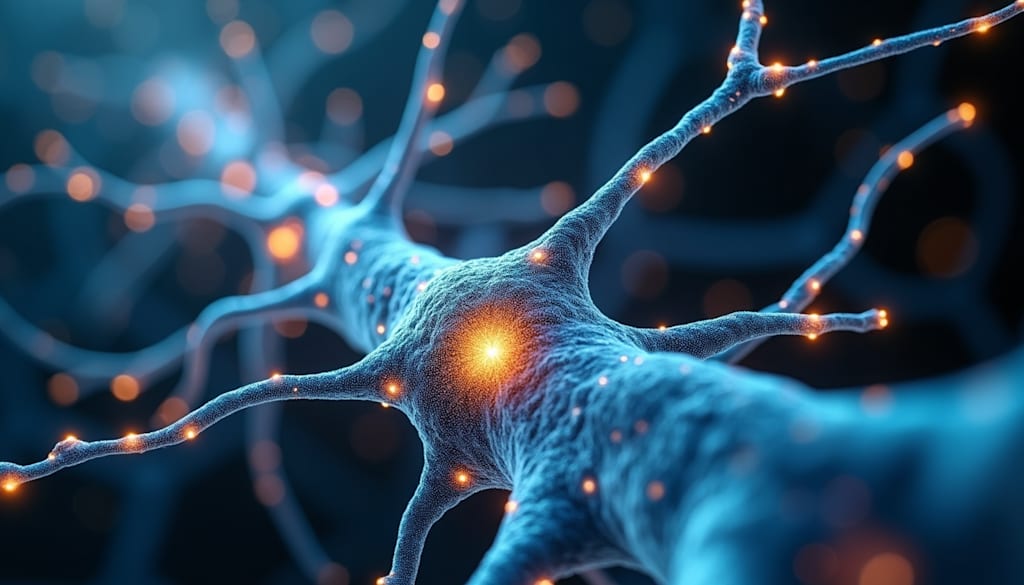
The science of this is fascinating and often overlooked. Inside your brain, you have cells called microglia. For a long time, we thought these were just support cells that held everything together. We now know they are the primary immune defenders of the brain. When you are under chronic digital and psychological stress, these cells stay in a state of high alert. They begin to release pro-inflammatory cytokines. This isn't the kind of inflammation you see in a swollen ankle; it’s a subtle, chemical shift that slows down the speed at which your neurons can communicate. That is the glass wall Elias was feeling. His signals were literally moving slower because his brain’s immune system was trying to protect him from what it perceived as a never-ending threat.
To fix this, we have to stop looking for a hack and start looking at the biological baseline. One of the most important concepts I discuss with people in this state is the idea of the Dopamine Set Point. We are living in a dopamine-saturated world. Every time you check a like or scroll through a feed, you are spiking your levels. But the brain is a master of homeostasis. To protect itself from over-stimulation, it actually downregulates your receptors. It closes the doors. This means that over time, you need more and more stimulation just to feel "normal." When you try to sit down and do a "boring" task like writing code or reading a book, your brain simply doesn't have the receptor capacity to find it engaging.
This is why a three-day vacation doesn't work. You are taking the person out of the environment, but you aren't giving the neural receptors enough time to actually reset and upregulate. For Elias, we had to implement a strict period of low-stimulus recovery. We had to prove to his brain that it was safe to turn off the inflammatory response. This involved a protocol of active rest—not sitting on a couch watching TV, which is still a form of high-stimulus input, but actual low-arousal movement and sensory fasting.
We have to realize that our attention is a physical resource, not just a mental one. It is tied to the glucose levels in our prefrontal cortex and the health of our mitochondrial function. If you want to perform at a high level, you have to treat your brain like the high-energy organ it is. This means respecting the biological cost of your digital habits. It means understanding that every time you "quickly check" your phone, you are paying a metabolic tax that you might not be able to afford by three in the afternoon.
Elias eventually found his way back. It didn't happen because of a miracle supplement. It happened because he stopped fighting his biology and started working with it. He stopped viewing his exhaustion as a character flaw and began viewing it as a structural limit. Once he understood the architecture of his mind, he could finally start to rebuild it. The goal isn't to be "always on." The goal is to be capable of turning off, so that when it matters, you have the power to truly turn on.
About the Creator
Josh Ores
Neurologist & researcher. If your brain feels fried from digital overload, discover the clinical protocols to reset your focus. Get my books here: Official Hub: Neuro-Flow Clinical Hub
Enjoyed the story? Support the Creator.
Subscribe for free to receive all their stories in your feed.
Comments
There are no comments for this story
Be the first to respond and start the conversation.