
Sugary Drinks Are Silently Fueling the Rise of Anxiety in Teens
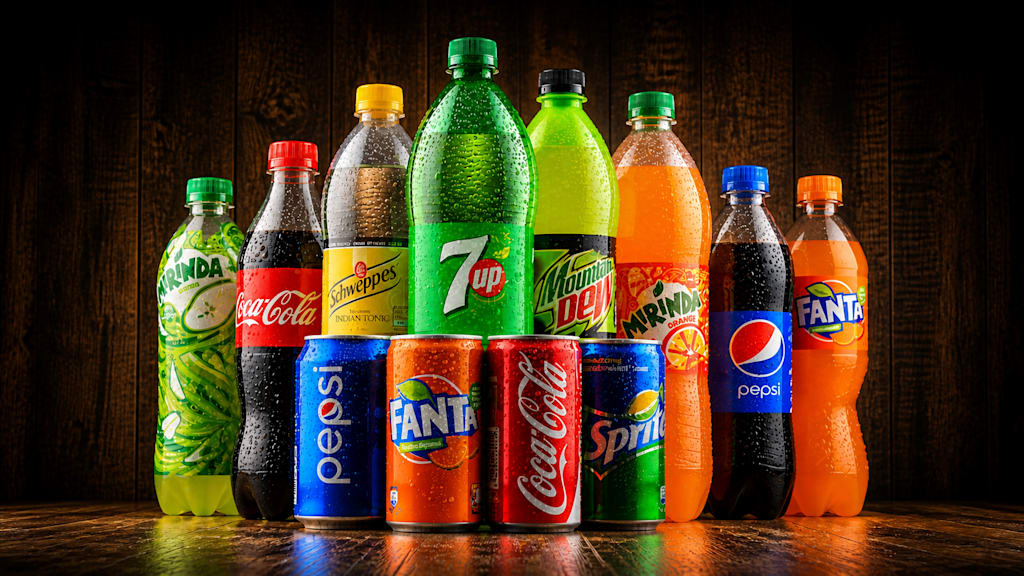
And no, I’m not talking about energy drinks specifically. I mean the everyday stuff.

I want to be honest with you before we dive in.
When I first came across this research, I almost scrolled past it. Another study about sugar being bad? Great. We know. Move on.
But then I actually read it. And I sat with it for a while. And I think it deserves more attention than it’s getting.
Because we’re in the middle of a teenage anxiety crisis that nobody has a clean answer to. And here’s a piece of research suggesting that something as ordinary as a sweetened iced tea or a can of soda might be quietly making things worse for millions of adolescents.
That felt worth writing about.
So let’s get into it.
First, the numbers
A 2026 systematic review published in the Journal of Human Nutrition and Dietetics pulled together nine studies from across the world, spanning 25 years of research, covering tens of thousands of adolescents between the ages of 10 and 19.
The researchers wanted to know one thing: is there a real relationship between drinking sugary beverages regularly and experiencing anxiety disorders?
Here’s what they found.
Adolescents who regularly consumed sugar-sweetened beverages had 34% higher odds of having an anxiety disorder.
Seven out of nine studies pointed in the same direction. The two studies that actually followed teenagers over time, instead of just taking a snapshot, found that SSB consumption at the start predicted anxiety symptoms later, even after accounting for how anxious those kids already were.
That last part is important. It wasn’t just that anxious kids happened to drink more soda. The drinking came first.
Now before anyone jumps in: this does not prove causation. The researchers are careful about that and so am I. But 34% higher odds, replicated across different countries, different methodologies, different cultural contexts?
That’s not noise.
Why would sugar even affect anxiety?
This is the part I find genuinely fascinating. Because most people’s intuition stops at “sugar is bad for your body.” We don’t often think about what it’s doing upstairs.
Let me walk you through three pathways the neuroscience points to.
1. Sugar is inflaming the anxious brain
Chronic high sugar intake raises levels of inflammatory markers in the body. Things like IL-6 and TNF-α, which sound like sci-fi jargon but are actually cytokines, proteins that influence how the brain functions.
These inflammatory signals reach the amygdala and the hippocampus. Two brain regions that are basically ground zero for anxiety processing.
When those regions are chronically exposed to inflammatory signaling, the brain’s threat detection system gets louder. More reactive. More sensitive to things that might not even be threats.
Think of it like a smoke detector that keeps going off even when there’s no smoke.
2. Sugar is training the brain to cope in unhealthy ways
Every time you drink something sweet, your brain’s reward center lights up. Dopamine gets released. You feel a brief lift.
For adults, this is manageable. We have a relatively mature prefrontal cortex that can regulate these impulses over time.
Teenagers don’t have that yet.
The prefrontal cortex is still under construction during adolescence. Which means the reward signal from sugar hits harder, and the braking system is weaker.
So what happens over months and years of reaching for a sugary drink when you’re stressed or overwhelmed?
The brain learns. It builds a habit. It starts to associate emotional discomfort with the need for that reward. And the more that loop gets reinforced, the more entrenched it becomes..
Sugar offers short-term relief. The brain remembers. And a coping mechanism quietly becomes a dependency
Speaking of how your brain is actually functioning,
>> is your brain truly awake? << Find out in 30 seconds.
3. Sugar is messing with your stress hormones
The HPA axis, which is just a fancy name for the system that regulates cortisol and stress responses, is sensitive to blood glucose fluctuations.
Sugary drinks cause sharp spikes and drops in blood sugar. Do that repeatedly over time and you may be disrupting how the body handles stress at a hormonal level. Either amplifying the stress response or impairing the body’s ability to recover from it.
In adults this is concerning. In adolescents, whose stress systems are still being calibrated, it could matter a lot more.
Here’s the thing about adolescence that changes everything
I keep coming back to this point because I think it’s the most important one.
This isn’t just a sugar story. It’s a timing story.
The teenage brain is in one of the most intense periods of reconstruction it will ever go through. Synaptic pruning. Myelination. The slow, gradual development of prefrontal-amygdala connectivity, which is the neural wiring behind emotional regulation.
During this window, environmental inputs have an outsized effect. The brain is plastic, absorbing and adapting to everything around it.
Which means dietary exposures that barely register in a 40-year-old might genuinely shape the emotional architecture of a 15-year-old.
That’s not alarmism. That’s developmental neuroscience.
Before you panic, some important context
I want to be fair here because context matters.
This is not about one soda at a birthday party. The research consistently points to habitual, chronic consumption as the relevant variable. Short-term sugar exposure in experimental settings doesn’t reliably produce the same anxiety effects. It’s the pattern over weeks and months that appears to matter.
Energy drinks deserve a special mention though. They combine high sugar content with caffeine, which may compound effects on the stress axis and disrupt sleep. If there’s one category worth being particularly cautious about, it’s probably that one.
And yes, the relationship likely runs in both directions. Anxious teenagers may be more likely to reach for sugary drinks as a coping mechanism. The authors acknowledge this. But rather than weakening the argument, I think it strengthens it. It suggests a reinforcing loop, not a simple one-way street. And loops are harder to break.
So what do we actually do with this?
I’m not going to tell you to never let your kid drink a Coke again. That’s not realistic and it’s not what the research is saying.
But I do think this findings deserves a place in the larger conversation we’re having about adolescent mental health.
We’ve spent years asking: why are teenagers so anxious? We’ve pointed at phones, at social media, at academic pressure, at the news cycle. All of those things matter.
But maybe we’ve been overlooking something that’s sitting right there on the kitchen counter.
The research suggests that habitual liquid sugar intake might be one quiet, overlooked, and actually modifiable piece of the puzzle. Not the whole answer. But a piece.
And in a crisis this serious, no piece is too small to take seriously.
Before you go, worth asking yourself:
is your brain truly awake? Take 30 seconds and find out.
Source: Khaled, K., Abdulbaki, N., Almilaji, O., Casey, C., & Tsofliou, F. (2026). Sugar-Sweetened Beverage Consumption and Anxiety Disorders in Adolescents: A Systematic Review and Meta-Analysis. Journal of Human Nutrition and Dietetics. DOI: 10.1111/jhn.70217
About the Creator
Clara Hewitt
Hi, I am Clara. This newsletter is where I share what I learn. just honest writing about natural health, growing your own food, and building a life that costs less and feels better. If that sounds like your kind of thing, stick around.
Enjoyed the story? Support the Creator.
Subscribe for free to receive all their stories in your feed.
Comments
There are no comments for this story
Be the first to respond and start the conversation.